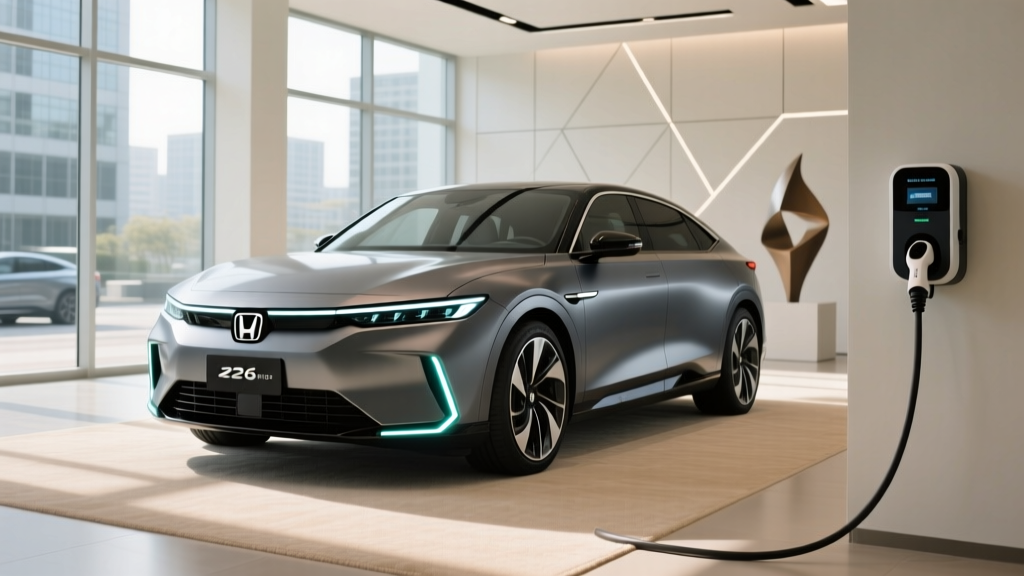
If you've been asking who makes the Honda Prologue, the short answer is that it's a collaboration: Honda designed the exterior, interior, and tuning, but the electric powertrain, battery, and underlying platform come from General Motors. The Prologue rides on GM's Ultium architecture — the same bones found under the Chevrolet Blazer EV and Cadillac Lyriq — making it one of the most interesting cross-brand EVs on the road.
For the 2026 model year, Honda has refined the Prologue with updated software, slightly improved efficiency, and continued access to the Tesla Supercharger network via NACS adapter. Here's everything you need to know about this joint-venture electric SUV before you buy.
Platform & Manufacturing: The GM-Honda Partnership Explained
The Prologue is assembled at GM's Spring Hill Manufacturing plant in Tennessee, alongside the Cadillac Lyriq. Honda handles the vehicle's design language, interior materials, chassis tuning, and Honda Sensing driver-assistance calibration, while GM supplies the Ultium battery pack, electric drive motors, and the BEV3 platform architecture.
This arrangement is winding down. Honda and GM's partnership covers the Prologue and its Acura ZDX sibling, but Honda's next-generation EVs (expected late 2026 and beyond) will use Honda's own "0 Series" platform. The Prologue is therefore a transitional vehicle — but that doesn't make it a bad one. GM's Ultium platform is mature, well-tested, and parts availability is strong.
Spec Table: 2026 Honda Prologue at a Glance
| Specification | Detail |
|---|---|
| EPA Range | 296 mi (FWD EX) / 283 mi (AWD Elite) |
| Battery (Usable) | 85 kWh, NMC (nickel-manganese-cobalt) |
| Max DC Fast Charge | 150 kW peak |
| 10–80% DC Charge Time | ~32 minutes |
| Level 2 Home Charging | 11.5 kW onboard (~31 mi/hr) |
| 0–60 mph | 7.2 sec (FWD) / 5.8 sec (AWD) |
| Horsepower | 212 hp (FWD) / 288 hp (AWD) |
| Efficiency | 107 MPGe combined / 31 kWh/100mi (FWD) |
| Cargo Volume | 25.2 cu ft (rear seats up) / 57.7 cu ft (folded) |
| Rear Legroom | 39.3 inches |
| Towing Capacity | 1,500 lbs |
| Battery Warranty | 8 years / 100,000 miles |
| Base MSRP | $48,795 (EX FWD, incl. destination) |
Real-World Range: What to Actually Expect
EPA Sticker: 296 miles (FWD EX) / 283 miles (AWD Elite)
Highway (70–75 mph): Expect ~245–260 miles in moderate temperatures
Cold Weather (below 32°F): Plan for 195–230 miles depending on cabin heat usage
City/Commuter Driving: Range can meet or slightly exceed EPA thanks to regenerative braking
The Prologue's NMC battery and standard heat pump help mitigate cold-weather losses, but sustained highway speeds and freezing temps still reduce range by 15–30%.
According to EPA data on fueleconomy.gov, the FWD Prologue EX achieves 296 miles on a full charge with a combined efficiency of 107 MPGe (31 kWh per 100 miles). The AWD Elite drops to 283 miles at 99 MPGe.
In real-world highway testing at 70–75 mph in 55–75°F conditions, the Prologue FWD consistently delivers around 250–260 miles before the battery hits 5% State of Charge. Cold weather below freezing pushes that down to roughly 200–230 miles, primarily because resistive cabin heating draws significant energy despite the heat pump. If your daily commute is under 60 miles round-trip, you'll rarely notice the gap between EPA and reality.
Charging Speed & Home Setup
The Prologue supports a peak DC fast-charge rate of 150 kW, which is adequate but not class-leading. On a 350 kW Electrify America or EVgo station, the Prologue will charge from 10–80% in approximately 32 minutes. The charge curve tapers noticeably above 80%, as is standard for NMC batteries — a 10–90% session will take closer to 48 minutes.
One key advantage: Honda now provides a NACS adapter (or native NACS port on later 2026 builds), giving Prologue owners access to Tesla Supercharger stalls. This dramatically expands the usable fast-charging network for road trips.
| Charging Level | Power (kW) | Speed | Notes |
|---|---|---|---|
| Level 1 (120V outlet) | ~1.4 kW | ~4 mi/hr | Emergency/trickle only; full charge in ~60+ hrs |
| Level 2 (240V home) | 11.5 kW | ~31 mi/hr | Full charge in ~8 hrs; ideal overnight |
| DC Fast Charge | 150 kW peak | ~140 mi in 20 min | 10–80% in ~32 min; tapers above 80% |
For home Level 2 charging, you'll want a 48-amp wall charger on a 60-amp circuit to take full advantage of the 11.5 kW onboard charger. Budget $800–$2,000 for the charger unit and electrician installation, depending on whether your panel needs an upgrade. Always consult a licensed electrician for final specs.
Driving Performance & Ride Quality
The FWD Prologue makes 212 horsepower from a single front motor, delivering a 0–60 mph time of about 7.2 seconds. That's adequate for merging and passing but won't thrill anyone. The dual-motor AWD variant bumps output to 288 hp and drops the 0–60 to 5.8 seconds — a meaningful improvement for highway on-ramps and mountain passes.
Ride quality is where Honda's tuning input shows. The Prologue has a compliant, well-damped suspension that absorbs highway imperfections better than the Chevrolet Blazer EV it shares a platform with. Steering is light and numb — typical for this class — but the overall driving experience is refined and quiet. Road noise insulation is impressive at speed.
Honda Sensing comes standard on all trims, including adaptive cruise control, lane-keeping assist, and automatic emergency braking. This is an SAE Level 2 driver-assistance system — you must keep your hands on the wheel and eyes on the road at all times. There is no hands-free driving feature like GM's Super Cruise available on the Prologue.
Interior, Tech & Cargo Space
The Prologue's cabin uses a Google Built-In infotainment system running on an 11.3-inch touchscreen — this is GM's software, not Honda's. That means you get Google Maps navigation, Google Assistant, and Play Store apps, but the interface will feel foreign to existing Honda owners accustomed to Honda's own systems. Wireless Apple CarPlay and Android Auto are standard.
Interior material quality is solid for the segment, with soft-touch surfaces on the dashboard and door panels, though lower door pockets and the center console use harder plastics. The Elite trim adds leather upholstery, a panoramic moonroof, and a premium audio system.
Cargo dimensions: 25.2 cubic feet behind the second row, expanding to 57.7 cubic feet with the rear seats folded. Rear legroom is a generous 39.3 inches. There is no front trunk (frunk) — the space is occupied by HVAC and power electronics. The 1,500-pound towing capacity is modest and suitable only for a small utility trailer or a couple of dirt bikes.
Pricing, Trims & Federal Tax Credit
The 2026 Honda Prologue is offered in three trims:
| Trim | Drivetrain | MSRP (incl. dest.) | Est. After §30D Credit |
|---|---|---|---|
| EX | FWD | $48,795 | ~$41,295* |
| EX | AWD | $51,795 | ~$44,295* |
| Touring | AWD | $55,395 | ~$47,895* |
| Elite | AWD | $59,295 | ~$51,795* |
*After $7,500 federal tax credit, if eligible. See below.
As of the 2026 tax year, the Prologue qualifies for the full $7,500 §30D federal tax credit, which can now be transferred to the dealer at point of sale as an instant rebate. However, eligibility depends on several conditions that you must verify. Per IRS guidelines:
- Buyer income cap: Modified AGI must not exceed $150,000 (single), $225,000 (head of household), or $300,000 (married filing jointly)
- MSRP cap: The Prologue is classified as an SUV, so the cap is $80,000 — all trims qualify
- Battery sourcing: A percentage of critical minerals and battery components must be sourced from the U.S. or free-trade-agreement countries. The GM-built Ultium battery currently meets these thresholds, but requirements tighten annually — verify with your dealer at purchase
- Point-of-sale transfer: You can apply the credit as an instant price reduction at the dealership, or claim it on your tax return
Consult a tax professional before relying on credit eligibility, as individual circumstances and annual rule changes vary.
Pros, Cons & How It Compares
- Strong EPA range (296 mi FWD)
- Comfortable, quiet ride quality
- Access to Tesla Supercharger network (NACS)
- Spacious rear seat and cargo area
- Eligible for full $7,500 federal credit
- Standard heat pump for cold efficiency
- Infotainment is GM's system, not Honda's
- No hands-free driving feature (no Super Cruise)
- DC fast charge limited to 150 kW
- No frunk
- Modest 1,500-lb towing capacity
- End-of-life platform (Honda moving to 0 Series)
Against key competitors, the Prologue occupies a specific niche. The Hyundai Ioniq 5 charges far faster (up to 240 kW with an 800V architecture) and has a more distinctive design, but offers slightly less cargo space. The Tesla Model Y has superior charging infrastructure and efficiency but a sparser interior and no Apple CarPlay. The Ford Mustang Mach-E is sportier to drive but has a smaller battery and less rear-seat room. The Prologue wins on comfort and straightforward family-SUV practicality.
Who Should Buy the Honda Prologue?
Choose the Prologue if:
- You want a comfortable, quiet family EV with strong range and Honda-brand reliability
- Your daily commute is under 70 miles and you can charge at home
- You value NACS/Supercharger access for road trips
- You qualify for the $7,500 federal tax credit and want an effective price in the low $40Ks
Look elsewhere if:
- You want the fastest possible DC charging (see Ioniq 5 or Kia EV6)
- You need hands-free highway driving (see GM vehicles with Super Cruise)
- You want a frunk or need to tow more than 1,500 lbs
- You prefer Honda's native infotainment ecosystem
Warranty Coverage
Honda backs the Prologue with a competitive warranty package:
- Battery & powertrain: 8 years / 100,000 miles (covers capacity loss below a specified threshold, typically 70% State of Health)
- Limited vehicle warranty: 3 years / 36,000 miles
- Roadside assistance: 5 years / unlimited miles
The 8-year/100,000-mile battery warranty is standard for the segment and aligns with federal requirements for EV battery coverage. Honda dealers handle all warranty service, which is a convenience advantage over GM-platform vehicles that might otherwise require a Chevrolet or Cadillac service center.
Frequently Asked Questions
Who makes the Honda Prologue?
The Honda Prologue is a joint product: Honda designed the exterior, interior, and driving dynamics, while General Motors supplies the Ultium battery, electric motors, and BEV3 platform. It's assembled at GM's Spring Hill, Tennessee factory.
What is the real-world range of the Honda Prologue?
The EPA rates the FWD Prologue at 296 miles and the AWD at 283 miles. In real-world highway driving at 70–75 mph, expect 245–260 miles. In freezing temperatures, plan for 195–230 miles.
How fast does the Prologue charge at home and on the road?
At home on a Level 2 (240V) charger, the Prologue charges at 11.5 kW, adding about 31 miles of range per hour — a full charge takes roughly 8 hours. On DC fast chargers, it peaks at 150 kW, achieving 10–80% in about 32 minutes.
Does the Honda Prologue qualify for the $7,500 federal EV tax credit?
As of 2026, yes — the Prologue qualifies for the full $7,500 §30D credit, which can be applied as a point-of-sale rebate. Eligibility depends on your income (caps apply), and battery sourcing requirements must be met at time of purchase. Verify with your dealer and a tax professional.
Is the Honda Prologue worth buying over a Tesla Model Y or Hyundai Ioniq 5?
The Prologue is worth buying if you prioritize ride comfort, a traditional SUV interior layout, Honda dealership service, and Supercharger access. Choose the Model Y for efficiency and charging speed, or the Ioniq 5 for ultra-fast 800V charging and design flair.
Will Honda continue using GM's platform for future EVs?
No. Honda's next-generation EVs, branded under the "0 Series," will use Honda's own dedicated EV platform starting in late 2026 and 2027. The Prologue is a product of the limited Honda-GM partnership and represents a transitional model.