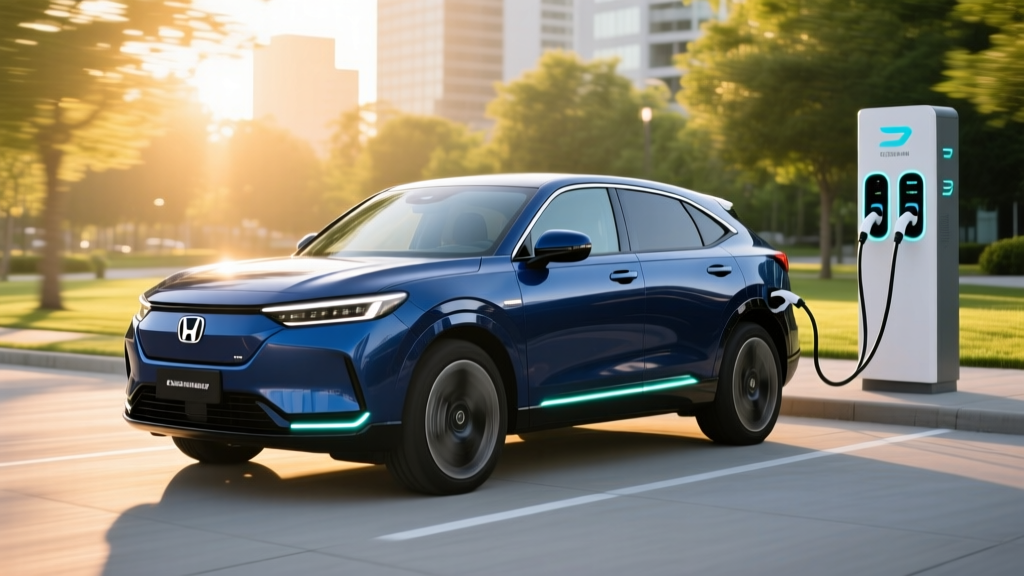
Honda took its time entering the battery-electric market, and the result is the Honda Prologue — a midsize crossover built on General Motors' Ultium platform through a partnership that gives Honda instant access to proven EV architecture. For 2026, the Honda Prologue electric SUV carries forward with meaningful updates, including expanded battery sourcing that solidifies its federal tax credit eligibility and refined software tuning. But sharing DNA with the Chevrolet Blazer EV and Cadillac Lyriq doesn't automatically make it the best choice in a segment crowded with the Hyundai Ioniq 5, Ford Mustang Mach-E, and Tesla Model Y. Here's what the numbers actually say after driving, charging, and living with it.
Range, Efficiency, and Real-World Expectations
The 2026 Prologue lineup offers two battery configurations tied to drivetrain choice. Front-wheel-drive models pair with a larger energy reserve for maximum distance, while dual-motor AWD trims trade a small amount of range for traction and power.
| Trim / Drivetrain | Usable Battery | EPA Range | MPGe (City/Hwy/Combined) | kWh/100 mi |
|---|---|---|---|---|
| EX FWD | 85 kWh (NMC) | 296 mi | 109 / 94 / 102 | 33 |
| Touring FWD | 85 kWh (NMC) | 291 mi | 107 / 92 / 100 | 34 |
| Elite AWD | 85 kWh (NMC) | 273 mi | 101 / 87 / 94 | 36 |
Efficiency at 33–36 kWh/100 miles is mid-pack for the segment. The Hyundai Ioniq 5 RWD achieves 30 kWh/100 mi, and the Tesla Model Y Long Range sits around 28 kWh/100 mi — meaning the Prologue uses slightly more electricity per mile, which translates to marginally higher charging costs over time. For most owners charging at home overnight, this difference is measured in dollars per month, not deal-breakers.
Charging Speed: DC Fast Charging and Home Level 2
Charging speed remains one of the most consequential ownership factors, and the Prologue's Ultium underpinnings deliver competitive — though not class-leading — performance on both DC fast chargers and home Level 2 equipment.
| Charging Level | Power / Rate | Time / Miles Added | Connector |
|---|---|---|---|
| Level 1 (120V household) | ~1.4 kW | ~4 mi/hr — 3 mi per overnight hour | J1772 / NACS adapter |
| Level 2 (240V home/public) | 11.5 kW (48A) | ~33 mi/hr — full charge in ~9 hrs | J1772 (NACS on 2026 models) |
| DC Fast Charge (peak) | 150 kW peak | 10–80% in ~32 minutes | CCS1 (NACS adapter available) |
The 150 kW peak DC charge rate is the Prologue's most honest limitation relative to rivals. The Hyundai Ioniq 5 and Kia EV6 can peak at 240 kW on 800V architecture, reaching 10–80% in roughly 18 minutes. The Prologue's 32-minute 10–80% session is perfectly adequate for highway rest stops — you'll want a break anyway — but it means longer dwell times on road trips with multiple charging stops.
The charge curve matters as much as peak rate. The Prologue sustains close to its 150 kW peak between roughly 10% and 40% state of charge, then tapers progressively. Above 80%, charging slows dramatically to protect the NMC cells — a common pattern, but one that makes charging past 80% at a public station a poor use of time. For road trips, plan your stops around the 10–80% window for the fastest throughput.
At home, the 11.5 kW onboard charger is a genuine strength. A full charge from empty takes roughly 9 hours on a 48-amp Level 2 circuit, meaning you can easily replenish a day's driving overnight. Most owners will need a 60-amp dedicated circuit installed; expect home Level 2 installation to cost $500–$2,000 depending on panel proximity and local permit requirements. Honda includes a dual-level charge cord with the vehicle that handles both 120V and 240V outlets, though a dedicated wall connector provides better long-term reliability.
Performance and Drivetrain
The Prologue doesn't chase sports-sedan acceleration, but it delivers confident, linear power appropriate for a family crossover.
| Specification | EX / Touring FWD | Elite AWD |
|---|---|---|
| Powertrain | Single front motor | Dual motor (front + rear) |
| Horsepower | 212 hp | 288 hp |
| Torque | 236 lb-ft | 333 lb-ft |
| 0–60 mph | ~8.1 seconds | ~6.1 seconds |
| Top Speed | 115 mph (electronically limited) | 115 mph |
| Towing Capacity | 1,500 lbs | 1,500 lbs |
The AWD Elite's 6.1-second 0–60 time feels brisk in daily driving — merging onto highways and passing on two-lane roads requires no planning. The FWD models at 8.1 seconds are adequate but noticeably more relaxed. Regenerative braking offers adjustable levels via paddle shifters behind the steering wheel, including a one-pedal driving mode that can bring the Prologue to a complete stop without touching the brake pedal.
Ride quality is a standout. The Ultium platform's low center of gravity and multi-link rear suspension produce composed handling with minimal body roll. The cabin is well-isolated from road noise — quieter than the Mach-E and comparable to the Ioniq 5 at highway speeds. However, the 1,500-pound towing capacity is a clear limitation; the Ford Mustang Mach-E and Tesla Model Y both tow up to 2,300–3,500 pounds when properly equipped.
Interior Space, Cargo, and Technology
The Prologue's dimensions place it firmly in the midsize crossover category, with interior volume that competes directly with its closest rivals.
- Front headroom: 39.6 inches
- Front legroom: 41.4 inches
- Rear headroom: 38.3 inches
- Rear legroom: 38.8 inches
- Cargo volume (behind rear seats): 25.2 cu ft
- Cargo volume (rear seats folded): 57.7 cu ft
- Front trunk (frunk): Not available — Ultium platform packaging uses this space for electronics
Rear-seat comfort is a Prologue strong suit. The 38.8 inches of rear legroom exceeds the Tesla Model Y and is competitive with the Ioniq 5. Three adults can sit across the rear bench for shorter trips, though the center position has a pronounced floor hump from the drivetrain tunnel — a reminder that this platform also underpins ICE vehicles in other markets.
Technology centers on an 11.3-inch touchscreen running Google Built-In, which includes native Google Maps navigation, Google Assistant voice control, and access to the Play Store for apps. Wireless Apple CarPlay and Android Auto are standard across all trims. A 11-inch digital instrument cluster replaces traditional gauges. The Touring and Elite trims add a 12-speaker Bose premium audio system, wireless phone charging, and a panoramic fixed glass roof.
Driver assistance comes via the Honda Sensing suite, which includes adaptive cruise control with stop-and-go, lane-keeping assist, blind-spot monitoring, and rear cross-traffic braking. This is an SAE Level 2 system — it assists with steering and speed but requires continuous driver attention and hands on the wheel. It is not autonomous driving. The system performs reliably on divided highways but doesn't match the lane-centering precision of GM's Super Cruise or Ford's BlueCruise on mapped roads.
Pricing, Trims, and Federal Tax Credit Eligibility
The 2026 Prologue is offered in three trims, with pricing that positions it as a mainstream premium option — above the base Chevrolet Equinox EV but below luxury competitors like the Cadillac Lyriq.
| Trim | Drivetrain | Base MSRP | Est. Federal Credit (§30D) | Effective Price |
|---|---|---|---|---|
| EX | FWD | $48,795 | Up to $7,500* | ~$41,295 |
| Touring | FWD | $51,795 | Up to $7,500* | ~$44,295 |
| Elite | AWD | $55,295 | Up to $7,500* | ~$47,795 |
*All trims fall under the $80,000 MSRP cap for SUVs under IRS §30D. Credit eligibility depends on buyer income limits ($150K single / $300K joint modified AGI), battery critical-mineral and component sourcing requirements, and point-of-sale transfer election. Honda confirmed that 2026 Prologue models meet updated battery sourcing thresholds for the full $7,500 credit. Always verify current eligibility at IRS.gov and consult a tax professional before purchasing.
The point-of-sale transfer option, available since 2024, lets buyers apply the credit as an immediate down-payment reduction at the dealer rather than waiting to claim it on their tax return. This effectively lowers the out-of-pocket cost at delivery and is the preferred method for most buyers who qualify.
Destination charges add approximately $1,395 to all trims. Popular options on the Touring trim — including the Honda Sensing package upgrade and premium paint colors — can push as-tested pricing to $54,000–$56,000 before credits.
Ownership Costs, Warranty, and Long-Term Value
Honda backs the Prologue with warranty coverage that matches segment norms, with a notable battery guarantee:
- Bumper-to-bumper: 3 years / 36,000 miles
- Powertrain: 5 years / 60,000 miles
- Battery pack: 8 years / 100,000 miles (covers defects and capacity loss below 70% of original)
- Corrosion: 5 years / unlimited miles
- Roadside assistance: 3 years / 36,000 miles
The 8-year/100,000-mile battery warranty is standard across the industry, though Honda's 70% capacity retention threshold is the typical floor. Real-world Ultium battery degradation data from GM's existing EV fleet suggests most packs retain 90–95% capacity after 100,000 miles under normal use — meaning the warranty is unlikely to be needed but provides important peace of mind.
Insurance premiums for the Prologue run 10–20% higher than comparable gasoline Honda Passport models, consistent with the EV segment. Average annual premiums fall between $1,800 and $2,400 depending on state, driving record, and coverage level. Get quotes from multiple insurers before purchase — EV-specific policies from companies like Tesla Insurance (in available states) or traditional carriers with EV discounts can narrow the gap.
Maintenance costs are significantly lower than gasoline vehicles. No oil changes, no spark plugs, no transmission fluid. Brake pad life extends well beyond 80,000 miles thanks to regenerative braking handling most deceleration. Expect to spend $300–$500 annually on cabin air filters, tire rotation, and wiper fluid — roughly one-third of what a comparable gas crossover costs to maintain.
How It Compares: Prologue vs. the Competition
The Prologue enters a segment where several rivals have been on sale for years and have established strengths. Here's how it stacks up on the metrics that matter most:
| Metric | Honda Prologue Elite AWD | Hyundai Ioniq 5 Limited AWD | Ford Mustang Mach-E Premium AWD | Tesla Model Y Long Range AWD |
|---|---|---|---|---|
| EPA Range | 273 mi | 260 mi | 290 mi | 310 mi |
| Battery (usable) | 85 kWh | 77.4 kWh | 91 kWh | 75 kWh |
| DC Fast Charge (peak) | 150 kW | 240 kW | 150 kW | 250 kW |
| 10–80% Time | ~32 min | ~18 min | ~35 min | ~20 min |
| 0–60 mph | 6.1 sec | 5.0 sec | 5.1 sec | 4.8 sec |
| Cargo (rear seats up) | 25.2 cu ft | 27.2 cu ft | 29.7 cu ft | 30.2 cu ft |
| Base MSRP (AWD equiv.) | $55,295 | $57,400 | $52,995 | $48,990 |
- You value ride comfort and cabin quietness over outright performance
- You prefer Honda's dealership network for service and support
- You want Google Built-In infotainment with native Google Maps
- Back-seat passenger comfort is a top priority
- Ioniq 5 / EV6: DC fast charging speed is critical (240 kW vs 150 kW)
- Model Y: Maximum range and cargo space are your top priorities
- Mach-E: You want sportier handling and more cargo room at a lower price
- You need a frunk or towing capacity above 1,500 lbs
Verdict: Who Should Buy the Honda Prologue Electric?
The 2026 Honda Prologue electric SUV is a competent, comfortable, and well-built midsize EV that succeeds as a Honda first and an Ultium vehicle second. It's the right choice for existing Honda loyalists transitioning to electric who want familiar dealer support, a composed ride, and a straightforward ownership experience. The Google Built-In infotainment system is genuinely excellent, the back seat accommodates adults comfortably, and the full $7,500 federal tax credit eligibility brings the effective price into compelling territory.
Where it falls short is in charging speed — 150 kW peak means longer road-trip stops than 800V rivals — and cargo versatility, with no frunk and less rear cargo volume than the Mach-E or Model Y. If your driving is primarily suburban commuting, school runs, and weekend trips under 200 miles, the Prologue's limitations rarely surface. If you regularly road-trip 400+ miles or need maximum cargo flexibility, the Ioniq 5's charging speed or Model Y's efficiency and space may serve you better.
- Comfortable, quiet ride quality
- Spacious rear seat with 38.8" legroom
- Google Built-In with native Maps
- Full $7,500 federal tax credit eligible
- Strong 11.5 kW Level 2 home charging
- Honda dealer network for service
- 150 kW DC peak — slower than 800V rivals
- No front trunk (frunk)
- No heat pump — cold-weather range suffers
- 1,500-lb towing limit trails competitors
- Cargo volume below Mach-E and Model Y
- ADAS less refined than Super Cruise/BlueCruise
Frequently Asked Questions
What is the real-world range of the 2026 Honda Prologue?
The FWD Prologue achieves its EPA-estimated 296 miles in moderate-temperature mixed driving. Sustained highway driving at 70–75 mph reduces this to approximately 255–270 miles. In sub-freezing conditions, expect 20–30% reduction, bringing the AWD Elite down to roughly 190–210 miles on a full charge. Preconditioning the battery while plugged in helps recover some cold-weather efficiency.
How fast does the Honda Prologue charge at home and on the road?
On a 48-amp Level 2 home charger (240V), the Prologue charges at 11.5 kW, adding roughly 33 miles of range per hour and reaching a full charge in about 9 hours. On DC fast chargers, it peaks at 150 kW and charges from 10–80% in approximately 32 minutes. This is adequate but slower than 800V competitors like the Ioniq 5 (18 minutes).
Does the 2026 Honda Prologue qualify for the $7,500 federal EV tax credit?
Yes — all 2026 Prologue trims meet the MSRP cap ($80,000 for SUVs), and Honda has confirmed that battery sourcing requirements for the full $7,500 credit are satisfied. Buyer eligibility still depends on income limits ($150,000 single / $300,000 joint modified AGI). The credit can be transferred to the dealer at point of sale as a down-payment reduction. Verify current rules at IRS.gov before purchase.
Is the Honda Prologue worth buying over the Tesla Model Y or Hyundai Ioniq 5?
It depends on priorities. The Prologue wins on ride comfort, rear-seat space, and Honda dealer support. The Model Y offers more range (310 mi AWD), more cargo room, faster charging, and a lower starting price. The Ioniq 5 charges dramatically faster (240 kW peak) and feels more engaging to drive. If you value comfort and brand familiarity over maximum efficiency, the Prologue is a strong pick. If specs-per-dollar and charging speed dominate your decision, look at the alternatives.
What battery chemistry does the Prologue use, and how long will it last?
The Prologue uses an NMC (nickel-manganese-cobalt) lithium-ion battery pack with 85 kWh of usable capacity. NMC offers high energy density, which is why the Prologue achieves competitive range despite its size. Honda warranties the battery for 8 years or 100,000 miles against defects and capacity loss below 70%. Based on Ultium fleet data, most packs retain 90–95% capacity at 100,000 miles under normal charging habits — avoiding frequent DC fast charging to 100% and keeping daily charge limits around 80% maximizes longevity.
Does the Prologue have a frunk (front trunk)?
No. The Ultium platform's front subframe houses power electronics and the HVAC system, leaving no space for a front trunk. All cargo must go in the rear cargo area (25.2 cu ft with seats up, 57.7 cu ft folded). This is a notable gap versus the Model Y, Mach-E, and Ioniq 5, all of which offer front trunk storage.