Quick Verdict: The Prologue's Practicality Play
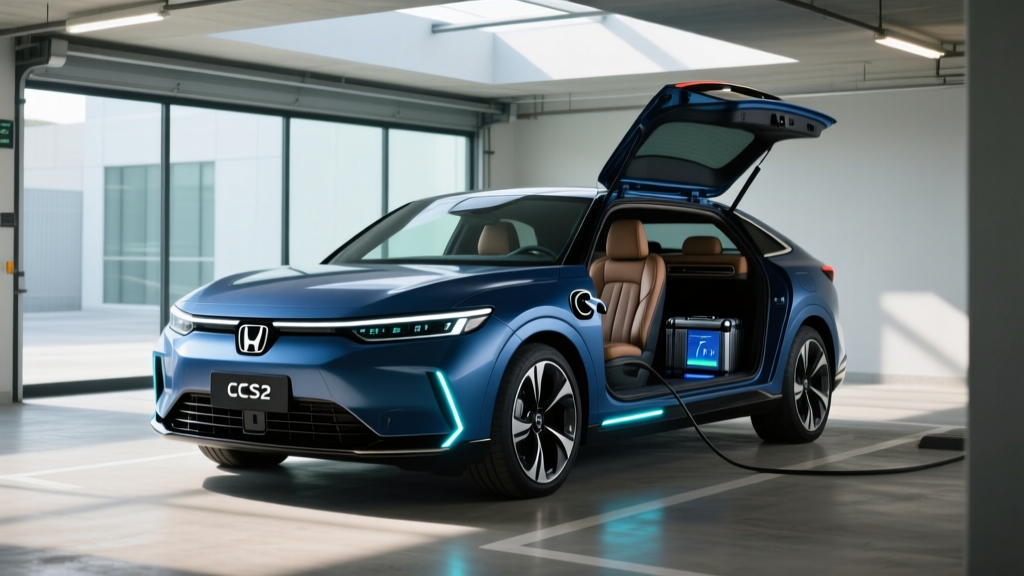
Honda's first volume-selling electric SUV leans hard into what Honda does best: packaging efficiency and everyday usability. The 2026 Honda Prologue, built on GM's Ultium platform (shared with the Chevrolet Blazer EV and Cadillac Lyriq), answers a specific question for Honda loyalists going electric — does it deliver the cargo flexibility, ride comfort, and straightforward controls the brand is known for? The answer is largely yes, with some notable compromises in charging speed and software execution that buyers should weigh before signing.
With up to 296 miles of EPA-estimated range (FWD Elite trim), competitive cargo volume, and a starting price that undercuts several rivals, the Prologue is positioned as the sensible family EV. But "sensible" in the EV space means scrutinizing the charge curve, the real-world highway range, and whether the federal tax credit actually applies to your household. Let's break it all down with exact numbers.
Honda Prologue Cargo Space and Interior Dimensions
The keyword that brought you here — Honda Prologue cargo space — deserves a precise answer. Honda has always been clever about interior packaging, and the Prologue continues that tradition on its Ultium skateboard.
| Measurement | Specification |
|---|---|
| Cargo volume (behind 2nd row) | 25.2 cu ft |
| Cargo volume (2nd row folded) | 57.7 cu ft |
| Front legroom | 41.4 in |
| Rear legroom | 38.6 in |
| Front headroom | 39.6 in |
| Rear headroom | 38.0 in |
| Frunk (front trunk) | None |
| Towing capacity (AWD, properly equipped) | 1,500 lbs |
Real-world interpretation: The 25.2 cu ft behind the second row is competitive with the Hyundai Ioniq 5 (27.2 cu ft) and slightly less than the Ford Mustang Mach-E (29.7 cu ft). However, the Prologue's cargo area is notably square and flat-floored, making it easier to slide in strollers, coolers, or luggage without fighting wheel-well intrusions. Fold the 60/40 split rear seats and the 57.7 cu ft maximum is genuinely useful for weekend trips or a Costco haul.
The lack of a frunk is a missed opportunity — the Ultium platform's motor packaging doesn't leave room up front. If you rely on a frunk for charging cables or a separate dirty-gear compartment (as Ioniq 5 owners do), you'll need to dedicate cargo space to that instead.
Rear-seat passengers get 38.6 inches of legroom, which is generous for the segment. Two adults on a long drive will have plenty of stretch room, and the flat floor (no transmission tunnel) means the middle seat is actually usable for a child or shorter adult.
Range, Battery, and Efficiency: What the EPA Doesn't Tell You
EPA estimate: 296 miles (FWD Elite) / 288 miles (AWD) / 273 miles (EX/EX-L AWD)
Real-world highway (70 mph, moderate temps): ~250–270 miles
Cold-weather (below 30°F, highway): ~210–240 miles
Highway driving at sustained speed and cold temperatures reduce range 10–25% from the EPA sticker. Plan charging stops accordingly.
The Prologue uses GM's 85 kWh usable Ultium battery pack with NMC (nickel manganese cobalt) chemistry. This is the same pack found in the Cadillac Lyriq and Chevrolet Blazer EV. NMC offers higher energy density than LFP (lithium iron phosphate), which is how Honda fits enough capacity for nearly 300 miles into a midsize SUV footprint — but it also means you should avoid routinely charging to 100% for daily driving. Honda recommends an 80% daily charge limit to preserve long-term battery health.
| Trim / Drivetrain | EPA Range | MPGe (Combined) | kWh/100 mi |
|---|---|---|---|
| EX FWD | 291 mi | 99 MPGe | 34 kWh |
| EX-L FWD | 291 mi | 99 MPGe | 34 kWh |
| Elite FWD | 296 mi | 101 MPGe | 33 kWh |
| EX AWD | 273 mi | 91 MPGe | 37 kWh |
| EX-L AWD | 273 mi | 91 MPGe | 37 kWh |
| Elite AWD | 288 mi | 95 MPGe | 35 kWh |
The Elite FWD trim achieves the best range and efficiency thanks to lighter weight (no rear motor) and low-rolling-resistance tires. The AWD penalty is roughly 18–23 miles of range depending on trim — reasonable for the traction and performance gain.
Data sourced from fueleconomy.gov.
Charging Speed: DC Fast, Level 2, and the Charge Curve
Charging is where the Prologue reveals its biggest competitive vulnerability. In a segment where rivals push 200–350 kW peak DC fast-charging rates, the Prologue tops out at 150 kW. Here's the full picture:
| Charging Method | Max Rate | Speed / Time |
|---|---|---|
| DC Fast Charge (peak) | 150 kW | 10–80% in ~34 minutes |
| DC Fast Charge (sustained avg, 10–80%) | ~95–110 kW | ~65 miles added in 10 min |
| Level 2 Home (240V, 48A) | 11.5 kW | ~32 miles per hour of charging |
| Level 1 (120V, 12A) | 1.4 kW | ~4 miles per hour |
What this means in practice: A 150 kW peak sounds adequate, but the Prologue's charge curve tapers early. You'll see 150 kW briefly in the 10–20% state-of-charge window, then the rate drops to roughly 110–120 kW through the mid-range before tapering further above 60%. The result is a 10–80% time of approximately 34 minutes — roughly 10–15 minutes slower than a Hyundai Ioniq 5 or Kia EV6 on the same 350 kW Electrify America stall.
For road trips, this means budgeting an extra bathroom-and-coffee stop's worth of time at each DC fast charger. For daily home charging on a Level 2 unit, the 11.5 kW onboard charger is perfectly adequate — a full overnight charge from 20% to 80% takes about 4.5 hours, which is standard for the class.
The Prologue uses the NACS (Tesla) connector for the 2026 model year, giving it native access to Tesla Supercharger stations (V3 and V4). This is a significant practical advantage over CCS-only vehicles, as the Supercharger network remains the most reliable DC fast-charging infrastructure in the U.S. Honda includes a NACS-to-CCS adapter in the unlikely event you need to use a legacy CCS station.
Performance and Drivetrain
| Spec | FWD | AWD |
|---|---|---|
| Horsepower | 212 hp | 288 hp |
| Torque | 236 lb-ft | 339 lb-ft |
| 0–60 mph | ~7.8 sec | ~6.1 sec |
| Drivetrain | Single-motor, front | Dual-motor |
| Top speed | 115 mph (electronically limited) | 115 mph |
The AWD dual-motor Prologue is genuinely quick. The 6.1-second 0–60 time puts it in the same territory as a VW ID.4 AWD and well ahead of the base RAV4 Hybrid. Throttle response is immediate and linear, as you'd expect from electric torque delivery. The FWD version, at 212 hp, feels adequate around town but can feel strained during highway merging with a full load — I'd recommend the AWD for anyone who regularly carries passengers or drives in rain/snow.
Ride quality is a Honda strength. The Prologue uses a multilink rear suspension that soaks up expansion joints and potholes with a maturity that some competitors (looking at you, Tesla Model Y) can't match. The trade-off is that the Prologue isn't a corner-carver — body roll is noticeable on twisty roads, and the steering is tuned for comfort, not feedback.
Pricing, Trims, and Federal Tax Credit Eligibility
| Trim | Drivetrain | MSRP (incl. destination) | Est. After §30D Credit* |
|---|---|---|---|
| EX | FWD | $48,795 | $41,295 |
| EX | AWD | $51,795 | $44,295 |
| EX-L | FWD | $51,095 | $43,595 |
| EX-L | AWD | $54,095 | $46,595 |
| Elite | FWD | $55,795 | $48,295 |
| Elite | AWD | $58,795 | $51,295 |
*"Est. After §30D Credit" assumes full $7,500 federal tax credit eligibility. Actual credit varies.
- MSRP cap: SUVs must be ≤$80,000 — all Prologue trims qualify.
- Buyer income cap: AGI must not exceed $150,000 (single), $225,000 (head of household), or $300,000 (joint).
- Battery sourcing: Critical minerals and battery components must meet phased-in percentage thresholds that tighten annually. Honda sources Ultium cells from the LG Energy Solution–GM joint venture (Ultium Cells) in the U.S., but critical-mineral sourcing is subject to annual IRS updates.
- Point-of-sale transfer: Eligible buyers can transfer the credit to the dealer at purchase for an immediate price reduction rather than waiting for tax filing.
- New vehicle requirement: Must be new, purchased for personal use, and primarily driven in the U.S.
Confirm current-year eligibility at IRS.gov or consult a tax professional before purchasing.
The Prologue's pricing places it squarely in the midsize electric SUV battleground. The EX FWD at $48,795 (roughly $41,295 after the credit) competes directly with the Hyundai Ioniq 5 SEL ($49,500) and the Ford Mustang Mach-E Select ($42,995). The Elite AWD at $58,795 pushes into premium territory where the Cadillac Lyriq and even the base BMW iX start to appear in cross-shopping.
Standard equipment on the EX is generous: 19-inch wheels, a 11.3-inch touchscreen with wireless Apple CarPlay and Android Auto, heated front seats, power liftgate, Honda Sensing ADAS suite, and a 6-speaker audio system. The EX-L adds leather, a power passenger seat, wireless phone charging, and a 12-speaker Bose system. The Elite tops the range with 21-inch wheels, a panoramic roof, ventilated front seats, heated rear seats, a head-up display, and a surround-view camera.
Tech, Driver Assists, and Notable Drawbacks
The Prologue runs Honda's latest infotainment interface on an 11.3-inch portrait-oriented touchscreen. Response times are improved over earlier Honda systems, and the Google Built-in integration (on Elite trim) provides native Google Maps navigation with real-time charger routing — a genuine advantage for road-trip planning. Wireless Apple CarPlay and Android Auto are standard across all trims.
The Honda Sensing ADAS suite includes:
- Adaptive cruise control with low-speed follow
- Lane-keeping assist and road-departure mitigation
- Collision mitigation braking
- Traffic sign recognition
- Blind-spot monitoring with rear cross-traffic alert
Honda Sensing is a SAE Level 2 driver-assistance system. It can manage steering, acceleration, and braking under certain conditions, but the driver must remain fully engaged, hands on or near the wheel, and eyes on the road at all times. This is not self-driving. It does not handle construction zones, unmapped roads, or severe weather autonomously.
Notable drawbacks:
- 150 kW peak DC charging is below the 200+ kW class standard and significantly slower than Hyundai/Kia's 800V architecture.
- No frunk — all storage is in the rear cargo area.
- Regenerative braking is mild even at the max setting; true one-pedal driving (coming to a complete stop without the brake pedal) is not available.
- Rear visibility is compromised by thick C-pillars; the surround-view camera (Elite only) is highly recommended.
- Towing is limited to 1,500 lbs (AWD only) — not suitable for boat or camper trailers.
Warranty and Battery Coverage
| Coverage | Term |
|---|---|
| Basic (bumper-to-bumper) | 3 years / 36,000 miles |
| Powertrain | 5 years / 60,000 miles |
| Battery (high-voltage) | 8 years / 100,000 miles |
| Battery capacity retention | Maintains ≥70% of original capacity during warranty term |
| Corrosion perforation | 5 years / unlimited miles |
| Roadside assistance | 3 years / 36,000 miles |
The 8-year/100,000-mile battery warranty with a 70% capacity retention floor is industry-standard and aligns with GM's Ultium coverage. For context, real-world Ultium pack degradation data from early Lyriq and Blazer EV owners suggests roughly 3–5% loss over the first 50,000 miles — well within the warranty threshold. NMC chemistry degrades somewhat faster than LFP when routinely charged to 100%, so the 80% daily limit recommendation matters for long-term health.
Who Should Buy the Honda Prologue?
- Honda loyalists transitioning from a CR-V or Passport who want familiar ergonomics and dealer relationships.
- Commuters and families who charge at home overnight and rarely road-trip more than 200 miles one-way.
- Two-car households where the Prologue handles daily duty and a gas/long-range vehicle covers road trips.
- Buyers who value ride comfort and low NVH over sporty handling.
- You road-trip frequently and need the fastest possible DC charging (consider Ioniq 5 or EV6).
- You need a frunk, one-pedal driving, or towing above 1,500 lbs.
- You want the latest Level 2+ hands-free driving tech (BlueCruise, Super Cruise).
How It Stacks Up Against Competitors
| Spec | Honda Prologue AWD | Hyundai Ioniq 5 AWD | Ford Mach-E AWD |
|---|---|---|---|
| EPA Range | 273–288 mi | 290 mi | 284 mi |
| Battery | 85 kWh NMC | 77.4 kWh NMC | 91 kWh NMC |
| Peak DC Charge | 150 kW | 238 kW | 150 kW |
| 10–80% DCFC Time | ~34 min | ~18 min | ~37 min |
| 0–60 mph | 6.1 sec | 5.1 sec | 5.5 sec |
| Cargo (rear seats up) | 25.2 cu ft | 27.2 cu ft | 29.7 cu ft |
| Starting MSRP (AWD) | $51,795 | $53,350 | $48,995 |
The Prologue trades outright range and charging speed for ride quality, Honda dealer support, and competitive pricing (especially after the tax credit). The Ioniq 5 wins on charging speed decisively. The Mach-E wins on cargo space and performance. The Prologue wins on comfort and simplicity.
Frequently Asked Questions
What is the real-world range of the Honda Prologue?
In mixed driving at moderate temperatures, expect 260–280 miles from the FWD Elite's 296-mile EPA rating. Sustained highway driving at 70+ mph drops that to roughly 250–270 miles. In freezing temperatures with cabin heat running, plan for 210–240 miles. The AWD models will run 15–20 miles less in each scenario.
How fast does the Honda Prologue charge at home and on the road?
At home on a 240V Level 2 charger (48 amps), the Prologue adds about 32 miles of range per hour — a full overnight session easily replenishes a day's driving. On a DC fast charger, it peaks at 150 kW and charges from 10% to 80% in approximately 34 minutes. That's competitive with the Mach-E but roughly 15 minutes slower than the Ioniq 5's 800V system.
How much does the Honda Prologue cost after tax credits?
If you qualify for the full $7,500 federal §30D credit (income within limits, vehicle meets battery-sourcing requirements), the EX FWD drops from $48,795 to roughly $41,295. The Elite AWD falls from $58,795 to about $51,295. Many states also offer additional rebates — check your state's energy office or AFDC state incentive database for local programs.
Is the Honda Prologue worth buying vs. the Ioniq 5 or Mach-E?
It depends on your priorities. If DC fast-charging speed and maximum cargo volume matter most, the Ioniq 5 and Mach-E win. If you prioritize ride comfort, Honda dealer familiarity, straightforward controls, and competitive post-credit pricing, the Prologue is a strong choice. It's not the spec-sheet leader, but it's an easy EV to live with daily.
Does the Honda Prologue qualify for the $7,500 federal EV tax credit?
All Prologue trims fall under the $80,000 SUV MSRP cap. The Ultium battery is manufactured in the U.S., which helps with the battery-component requirement. However, the critical-minerals sourcing threshold tightens each year under IRS §30D rules. Verify current-year eligibility before purchase, and confirm your AGI falls within the income caps ($150K single / $300K joint).
Does the Prologue have a frunk?
No. The Prologue does not include a front trunk. All cargo space (25.2 cu ft behind the second row, 57.7 cu ft with seats folded) is in the rear. This is a packaging consequence of the Ultium platform's front motor/subframe layout.
Can the Honda Prologue tow?
AWD models are rated for up to 1,500 lbs when properly equipped. FWD models are not rated for towing. This is sufficient for a small utility trailer or bike rack but not for campers, boats, or horse trailers.