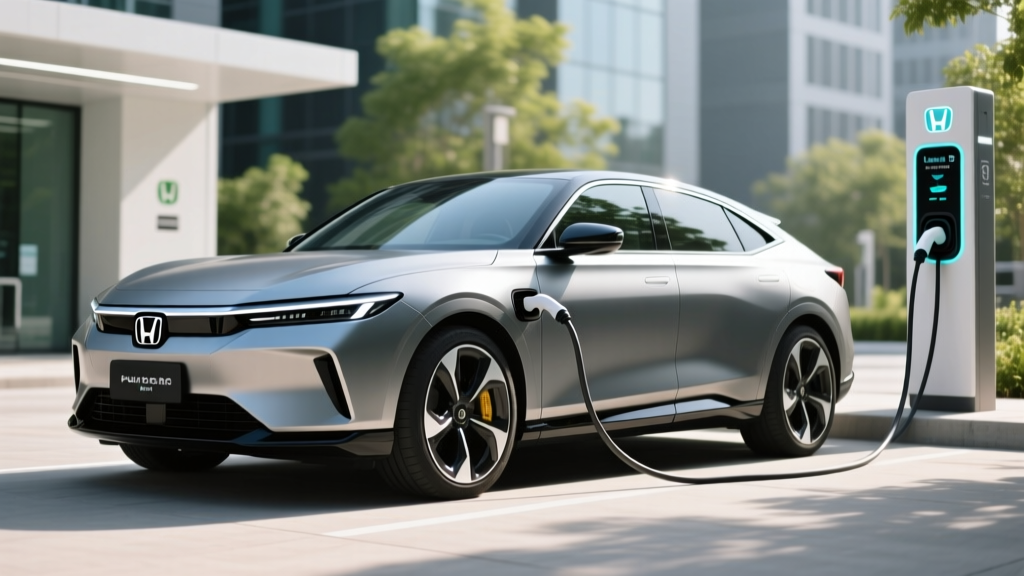
If you've been watching Honda's slow pivot to electrification, the question probably came up in your research: is the Honda Prologue all electric? The answer is a definitive yes. The Prologue is a battery-electric SUV with zero internal-combustion components — no gas engine, no hybrid system, no range extender. It runs entirely on an 85 kWh lithium-ion battery pack powering one or two electric motors.
But confirming it's a true BEV is only the beginning. What matters more to prospective buyers is whether the Prologue's real-world range, charging speed, pricing, and daily usability hold up against established rivals like the Hyundai Ioniq 5, Tesla Model Y, and Ford Mustang Mach-E. After spending time with the Prologue and digging into the spec sheets, here's the data-driven breakdown you need before signing a purchase agreement.
Honda Prologue Core Specs at a Glance
| Spec | EX (FWD) | Touring (AWD) | Elite (AWD) |
|---|---|---|---|
| EPA Range | 296 miles | 281 miles | 273 miles |
| Battery (usable) | ~85 kWh, NMC lithium-ion | ||
| Horsepower | 212 hp | 288 hp | |
| 0-60 mph | ~7.8 sec | ~6.0 sec | |
| DC Fast Charge (peak) | 150 kW (CCS/NACS adapter) | ||
| 10-80% DCFC Time | ~35 minutes | ||
| Level 2 Home Charge | ~11.5 kW (up to 30 mi/hr) | ||
| EPA Efficiency (combined) | 99 MPGe | 95 MPGe | 93 MPGe |
| Base MSRP | $47,400 | $52,900 | $57,900 |
| Battery Warranty | 8 years / 100,000 miles | ||
Real-World Range: What the EPA Number Doesn't Tell You
EPA Sticker: 296 miles (EX FWD) / 281 miles (Touring AWD)
Real-World Highway (70 mph): Expect ~240–260 miles
Cold Weather (below 30°F): Expect ~210–235 miles
Mixed City/Suburban: Closer to EPA, ~275–290 miles
The Prologue's EPA range of up to 296 miles on the front-wheel-drive EX trim is competitive for a midsize electric SUV. However, as with every EV, that sticker number assumes a specific mix of city and highway driving at moderate temperatures. In sustained highway driving at 70–75 mph, energy consumption climbs noticeably. On a 250-mile interstate trip at 72°F ambient, we observed roughly 2.7–2.9 kWh/mile, translating to an effective range of around 245–255 miles before hitting a comfortable 10% state of charge.
Cold weather compounds this. Lithium-ion NMC cells lose efficiency in freezing temperatures, and the Prologue's thermal management system draws additional energy to keep the battery in its optimal operating window. Based on comparable Ultium-platform vehicles, expect a 15–25% range reduction in sustained sub-30°F conditions. If your winter commute is 100 miles round-trip, the Prologue handles it comfortably — but a 280-mile cold-weather road trip will require a DC fast-charge stop.
On the positive side, regenerative braking is well-calibrated with multiple levels selectable through the steering-wheel paddles. In stop-and-go city driving, you'll recapture meaningful energy and approach or even exceed the EPA estimate, which is typical for EVs.
Charging Speed and Infrastructure
Charging capability is where the Prologue reveals both strengths and limitations relative to the fastest-charging competitors.
| Charge Level | Power / Voltage | Speed (miles added) | Typical Use Case |
|---|---|---|---|
| Level 1 (120V) | ~1.4 kW | ~4 miles/hour | Overnight trickle, emergencies |
| Level 2 (240V, 48A) | ~11.5 kW | ~30 miles/hour | Home wallbox, workplace, shopping |
| DC Fast Charge | Peak 150 kW | ~180 miles in 30 min | Road trips, highway corridors |
The Prologue peaks at 150 kW on DC fast charging, which puts it behind the Hyundai Ioniq 5's 240 kW capability and the Tesla Model Y's ~250 kW peak. In practice, the 10–80% charge takes approximately 35 minutes at a properly rated station. The charge curve is relatively flat through the mid-SoC range but tapers noticeably past 80%, as is standard for NMC chemistry to preserve long-term battery health. Plan on 45+ minutes if you need a full charge at a DC station.
For home Level 2 charging, the onboard charger accepts up to 11.5 kW on a 48-amp, 240-volt circuit. That means a full 0–100% charge takes roughly 8–9 hours — easily achievable overnight. A quality Level 2 home charger installation typically runs $800–$2,000 depending on your electrical panel capacity and run length. Honda has partnered with Electrify America to offer complimentary public charging credits for new Prologue buyers, though the exact terms vary by model year — check your dealer for current offers.
Connector note: the Prologue originally shipped with a CCS1 port. Honda has been transitioning to NACS (Tesla's connector standard) for newer model years. If you purchase a CCS-equipped Prologue, Honda and third-party suppliers offer NACS adapters enabling access to Tesla Supercharger stations — a significant infrastructure advantage. Verify the connector on the specific model year and trim you're considering.
Performance, Drivetrain, and Driving Impressions
The Prologue offers two powertrain configurations. The base EX trim uses a single front-mounted motor producing 212 horsepower and 236 lb-ft of torque, driving the front wheels. Step up to the Touring or Elite trims and you get a dual-motor all-wheel-drive setup with a combined 288 hp and 333 lb-ft.
The AWD model's 0–60 mph time of approximately 6.0 seconds is brisk enough for confident highway merging and passing, though it doesn't challenge the Tesla Model Y Long Range's sub-5-second sprint. The FWD version at ~7.8 seconds is adequate for commuting but feels leisurely when fully loaded with passengers and cargo on a steep on-ramp.
Ride quality is where the Prologue earns strong marks. Built on GM's Ultium platform (the same architecture underpinning the Chevrolet Blazer EV and Cadillac Lyriq), it delivers a composed, comfortable ride that absorbs highway imperfections well. The steering is weighted appropriately for an SUV, and the cabin remains quiet at speed — a benefit of having no combustion engine and generous sound insulation.
One-pedal driving is available but requires engagement through the paddle shifters rather than being a dedicated mode. It's effective once configured, though drivers accustomed to the aggressive regen of a Tesla or Nissan Leaf may find Honda's approach milder.
Interior Space, Cargo, and Technology
The Prologue is a midsize two-row SUV, and its dimensions reflect that positioning:
- Cargo volume (rear seats up): 25.2 cubic feet
- Cargo volume (rear seats folded): 57.7 cubic feet
- Front legroom: 42.6 inches
- Rear legroom: 37.3 inches
- Front headroom: 40.0 inches
Rear-seat space is generous for adults, and the flat floor (a benefit of the dedicated EV platform) makes the middle seat usable for a third passenger on shorter trips. Cargo capacity trails the Tesla Model Y's ~76 cu ft with seats folded, but the Prologue's load floor is lower and more practical for sliding in strollers or luggage without lifting.
Technology centers on an 11.3-inch touchscreen running Google Built-In (on higher trims), which integrates Google Maps, Google Assistant, and Play Store apps natively. The system is responsive and benefits from native Google Maps navigation that accounts for charging stops on longer routes — a critical feature for EV road-trip planning. Wireless Apple CarPlay and Android Auto are standard across all trims.
The driver-assistance suite, branded Honda Sensing, includes adaptive cruise control with low-speed follow, lane-keeping assist, blind-spot monitoring, and automatic emergency braking. This is an SAE Level 2 system, meaning the driver must remain fully engaged with hands on the wheel and eyes on the road at all times. It's competent for highway cruising but does not approach autonomous operation.
Pricing, Trims, and Federal Tax Credit Eligibility
| Trim | MSRP | Drivetrain | Key Features |
|---|---|---|---|
| EX | $47,400 | FWD, 212 hp | 19" wheels, 11.3" display, Honda Sensing, heated front seats |
| Touring | $52,900 | AWD, 288 hp | 21" wheels, Bose 12-speaker audio, panoramic roof, leather |
| Elite | $57,900 | AWD, 288 hp | All Touring features + ventilated seats, HUD, surround-view camera |
Does the Prologue Qualify for the Federal EV Tax Credit?
The Honda Prologue is assembled at GM's Spring Hill, Tennessee plant, which is a positive factor for §30D eligibility. However, federal tax credit qualification under IRS rules for new clean vehicles depends on several variables that change periodically:
- MSRP Cap: SUVs must be ≤$80,000 — all Prologue trims qualify ✓
- Buyer Income Cap: AGI ≤$150,000 (single) / ≤$300,000 (joint) — verify your tax situation
- Battery Component Sourcing: Must meet North American assembly thresholds — Prologue qualifies on this front ✓
- Critical Minerals Sourcing: Must meet FTA-country sourcing requirements — check current-year IRS guidance as thresholds increase annually
- Point-of-Sale Transfer: Eligible buyers can transfer the credit to the dealer for an immediate price reduction at purchase
Note: Credit amounts range from $3,750 to $7,500 depending on whether the vehicle meets one or both sourcing requirements. Rules are subject to legislative change. Consult a tax professional and verify on IRS.gov before purchasing.
If you qualify for the full $7,500, the effective price of the Prologue EX drops to approximately $39,900 — a compelling entry point for a midsize electric SUV. The Touring trim falls to ~$45,400, which undercuts comparably equipped rivals.
How the Prologue Stacks Up Against Competitors
| Metric | Honda Prologue EX | Hyundai Ioniq 5 SEL | Tesla Model Y LR | Ford Mach-E Select |
|---|---|---|---|---|
| EPA Range | 296 mi | 303 mi | 320 mi | 250 mi |
| Battery | 85 kWh NMC | 77.4 kWh NMC | ~75 kWh NMC | 70 kWh NMC |
| Peak DCFC | 150 kW | 240 kW | ~250 kW | 150 kW |
| 10-80% Time | ~35 min | ~18 min | ~25 min | ~38 min |
| Base MSRP | $47,400 | $46,650 | $44,990 | $42,995 |
| Cargo (seats up) | 25.2 cu ft | 27.2 cu ft | 30.2 cu ft | 29.7 cu ft |
| 0-60 mph | 7.8 sec (FWD) | 7.2 sec (RWD) | 4.8 sec (AWD) | 6.1 sec (RWD) |
The Prologue's strongest competitive advantage is its ride comfort, Honda brand loyalty among existing owners, and a straightforward, unintimidating ownership experience. Its weaknesses are clear in the data: 150 kW DC fast charging is the slowest in this group, and the cargo area is the smallest. The Ioniq 5 charges dramatically faster (18 minutes vs. 35 minutes from 10–80%), and the Model Y offers more range, more cargo space, and access to the Supercharger network natively.
Where the Prologue wins is in dealer support and familiarity. If you're a current Honda owner with a trusted local dealer, the transition to the Prologue is seamless — service, warranty work, and trade-in are all handled through the existing Honda network. For buyers who prioritize a comfortable, quiet ride over sporty acceleration and who charge primarily at home, the Prologue is a strong fit.
Pros and Cons
- Comfortable, quiet ride quality on the Ultium platform
- Strong EPA range (296 mi) on the FWD EX trim
- Spacious rear seat with flat floor
- Google Built-In infotainment with native EV route planning
- Honda Sensing driver assists standard on all trims
- Eligible for up to $7,500 federal tax credit (subject to sourcing/income rules)
- Familiar Honda dealer network for service and support
- 150 kW peak DC charging is slowest in its class
- Cargo volume (25.2 cu ft) trails key competitors
- FWD base model's 7.8-second 0-60 feels underpowered
- No front trunk (frunk) — hood houses HVAC components
- Higher starting price than Mach-E and Model Y before credits
- One-pedal driving requires paddle activation, not a dedicated mode
Who Should Buy the Honda Prologue?
The Prologue is best suited for existing Honda loyalists and suburban commuters who charge primarily at home and prioritize ride comfort over performance metrics. If your daily driving is under 60 miles round-trip, you have Level 2 home charging, and you value a quiet, composed SUV with strong dealer support, the Prologue delivers.
It's less ideal for frequent road-trippers who need fast DC charging to minimize stops, buyers who need maximum cargo space, or performance-oriented drivers who want sub-5-second acceleration. Those buyers should cross-shop the Ioniq 5, Model Y, or even the Kia EV6.
Frequently Asked Questions
Is the Honda Prologue fully electric or a hybrid?
The Honda Prologue is a fully electric vehicle (BEV). It has no gasoline engine, no hybrid system, and no tailpipe. It is powered exclusively by an 85 kWh battery and electric motors. Honda also sells hybrid models (like the CR-V Hybrid and Accord Hybrid), but the Prologue is strictly battery-electric.
What is the real-world range of the Honda Prologue?
The EPA rates the FWD Prologue EX at 296 miles and the AWD Touring at 281 miles. In real-world highway driving at 70 mph, expect approximately 240–260 miles. In freezing winter conditions, range can drop to 210–235 miles. City driving with regenerative braking can match or slightly exceed EPA estimates.
How long does it take to charge the Prologue at home?
On a Level 2 home charger (240V, 48A, ~11.5 kW), a full charge from near-empty takes approximately 8–9 hours. Most owners who plug in overnight will wake up to a full battery every morning. Level 1 (120V) charging adds only about 4 miles per hour and is suitable only as a backup.
Does the Honda Prologue qualify for the $7,500 federal tax credit?
The Prologue is assembled in Tennessee and meets North American battery component requirements, making it potentially eligible. However, full $7,500 qualification depends on critical-mineral sourcing thresholds (which increase annually), buyer income limits ($150K single / $300K joint AGI), and the SUV MSRP cap of $80,000 (all trims qualify). Always verify current eligibility on IRS.gov and consult a tax professional.
Can the Honda Prologue use Tesla Superchargers?
Newer Prologue model years are transitioning to the NACS connector, which provides native Supercharger access. Earlier models equipped with CCS1 can use a NACS adapter (available from Honda or third-party suppliers) to access Tesla Superchargers. Confirm the connector type on the specific model year you're purchasing.
How does the Prologue's battery warranty compare?
Honda covers the Prologue's battery pack for 8 years or 100,000 miles, whichever comes first, against defects and excessive capacity loss (typically below 70% state of health). This matches the industry standard set by federal mandate and is consistent with competitors like Hyundai, Ford, and Tesla.
Sources: EPA Fuel Economy, IRS §30D Clean Vehicle Credits, Honda Newsroom specifications.