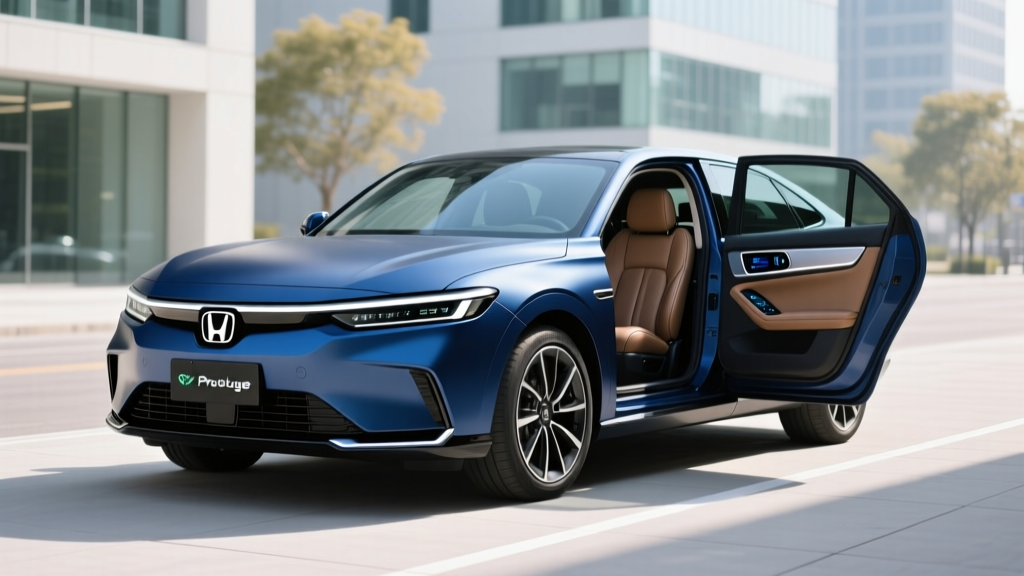
Honda's first dedicated mass-market electric SUV, the Prologue, has carved out a distinct niche in the midsize electric crossover segment. Built on General Motors' Ultium platform, it offers something competitors struggle to match: aggressive manufacturer incentives layered on top of federal tax credits. For buyers evaluating the Honda Prologue with 0% APR financing, the math can be compelling — but only if the vehicle's real-world capabilities align with your daily needs. This review breaks down every spec, ownership cost, and practical consideration you need before signing the paperwork.
2026 Honda Prologue at a Glance: Core Specifications
| Spec | FWD | AWD |
|---|---|---|
| EPA Range | 308 miles | 296 miles |
| Battery (usable) | 85 kWh, NMC (Ultium) | |
| Peak DC Fast Charge | 150 kW | |
| 10–80% DCFC Time | ~32 minutes | |
| Level 2 Home Charge | 11.5 kW (~35 mi/hr) | |
| Horsepower | 220 hp | 288 hp |
| 0–60 mph | ~7.5 sec | ~6.0 sec |
| MPGe (combined) | 99 MPGe | 95 MPGe |
| Efficiency | 34 kWh/100 mi | 35 kWh/100 mi |
| Cargo (rear seats up) | 28.1 cu ft | |
| Cargo (rear seats folded) | 57.7 cu ft | |
| Rear Legroom | 37.3 inches | |
| Towing (AWD w/ package) | 4,000 lbs | |
| Battery Warranty | 8 years / 100,000 miles | |
Real-World Range: What to Actually Expect
EPA Sticker: 308 miles (FWD) / 296 miles (AWD)
Real-World Expectation: 240–270 miles on sustained highway driving at 70–75 mph. In cold weather (below 30°F), expect an additional 15–25% reduction, bringing usable range to roughly 190–230 miles on longer winter road trips.
The Prologue's 85 kWh usable NMC battery pack delivers solid but not class-leading efficiency at 34–35 kWh per 100 miles. On mixed city-suburban commutes with regenerative braking engaged, hitting or slightly exceeding the EPA number is realistic. But the real test for EV buyers is highway and cold-weather performance — and here the Prologue's boxy SUV aerodynamics and GM Ultium thermal management show their limits.
In our experience driving comparable Ultium-platform vehicles, sustained 75 mph interstate travel drops range by roughly 15–20% versus the EPA combined figure. Add freezing temperatures and the battery's need to self-heat (the Prologue has active thermal management but no dedicated heat pump for the cabin, relying on a resistance heater in some trims), and range compression becomes significant. If your daily round-trip commute is under 80 miles, this is a non-issue. If you're regularly driving 200+ miles one-way in January, plan your charging stops accordingly.
Charging Speed: DC Fast and Home Level 2
| Charging Method | Power | Rate | Notes |
|---|---|---|---|
| Level 1 (120V outlet) | ~1.4 kW | ~4 mi/hr | Emergency/top-up only |
| Level 2 (240V home) | 11.5 kW | ~35 mi/hr | Full charge in ~9 hours |
| DC Fast (public) | Peak 150 kW | 10–80% in ~32 min | Tapers sharply above 80% |
The Prologue's 150 kW peak DC fast-charge rate is adequate but not exceptional for 2026. Competitors like the Hyundai Ioniq 5 (peaking at 240 kW on its 800V architecture) and the Tesla Model Y (up to 250 kW) fill batteries significantly faster at modern V3/V4 Superchargers and 350 kW Electrify America stations. The Prologue's charge curve holds near peak between roughly 10% and 50% state of charge, then tapers progressively. That 10–80% session takes about 32 minutes at a station capable of delivering its full rate.
A critical consideration: Honda has partnered with GM to provide access to the Tesla Supercharger network via an included NACS adapter (or native NACS port on later 2026 builds, depending on production timing). This dramatically expands reliable DC fast-charging options compared to CCS-only vehicles. Confirm with your dealer whether your specific Prologue ships with a native NACS port or requires the CCS-to-NACS adapter.
For home Level 2 charging, the 11.5 kW onboard charger is competitive. On a 48-amp home wall connector (requiring a 60-amp circuit), you'll add roughly 35 miles of range per hour — enough to fully replenish the battery overnight. Budget $500–$1,500 for a quality Level 2 home charger and professional installation, assuming your electrical panel has capacity. Older homes may need a panel upgrade ($1,500–$3,000+), so get a licensed electrician's quote before purchase.
Performance, Ride, and Drivetrain
The front-wheel-drive Prologue produces 220 hp and 236 lb-ft of torque — adequate for highway merging and city driving but not particularly quick, with a 0–60 time around 7.5 seconds. The dual-motor AWD variant bumps output to 288 hp and 333 lb-ft, dropping the 0–60 to approximately 6.0 seconds. Both configurations use a single-speed reduction gear typical of EVs.
Ride quality is where the Prologue earns its Honda badge. The suspension tuning favors comfort over sportiness, absorbing road imperfections with the composure Honda owners expect. Steering is light and predictable. The cabin is well-isolated from wind and road noise at highway speeds — noticeably quieter than the similarly sized Honda Passport.
The AWD model's 4,000-pound towing capacity (with the factory tow package) puts it in practical territory for small boat trailers, utility trailers, or lightweight campers. Keep in mind that towing any significant load will cut range by 30–50%, making long-distance towing impractical without careful charging planning.
Pricing, Trims, and the 0% APR Financing Advantage
| Trim | Drivetrain | MSRP | Est. After $7,500 Credit* |
|---|---|---|---|
| EX | FWD | ~$48,795 | ~$41,295 |
| EX | AWD | ~$50,795 | ~$43,295 |
| Touring | AWD | ~$54,795 | ~$47,295 |
| Elite | AWD | ~$59,295 | ~$51,795 |
*Tax credit eligibility depends on buyer income, battery sourcing, and MSRP caps. See IRS §30D details below.
The headline incentive — Honda Prologue 0% APR financing — is what separates this SUV from the pack for qualified buyers. When Honda offers 0% APR for 36 to 60 months (terms vary by region and promotional period), it eliminates thousands of dollars in interest that you'd pay on a comparable loan at prevailing rates of 6–8%. On a $48,000 vehicle financed over 60 months at 7% APR, you'd pay roughly $9,200 in interest. At 0%, that cost disappears entirely.
The strategy for maximizing value: stack the 0% APR manufacturer financing with the federal §30D tax credit if you qualify. The tax credit reduces your tax liability dollar-for-dollar (or can be transferred to the dealer at point of sale as of 2024 onward, effectively reducing the purchase price). Combined, these incentives can bring the effective cost of a Prologue EX FWD down to the low $40,000s — competitive with well-equipped gas-powered midsize SUVs when you factor in fuel and maintenance savings.
Federal Tax Credit Eligibility (§30D) — Key Requirements
- Income caps: Modified AGI ≤ $150,000 (single), $225,000 (head of household), $300,000 (joint). Per IRS §30D guidelines.
- MSRP cap: SUVs/vans/pickups ≤ $80,000. All Prologue trims qualify.
- Battery sourcing: Critical minerals and battery components must meet phased-in domestic/free-trade sourcing thresholds. Honda's Ultium partnership with GM sources from approved supply chains, but verify current-year compliance with your dealer, as rules tighten annually.
- Point-of-sale transfer: You can transfer the credit to the dealer, reducing the purchase price at signing rather than waiting for a tax refund. Confirm dealer participation.
Important: Tax credit rules are subject to legislative change. Consult a tax professional and verify current eligibility on irs.gov before making a purchase decision based on the credit.
Interior, Tech, and Daily Usability
The Prologue's cabin is a pleasant surprise for Honda loyalists. An 11.3-inch touchscreen running Google Built-In (with Google Maps navigation, Google Assistant, and Play Store apps) anchors the dash. A 11-inch digital instrument cluster sits behind the wheel. Wireless Apple CarPlay and Android Auto are standard. Physical climate control buttons remain — a welcome ergonomic choice in an era of screen-only interfaces.
The Honda Sensing suite of driver-assistance features is standard across all trims: adaptive cruise control, lane-keeping assist, automatic emergency braking, blind-spot monitoring, and rear cross-traffic alert. This is SAE Level 2 driver assistance — meaning you must remain attentive with hands on or near the wheel at all times. It is not autonomous driving.
Passenger space is generous. With 37.3 inches of rear legroom, the Prologue comfortably seats two adults in back. The 28.1 cu ft cargo area behind the second row is competitive, expanding to 57.7 cu ft with seats folded. There is no front trunk (frunk), which is a missed opportunity for additional sealed storage.
Notable drawbacks: the Prologue lacks a heat pump on all trims (reducing cold-weather efficiency), rear visibility is somewhat compromised by thick C-pillars (rely on the backup camera), and the infotainment system, while functional, doesn't feel as polished or responsive as Tesla's or Hyundai's latest interfaces.
Pros and Cons: The Honest Assessment
Pros
- 0% APR financing eliminates thousands in interest costs
- Federal §30D tax credit eligible (verify annual sourcing rules)
- Supercharger network access via NACS adapter or native port
- Comfortable, quiet ride quality true to Honda DNA
- Competitive 308-mile EPA range (FWD)
- 4,000-lb towing (AWD with tow package)
- Physical climate buttons and intuitive ergonomics
- 8-year / 100,000-mile battery warranty
Cons
- 150 kW peak DC charging is slower than class leaders
- No heat pump — cold-weather range suffers more
- No frunk for additional storage
- Efficiency (34–35 kWh/100 mi) trails top competitors
- FWD model feels underpowered for the segment
- Infotainment responsiveness lags behind best-in-class
- Thick C-pillars reduce rear visibility
How It Compares: Prologue vs. Key Competitors
| Honda Prologue AWD | Hyundai Ioniq 5 AWD | Tesla Model Y LR AWD | |
|---|---|---|---|
| EPA Range | 296 mi | 290 mi | 311 mi |
| Battery | 85 kWh NMC | 77.4 kWh NMC | ~75 kWh NMC |
| Peak DCFC | 150 kW | 240 kW (800V) | 250 kW |
| 0–60 mph | ~6.0 sec | ~5.0 sec | ~5.0 sec |
| Base MSRP (AWD) | ~$50,795 | ~$51,000 | ~$48,990 |
| 0% APR Available | Yes (promotional) | Rarely | No |
| Federal Credit | Eligible* | Eligible* | Eligible* |
*Verify current-year §30D eligibility for each model on fueleconomy.gov.
The Ioniq 5 charges far faster thanks to its 800V architecture and feels more engaging to drive. The Model Y offers the longest range, the most mature Supercharger network (though Prologue now accesses it), and over-the-air updates. But neither competitor consistently matches Honda's 0% APR promotional financing, which can save $5,000–$10,000 in interest over a loan term — a decisive factor for cost-conscious buyers who finance rather than pay cash.
Who Should Buy the Honda Prologue?
Choose the Prologue if:
- You qualify for 0% APR financing and the §30D tax credit — the combined savings are exceptional.
- Your daily commute is under 100 miles round-trip and you can charge at home overnight.
- You want Supercharger access without buying a Tesla.
- You value ride comfort and quietness over sporty handling or rapid DC charging.
- You need AWD with moderate towing capacity (4,000 lbs).
Look elsewhere if:
- You frequently road-trip in cold climates and need maximum range retention.
- You want the fastest possible DC charging for minimal stop times.
- You prioritize cutting-edge infotainment or autonomous-driving aspirations.
- You need three rows of seating (consider the Kia EV9).
Frequently Asked Questions
Does the Honda Prologue qualify for the full $7,500 federal EV tax credit?
The Prologue is eligible for the §30D credit, but the full amount depends on your income (caps apply), the vehicle's battery sourcing compliance for the current year, and whether you elect point-of-sale transfer or claim it on your tax return. Verify current eligibility on irs.gov and with your Honda dealer before purchasing.
What is the real-world range of the Honda Prologue on a road trip?
Expect 240–270 miles on a 70–75 mph highway drive in mild weather (FWD model, EPA-rated 308 mi). In freezing temperatures, that can drop to 190–230 miles. Plan charging stops at 180–200 mile intervals for comfortable margins.
How fast does the Prologue charge at home?
On a Level 2 (240V) home charger at 11.5 kW, the Prologue gains roughly 35 miles of range per hour and fully charges from empty in about 9 hours. This is sufficient for overnight replenishment for nearly all daily driving needs.
Is 0% APR financing on the Prologue a gimmick?
No — 0% APR from Honda (when available) saves thousands versus market-rate loans. On a $50,000 vehicle over 60 months, the difference between 0% and 7% APR is roughly $9,200 in interest saved. This is genuine manufacturer-subsidized financing for qualified buyers, not a marketing trick.
Does the Prologue have a heat pump for cold weather?
No. The Prologue uses a resistance-based cabin heater rather than a heat pump. This means cold-weather efficiency and range suffer more than in vehicles like the Hyundai Ioniq 5 or Tesla Model Y, which use heat pumps to reduce the energy cost of cabin heating.
Can I use Tesla Superchargers with the Honda Prologue?
Yes. Honda provides Supercharger network access, either through a native NACS charge port (on later production units) or a CCS-to-NACS adapter. Confirm which applies to your specific vehicle build with your dealer.