Quick Answer: Does a Honda Insight Electric Crossover Exist?
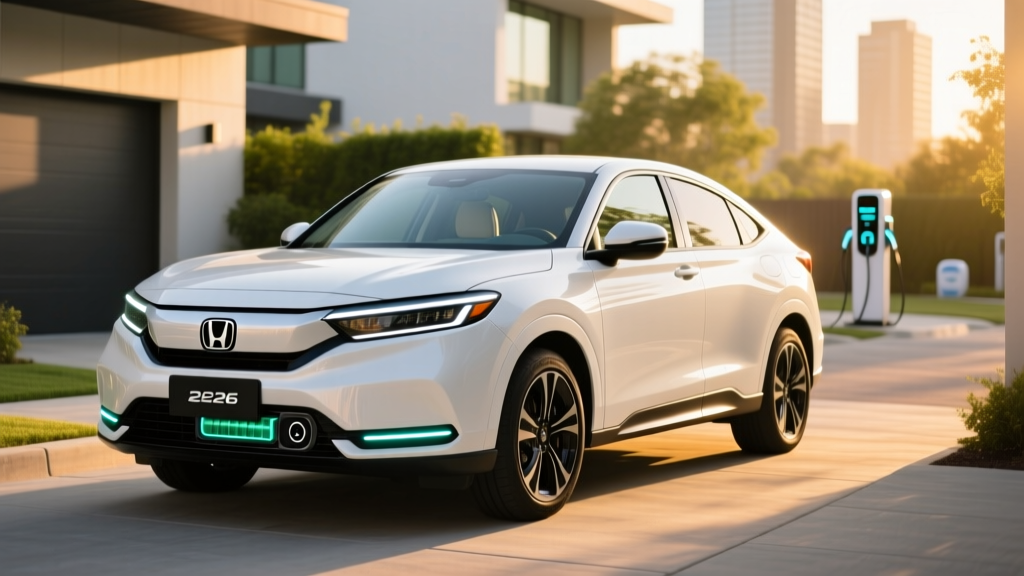
As of early 2026, Honda does not sell a vehicle officially badged as a "Honda Insight electric crossover" in the United States. The Insight nameplate was retired after the 2022 model year, when it was a compact hybrid sedan — never a crossover, and never a battery-electric vehicle (BEV). Honda's current electrified crossover lineup in the U.S. consists of the Honda Prologue (a fully electric midsize crossover with up to 296 miles of EPA range, starting around $47,400) and the hybrid CR-V Hybrid and Accord Hybrid. If you've seen references to a "Honda Insight EV," they are either speculative, mislabeled, or referring to Honda's European e:Ny1, which is not sold in North America.
Below, we map what buyers searching for a Honda Insight electric crossover are actually looking for — an efficient, affordable, Honda-badged electrified crossover — and compare the real options available in 2026 with hard numbers on range, charging, cost, and ownership.
What Happened to the Honda Insight?
The Honda Insight was one of the first mass-market hybrids in the U.S., originally launched as a two-seat subcompact in 1999 and later revived as a Civic-based sedan. Honda discontinued the Insight after the 2022 model year, folding its hybrid technology into the Civic Hybrid lineup. At no point was the Insight offered as a crossover/SUV, and Honda never produced a battery-electric version. The search term "Honda Insight electric crossover" likely stems from confusion with three overlapping trends:
- Honda's EV rebranding: Honda has signaled it may revive heritage nameplates for new EVs, leading to speculation that the Insight badge could return on an electric crossover.
- The Prologue's existence: Honda's actual electric crossover (the Prologue) fills the role a buyer imagining an "Insight EV" would want.
- European e:Ny1: Honda sells a compact electric crossover called the e:Ny1 in Europe and Asia, built on the e:N Architecture F platform. It is not EPA-certified or available in the U.S.
If Honda does revive the Insight name for a future EV, it has not been announced for the U.S. market as of this writing. Any specs circulating online are speculative.
Honda's Real 2026 Electric Crossover: The Prologue
Since the "Insight electric crossover" doesn't exist, the closest real product is the 2026 Honda Prologue, which carries over the powertrain and platform introduced for its 2024 debut on GM's Ultium architecture. Here are the exact figures:
| Spec | 2026 Honda Prologue FWD | 2026 Honda Prologue AWD |
|---|---|---|
| EPA Range | 296 mi | 281 mi |
| Battery (usable) | 85 kWh, NMC lithium-ion | 85 kWh, NMC lithium-ion |
| Motor Output | 212 hp / 236 lb-ft | 288 hp / 325 lb-ft |
| 0-60 mph | ~7.2 sec | ~5.9 sec |
| DC Fast Charge (peak) | 150 kW | 150 kW |
| 10-80% DC Time | ~35 min | ~35 min |
| Level 2 Charge Rate | 11.5 kW (48A) | 11.5 kW (48A) |
| MPGe (combined) | 99 MPGe | 93 MPGe |
| Base MSRP (EX) | $47,400 | $50,400 |
| Battery Warranty | 8 yr / 100,000 mi | 8 yr / 100,000 mi |
Real-World Range Reality Check
The Prologue's 296-mile EPA figure assumes mixed city/highway driving at moderate temperatures. Expect ~235-260 miles on sustained highway trips at 70-75 mph due to higher aerodynamic drag. In sub-freezing winter conditions (20-30°F), plan for 20-30% range reduction — roughly 210-240 miles from a full charge — even with the Prologue's heat pump. If your commute is under 60 miles round-trip and you charge at home, this is a non-issue; for road-trip-heavy buyers, the 35-minute 10-80% DC charge time means planning one stop every 200-220 miles to stay in the fast-charging sweet spot.
EV vs. Hybrid: Prologue vs. CR-V Hybrid Cost Comparison
Many shoppers cross-shopping a hypothetical Insight electric crossover are also considering the CR-V Hybrid, which starts at roughly $35,400 and delivers 40 MPG combined. Here's a five-year ownership comparison assuming 15,000 miles/year, a national average electricity rate of $0.16/kWh, and regular unleaded at $3.40/gallon:
| Cost Factor | 2026 Prologue FWD | 2026 CR-V Hybrid AWD |
|---|---|---|
| MSRP (base) | $47,400 | $36,500 |
| Federal Tax Credit (§30D) | Up to $7,500* | $0 |
| Effective Purchase Price | ~$39,900 | $36,500 |
| Annual Fuel/Energy Cost | ~$540 (home charging) | ~$1,275 (gasoline) |
| 5-Year Fuel/Energy Total | ~$2,700 | ~$6,375 |
| 5-Year Maintenance (est.) | ~$1,500 | ~$2,800 |
| 5-Year Total Cost (purchase + fuel + maint.) | ~$44,100 | ~$45,675 |
*§30D federal tax credit eligibility depends on your adjusted gross income (single: ≤$150K; joint: ≤$300K), the vehicle's MSRP cap ($80K for SUVs), and battery critical-mineral/component sourcing requirements that tighten annually. The Prologue has qualified for the full credit via point-of-sale transfer at participating dealers, but verify current eligibility on IRS.gov before purchasing.
The Prologue achieves rough cost parity with the CR-V Hybrid over five years when the full $7,500 credit applies. Without the credit, the Prologue costs approximately $5,000-7,000 more to own over the same period. The breakeven point extends further if you cannot install a home Level 2 charger and must rely on public DC fast charging, which averages $0.35-$0.48/kWh — roughly doubling the Prologue's energy cost to $1,000-$1,200 annually.
What First-Time EV Buyers Must Know Before Purchasing
If the Prologue (or a future Honda EV) is your first electric vehicle, these ownership realities are not optional footnotes — they determine whether EV ownership is convenient or frustrating:
Home Charging Access Is the Deciding Factor
A Level 2 home charger (240V, 11.5 kW on the Prologue) adds roughly 35-37 miles of range per hour of charging. An overnight session (8-10 hours) fully replenishes the battery. Installation costs range from $500-$1,500 if your electrical panel has spare capacity, or $2,000-$4,000+ if you need a panel upgrade to 200A. Without home charging, daily EV ownership means planning public-charging stops, which adds 30-45 minutes to your week minimum.
kW vs. kWh: Don't Confuse Power and Energy
The Prologue's battery holds 85 kWh of energy (the "tank size"). Its DC fast-charging rate peaks at 150 kW (the "pump speed"). Peak rate is not sustained — the Prologue charges at 150 kW only between roughly 10-40% state of charge, then tapers progressively. That's why the 10-80% time is ~35 minutes rather than the theoretical ~24 minutes you'd get at sustained peak. This charge-curve taper is physics, not a defect.
Cold Weather Range Loss Is Real
Lithium-ion batteries lose efficiency in cold temperatures, and cabin heating draws significant energy. Expect 20-30% range reduction below freezing. The Prologue includes a heat pump (more efficient than resistive heating), which mitigates but does not eliminate this loss. If you live in northern climates and regularly drive more than 180 miles in winter, plan for mid-route charging.
Insurance Premiums Are Typically Higher
EV insurance averages 15-25% more than equivalent gas vehicles due to higher repair costs for battery and structural components. Budget an extra $200-$500/year over a comparable CR-V. Shop quotes before purchasing — some insurers have EV-specific discounts.
Common Misconceptions About Honda's EV Lineup
| Myth | Fact |
|---|---|
| "The Honda Insight is available as an electric crossover." | The Insight was discontinued in 2022 as a hybrid sedan. Honda's U.S. electric crossover is the Prologue. |
| "All EVs qualify for the $7,500 federal tax credit." | Eligibility requires meeting MSRP caps, buyer income limits, and battery-sourcing thresholds. Check IRS §30D rules for current requirements. |
| "EV batteries need replacing every 5 years." | Honda warranties the Prologue's battery for 8 years/100,000 miles against degradation below 70% capacity. Real-world data from similar NMC packs shows typical degradation of 8-12% over 100K miles. |
| "Public charging is always unreliable." | Reliability varies by network. Tesla Superchargers (now open to non-Tesla EVs via NACS adapter) and Electrify America's newer 350-kW stations show 90%+ uptime. Older CHAdeMO sites are less reliable. |
| "The Prologue is a Honda-engineered EV." | The Prologue uses GM's Ultium platform and battery. Honda's in-house EV platform (the 0 Series) debuts with new models expected in 2026-2027. |
Decision Framework: Which Honda Electrified Crossover Fits You?
Choose the Honda Prologue (BEV) If:
- You have reliable home Level 2 charging access (garage or driveway with 240V circuit)
- Your daily driving is under 150 miles and you take road trips fewer than 6 times per year
- You qualify for the full $7,500 federal tax credit (income and sourcing requirements met)
- You want zero tailpipe emissions and minimal routine maintenance (no oil changes, fewer brake replacements due to regenerative braking)
- You're comfortable planning 30-35 minute DC fast-charging stops on longer trips
Choose the CR-V Hybrid (HEV) If:
- You live in an apartment or lack access to home or workplace charging
- You regularly drive 300+ miles in a single trip through areas with sparse charging infrastructure
- Your budget is firm below $38,000 and you don't qualify for the EV tax credit
- You live in an extreme-cold climate where EV range loss would compromise your commute
- You want the simplicity of gas-station refueling with improved efficiency (40 MPG vs. a gas-only CR-V's 30 MPG)
Wait for Honda's 0 Series EVs If:
- You want a Honda-engineered (not GM-sourced) electric platform with thinner batteries and more interior space
- You're targeting 2027-2028 purchase timing and want next-gen solid-state-adjacent battery technology
- Honda announces a compact electric crossover under $40,000 that could carry a revived nameplate
2026 Federal Tax Credit: What You Actually Qualify For
The §30D Clean Vehicle Credit offers up to $7,500, split into two components: $3,750 for critical-mineral sourcing and $3,750 for battery-component manufacturing. As of 2026, battery components must be manufactured or assembled in North America at an 80% threshold, and critical minerals must be sourced from the U.S. or free-trade-agreement partners at an 80% threshold. The Prologue, built in Ohio with GM's Ultium battery, has generally met these requirements — but sourcing rules tighten each year, and eligibility can change mid-year.
- Buyer income cap: AGI ≤$150,000 (single), ≤$225,000 (head of household), ≤$300,000 (joint)
- Vehicle MSRP cap: ≤$80,000 for SUVs/crossovers (Prologue qualifies at ~$47,400-$53,000 depending on trim)
- Point-of-sale transfer: You can transfer the credit to the dealer at purchase, reducing your out-of-pocket cost immediately — but you must still meet income requirements when you file taxes, or you'll owe the credit back
- Final assembly: Must occur in North America (Prologue is assembled in Lordstown, OH)
Verify eligibility before signing: check the vehicle's VIN on the DOE's fueleconomy.gov tax credit tool and confirm with your tax professional.
Frequently Asked Questions
Will Honda ever make an Insight electric crossover?
Honda has not announced plans to revive the Insight nameplate for any vehicle, electric or otherwise. Honda's global EV strategy centers on its new 0 Series platform (debuting 2026-2027) and the existing Prologue for the U.S. market. If Honda does badge a future compact EV crossover with a heritage name, the Insight is a plausible candidate, but nothing is confirmed.
Is the Honda Prologue eligible for the $7,500 federal EV tax credit in 2026?
The Prologue has qualified for the full $7,500 credit through point-of-sale transfer at participating dealers. However, eligibility depends on your income, the vehicle's battery sourcing compliance at time of delivery, and MSRP thresholds. Always verify on IRS.gov and with your dealer before finalizing a purchase.
How does the Prologue's charging speed compare to competitors?
At 150 kW peak DC, the Prologue charges slower than the Hyundai Ioniq 5 (peak 240 kW, 10-80% in ~18 min) or the Tesla Model Y (peak 250 kW, 10-80% in ~15 min). The Prologue's 10-80% time of ~35 minutes is adequate for road trips but means longer stops. If fast charging is a priority, competitors on 800V architectures have a meaningful advantage.
Can I charge the Prologue at Tesla Superchargers?
Honda has committed to NACS (North American Charging Standard) adoption, and the Prologue can access Tesla Superchargers using an approved adapter. Honda's next-generation EVs (0 Series) will include native NACS ports. Confirm adapter compatibility with your dealer, as using non-approved adapters may void warranty coverage.
What is the real cost to charge a Prologue at home?
With the 85 kWh battery and a national average electricity rate of $0.16/kWh, a full charge costs approximately $13.60. Driving 15,000 miles per year at the Prologue's efficiency of ~34 kWh/100 mi requires about 5,100 kWh annually, or roughly $816/year — compared to ~$1,275/year for a CR-V Hybrid at 40 MPG and $3.40/gallon gas. Your actual cost depends on local utility rates, which range from $0.09/kWh (parts of the South) to $0.30+/kWh (California, Northeast).