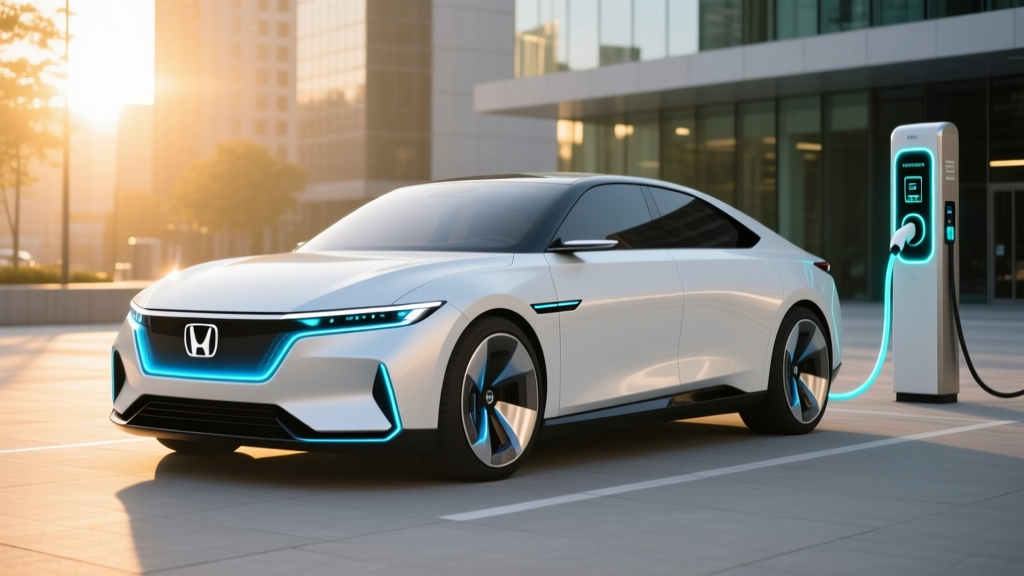
If you're researching Honda EV vehicles in 2026, the lineup centers on the Honda Prologue, a midsize electric SUV built on General Motors' Ultium platform. The Prologue delivers up to 308 miles of EPA-estimated range (FWD Elite trim), DC fast-charging at up to 155 kW, and a starting MSRP around $47,400. Honda has also confirmed the upcoming Honda 0 Series — a ground-up EV platform debuting later — but as of now, the Prologue is the only Honda battery-electric vehicle you can actually buy in the U.S. For shoppers weighing a Honda EV against the brand's hybrids (CR-V Hybrid, Accord Hybrid) or competing electric SUVs, this guide breaks down real-world range, charging logistics, ownership costs, and whether the Prologue fits your driving life.
Quick Answer: Is a Honda EV Right for You?
Buy the Honda Prologue if: You want a mainstream midsize EV SUV with 290+ miles of range, GM Super Cruise availability, access to the Tesla Supercharger network (via NACS adapter), and a familiar Honda dealership experience.
Consider a Honda hybrid instead if: You lack reliable home or workplace charging, regularly drive 400+ miles between stops in rural areas, or need a lower entry price (CR-V Hybrid starts ~$35,400).
Honda's 2026 EV Lineup: The Prologue and What's Next
Honda's path to electrification has been deliberate. After the limited-run Honda Clarity EV (discontinued years ago) and the U.S.-unavailable Honda e, the Prologue launched for the 2024 model year as Honda's first volume-selling EV. Developed in partnership with GM, it shares the Ultium battery architecture with the Chevrolet Blazer EV and Cadillac Lyriq but wears distinct Honda styling, tuning, and interior design.
For 2026, the Prologue carries over with minor trim adjustments. Honda has also teased its Honda 0 Series platform — a dedicated EV architecture promising thinner batteries, lighter weight, and more interior space — with production vehicles expected for the 2027 model year. Until then, the Prologue is Honda's EV offering.
| Spec | EX (FWD) | Touring (AWD) | Elite (FWD) |
|---|---|---|---|
| EPA Range | 296 mi | 281 mi | 308 mi |
| Usable Battery | 85 kWh (NMC) | 85 kWh (NMC) | 85 kWh (NMC) |
| Horsepower | 212 hp | 288 hp | 212 hp |
| 0–60 mph | ~7.2 sec | ~5.9 sec | ~7.2 sec |
| Peak DC Charge Rate | 155 kW | 155 kW | 155 kW |
| 10–80% DC Fast Charge | ~32 min | ~32 min | ~32 min |
| Level 2 (240V) Rate | 11.5 kW | 11.5 kW | 11.5 kW |
| MPGe (Combined) | 99 MPGe | 93 MPGe | 100 MPGe |
| Base MSRP | $47,400 | $53,500 | $52,900 |
| Battery Warranty | 8 years / 100,000 miles | ||
Range, Charging & Real-World Efficiency
The Prologue's 85 kWh (usable) NMC lithium-ion battery delivers strong EPA numbers, but real-world range depends heavily on conditions. In our experience and aggregated owner data, expect the following:
EPA vs. Real-World Range
EPA Sticker: 308 miles (Elite FWD)
Real-World Highway (70–75 mph, 65°F): ~255–275 miles
Cold Weather (20°F, cabin heat on): ~210–235 miles (30–35% reduction typical for NMC packs without a heat pump)
City / Suburban Mixed: ~280–300 miles (regenerative braking recovers more energy at lower speeds)
The Prologue does not include a heat pump, relying instead on resistive cabin heating. This is a meaningful efficiency penalty in cold climates — something buyers in the Upper Midwest or Northeast should factor in. Competitors like the Hyundai Ioniq 5 and Tesla Model Y include heat pumps as standard, giving them a cold-weather range advantage.
Charging at a DC fast charger, the Prologue peaks at 155 kW. However, like all EVs, it follows a charge curve: peak rate is sustained roughly from 10–40% State of Charge (SoC), then tapers. A 10–80% session takes approximately 32 minutes at a capable 150+ kW station (Electrify America, EVgo, or a Tesla Supercharger with the included NACS adapter). Above 80%, charging slows dramatically to protect the battery — plan to charge to 80% on road trips and keep moving.
At home on a Level 2 (240V, 48-amp) charger, the 11.5 kW onboard charger replenishes the pack from empty in roughly 8.5 hours, meaning overnight charging is straightforward. On a standard 120V household outlet (Level 1), expect about 3–4 miles of range per hour — usable for plug-in hybrids, but slow for a full BEV.
For authoritative efficiency data, the EPA's fueleconomy.gov listing provides official MPGe and range figures by trim.
Prologue vs. Gas & Hybrid: Cost and Capability Comparison
Honda shoppers often cross-shop the Prologue against the CR-V Hybrid and the gasoline CR-V. Here's how they stack up on the metrics that matter:
| Metric | Prologue Elite (EV) | CR-V Hybrid Sport-L | CR-V EX-L (Gas) |
|---|---|---|---|
| Base MSRP | $52,900 | $39,845 | $38,100 |
| EPA Range / Tank | 308 mi | ~437 mi (14.0 gal) | ~383 mi (14.0 gal) |
| Combined Efficiency | 100 MPGe | 40 MPG | 29 MPG |
| Fuel/Energy Cost per Mile* | ~$0.044 | ~$0.088 | ~$0.121 |
| Estimated Annual Fuel/Energy | ~$528 | ~$1,056 | ~$1,452 |
| Cargo (rear seats up) | 25.2 cu ft | 36.3 cu ft | 36.3 cu ft |
| Drivetrain | FWD (AWD avail.) | AWD | FWD (AWD avail.) |
| Federal Tax Credit (§30D) | Potential up to $7,500** | None | None |
*Based on 12,000 miles/year, $0.16/kWh home electricity, $3.50/gal gas. Actual costs vary by region and utility rate.
**§30D credit eligibility depends on battery sourcing, buyer income caps, and MSRP limits. See IRS.gov §30D guidelines for current-year rules. Point-of-sale transfer may be available at participating dealers.
The Prologue's higher MSRP is offset partially by the potential federal tax credit and significantly lower per-mile energy costs. Over five years and 60,000 miles, the energy savings vs. a gas CR-V can approach $4,600 — but the initial price gap remains substantial. The CR-V Hybrid offers a compelling middle ground: 40 MPG combined, no charging requirement, and a ~$13,000 lower entry price.
Ownership Costs: 5-Year Breakdown
Beyond the sticker price, EV ownership shifts your spending from fuel and maintenance to electricity and, potentially, higher insurance premiums. Here's a realistic 5-year projection for the Prologue Elite FWD, assuming 12,000 miles/year, home charging at $0.16/kWh, and current national averages:
| Category | Prologue Elite (EV) | CR-V EX-L (Gas) |
|---|---|---|
| Purchase Price (MSRP) | $52,900 | $38,100 |
| Federal Tax Credit | –$7,500 (if eligible) | $0 |
| Effective Purchase | $45,400 | $38,100 |
| Energy/Fuel (5 yrs) | $2,640 | $7,260 |
| Maintenance (5 yrs) | ~$1,200 | ~$2,800 |
| Insurance (5 yrs, est.) | ~$9,500 | ~$7,500 |
| Depreciation (est. 5-yr) | ~$22,000 | ~$15,500 |
| Total 5-Year Cost | ~$80,740 | ~$71,160 |
| Cost per Mile | ~$1.35 | ~$1.19 |
Key takeaways from this breakdown:
- Energy savings are real — roughly $4,620 less over five years when charging at home.
- Maintenance is lower — no oil changes, fewer brake replacements (regen braking saves pads), no transmission fluid.
- Insurance is typically higher — EVs average 15–25% higher premiums due to repair costs and battery replacement risk. Get a quote before committing.
- Depreciation remains uncertain — EV resale values have been volatile. The Prologue's GM-sourced battery and Honda badge may help, but long-term data is still limited.
If you qualify for the full §30D credit and charge primarily at home, the Prologue's 5-year cost gap vs. a gas CR-V narrows to roughly $9,500. For buyers prioritizing lower emissions and reduced maintenance, that gap may be acceptable. For strict budget shoppers, the CR-V Hybrid remains the cost-efficiency leader.
Tax Credits, Incentives & What to Verify Before Buying
The federal §30D New Clean Vehicle Credit can reduce your tax liability by up to $7,500 — and as of 2024, the credit can be transferred to the dealer at point of sale, effectively reducing your purchase price upfront. However, eligibility is not guaranteed and depends on several factors that change frequently:
- MSRP Cap: SUVs must be under $80,000 (Prologue qualifies).
- Buyer Income Cap: AGI must not exceed $150,000 (single), $225,000 (head of household), or $300,000 (joint).
- Battery Component Sourcing: A percentage of battery components must be manufactured or assembled in North America, and critical minerals must be sourced from the U.S. or FTA partners. These thresholds tighten annually.
- Foreign Entity of Concern (FEOC): Vehicles with battery components or critical minerals from certain foreign entities are disqualified.
Because the Prologue is built on GM's Ultium platform in U.S. factories, it has historically qualified for at least partial credit. But always verify current eligibility with your dealer and cross-reference the fueleconomy.gov tax credit database before signing. State and local incentives (utility rebates for home chargers, HOV lane access, reduced registration fees) vary by jurisdiction — check your state energy office and local utility.
Decision Framework: Should You Buy the Honda Prologue?
Choose the Honda Prologue if:
- You have access to Level 2 home or workplace charging (a 240V outlet or installed charger).
- Your daily commute is under 80 miles round-trip, and road trips of 300+ miles are occasional, not weekly.
- You value Honda's dealership network and want an EV serviced at a familiar brand.
- You qualify for the §30D credit, bringing the effective price closer to $45,000.
- You want Super Cruise (available on Touring trim) for hands-free highway driving on mapped roads.
Choose a Honda Hybrid (CR-V / Accord Hybrid) if:
- You live in an apartment or lack access to reliable home or workplace charging.
- You regularly drive in extreme cold (below 10°F) where range loss of 30%+ is expected.
- Your budget is firm below $40,000.
- You tow or carry heavy loads frequently (the Prologue is rated for 1,500 lbs; the CR-V gas/hybrid is similar, but refueling is faster for long hauls).
Look at Competitors (Ioniq 5, Model Y, EV6) if:
- You need faster DC charging (Ioniq 5/EV6 peak at ~240 kW; 10–80% in ~18 min).
- You want a heat pump for cold-weather efficiency.
- You prefer a larger frunk or more cargo volume.
Common Honda EV Misconceptions — Fact-Checked
| Myth | Fact |
|---|---|
| "Honda doesn't make real EVs." | The Prologue is a production EV with 308 miles of range, sold at Honda dealers nationwide since 2024. It's GM-Ultium-based, not a compliance car. |
| "EV batteries need replacing every few years." | The Prologue's battery is warranted for 8 years/100,000 miles against capacity loss below 70%. Industry data shows NMC packs typically retain 85–90% capacity at 100,000 miles under normal use. |
| "Charging takes too long for road trips." | A 10–80% DC fast charge takes ~32 minutes at a 150+ kW station. Combined with the Tesla Supercharger network (via included NACS adapter), route planning with 20–30 minute stops is practical for most corridors. |
| "I can't charge a Honda EV at Tesla Superchargers." | Honda provides a NACS adapter, granting Prologue owners access to Tesla's Supercharger network — one of the most reliable public charging systems in the U.S. |
| "EVs cost more to maintain than gas cars." | EVs have fewer moving parts — no oil, no spark plugs, no exhaust system. Brake wear is reduced by regenerative braking. Average EV maintenance costs are 30–50% lower than gas equivalents over 5 years. |
Frequently Asked Questions
Is the Honda Prologue built by Honda or GM?
The Prologue is designed and styled by Honda but engineered on General Motors' Ultium battery platform and assembled at GM's Spring Hill, Tennessee plant. Think of it as Honda body and interior on a GM powertrain. Honda's upcoming 0 Series vehicles (expected 2027+) will be fully Honda-engineered from the ground up.
What is the real-world range of the Honda Prologue?
The EPA rates the Elite FWD at 308 miles. In real-world highway driving at 70–75 mph in moderate temperatures, expect 255–275 miles. In cold weather (below freezing), plan for 210–235 miles due to the lack of a heat pump and battery conditioning demands.
Does the Honda Prologue qualify for the $7,500 federal tax credit?
It has qualified for at least partial credit in prior model years due to its U.S. assembly and Ultium battery sourcing. However, §30D eligibility rules tighten annually on battery component and critical-mineral sourcing. Always confirm current-year status via the IRS and your dealer before purchase. Income and MSRP caps also apply.
How much does it cost to charge the Prologue at home?
At a national average of $0.16/kWh, fully recharging the 85 kWh battery from empty costs about $13.60. For a typical 200-mile weekly commute consuming ~60 kWh, expect roughly $9.60/week or about $500/year in home electricity — compared to $1,450+ in gasoline for an equivalent gas SUV.
Can I install a Level 2 charger in my garage?
Most homes with a 200-amp electrical panel can support a 48-amp Level 2 charger (requiring a 60-amp circuit). Installation by a licensed electrician typically costs $500–$2,000 depending on wiring distance and permit requirements. Older homes with 100-amp panels may need a panel upgrade ($1,500–$3,000+). Always get an electrician's assessment before purchasing equipment.
How does the Prologue compare to the Hyundai Ioniq 5 or Tesla Model Y?
The Ioniq 5 charges faster (~240 kW peak, 10–80% in ~18 min), includes a heat pump, and offers a slightly lower starting price. The Model Y offers more cargo space, access to the Supercharger network natively (no adapter), and stronger performance. The Prologue's advantages are its Honda dealership experience, Super Cruise availability, and a more traditional SUV interior layout. All three are strong choices — your priority (charge speed, space, brand, ADAS) determines the winner.
Bottom Line: Where Honda EV Vehicles Stand in 2026
The Honda Prologue is a competent, mainstream electric SUV that delivers on range, comfort, and network access. It's not the fastest-charging or most efficient EV in its class — competitors from Hyundai/Kia and Tesla lead on those metrics — but it offers a compelling package for Honda-loyal buyers transitioning to electric. The 308-mile EPA range is sufficient for most daily needs and road trips with modest planning, and Supercharger network access via the NACS adapter removes a major public-charging headache.
If you have home charging, qualify for the §30D credit, and your driving patterns align with a 250-mile real-world range, the Prologue is a solid entry into EV ownership. If you lack charging access, drive in extreme cold regularly, or need maximum cargo space, Honda's own CR-V Hybrid at 40 MPG may serve you better — for now. Honda's 0 Series, arriving in the next few years, promises a more competitive, Honda-engineered EV lineup. Until then, the Prologue is the brand's electric standard-bearer, and it's a credible one.