The short answer: As of early 2026, Honda does not sell a dedicated EV sedan in the United States. The Honda Prologue is an all-electric SUV (not a sedan) built on GM's Ultium platform, with an EPA-estimated 296 miles of range and a starting MSRP around $47,400. Honda's true EV sedan — previewed by the Honda Saloon concept — remains in development on Honda's own dedicated EV architecture and is not yet available for purchase. If you need a Honda sedan with electric driving today, the closest option is the Accord Hybrid, which delivers 48 MPG combined and starts near $32,000.
The Current Honda EV Sedan Landscape
Honda's electrification strategy has been a moving target. After initially partnering with General Motors to produce the Prologue and Acura ZDX on GM's Ultium platform, Honda scrapped plans for a larger GM-based EV lineup in late 2023, pivoting instead to its own dedicated EV architecture. The Saloon concept, first shown at the 2024 CES, represents Honda's vision for a flagship electric sedan — but production timing remains vague, with industry estimates pointing to late 2026 at the earliest for a U.S. launch.
For buyers specifically searching for a "Honda EV sedan," this creates a frustrating gap: Honda's only current battery-electric vehicle is an SUV, and its sedan lineup remains hybrid-only. Let's break down exactly what you can buy, what's coming, and whether waiting makes financial sense.
Honda Prologue: The Closest Thing to a Honda EV (But It's an SUV)
The 2026 Honda Prologue carries over largely unchanged from its 2024 debut. Built alongside the Chevrolet Blazer EV at GM's Ramos Arizpe plant in Mexico, it shares the Ultium platform and battery technology with its GM siblings.
| Specification | 2026 Honda Prologue (FWD) | 2026 Honda Prologue (AWD) |
|---|---|---|
| EPA Range | 296 miles | 281 miles |
| Battery (usable) | 85 kWh, NMC lithium-ion | 85 kWh, NMC lithium-ion |
| Horsepower | 212 hp | 288 hp |
| 0–60 mph | ~7.8 sec | ~6.2 sec |
| Peak DC Fast Charge | 150 kW | 150 kW |
| 10–80% DC Charge Time | ~32 minutes | ~32 minutes |
| Level 2 Charging (240V) | ~11.5 kW | ~11.5 kW |
| MPGe (combined) | 99 MPGe | 95 MPGe |
| Starting MSRP | $47,400 | $49,400 |
| Battery Warranty | 8 yr / 100,000 mi | 8 yr / 100,000 mi |
Real-world range reality: The Prologue's EPA 296-mile rating (FWD) is respectable, but expect approximately 240–260 miles on sustained highway driving at 70+ mph. In freezing temperatures (below 32°F), plan for 20–30% range reduction, dropping real-world range to roughly 195–230 miles. The Prologue does not feature a heat pump, relying instead on resistive cabin heating, which draws heavily from the traction battery in cold weather.
Charging Curve Reality
The Prologue's 150 kW peak DC fast-charge rate is competitive for its class but not exceptional. In practice, the vehicle sustains peak charge rate only between roughly 10–40% State of Charge (SoC). Above 60%, the curve tapers significantly — the 60–80% portion can add 10–12 minutes. Total 10–80% time of approximately 32 minutes is acceptable for road trips but trails rivals like the Hyundai Ioniq 6 sedan, which can achieve 10–80% in roughly 18 minutes at 240 kW on an 800V architecture.
Honda Saloon Concept: The EV Sedan That Isn't Here Yet
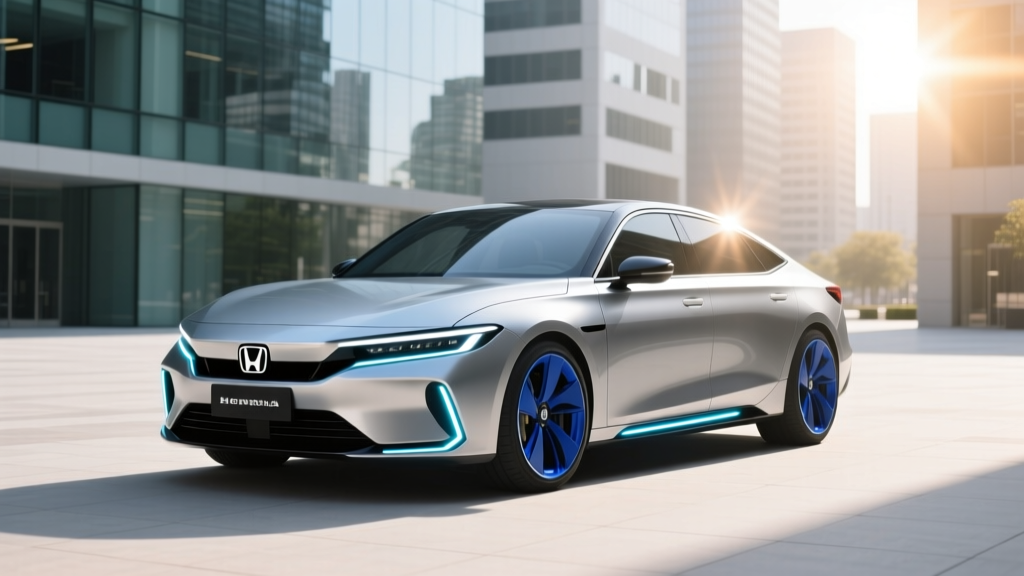
The Honda Saloon concept previews what Honda's production flagship EV sedan will look like on the company's own dedicated e:Architecture platform. Honda has confirmed a production version is in development, but as of this writing, the company has not released official specs, pricing, or a firm on-sale date. Industry analysts expect a late 2026 or 2027 U.S. launch at the earliest.
What we know from Honda's announcements:
- The production sedan will ride on Honda's new dedicated EV platform (not GM Ultium)
- Honda is targeting a low center of gravity with a thin battery pack integrated into the chassis
- The concept features a fastback sedan silhouette with a spacious interior footprint
- Honda has hinted at next-generation ADAS features beyond its current Honda Sensing suite
Buyer guidance: Do not delay a vehicle purchase based on the Saloon. With no confirmed specs, pricing, or timeline, waiting could mean 18–24 months without a vehicle. If you need a sedan now, evaluate current options.
Prologue vs. Accord Hybrid: The Real Cost Comparison
Since Honda's only EV is an SUV, the most relevant comparison for sedan shoppers is the Prologue against the Accord Hybrid — Honda's most efficient sedan. Here's how they stack up over five years of ownership.
| Cost Factor | 2026 Honda Prologue (FWD) | 2026 Honda Accord Hybrid (Sport) |
|---|---|---|
| Base MSRP | $47,400 | $32,995 |
| Federal Tax Credit (§30D) | Up to $7,500 (see eligibility) | $0 (not a BEV/PHEV) |
| Effective Purchase Price | ~$39,900 (if eligible) | $32,995 |
| Annual Fuel/Energy (12,000 mi/yr) | ~$540 (home charging at $0.14/kWh) | ~$1,050 (gasoline at $3.30/gal) |
| 5-Year Fuel/Energy Cost | ~$2,700 | ~$5,250 |
| 5-Year Maintenance Estimate | ~$1,200 | ~$2,400 |
| Estimated Insurance (5-yr avg) | ~$9,600 | ~$7,800 |
| 5-Year Total Cost (excl. depreciation) | ~$53,400 | ~$48,445 |
Key takeaway: Even with the maximum $7,500 federal tax credit, the Prologue costs roughly $5,000 more over five years than the Accord Hybrid for most buyers. The Prologue's fuel and maintenance savings ($2,550 + $1,200 = $3,750 over five years) do not fully offset the higher purchase price and insurance premiums. The Accord Hybrid's 48 MPG combined means you're already minimizing fuel costs without paying an EV premium.
However, if you have access to free or heavily subsidized workplace charging, or if your utility offers off-peak EV rates below $0.08/kWh, the Prologue's energy cost drops to $320–$380 annually, narrowing the gap significantly.
Federal Tax Credit Eligibility: What You Actually Qualify For
The Prologue's eligibility for the IRS §30D Clean Vehicle Credit is nuanced. The credit amount depends on battery sourcing requirements, your income, and the vehicle's MSRP and assembly location.
2026 §30D Credit Requirements for the Honda Prologue:
- MSRP Cap: Prologue qualifies (under the $80,000 SUV/truck cap)
- Final Assembly: Mexico-assembled — must meet North American assembly rules under current IRS guidance
- Battery Sourcing: The $7,500 credit splits into two halves — $3,750 for critical minerals and $3,750 for battery components. Sourcing requirements tighten annually. Verify current-year compliance on the fueleconomy.gov tax credit tracker
- Buyer Income Caps: AGI must not exceed $300,000 (married filing jointly), $225,000 (head of household), or $150,000 (single)
- Point-of-Sale Transfer: Eligible buyers can transfer the credit to the dealer at purchase, reducing the out-of-pocket price immediately
Always verify current eligibility at irs.gov before purchasing. Rules and sourcing compliance change frequently.
EV vs. Hybrid vs. Gas: Which Honda Sedan Buyer Are You?
| Factor | Honda Prologue (EV SUV) | Honda Accord Hybrid | Honda Accord (Gas 1.5T) |
|---|---|---|---|
| EPA Efficiency | 99 MPGe / 34 kWh/100mi | 48 MPG combined | 33 MPG combined |
| Annual Energy Cost (12k mi) | ~$540 | ~$1,050 | ~$1,525 |
| CO₂ Emissions (tailpipe) | Zero | ~195 g/mi | ~268 g/mi |
| Home Charging Needed? | Yes (strongly recommended) | No | No |
| Cold-Weather Penalty | 20–30% range loss | Minimal (~5%) | Minimal (~5%) |
| Road-Trip Refueling | 30+ min DC stops | 5 min gas stop | 5 min gas stop |
| Starting Price (after credit) | ~$39,900 | $32,995 | $29,295 |
Real-World Ownership: What First-Time EV Buyers Must Know
If you're considering the Prologue (or waiting for a future Honda EV sedan), these practical realities will determine whether EV ownership works for you:
Home Charging Is Nearly Essential
Public DC fast charging costs $0.35–$0.55/kWh at most networks (Electrify America, EVgo), which makes the Prologue's per-mile cost comparable to a 35 MPG gas car. The real savings come from Level 2 home charging at residential electricity rates. A 240V/48A home charger installation typically costs $800–$2,200 depending on your electrical panel's capacity. If your panel needs upgrading from 100A to 200A service, add $1,500–$3,000.
If you live in an apartment or condo without charging access, the Prologue's economics deteriorate rapidly. Relying exclusively on public fast charging will cost approximately $1,800–$2,400 annually — more than fueling the Accord Hybrid.
Insurance Costs More
EV insurance premiums run 15–25% higher than equivalent gas vehicles due to higher repair costs and battery replacement risk. Expect to pay roughly $1,800–$2,100/year for the Prologue versus $1,400–$1,600 for the Accord Hybrid, depending on your profile and state.
Maintenance Is Genuinely Lower
The Prologue eliminates oil changes, spark plugs, transmission fluid, and exhaust system repairs. Brake pad life extends significantly thanks to regenerative braking — many EV owners report original brake pads lasting 80,000+ miles. Budget roughly $200–$300/year for cabin air filters, tire rotation, and wiper fluid.
Common Misconceptions About Honda's EV Plans
| Myth | Fact |
|---|---|
| "Honda has an EV sedan you can buy right now." | Honda's only U.S. EV is the Prologue SUV. The Saloon sedan concept has no confirmed production date. |
| "The Prologue qualifies for the full $7,500 tax credit for everyone." | Credit eligibility depends on your AGI, battery sourcing compliance, and point-of-sale transfer rules. Many buyers receive a partial credit or none at all. |
| "EVs cost less to own than hybrids." | Not always. The Accord Hybrid's low purchase price and 48 MPG can beat the Prologue's total cost over five years, especially without home charging. |
| "Honda's EV sedan is coming in 2025." | Honda has not confirmed a production Saloon timeline. Industry estimates suggest late 2026 or 2027 at the earliest for U.S. availability. |
| "The Prologue charges as fast as any other EV." | At 150 kW peak, the Prologue charges slower than 800V rivals like the Ioniq 6 (240 kW) or Porsche Taycan (270 kW). |
Decision Framework: Should You Buy, Wait, or Choose Hybrid?
Buy the Honda Prologue if:
- You want an all-electric Honda specifically and can accept an SUV body style
- You have reliable Level 2 home charging (garage or driveway with 240V access)
- You qualify for at least $3,750 in federal tax credits (verify at irs.gov)
- Your daily commute is under 200 miles round-trip
- You live in a moderate climate or can accept cold-weather range loss
Choose the Honda Accord Hybrid if:
- You specifically want a Honda sedan — it's Honda's most efficient sedan available today
- You lack home charging access or live in an apartment
- You frequently drive 300+ miles in a single day (no charging stops needed)
- You want the lowest total cost of ownership over five years
- You live in an area with extreme cold (below 10°F regularly)
Wait for the Honda Saloon (production EV sedan) if:
- You are not in an urgent vehicle-purchase window
- You want a Honda-badged EV built on Honda's own architecture (not GM Ultium)
- You're willing to wait until at least late 2026 or 2027 with no guaranteed specs or pricing
Consider a non-Honda EV sedan if:
- Brand loyalty is flexible — the Hyundai Ioniq 6 (EPA 361 mi, 240 kW charging, ~$38,000) and Tesla Model 3 (EPA 341 mi, 250 kW charging, ~$39,990) are compelling electric sedans available now
- You want faster charging, longer range, or more established Supercharger/NACS network access
Frequently Asked Questions
Does Honda make an all-electric sedan?
Not as of early 2026. Honda's only battery-electric vehicle sold in the U.S. is the Prologue, which is a midsize SUV. The Honda Saloon concept previews a future EV sedan, but it has no confirmed production date or specifications.
How much does the Honda Prologue cost after tax credits?
The Prologue starts at $47,400. If you qualify for the full $7,500 §30D federal tax credit (subject to income caps, battery sourcing rules, and MSRP limits), the effective price drops to approximately $39,900. Many buyers qualify for a partial credit of $3,750 or may not qualify at all depending on income and sourcing compliance. Verify at irs.gov.
Is the Accord Hybrid better than the Prologue for most buyers?
For sedan buyers who want the lowest total cost, don't have home charging, or regularly take long road trips, the Accord Hybrid at 48 MPG combined and ~$33,000 is the more practical choice. The Prologue makes sense for buyers who prioritize zero tailpipe emissions, have home charging, and qualify for tax incentives.
What is the real-world range of the Honda Prologue?
The EPA rates the FWD Prologue at 296 miles. In real-world highway driving at 70+ mph, expect approximately 240–260 miles. In cold weather (below freezing), range can drop to 195–230 miles due to battery chemistry limitations and resistive cabin heating (the Prologue lacks a heat pump).
When will the Honda Saloon EV sedan be available?
Honda has not announced an official U.S. on-sale date for the production Saloon sedan. Industry estimates suggest late 2026 at the earliest, more likely 2027. No pricing, range, or battery specifications have been confirmed. Treat any published specs as preliminary.
Can I fast-charge the Prologue on Tesla Superchargers?
The Prologue uses the CCS1 connector natively. Honda has indicated that future models will adopt NACS, but the current Prologue requires a CCS-to-NACS adapter for Tesla Supercharger access. Honda provides a complimentary adapter for Prologue owners in some model years — check with your dealer.