The Short Answer on Honda EV Concepts
Honda's EV concept lineup—headlined by the Honda Saloon (announced as the production Honda 0 Series flagship sedan, expected late 2026/2027) and the Honda Prologue (already on sale since 2024, refreshed for 2026)—represents two distinct strategies: the Prologue leverages GM's Ultium platform today, while the Saloon previews Honda's proprietary thin, light, and aerodynamic "0 Series" architecture. If you need an EV now, the 2026 Prologue delivers ~300 miles of EPA range starting near $47,400. If you can wait 12–18 months and want something more distinctly Honda, the Saloon and 0 Series SUV concepts preview lighter, more efficient vehicles. Neither the Saloon nor the 0 Series SUV have confirmed EPA specs or pricing yet, so treat all figures below as preliminary estimates based on Honda's stated engineering targets.
Honda's EV Concept Lineup Explained: From Prologue to the 0 Series
Honda's path to electrification has been anything but linear. After the discontinued Clarity EV and the limited-run Honda e (never sold in the US), Honda committed to a serious EV offensive. That offensive now splits into two waves:
- Wave 1 (Now): The Honda Prologue, a midsize SUV built on GM's Ultium platform—the same architecture underpinning the Chevrolet Blazer EV and Cadillac Lyriq. It's Honda's current-market EV offering, available through dealerships today.
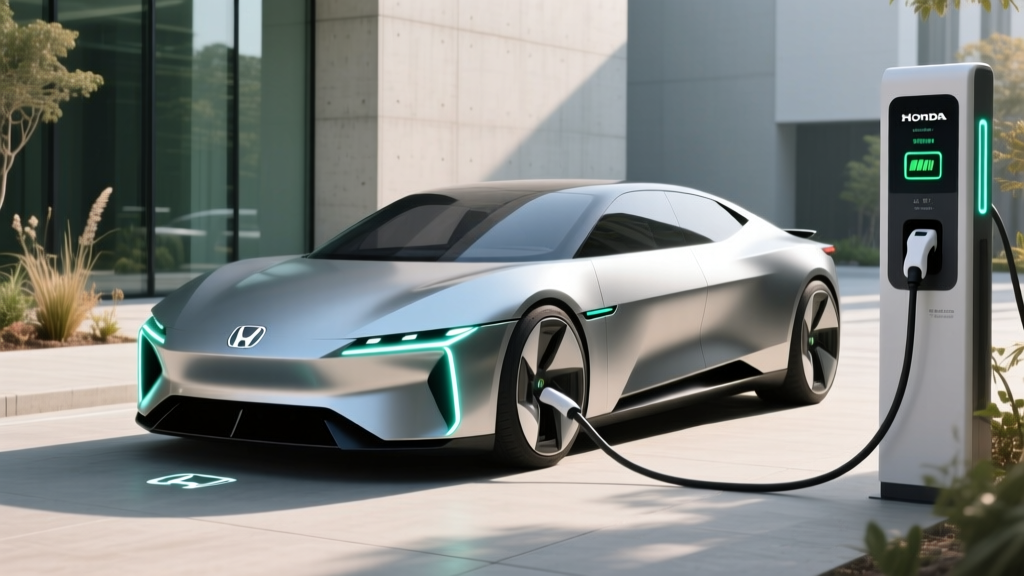
- Wave 2 (2026–2028): The Honda 0 Series, a family of vehicles built on Honda's own dedicated EV platform. The Saloon concept (a sleek, low-slung sedan) debuted at CES 2024 and is confirmed as the 0 Series flagship. A compact SUV concept, the Space-Hub, previews a family-oriented model. Honda has stated these vehicles will prioritize thin bodies, low weight, and aerodynamic efficiency over brute-force battery sizing.
For buyers researching "Honda EV concepts," the critical distinction is availability: the Prologue is a real, purchasable vehicle with published EPA data. The Saloon and Space-Hub remain pre-production concepts with estimated specifications.
2026 Honda Prologue: The EV You Can Actually Buy Today
The 2026 Honda Prologue is the tangible result of Honda's GM partnership. Here's what the data tells us, sourced from fueleconomy.gov and Honda's official specifications:
| Spec | Prologue FWD | Prologue AWD |
|---|---|---|
| EPA Range | ~302 miles | ~286 miles |
| Battery (usable) | ~85 kWh (NMC, Ultium) | ~85 kWh (NMC, Ultium) |
| Horsepower | 220 hp | 288 hp |
| 0–60 mph | ~7.8 sec | ~6.2 sec |
| DC Fast Charge (peak) | ~150 kW | ~150 kW |
| 10–80% DCFC Time | ~35 min | ~35 min |
| Level 2 Charge Rate | ~11.5 kW | ~11.5 kW |
| Efficiency (MPGe) | ~99 MPGe combined | ~93 MPGe combined |
| Base MSRP (2026 est.) | ~$47,400 | ~$50,400 |
| Battery/Powertrain Warranty | 8 yr / 100,000 mi | 8 yr / 100,000 mi |
Real-World Range Reality Check
The Prologue FWD's 302-mile EPA sticker is competitive, but real-world results depend on conditions. Expect ~240–260 miles at sustained 75 mph highway speeds, and ~200–230 miles in sub-30°F winter driving without aggressive preconditioning. The Ultium battery's thermal management helps, but NMC chemistry loses 15–25% capacity in deep cold. On road trips, plan charging stops at the 200-mile mark for comfort.
Honda Saloon Concept: The 0 Series Flagship (Coming 2027)
The Honda Saloon concept is the star of the 0 Series vision. Honda's stated engineering philosophy—"thin, light, and wise"—aims to counter the industry trend of heavier-is-better EV design. Here's what we know versus what's estimated:
| Spec | Saloon (Estimated/Preliminary) |
|---|---|
| Platform | Honda 0 Series dedicated EV |
| Body Style | Low-slung sedan / fastback |
| Target Range | ~300+ miles (Honda target, unconfirmed EPA) |
| Battery Chemistry | Likely NMC; Honda exploring next-gen options |
| Estimated Weight | Significantly lighter than comparable Ultium EVs |
| Steering | Steer-by-wire (confirmed for 0 Series) |
| ADAS | Level 2+ (Honda Sensing 360 evolution) |
| Production Start | Expected late 2026 (Japan), 2027 (US market) |
| Estimated MSRP | Not announced — expect $45,000–$55,000 range |
Why it matters: Honda's emphasis on weight reduction is significant. The Prologue weighs roughly 4,900 lbs (AWD), which is typical for Ultium-based SUVs but hurts efficiency. If the Saloon achieves a curb weight closer to 4,200 lbs—as Honda's "thin and light" language suggests—it could deliver similar range with a smaller battery, reducing cost and improving driving dynamics. Steer-by-wire also eliminates the mechanical column, enabling the Saloon's low, aerodynamic hood line and potentially variable steering ratios.
⚠️ Unreleased Model Advisory
The Honda Saloon and 0 Series vehicles are announced concepts, not currently available for purchase. All specifications above are preliminary estimates based on Honda's public statements and industry analysis. Final EPA range, pricing, tax credit eligibility, and US availability dates will be confirmed closer to production. Do not make purchasing decisions based on concept-stage data.
Honda EV vs. Gas and Hybrid: Real Cost Comparison
Whether you choose the Prologue today or wait for the Saloon, the economics of EV ownership require honest analysis. Below is a 5-year cost comparison for the Prologue AWD against the gasoline Honda Passport and the Honda CR-V Hybrid—vehicles Honda buyers commonly cross-shop.
| Cost Factor (5 Years) | Prologue AWD (~$50,400) | Honda Passport AWD (~$43,000) | CR-V Hybrid AWD (~$38,000) |
|---|---|---|---|
| Purchase Price | $50,400 | $43,000 | $38,000 |
| Federal Tax Credit (§30D) | Up to $7,500* | $0 | $0 |
| Effective Purchase | ~$42,900 | $43,000 | $38,000 |
| Fuel / Charging (60k mi) | ~$3,900 (home L2) | ~$9,200 (gas) | ~$5,800 (gas) |
| Maintenance (5 yr) | ~$1,200 | ~$3,500 | ~$3,000 |
| Insurance (5 yr avg.) | ~$11,500 | ~$9,000 | ~$8,500 |
| Estimated Depreciation | ~$22,000 | ~$18,000 | ~$15,000 |
| 5-Year Total Cost | ~$81,500 | ~$82,700 | ~$70,300 |
*§30D credit eligibility depends on buyer income (AGI caps: $150k single / $300k joint), vehicle MSRP caps ($80k SUVs), battery sourcing requirements, and point-of-sale transfer rules. Verify current eligibility at irs.gov. The Prologue currently qualifies for at least partial credit; confirm at purchase.
Key takeaway: The Prologue nearly breaks even with the Passport over 5 years thanks to fuel and maintenance savings, but the CR-V Hybrid remains the cost champion by a wide margin. If pure economics drives your decision and you don't need EV-only commuting, Honda's hybrid lineup still wins on paper. The EV case strengthens with every mile you drive on cheap home electricity and weakens if you rely on expensive public DC fast charging.
First-Time Honda EV Buyer: Ownership Realities
If you're considering a Prologue (or planning to wait for the 0 Series), these practical factors determine whether EV ownership will delight or frustrate you:
Home Charging Access Is Non-Negotiable for Most Buyers
The Prologue's 11.5 kW Level 2 onboard charger means a full home charge from 10–100% takes roughly 8 hours on a 48-amp Level 2 circuit. This works beautifully if you have a garage or driveway with 240V access. A Level 2 home charger installation typically costs $800–$2,500 (equipment + licensed electrician + permit), assuming your electrical panel has spare capacity. If you need a panel upgrade (200A service), add $1,500–$3,000. Without home charging, you'll rely on public Level 2 and DC fast chargers, which cost 2–4× more per kWh and add time to your routine.
Cold Climate? Account for 20% Range Loss
The Prologue's NMC Ultium battery includes active thermal management, but physics doesn't negotiate. In sustained sub-freezing temperatures, expect 15–25% range reduction. A 286-mile AWD Prologue becomes a ~215–240 mile vehicle in January in Minnesota. Preconditioning the battery while plugged in mitigates this, but if your daily round-trip commute exceeds 150 miles in cold weather, range planning becomes a real concern.
Driving Patterns That Favor the Prologue
The Prologue shines for suburban commuters with home charging, 40–100 mile daily round trips, and moderate road-trip frequency. Its ~150 kW peak DC fast charge rate means a 10–80% stop takes about 35 minutes—adequate for road trips but noticeably slower than the Hyundai Ioniq 5 (~240 kW, ~18 minutes). If you regularly drive 300+ miles in a day, the Prologue's charge speed adds meaningful stop time compared to 800V competitors.
Honda EV Concepts: Common Misconceptions vs. Facts
| Myth | Fact |
|---|---|
| "The Saloon concept is basically ready for production" | The Saloon remains a concept vehicle. Honda targets late-2026 production in Japan and 2027 for the US, but specs, pricing, and federal credit eligibility are unconfirmed. |
| "Honda's EV concepts are just rebadged GMs" | The Prologue uses GM's Ultium platform, but the 0 Series (Saloon, Space-Hub) is Honda's own proprietary architecture with steer-by-wire and Honda-developed powertrains. |
| "EV batteries need replacing every 5 years" | NMC batteries in vehicles like the Prologue are warrantied for 8 years / 100,000 miles against capacity loss below ~70%. Real-world degradation data from Ultium vehicles shows ~5–8% loss over the first 100k miles—far from needing replacement. |
| "I'll save money immediately by going EV" | Higher purchase price, potentially higher insurance, and home charger installation costs mean the break-even point vs. a hybrid is typically 3–6 years depending on mileage, electricity rates, and credit eligibility. |
| "The Prologue qualifies for the full $7,500 tax credit" | Credit amount depends on battery critical-mineral and component sourcing percentages, which change annually. The Prologue has qualified for at least partial credit; verify the exact amount at point of sale per current IRS §30D rules. |
Decision Framework: Buy the Prologue, Wait for the Saloon, or Go Hybrid?
Choose the Honda Prologue (Now) If:
- You need a midsize electric SUV within the next 3 months
- You have home Level 2 charging access or can install it
- Your daily driving is under 100 miles round-trip
- You qualify for at least partial §30D federal tax credit
- You want a Honda dealer experience with a battery-backed warranty
Wait for the Honda Saloon / 0 Series If:
- You prefer a sedan over an SUV and value driving dynamics
- You can defer your purchase 12–24 months
- Honda's "thin and light" philosophy appeals to you (lighter = more efficient)
- You want a Honda-developed EV platform, not a GM-sourced one
- Steer-by-wire and next-gen ADAS features excite you
Choose a Honda Hybrid (CR-V Hybrid, Accord Hybrid) If:
- You lack reliable home charging access
- Your budget is firmly under $40,000
- You regularly drive in extreme cold or remote areas with sparse charging infrastructure
- Total 5-year cost is your primary decision driver (hybrids still win here for most buyers)
- You want zero range-planning for long road trips
What's Next for Honda's EV Roadmap Beyond 2027
Honda has signaled that the 0 Series will expand to include multiple body styles globally by 2030, with a target of 10+ EV models. The Space-Hub concept previews a compact family SUV that could slot below the Prologue in price—potentially in the $35,000–$42,000 range if Honda can leverage its weight-reduction engineering. Honda has also committed to solid-state battery research, though mass production of solid-state cells remains a late-2020s prospect industry-wide.
For US buyers, the critical question is whether Honda will localize 0 Series production to maintain §30D tax credit eligibility. The Prologue benefits from GM's US battery manufacturing, but Honda's 0 Series production is expected to begin in Japan. If imported, these vehicles may not qualify for the federal credit unless Honda establishes North American battery sourcing—something to monitor as production plans solidify.
Frequently Asked Questions
Is the Honda Saloon concept going to be sold in the US?
Honda has confirmed the Saloon as the 0 Series flagship and has indicated US market intent, but a specific launch date and US pricing have not been announced as of early 2026. Expect a US launch in the 2027 model year at the earliest.
How does the Prologue's charging speed compare to competitors?
At ~150 kW peak DC, the Prologue charges more slowly than 800V rivals like the Hyundai Ioniq 5 (peak ~240 kW, 10–80% in ~18 min) and Kia EV6. It's comparable to the Ford Mustang Mach-E Extended Range (~150 kW). For road trips, expect 35-minute charging stops vs. ~20 minutes in the fastest competitors.
Does the Honda Prologue qualify for the $7,500 federal EV tax credit in 2026?
The Prologue has qualified for partial or full §30D credit depending on the model year and current battery sourcing rules. Credit eligibility depends on your income (AGI caps apply), the vehicle's MSRP (must be under $80,000 for SUVs), and battery component/critical mineral sourcing percentages. The credit can now be transferred at point of sale as an immediate discount. Verify the exact amount with your dealer and consult IRS §30D guidance.
Should I be concerned about Honda discontinuing the Prologue once the 0 Series launches?
There's no indication Honda plans to discontinue the Prologue. It's more likely the Prologue continues as the Ultium-based SUV option while the 0 Series fills other segments. Honda has historically supported models with parts and warranty service for well over a decade after discontinuation, so long-term ownership risk is low.
What's the real-world efficiency of the Prologue in kWh per mile?
The Prologue FWD averages approximately 3.0–3.3 miles per kWh (roughly 30–33 kWh per 100 miles) in mixed driving. Highway-only driving at 75 mph drops this to ~2.6–2.8 mi/kWh. At a national average electricity rate of ~$0.16/kWh, that's roughly $0.05–$0.06 per mile on home charging—about one-third the per-mile fuel cost of a comparable gas SUV.