Quick Answer: Is a Honda EV Car Right for You?
As of 2026, Honda's primary battery-electric offering is the Honda Prologue, a midsize SUV built on GM's Ultium platform with an EPA-estimated range of up to 308 miles (FWD Elite trim), a 85 kWh usable battery, and DC fast charging up to 150 kW (10–80% in roughly 29 minutes). Starting at approximately $48,795 (EX FWD), the Prologue qualifies for the full $7,500 federal tax credit under current §30D rules when purchased new and meeting income/sourcing requirements — bringing the effective starting price near $41,295. It's a strong choice for buyers who want Honda's interior quality and dealer network in an EV, but those prioritizing charging speed or one-pedal driving should cross-shop the Hyundai Ioniq 5 and Tesla Model Y.
Honda's EV Lineup in 2026: Where Things Stand
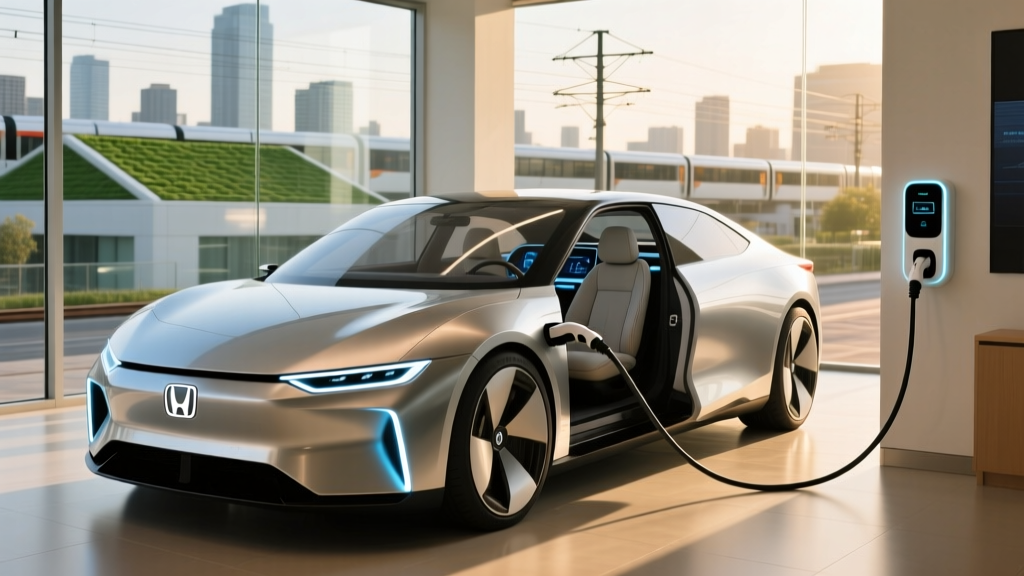
Honda was late to the dedicated EV platform game, but the Prologue — developed jointly with General Motors and riding the same Ultium architecture as the Chevrolet Blazer EV and Cadillac Lyriq — represents the brand's serious entry into battery-electric territory. For 2026, Honda has also confirmed development of its next-generation EVs on a proprietary "0 Series" platform (announced, with production expected late 2026/2027), but the Prologue remains the only Honda EV car you can buy today.
Honda's broader electrification strategy also includes the CR-V e:FCEV (a hydrogen fuel-cell plug-in hybrid available only in California) and a robust lineup of conventional hybrids like the Accord Hybrid and CR-V Hybrid. If you're searching for a "Honda EV car," you're likely weighing the Prologue against these alternatives — and against competitors from Hyundai, Tesla, and Ford.
2026 Honda Prologue: Range, Battery, and Charging Specs
The Prologue's powertrain numbers are competitive for the midsize electric SUV segment, though not class-leading. Here's the complete spec breakdown by trim:
| Specification | EX FWD | Touring AWD | Elite AWD |
|---|---|---|---|
| EPA Range | 308 mi | 294 mi | 281 mi |
| Battery (usable) | 85 kWh, NMC chemistry (Ultium) | ||
| Motor Output | 212 hp / 236 lb-ft | 288 hp / 333 lb-ft (dual motor) | |
| 0–60 mph | ~7.8 sec | ~6.0 sec | |
| DC Fast Charge Peak | 150 kW (CCS1 connector) | ||
| 10–80% DC Charge Time | ~29 minutes | ||
| Level 2 (240V) Charge Rate | 11.5 kW (7.7 kW on base charger option) | ||
| MPGe (combined) | 94 MPGe | 90 MPGe | 87 MPGe |
| Starting MSRP | $48,795 | $54,395 | $57,295 |
| Battery/Powertrain Warranty | 8 years / 100,000 miles | ||
Real-World Range vs. EPA Sticker
The EPA numbers above assume mixed driving in moderate temperatures. In real-world conditions, expect the following adjustments:
- Highway-only driving (70–75 mph): Subtract 10–15%. An Elite AWD rated at 281 miles will deliver roughly 240–255 miles on a sustained interstate trip.
- Cold weather (below 32°F): Subtract 20–30% depending on cabin heating use. The same Elite AWD may drop to 195–225 miles in freezing conditions without preconditioning.
- Preconditioning the battery (available via the HondaLink app before departure) can recover 5–10% of cold-weather range by warming the pack before you drive.
The Prologue's NMC battery chemistry offers higher energy density than LFP competitors, but it also means Honda recommends keeping state of charge between 20–80% for daily use to maximize long-term health. Only charge to 100% before long road trips.
Charging the Prologue: Home, Public, and What You'll Actually Pay
Charging access is the single biggest ownership variable for any Honda EV car. The Prologue uses the CCS1 connector for DC fast charging — not the NACS (Tesla) plug, though Honda has announced that future models will adopt NACS. For 2026, Prologue owners can access Tesla Superchargers using a GM-approved CCS-to-NACS adapter (sold separately, approximately $200–$250).
| Charging Level | Power (kW) | Miles Added Per Hour | Typical Use Case | Estimated Cost |
|---|---|---|---|---|
| Level 1 (120V household) | ~1.4 kW | ~4 mi/hr | Overnight top-up, low daily mileage | $0.12–$0.18/kWh (residential rate) |
| Level 2 (240V home charger) | 11.5 kW | ~34 mi/hr | Daily home charging (full charge in ~8.5 hrs) | $0.12–$0.18/kWh (residential rate) |
| DC Fast Charge (public) | Up to 150 kW | ~185 mi in 30 min | Road trips, quick top-ups | $0.30–$0.55/kWh (network dependent) |
Home Charging Installation: What to Budget
If you have a garage or dedicated parking spot with access to a 240V circuit, home Level 2 charging is the most convenient and cheapest way to run a Prologue. Here's what installation typically costs:
| Item | Cost Range |
|---|---|
| Level 2 EVSE hardware (e.g., ChargePoint Home Flex, Emporia Vue) | $400–$700 |
| Electrician labor (240V/50A circuit, NEMA 14-50 outlet) | $600–$2,000 |
| Electrical panel upgrade (if needed — 200A service) | $1,500–$3,500 |
| Permit and inspection | $100–$300 |
| Total (no panel upgrade) | $1,100–$3,000 |
| Total (with panel upgrade) | $2,600–$6,500 |
Important: Always hire a licensed electrician for a load calculation before installation. Older homes with 100A panels often need an upgrade to support a 50A EV circuit alongside existing appliances. Your utility may offer rebates that offset $200–$500 of this cost.
Prologue vs. Gas and Hybrid: The Real Cost Comparison
The Prologue competes in Honda's own showroom against the CR-V Hybrid and the gas-only CR-V. Here's how a 5-year ownership period stacks up, assuming 15,000 miles per year and national average fuel/electricity prices:
| Cost Factor (5 Years / 75,000 mi) | Prologue EX AWD | CR-V Hybrid AWD | CR-V EX AWD (Gas) |
|---|---|---|---|
| Purchase Price (MSRP) | $48,795 | $36,350 | $33,850 |
| Federal Tax Credit (§30D) | −$7,500 | $0 | $0 |
| Effective Purchase Price | $41,295 | $36,350 | $33,850 |
| Fuel/Energy Cost (5 yrs) | $3,375 (home L2) | $7,875 (40 MPG, $3.50/gal) | $10,500 (30 MPG, $3.50/gal) |
| Maintenance (5 yrs) | ~$1,200 | ~$2,800 | ~$3,200 |
| Insurance (5 yrs, avg) | ~$9,500 | ~$7,500 | ~$7,200 |
| Estimated Total 5-Yr Cost | $55,370 | $54,525 | $54,750 |
Key takeaways:
- The Prologue's higher MSRP is substantially offset by the $7,500 tax credit and lower fuel/maintenance costs. Over 5 years, total cost is nearly identical to the CR-V Hybrid.
- EV insurance premiums run 15–25% higher on average due to repair costs and battery replacement risk. Get quotes before purchasing.
- After year 5, the Prologue pulls further ahead on operating costs — electricity is cheaper and more price-stable than gasoline.
- If you rely exclusively on public DC fast charging ($0.40/kWh average), your 5-year energy cost rises to roughly $5,400, narrowing the advantage over the hybrid.
Federal Tax Credit: Does the Prologue Qualify?
Under current IRS §30D rules, the 2026 Honda Prologue qualifies for the full $7,500 Clean Vehicle Credit, thanks to its GM Ultium battery sourcing and assembly in North America. However, buyer eligibility depends on several factors:
- Income caps: Modified AGI must not exceed $300,000 (married filing jointly), $225,000 (head of household), or $150,000 (single).
- MSRP cap: SUVs must be under $80,000 MSRP. All Prologue trims qualify.
- Battery sourcing: The Prologue's battery meets current critical-minerals and battery-component requirements for the full $7,500.
- Point-of-sale transfer: You can transfer the credit to the dealer at purchase, reducing your out-of-pocket cost immediately — you don't need to wait until tax filing.
- One-time use: You can only claim one new EV credit per year, and the vehicle must be for personal use, primarily in the U.S.
Tax rules are subject to change. Always verify current eligibility on IRS.gov and consult a tax professional before relying on the credit in your purchase decision.
Common Misconceptions About the Honda Prologue
| Myth | Fact |
|---|---|
| "EV batteries need replacing every few years." | Honda warrants the Prologue's Ultium pack for 8 years/100,000 miles against capacity loss below 70%. Industry data shows NMC packs typically retain 85–90% capacity at 100,000 miles. Full replacement, if ever needed, costs $12,000–$18,000 but is rare under normal use. |
| "The Prologue charges as fast as a Tesla." | At 150 kW peak, the Prologue is slower than the Tesla Model Y (250 kW) and Hyundai Ioniq 5 (240 kW). A 10–80% charge takes ~29 minutes vs. ~18–20 minutes for those rivals. Sustained charging above 60% SoC tapers significantly. |
| "I can't take an EV on road trips." | With CCS access to Electrify America, EVgo, and (via adapter) Tesla Superchargers, the Prologue can cover cross-country trips. Plan 25–30 minute stops every 200–240 miles in real-world highway driving. |
| "EVs are worse in winter." | Range does drop 20–30% in freezing temperatures, but the Prologue's heat pump (standard on Touring/Elite) recovers some efficiency. Preconditioning via the HondaLink app while plugged in preserves range significantly. |
| "Honda makes a self-driving Prologue." | Honda Sensing is a SAE Level 2 driver-assistance system (adaptive cruise + lane centering). It requires constant driver attention and is not autonomous. No production Honda offers hands-free driving like GM's Super Cruise. |
Decision Framework: Should You Buy the Honda Prologue?
Choose the Honda Prologue if:
- You want an EV from a mainstream brand with a large, familiar dealer service network.
- You have access to home Level 2 charging (garage, driveway, or workplace).
- Your daily driving is under 80 miles and you take road trips 4–6 times per year.
- You value a quiet, smooth ride and Honda's interior ergonomics over maximum performance.
- You qualify for the full $7,500 tax credit, bringing the effective price below $42K.
Look elsewhere if:
- You need the fastest possible DC charging for frequent long-distance travel (consider Hyundai Ioniq 5 or Tesla Model Y).
- You want one-pedal driving with strong regenerative braking — the Prologue's regen is mild and lacks a true one-pedal mode.
- You live in an apartment with no charging access and your area has limited public charging infrastructure.
- You're on a tighter budget — the CR-V Hybrid starts ~$12,000 lower and gets 40 MPG combined with zero charging hassle.
- You want a sedan or hatchback EV — the Prologue is SUV-only. Consider the Tesla Model 3 or Hyundai Ioniq 6 instead.
First-Time EV Buyer Checklist
If the Prologue is your first electric vehicle, work through these practical steps before signing:
- Audit your charging access. Can you install a 240V outlet at home? If not, map public chargers within 5 miles of your home and workplace using PlugShare or the DOE's Alternative Fuels Station Locator.
- Get an electrician quote. A licensed electrician should assess your panel capacity before you commit. Budget $1,100–$3,000 for a standard install.
- Pull real insurance quotes. EV premiums are higher. Compare quotes from at least three insurers using the specific Prologue trim you plan to buy.
- Test the regen and brake feel. The Prologue's regenerative braking is adjustable via paddle shifters but is notably less aggressive than Tesla or Hyundai. Make sure the braking feel suits you on a real test drive.
- Verify tax credit eligibility. Confirm your income is under the §30D cap and that the specific VIN qualifies. Your dealer should provide a clean vehicle seller report.
- Download HondaLink and test preconditioning. Understanding battery preconditioning before DC fast charging is critical for road-trip charging speed.
Frequently Asked Questions
Will Honda release more EV models after the Prologue?
Yes. Honda's "0 Series" platform is expected to underpin a new generation of dedicated Honda EVs starting in late 2026 or 2027, including a sedan and SUV with NACS charging ports, thinner battery packs, and potentially faster charge rates. These are announced but not yet available for purchase.
Can I charge the Prologue at Tesla Superchargers?
Yes, but only with a CCS-to-NACS adapter (approximately $200–$250). Honda/GM has approved specific adapters for use with the Ultium platform. Without the adapter, the Prologue is limited to CCS-equipped networks like Electrify America, EVgo, and ChargePoint.
How does the Prologue compare to the Chevrolet Blazer EV?
They share the Ultium platform and similar battery specs, but the Prologue has Honda-tuned suspension, different interior design, and slightly different range ratings. The Blazer EV offers a larger battery option and available Super Cruise (hands-free Level 2 driving on compatible highways), which the Prologue lacks. Check fueleconomy.gov for side-by-side EPA data.
What happens if the battery degrades?
Honda's 8-year/100,000-mile battery warranty covers capacity loss below 70% of original. In practice, GM's Ultium packs have shown strong longevity — most owners report 90%+ capacity at 50,000 miles based on early fleet data. If a replacement is ever needed out of warranty, expect $12,000–$18,000, though prices are declining as battery costs fall industry-wide.
Is the Prologue eligible for state incentives too?
Possibly. Many states (California, Colorado, Massachusetts, New York, and others) offer additional rebates or tax credits ranging from $1,000 to $7,500. These vary by state, income level, and current funding availability. Check your state's energy office or the AFDC state incentive database for current programs.