The Short Answer: Honda's GM-Based EV Was Cancelled — Here's What You Can Actually Buy
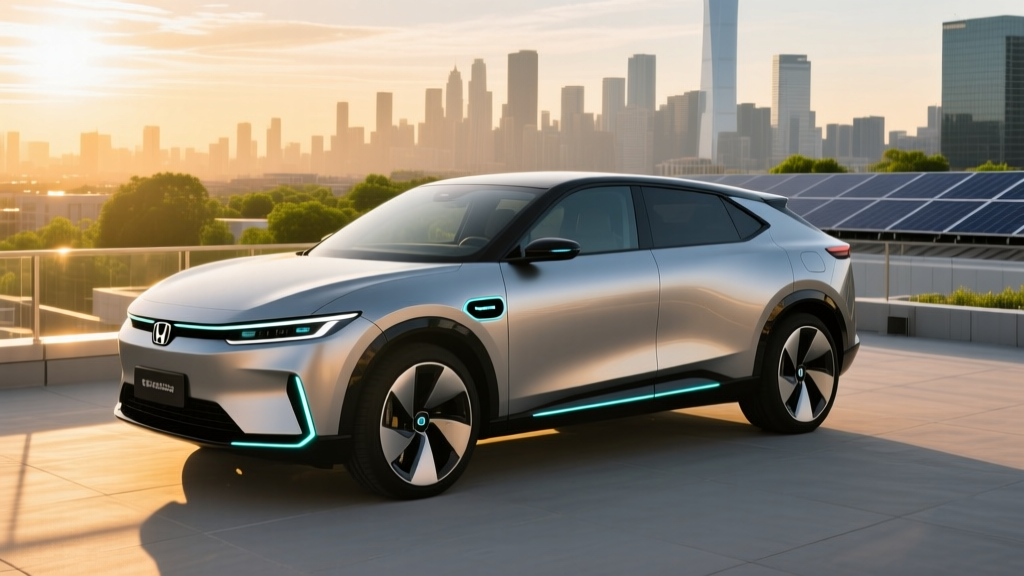
Honda cancelled its planned next-generation electric SUV built on General Motors' Ultium platform in late 2024, ending the Honda-GM EV partnership before a second model ever reached production. The Honda Prologue, which uses the existing Chevy Blazer EV platform, remains on sale for the 2025-2026 model years but will not receive a direct successor on that architecture. Honda is now pivoting to its own in-house "0 Series" EV platform, with the first models expected for the 2027 model year. If you want a Honda EV today, the Prologue is your only option — and it's a competent, if unremarkable, mid-size electric crossover starting around $47,400 before incentives.
Why Honda Cancelled the GM Partnership EV
In October 2024, Honda and GM confirmed they would not co-develop additional affordable EVs beyond the Honda Prologue and Acura ZDX. The stated reason: shifting market conditions, slowing EV demand growth in North America, and both companies wanting to protect their own platform investments. Honda's leadership concluded that relying on GM's Ultium architecture would limit differentiation in styling, software, and driving dynamics — areas where Honda historically competes.
The practical result for buyers:
- No second-gen Ultium Honda EV is coming. Rumored models like a smaller, more affordable Honda electric crossover on the Equinox EV platform are dead.
- The Prologue continues through at least the 2026 model year with minor updates.
- Honda's "0 Series" — announced at CES 2024 — targets 2027 production with a dedicated thin-floor EV architecture, steer-by-wire, and a new operating system.
For shoppers who were waiting for a cheaper, next-gen Honda EV, the timeline just stretched by at least 18 months.
The 2026 Honda Prologue: What You Get Today
The Prologue is the only Honda-branded EV currently available. It shares its Ultium platform and roughly 85 kWh usable battery with the Chevrolet Blazer EV. Here are the key specifications for the 2026 model year:
| Spec | FWD EX | AWD EX/EX-L | AWD Elite |
|---|---|---|---|
| Base MSRP | $47,400 | $50,400 / $53,900 | $57,900 |
| EPA Range | 296 mi | 281 mi | 270 mi |
| Battery (usable) | ~85 kWh, NMC lithium-ion | ||
| Horsepower | 212 hp | 288 hp | |
| 0-60 mph | ~7.8 sec | ~6.0 sec | |
| Peak DC Fast Charge | 150 kW (CCS) | ||
| 10-80% DCFC Time | ~34 min (peak, tapers above 80%) | ||
| Level 2 Charge Rate | 11.5 kW (~31 mi/hr) | ||
| MPGe (combined) | 99 MPGe | 95 MPGe | 90 MPGe |
| Battery Warranty | 8 years / 100,000 miles | ||
Real-World Range Reality
The EPA sticker says 296 miles for the FWD model. In mixed highway driving at 70 mph, expect roughly 240-260 miles. In cold weather (below 30°F), range can drop an additional 20-30%, putting real-world winter range closer to 185-210 miles for the FWD trim. The AWD Elite, with its lower EPA rating and larger wheels, may see winter range dip to 170-190 miles. These numbers are typical for Ultium-based crossovers but trail the Hyundai Ioniq 5 and Tesla Model Y in efficiency.
Prologue vs. Gas and Hybrid: The Cost Math
With the Honda EV cancelled pipeline leaving only the Prologue, many shoppers are cross-shopping it against Honda's own hybrids (CR-V Hybrid, Accord Hybrid) or gas crossovers. Here's how the numbers stack up over five years and 75,000 miles:
| Cost Factor | Prologue AWD EX ($50,400) | CR-V Hybrid AWD Sport ($37,000) | CR-V Gas AWD EX ($35,500) |
|---|---|---|---|
| Purchase Price (MSRP) | $50,400 | $37,000 | $35,500 |
| Est. Federal Tax Credit | Up to $7,500* | $0 | $0 |
| Effective Purchase | ~$42,900 | $37,000 | $35,500 |
| Fuel / Electricity (75k mi) | ~$2,800 (home charging)** | ~$5,600 (37 MPG, $3.30/gal) | ~$8,100 (29 MPG, $3.30/gal) |
| Maintenance (5 yr) | ~$1,200 | ~$3,000 | ~$3,500 |
| Est. Insurance (5 yr) | ~$9,500 | ~$7,800 | ~$7,500 |
| 5-Year Total (no depreciation) | ~$53,900 | ~$53,400 | ~$54,600 |
*§30D credit eligibility depends on MSRP cap ($80,000 for SUVs), buyer income limits ($300k MFJ / $150k single), and battery critical-mineral sourcing. The Prologue's Ultium battery currently qualifies, but rules tighten annually. Confirm at IRS.gov or via the point-of-sale transfer at your dealer. **Assumes 80% home Level 2 charging at $0.15/kWh national average.
The takeaway: the Prologue roughly breaks even with the CR-V Hybrid over five years when the full federal credit applies. Without the credit — or if you rely heavily on public DC fast charging at $0.35-$0.50/kWh — the Hybrid pulls ahead on cost. The gas CR-V is cheapest upfront but most expensive to operate long-term.
Tax Credit Eligibility: What Changed and What Hasn't
As of 2026, the IRS §30D clean vehicle credit still offers up to $7,500 for qualifying new EVs, available as a point-of-sale transfer that reduces your dealer price directly. However, eligibility is not guaranteed:
- MSRP cap: SUVs (including the Prologue) must be below $80,000 — the Prologue qualifies at all trims.
- Income cap: Modified AGI must not exceed $300,000 (married filing jointly), $225,000 (head of household), or $150,000 (single).
- Battery sourcing: Increasingly strict critical-mineral and battery-component requirements phase in each year. The Prologue's GM-sourced Ultium battery has qualified through 2025; verify 2026 compliance on the DOE's fueleconomy.gov credit lookup.
- Point-of-sale transfer: You can assign the credit to the dealer at purchase, reducing your out-of-pocket cost immediately rather than waiting for a tax refund.
Always confirm eligibility with your tax professional before signing a purchase agreement. Sourcing rules change annually and can disqualify a previously eligible model mid-year.
Decision Framework: Should You Buy the Prologue, Wait for 0 Series, or Go Hybrid?
If-Then Buyer Guide
Buy the 2026 Prologue if:
- You want a Honda-badged EV now and don't want to wait until 2027-2028 for the 0 Series.
- You qualify for the full $7,500 federal credit and can apply it at point of sale.
- You have reliable home Level 2 charging (a 240V / 40A+ circuit) and drive under 250 miles round-trip on most days.
- You value Honda's dealer network and warranty support over cutting-edge EV tech.
Wait for Honda's 0 Series (2027+) if:
- You want a dedicated Honda EV platform with differentiated design, not a rebadged GM product.
- Charging speed matters — Honda has targeted 200+ kW DC fast charging and improved efficiency for 0 Series.
- Your current vehicle is functional and you can delay a purchase 12-18 months.
Choose a Honda CR-V Hybrid instead if:
- You lack reliable home charging access (apartment, street parking, no 240V circuit).
- You regularly drive in extreme cold (below 15°F) where EV range loss exceeds 30%.
- You frequently take 400+ mile road trips through areas with sparse DC fast-charging infrastructure.
- Your budget is firm at $35,000-$40,000 and you don't want to stretch for an EV even with incentives.
Charging the Prologue: Home and Public Reality
The Prologue uses a CCS1 connector for DC fast charging and a J1772 inlet for Level 1 and Level 2 AC charging. Here's what that means in practice:
| Level | Power | Miles Added per Hour | Typical Use Case |
|---|---|---|---|
| Level 1 (120V) | ~1.4 kW | ~4 mi/hr | Overnight trickle; emergency only |
| Level 2 (240V, 48A) | 11.5 kW | ~31 mi/hr | Home daily charging; full charge in ~8 hours |
| DC Fast (CCS) | Peak 150 kW | ~180 mi in 30 min (to 80%) | Road trips; tapers significantly above 80% SoC |
Home Level 2 installation typically costs $800-$2,500 for a hardwired 48A wall connector, plus $500-$2,000 if your electrical panel needs a 200A service upgrade. Most Prologue owners charging at home spend $0.12-$0.18 per kWh, making "fuel" cost roughly $0.04-$0.05 per mile versus $0.12-$0.15 per mile in a gas CR-V.
On public DC fast chargers, the Prologue's 150 kW peak is modest by 2026 standards — the Hyundai Ioniq 5 peaks at 240 kW and the Tesla Model Y at 250 kW on V3/V4 Superchargers. Expect the Prologue's charge curve to taper from 150 kW to roughly 60-80 kW above 60% state of charge, making the 10-80% session take approximately 34 minutes on a capable station.
Common Misconceptions About the Honda EV Cancellation
| Myth | Fact |
|---|---|
| "Honda is abandoning EVs entirely." | False. Honda is investing heavily in its own 0 Series platform. The GM partnership cancellation means Honda chose independence, not retreat. The Prologue remains on sale, and 0 Series prototypes are in testing. |
| "The Prologue will be discontinued immediately." | The Prologue continues through at least the 2026 model year. Honda has not announced an end date, and dealers still have inventory. |
| "I should wait — a cheaper Honda EV is coming soon." | Honda's 0 Series targets 2027 production at the earliest. Pricing is unannounced. If you need a vehicle in the next 12 months, waiting may not be practical. |
| "The Prologue is just a Chevy with a Honda badge." | While it shares the Ultium platform, Honda tuned the suspension, steering, interior materials, and infotainment independently. It drives and feels different from the Blazer EV, though the core architecture is shared. |
| "Honda EVs won't qualify for tax credits." | The Prologue currently qualifies for up to $7,500 under §30D. Future 0 Series models will need to meet then-current sourcing rules — too early to confirm. |
Frequently Asked Questions
Is Honda making their own EV platform?
Yes. Honda's "0 Series" is a dedicated EV architecture featuring a thin battery pack, steer-by-wire, and a new Honda-developed operating system. The first production model is expected as a 2027 or 2028 model-year vehicle, likely a sedan and an SUV. Honda has shown concept prototypes but has not released final specs, pricing, or range estimates.
Should I buy a used Honda Prologue instead of new?
Used Prologues from the 2024-2025 model years have depreciated significantly — some 25-35% off MSRP — making them competitive on price. However, the used EV tax credit (§25E) offers up to $4,000 or 30% of the sale price (whichever is lower) on vehicles priced at $25,000 or less. Only the most heavily depreciated base-trim Prologues may fall into this range. Verify eligibility at the IRS.
How does Prologue reliability compare to Honda's gas vehicles?
Long-term reliability data is limited since the Prologue launched for the 2024 model year. The Ultium platform has had some early software and charging-system complaints in GM vehicles. Honda's warranty covers the battery for 8 years/100,000 miles. For reliability benchmarks, consult NHTSA owner complaints and Consumer Reports as more data accumulates.
Can I charge a Prologue at Tesla Superchargers?
As of 2026, Honda has not equipped the Prologue with a native NACS (Tesla-style) port. You can use a CCS-to-NACS adapter at some Supercharger stations that have been opened to non-Tesla EVs via the "Open Supercharging" program, but availability varies by location. Honda's 0 Series is expected to adopt NACS natively, aligning with the broader industry shift.
What's the best alternative if I don't want to wait for Honda's 0 Series?
In the mid-size electric crossover segment, the Hyundai Ioniq 5 (305 mi EPA, 240 kW DCFC, ~$42,500), Tesla Model Y Long Range (320 mi EPA, 250 kW DCFC, ~$44,990), and Ford Mustang Mach-E (320 mi EPA Extended Range, ~$42,995) all offer superior range and faster charging than the Prologue. If you want to stay within the Honda ecosystem, the CR-V Hybrid (40 MPG combined, ~$37,000) is the pragmatic bridge until Honda's EV lineup matures.