Quick Answer: Should You Buy a Honda EV in 2026?
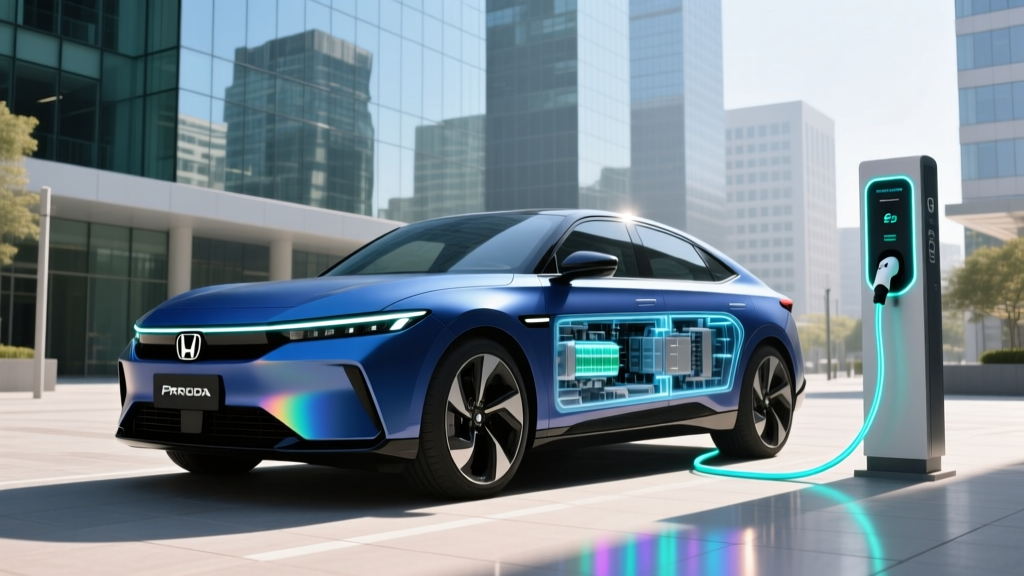
The 2026 Honda Prologue remains Honda's only all-electric vehicle available in the U.S. market, offering an EPA-estimated 296 miles of range (FWD), 288 horsepower, and DC fast charging up to 150 kW. Starting at approximately $47,400 before incentives, it qualifies for partial or full federal tax credits depending on your income, sourcing, and point-of-sale election. If you want a spacious midsize electric SUV with Honda's reputation for reliability and don't need cutting-edge charging speeds, the Prologue delivers. If you need 350+ miles of range or 250+ kW charging, look to competitors like the Hyundai Ioniq 5 or Tesla Model Y.
2026 Honda Prologue: Current Specs and Real-World Performance
The 2026 Prologue continues on the GM Ultium platform (shared with the Chevrolet Blazer EV and Cadillac Lyriq), which Honda adopted to bring an EV to market quickly. Here's what the numbers actually look like:
| Specification | Prologue EX (FWD) | Prologue Touring (AWD) | Prologue Elite (AWD) |
|---|---|---|---|
| EPA Range | 296 miles | 281 miles | 273 miles |
| Battery (usable) | 85 kWh, NMC lithium-ion | ||
| Horsepower | 212 hp | 288 hp | |
| Torque | 236 lb-ft | 333 lb-ft | |
| 0-60 mph | ~7.2 sec | ~5.8 sec | |
| Peak DC Fast Charge | 150 kW | ||
| 10-80% DC Charge Time | ~34 minutes (peak conditions) | ||
| Level 2 (240V) Rate | 11.5 kW (~37 mi/hr) | ||
| MPGe (combined) | 95 MPGe | 91 MPGe | 89 MPGe |
| Base MSRP | $47,400 | $52,400 | $57,900 |
| Battery Warranty | 8 years / 100,000 miles | ||
Real-World Range Expectations
EPA Sticker: 296 miles (FWD) / 281 miles (AWD Touring)
Real-World Highway (70-75 mph, moderate temps): Expect 245-265 miles. The Prologue's boxy SUV shape creates aerodynamic drag that reduces efficiency at sustained highway speeds.
Cold Weather (below 32°F): Expect 195-230 miles depending on cabin heating use. NMC chemistry loses 15-25% capacity in freezing temperatures, and the Prologue's heat pump helps but doesn't eliminate the penalty.
Practical Takeaway: Plan for 230-250 miles of usable range on road trips before needing a charge stop.
Charging Speed: The Prologue's Biggest Limitation
Here's where the Prologue shows its age. At a peak of 150 kW, it charges slower than most 2026 competitors:
| Charging Level | Power | Miles Added Per Hour | Typical Use Case |
|---|---|---|---|
| Level 1 (120V) | ~1.4 kW | ~4-5 miles | Emergency/trickle only |
| Level 2 (240V, 48A) | 11.5 kW | ~37 miles | Home/overnight charging |
| DC Fast (peak) | 150 kW | ~500 miles/hr (at peak) | Road trips |
The Charging Curve Reality: The Prologue hits 150 kW only between roughly 10-30% state of charge, then tapers significantly. Expect an average of 100-110 kW across the full 10-80% session. That 34-minute charge time assumes optimal battery preconditioning and a capable 350 kW charger — at older 50-150 kW stations, expect 45-55 minutes.
Competitor Context: The Hyundai Ioniq 5 peaks at 240 kW (10-80% in ~18 minutes), and the Tesla Model Y peaks at 250 kW. If you take frequent road trips, this 15-20 minute penalty per stop adds up.
Connector: The 2026 Prologue uses CCS1. Honda has announced a transition to NACS (Tesla-style) for future models, but the current Prologue requires a CCS-to-NACS adapter for Tesla Supercharger access. Honda provides this adapter with new vehicles.
EV vs Gas vs Hybrid: What Actually Saves You Money?
Let's compare the Prologue against its gas-powered sibling (Honda Passport) and a hybrid alternative:
| Factor | 2026 Prologue (EV) | 2026 Passport (Gas) | 2026 CR-V Hybrid |
|---|---|---|---|
| Base MSRP | $47,400 | $41,900 | $36,350 |
| Fed. Tax Credit (max) | Up to $7,500* | $0 | $0 |
| Effective Price (after credit) | ~$39,900 | $41,900 | $36,350 |
| Fuel/Energy Cost per Mile | $0.04-0.06 (home) | $0.16-0.18 (gas) | $0.11-0.13 (gas) |
| Annual Fuel Cost (15k mi) | $600-900 | $2,400-2,700 | $1,650-1,950 |
| Maintenance (5-yr est.) | $1,200 | $3,800 | $3,200 |
| 5-Year Total Cost of Ownership** | $52,000 | $63,500 | $54,000 |
*Tax credit eligibility depends on income caps ($150k single / $300k joint), MSRP caps ($80k SUVs), battery sourcing requirements, and point-of-sale election. Verify at IRS.gov.
**5-year TCO includes purchase price (after credit), fuel/energy, maintenance, insurance (average), and estimated depreciation. Source: fueleconomy.gov and industry averages.
The Verdict: If you qualify for the full $7,500 credit and charge primarily at home, the Prologue beats the Passport by ~$11,500 over five years. Against the CR-V Hybrid, the savings narrow to ~$2,000 — the hybrid wins if you can't charge at home or if the Prologue's higher insurance premiums ($200-400/year more) eat into the gap.
Real Ownership Costs: What Dealers Don't Tell You
Year-One Cost Breakdown: Prologue vs Passport
| Expense | Prologue EV | Passport Gas |
|---|---|---|
| Purchase Price (after credit) | $39,900 | $41,900 |
| Home Charger Install (Level 2) | $800-2,200 | $0 |
| Annual Insurance | $1,800-2,400 | $1,400-1,900 |
| Annual Energy/Fuel (15k mi) | $750 | $2,550 |
| Year-1 Maintenance | $120 (tire rotation, cabin filter) | $350 (oil, filters, inspection) |
| State Registration (avg) | $150-300 (some states add EV fees) | $100-200 |
| Total Year 1 | $43,520-45,670 | $46,300-46,900 |
Hidden Costs to Budget For:
- Home electrical panel upgrade: If your panel is 100A or older, adding a 50A circuit for Level 2 charging may require a $1,500-3,500 panel upgrade to 200A.
- Tire replacement: EVs are heavier and deliver instant torque — expect tire wear 20-30% faster than gas cars. Budget $800-1,200 for a set of EV-rated tires every 30-40k miles.
- Public DC charging: At $0.35-0.50/kWh, road-trip charging costs $0.12-0.18/mile — comparable to a 30 MPG gas car. The savings come from home charging at $0.12-0.16/kWh.
- Depreciation uncertainty: EV resale values have been volatile. The Prologue's GM platform and Honda badge help, but expect 45-55% depreciation over 5 years vs 40-50% for the Passport.
First-Time EV Buyer Checklist: Do You Qualify?
Before you commit, verify these practical requirements:
Is the Prologue Right for Your Situation?
✓ Buy the Prologue if:
- You have access to Level 2 charging at home or work (garage, driveway, or employer charger)
- Your daily driving is under 80 miles round-trip (covers 95% of Americans)
- You take 2-4 road trips per year under 400 miles (manageable with one charge stop)
- You qualify for the federal tax credit (income under $150k single / $300k joint)
- You want a midsize SUV with Honda's safety reputation and don't need 350+ mile range
✗ Look elsewhere if:
- You rely exclusively on street parking with no charging access (apartment/condo without chargers)
- You regularly drive 300+ miles in a day (the 150 kW charging speed will frustrate you)
- You live in extreme cold climates (Alaska, northern Minnesota) and need maximum range retention
- You need to tow more than 1,500 lbs (Prologue max tow rating)
- You want the latest ADAS tech — Honda Sensing is solid but not class-leading vs Tesla Autopilot or GM Super Cruise
Common Misconceptions About Honda's EV
| Myth | Fact |
|---|---|
| "The Prologue is just a rebadged Chevy." | It shares the Ultium platform and battery with the Blazer EV, but Honda engineered unique suspension tuning, interior design, and Honda Sensing ADAS. The driving experience and build quality are distinct. |
| "I'll save $7,500 no matter what." | The credit phases based on battery sourcing requirements, your income, and MSRP caps. Many buyers qualify for $3,750 (partial credit) or $0 if income exceeds limits. Always verify via IRS guidelines or a tax professional. |
| "EVs need no maintenance." | You'll still pay for tire rotations, cabin air filters, brake fluid checks, and wiper blades. But you eliminate oil changes, transmission service, spark plugs, and exhaust repairs — saving ~$500-700/year. |
| "The battery will need replacement in 5 years." | NMC batteries in liquid-cooled packs like the Prologue's typically degrade 10-15% over 8-10 years. Honda warrants the battery for 8 years/100,000 miles to retain at least 70% capacity. Replacement cost is $12,000-18,000 out of warranty, but full replacements are rare before 150k+ miles. |
| "I can charge at any Tesla Supercharger." | Only with the CCS-to-NACS adapter Honda provides. Not all Superchargers have been retrofitted for non-Tesla vehicles, and charging speeds may be limited to 150 kW even at 250 kW stalls. |
What's Next for Honda EVs? (2027 and Beyond)
Honda has announced a shift away from the GM Ultium platform. The next-generation Honda EVs, expected for 2027-2028, will use Honda's proprietary "e-Architecture" with these anticipated improvements:
- Thinner battery packs with improved energy density (targeting 350+ mile range)
- Faster charging (200-250 kW peak, targeting 10-80% in 20-25 minutes)
- Native NACS connector for seamless Tesla Supercharger access
- Next-gen Honda Sensing with Level 3 highway capability (hands-off, eyes-off in specific conditions — SAE Level 3, not full self-driving)
Should you wait? If you need an EV now and the Prologue fits your needs, buy it. The 2027+ models will be better, but they're 18-24 months away and will likely start at $50,000+. If you can wait and want cutting-edge tech, hold off — but don't expect revolutionary pricing.
FAQ: Honda EV Ownership in 2026
Can I install a Level 2 charger in my garage myself?
No. Level 2 chargers require a dedicated 240V, 40-50A circuit installed by a licensed electrician. DIY electrical work at this amperage is dangerous and likely violates local code. Budget $800-2,200 for professional installation (charger unit + labor + permit). If your electrical panel is maxed out, a panel upgrade adds $1,500-3,500.
How long does the Prologue battery actually last?
Based on Ultium platform data from GM vehicles (Cadillac Lyriq, Blazer EV), expect 10-15% degradation over 8 years / 100,000 miles. That means a 296-mile Prologue might deliver 250-265 miles when new, dropping to 220-240 miles after 8 years. Honda's warranty guarantees 70% capacity retention (207 miles minimum) at 8 years/100k miles.
Is the Prologue eligible for the $7,500 federal tax credit in 2026?
It depends. The Prologue qualifies for up to $7,500 under IRS §30D, but eligibility requires: (1) your adjusted gross income is under $150k (single) or $300k (joint), (2) the vehicle MSRP is under $80,000 (SUVs), (3) the battery meets critical mineral and component sourcing requirements (which change annually). Many buyers receive $3,750 (partial credit). Verify current-year rules before purchasing, and elect point-of-sale transfer at the dealer to get the credit as a down-payment reduction rather than a tax refund.
How does the Prologue handle in snow and ice?
The AWD Touring and Elite trims provide solid traction, and the low center of gravity (battery pack under the floor) improves stability. However, cold temperatures reduce range by 15-25%, and regenerative braking can be aggressive on slick surfaces — you can reduce regen intensity via steering wheel paddles. Winter tires are strongly recommended if you live in snowy climates; the stock all-season tires are adequate but not optimal.
What's the insurance cost compared to a gas Honda?
Expect to pay $200-400 more per year for Prologue insurance vs a Passport. EVs cost more to repair (specialized high-voltage training, expensive battery replacement if damaged), and insurers price this in. Shop quotes from Geico, Progressive, and State Farm — EV-specific insurers like Tesla Insurance aren't available for Honda, but mainstream carriers have caught up.
Can I use the Prologue for road trips?
Yes, but plan carefully. With 245-265 real-world highway miles and 34-minute charge stops (10-80%), a 600-mile trip requires 2 charge stops totaling ~70 minutes. Use apps like PlugShare or A Better Routeplanner to map 150+ kW chargers along your route. Avoid 50 kW CHAdeMO stations — they'll take 90+ minutes. The CCS-to-NACS adapter expands your options to Tesla Superchargers in compatible locations.
Sources: EPA fueleconomy.gov, Honda Prologue official specs, IRS §30D tax credit guidelines, IIHS safety ratings.