The Short Answer on Honda Electric Vehicles
Honda's EV lineup in 2026 centers on the Honda Prologue, a midsize electric SUV built on GM's Ultium platform with up to 308 miles of EPA range, starting around $47,400. Honda is also expanding its hybrid lineup as a bridge for buyers not ready to go fully electric. If you have reliable home charging and drive under 300 miles daily, the Prologue delivers competitive range and practicality. If you frequently road-trip through charging deserts or lack home charging access, a Honda hybrid like the CR-V Hybrid may better fit your routine today.
Honda's Electric Lineup: What's Actually Available
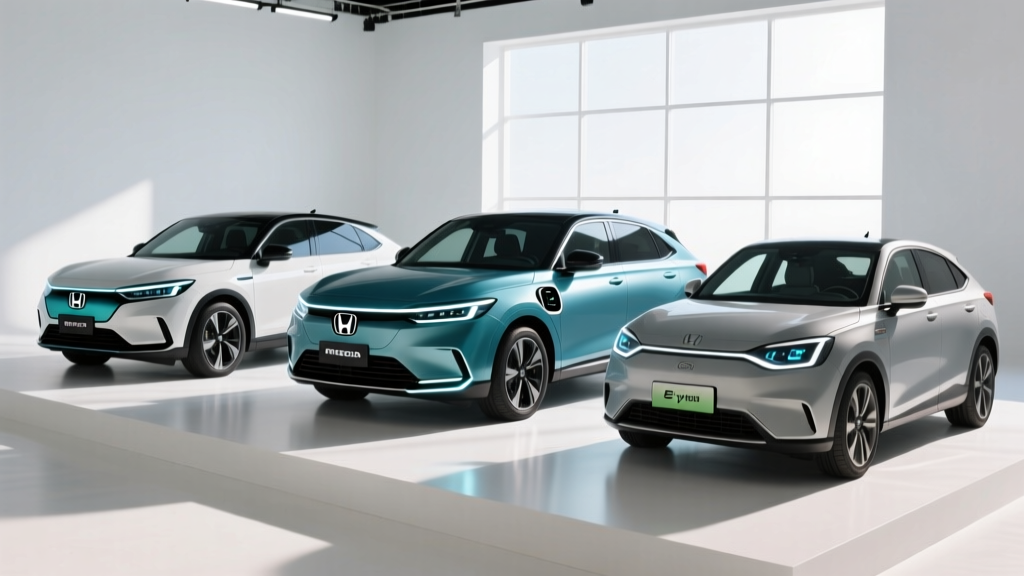
Honda was late to the battery-electric market compared to rivals like Hyundai and Tesla, but the Honda Prologue — introduced for the 2024 model year and refreshed for 2026 — represents the brand's first serious volume EV. Built in partnership with General Motors on the Ultium platform, the Prologue shares its bones with the Chevrolet Blazer EV and Cadillac Lyriq, but wears distinctly Honda styling and tuning.
As of the 2026 model year, Honda also sells the Acura ZDX (its luxury-division EV, also Ultium-based) and has announced a next-generation EV lineup built on its own dedicated platform, expected to arrive for the 2027 model year. Honda's smaller global EVs — the e:Ny1 and updated e: — remain limited to Asian and European markets and are not sold in the U.S.
| Specification | FWD (EX/EX-L) | AWD (Touring/Elite) |
|---|---|---|
| EPA Range | 308 miles | 283–294 miles |
| Battery (Usable) | ~85 kWh, NMC (Ultium) | |
| Horsepower | 213 hp | 288 hp |
| 0–60 mph | ~7.4 sec | ~6.0 sec |
| Peak DC Fast Charge | 190 kW | |
| 10–80% DC Charge Time | ~32 minutes | |
| Level 2 Charge Rate | 11.5 kW (onboard charger) | |
| MPGe (Combined) | 94 MPGe | 87–90 MPGe |
| Cargo Volume | 25.2 cu ft (rear seats up) / 57.7 cu ft (folded) | |
| Towing Capacity | 1,500 lbs | |
| Base MSRP | $47,400 (EX) | $57,900 (Elite) |
| Battery Warranty | 8 years / 100,000 miles | |
Real-World Range vs. EPA Sticker
EPA: 308 miles (FWD) — In real-world highway driving at 70–75 mph, expect approximately 250–275 miles. In cold weather (below 32°F), range can drop to 210–240 miles due to battery chemistry limitations and cabin heating load. Plan road trips around ~220 miles of usable range in winter conditions.
Prologue vs. Gas CR-V vs. CR-V Hybrid: The Numbers
Honda's own lineup provides the most relevant comparison. The gas-only CR-V and the CR-V Hybrid are the Prologue's closest internal alternatives. Here's how they compare on cost and efficiency across a realistic 5-year, 75,000-mile ownership window.
| Category | Prologue (EV) | CR-V Hybrid (AWD) | CR-V Gas (AWD) |
|---|---|---|---|
| Base MSRP | $47,400 | $35,650 | $33,350 |
| Est. Federal Tax Credit | Up to $7,500* | $0 | $0 |
| Effective Starting Price | ~$39,900 | $35,650 | $33,350 |
| EPA Efficiency | 94 MPGe | 40 MPG combined | 29 MPG combined |
| Fuel/Energy Cost (5 yr) | ~$3,200 (home charging) | ~$6,100 | ~$8,400 |
| Est. Maintenance (5 yr) | ~$1,800 | ~$3,400 | ~$3,900 |
| 5-Year Total (purchase + fuel + maint) | ~$44,900 | ~$45,150 | ~$45,650 |
*Federal §30D tax credit eligibility depends on MSRP caps, buyer income limits, and battery/critical-mineral sourcing requirements. Check current rules at IRS.gov before purchasing. Point-of-sale transfer is available at participating dealers.
The Prologue's higher sticker price is substantially offset by the federal tax credit and dramatically lower fuel and maintenance costs. Over five years, total ownership costs converge — and if electricity rates in your area are low (under $0.13/kWh), the EV pulls ahead. The key variable is whether you can charge at home. Public DC fast charging at $0.35–$0.50/kWh erodes the fuel-cost advantage significantly.
Charging the Prologue: Home, Public, and What You'll Spend
The Prologue uses the NACS (Tesla-style) connector on 2026 models, giving it native access to Tesla Supercharger stations — a major practical advantage over older CCS-equipped EVs. For Level 2 home charging, the Prologue's 11.5 kW onboard charger replenishes the 85 kWh battery from empty in roughly 8.5 hours, meaning overnight charging is straightforward.
| Charging Level | Power | Miles Added per Hour | Typical Use Case |
|---|---|---|---|
| Level 1 (120V) | ~1.4 kW | ~4–5 miles/hr | Emergency / trickle top-off |
| Level 2 (240V, 48A) | 11.5 kW | ~35 miles/hr | Home overnight, workplace |
| DC Fast Charge | Peak 190 kW | ~180 mi in 20 min | Road trips, public stations |
Charging cost reality: At the U.S. average residential electricity rate of ~$0.16/kWh, fully charging the Prologue's 85 kWh battery at home costs roughly $13.60, yielding ~308 miles. That's approximately $0.044 per mile. Compare this to the gas CR-V at 29 MPG and $3.40/gallon fuel: $0.117 per mile. The EV is roughly 62% cheaper per mile on home electricity.
However, DC fast charging on road trips at Electrify America or EVgo typically runs $0.35–$0.50/kWh, pushing cost-per-mile to $0.10–$0.14 — comparable to or slightly more than the gas CR-V. This is why home charging access is the single most important ownership variable.
Home charger installation: Budget $600–$1,800 for a quality Level 2 charger (e.g., ChargePoint Home Flex, Emporia Vue) plus $500–$2,500 for electrician labor, depending on whether your panel needs an upgrade to 200A. Total home charging setup: $1,100–$4,300.
Federal Tax Credits and Incentive Eligibility
The 2026 Prologue's eligibility for the $7,500 federal §30D clean vehicle credit depends on several factors that change periodically. Here's the current checklist:
- MSRP Cap: SUVs must be under $80,000 — the Prologue qualifies at all trims.
- Buyer Income Cap: Modified AGI must not exceed $150,000 (single) / $300,000 (joint).
- Battery Sourcing: Critical minerals and battery components must meet escalating domestic/free-trade-agreement thresholds. Because the Prologue uses GM's Ultium battery (U.S.-assembled), it has historically qualified for the full credit, but verify at purchase.
- Point-of-Sale Transfer: You can transfer the credit to the dealer at purchase, reducing your out-of-pocket cost immediately rather than waiting for tax filing.
- Lease Loophole: Leased EVs may qualify for the commercial clean vehicle credit (§45W) regardless of sourcing or income caps, which dealers often pass through as lease cash.
Always confirm eligibility on the official fueleconomy.gov tax credit page and consult a tax professional for your specific situation.
Common Misconceptions About Honda EVs
| Myth | Fact |
|---|---|
| "Honda doesn't make real EVs." | The Prologue is a production EV sold since 2024 with 308 miles EPA range and full U.S. dealer support. |
| "The battery will need replacing in 5 years." | Ultium NMC batteries are warrantied for 8 years/100,000 miles at 70%+ capacity. Industry data shows typical degradation of 10–15% over 8 years — not catastrophic failure. |
| "EVs cost more to insure." | Often true: EV insurance premiums run 10–25% higher than gas equivalents due to repair costs. Budget $150–$250/month depending on state and driving record. |
| "I can charge on any public charger." | The 2026 Prologue uses NACS natively, accessing Tesla Superchargers directly. For older CCS-only public chargers, a NACS-to-CCS adapter may be needed. |
| "Honda's self-driving tech is standard." | Honda Sensing is a Level 2 driver-assist system (adaptive cruise + lane centering). It requires hands-on-wheel supervision at all times. It is not autonomous driving. |
Honda Sensing = SAE Level 2
Honda Sensing includes adaptive cruise control, lane-keeping assist, and traffic-jam assist. These are SAE Level 2 features: the driver must remain fully engaged, hands on the wheel, eyes on the road. Honda does not currently offer any Level 3 or Level 4 autonomous system in U.S. consumer vehicles.
Decision Framework: Should You Buy a Honda EV?
Choose the Honda Prologue if:
- You have or can install Level 2 home charging (garage or driveway with 240V access).
- Your daily commute is under 80 miles round-trip.
- You want a midsize electric SUV with Honda's build quality and dealer network.
- You qualify for the §30D tax credit, bringing the effective price near $40,000.
- You value Supercharger network access via the NACS connector.
Choose the CR-V Hybrid instead if:
- You live in an apartment or street-park with no charging access.
- You regularly drive 300+ miles through rural areas with sparse charging infrastructure.
- You live in a region with extreme cold (prolonged sub-zero winters) and cannot garage the vehicle.
- Your budget is firmly under $36,000 and you cannot wait for incentives.
- You tow more than 1,500 lbs (the Prologue's limit).
Wait for Honda's next-gen EV platform if:
- You want a Honda-designed-from-scratch EV (not GM-shared) expected for 2027.
- You're targeting a smaller, more affordable Honda EV in the $30,000–$40,000 range.
What First-Time Honda EV Buyers Should Know
If the Prologue is your first electric vehicle, prepare for a few ownership realities that differ from the gas-car experience:
Preconditioning matters. Use the Prologue's scheduled departure feature to warm the battery while plugged in. A preconditioned battery charges faster at DC stations and recovers more range in cold weather. Skipping this step in winter can cost you 15–20 minutes of extra charging time.
The charge curve tapers above 80%. The Prologue peaks at 190 kW up to roughly 50–60% state of charge, then progressively slows. Charging from 80–100% on DC fast charging can take as long as the 10–80% session. On road trips, plan stops around 10–80% for maximum efficiency.
Tires wear faster. EVs are heavier and deliver instant torque. Expect to replace tires every 30,000–40,000 miles rather than the 50,000+ you might get on a gas CR-V. Budget $800–$1,200 for a set of EV-rated touring tires.
Maintenance is minimal but not zero. No oil changes, no spark plugs, no transmission fluid. You'll still need cabin air filters, brake fluid checks, windshield washer fluid, and wiper blades. Regenerative braking significantly extends pad life — many EV owners report original brake pads at 80,000+ miles.
Frequently Asked Questions
Does Honda make a fully electric car in 2026?
Yes. The Honda Prologue is a fully electric midsize SUV available at U.S. Honda dealers, offering up to 308 miles of EPA range. Acura (Honda's luxury division) also sells the ZDX, which shares the same Ultium platform. Honda's next-generation, Honda-designed EVs are announced for 2027 and beyond.
How much does it cost to charge a Honda Prologue at home?
At the U.S. average residential rate of $0.16/kWh, a full charge of the Prologue's ~85 kWh battery costs approximately $13.60, yielding up to 308 miles of range. That's roughly $0.044 per mile. Most owners who charge overnight spend $40–$60 per month on EV electricity.
Does the Honda Prologue qualify for the $7,500 tax credit?
The Prologue has qualified for the full §30D federal tax credit due to its U.S.-assembled Ultium battery. However, eligibility depends on buyer income limits ($150K single / $300K joint), the $80,000 SUV MSRP cap, and current battery-sourcing requirements. Verify at IRS.gov before purchasing.
Is the Honda Prologue better than a CR-V Hybrid?
It depends on your situation. The Prologue offers lower per-mile fuel costs (~$0.04/mi at home vs. ~$0.09/mi for the hybrid), zero tailpipe emissions, and a quieter ride. The CR-V Hybrid costs less upfront ($35,650 vs. $47,400), has no range limitations, and doesn't require home charging. For apartment dwellers or frequent long-distance drivers in rural areas, the hybrid is more practical today.
What is the real-world range of the Honda Prologue?
The EPA rates the FWD Prologue at 308 miles. In real-world highway driving (70–75 mph, moderate temperatures), expect approximately 250–275 miles. In cold weather below freezing, range drops to roughly 210–240 miles. These figures assume a mix of regenerative braking and standard driving modes.
How fast does the Honda Prologue charge?
The Prologue supports peak DC fast charging at 190 kW, reaching 10–80% in approximately 32 minutes under optimal conditions. On a Level 2 home charger at 11.5 kW, a full charge takes about 8.5 hours — ideal for overnight charging. The 2026 model uses the NACS connector, granting direct access to Tesla Supercharger stations.
What is Honda's EV battery warranty?
Honda covers the Prologue's Ultium battery pack for 8 years or 100,000 miles (whichever comes first), guaranteeing at least 70% capacity retention. Based on industry data from similar NMC packs, most owners experience 10–15% degradation over 8 years, meaning the warranty threshold is rarely reached in normal use.
Sources: fueleconomy.gov (EPA range and MPGe data), Honda.com (MSRP and specifications), IRS.gov (§30D tax credit rules). All figures reflect 2026 model year data available at time of publication. Verify incentives and pricing with your dealer.