Quick Answer: Honda's 2026 electric lineup centers on the Prologue midsize SUV (EPA range up to 308 miles, starting around $47,500), built on GM's Ultium platform. Honda is also expanding its Honda 0 Series with the new Saloon sedan concept moving toward production. For buyers who can charge at home and drive under 40 miles daily, a Honda EV offers strong fuel savings. If you lack home charging or frequently drive in sub-freezing climates, a Honda hybrid like the CR-V Hybrid (37 MPG combined) may be the more practical choice today.
Honda's Current EV Lineup: What's Actually Available
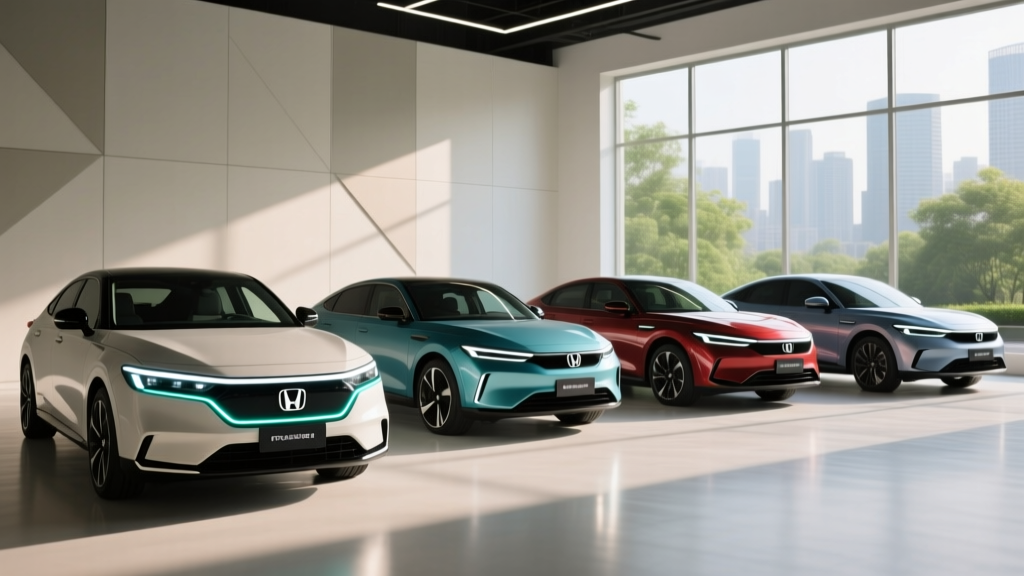
Honda was late to the dedicated battery-electric market compared to rivals like Hyundai and Tesla, but the brand is now committed to electrification. As of 2026, the primary Honda electric vehicle models you can buy in the U.S. are:
| Model | Body Style | EPA Range | Battery (kWh) | Peak DC Charge | Starting MSRP |
|---|---|---|---|---|---|
| Honda Prologue (FWD) | Midsize SUV | 308 mi | 85 kWh (NMC) | 150 kW | ~$47,500 |
| Honda Prologue (AWD) | Midsize SUV | 281 mi | 85 kWh (NMC) | 150 kW | ~$50,500 |
| Honda 0 Series Saloon | Sedan | ~350 mi (est.) | TBD | TBD | Announced |
The Prologue is the volume seller. It shares the GM Ultium BEV3 platform with the Chevrolet Blazer EV and Cadillac Lyriq, which means proven battery hardware but Honda-tuned suspension and interior execution. The Honda 0 Series represents Honda's in-house EV platform, announced for late-2026 or 2027 delivery — specs remain preliminary.
Real-World Range Reality: The Prologue FWD's EPA estimate is 308 miles. In real-world highway testing at 70-75 mph, expect roughly 250-270 miles. In freezing temperatures (below 32°F), that can drop to 210-230 miles due to battery chemistry limitations and cabin heating demands. Plan road trips around ~230 miles of usable range to stay comfortable.
Prologue Deep Dive: Charging, Performance, and Daily Use
The Prologue's 85 kWh NMC (nickel manganese cobalt) battery pack supports DC fast charging at a peak rate of 150 kW. At a compatible charger, you'll see a 10-80% charge in approximately 30-35 minutes. However, the charge curve tapers significantly above 80% — going from 80-100% can add another 25-30 minutes. This is normal for NMC chemistry but means you should plan to charge to 80% on road trips and move on.
| Charging Level | Power | Miles Added per Hour | Best For |
|---|---|---|---|
| Level 1 (120V) | ~1.4 kW | ~4-5 mi/hr | Emergency / overnight trickle |
| Level 2 (240V, 48A) | ~11.5 kW | ~35 mi/hr | Home daily charging |
| DC Fast Charge | Peak 150 kW | ~180 mi in 30 min | Road trips |
Performance-wise, the FWD Prologue delivers 212 hp and a 0-60 mph time of roughly 7.5 seconds. The AWD variant bumps output to 288 hp with a 0-60 in approximately 6.0 seconds. Neither is a performance EV, but the torque delivery is smooth and responsive for daily merging and passing.
On efficiency, the Prologue FWD achieves an EPA-rated 114 MPGe combined (approximately 29 kWh/100 miles). That's competitive with the Hyundai Ioniq 5 and slightly behind the Tesla Model Y, but perfectly adequate for a midsize family SUV.
Honda EV vs. Honda Hybrid: Which Saves You More?
Many Honda shoppers cross-shop the Prologue against the CR-V Hybrid or Accord Hybrid. Here's how the numbers stack up over 5 years of ownership, assuming 15,000 miles/year and a national average electricity rate of $0.16/kWh vs. gas at $3.40/gallon:
| Factor | Prologue FWD (EV) | CR-V Hybrid (HEV) | CR-V Gas (ICE) |
|---|---|---|---|
| Starting MSRP | $47,500 | $35,650 | $31,450 |
| Est. Federal Tax Credit (§30D) | $0-$7,500* | $0 | $0 |
| Annual Fuel/Energy Cost | ~$650 | ~$1,380 | ~$1,840 |
| 5-Year Fuel/Energy Total | ~$3,250 | ~$6,900 | ~$9,200 |
| Maintenance (5-yr est.) | ~$1,800 | ~$3,200 | ~$3,800 |
| 5-Year Total Cost (purchase + fuel + maint.) | ~$45,050-$52,550 | ~$45,750 | ~$44,450 |
*The Prologue's federal tax credit eligibility under IRS §30D depends on battery component and critical mineral sourcing requirements, buyer income caps ($150K single / $300K joint), and the vehicle's MSRP falling under the $80,000 SUV cap. Because the Prologue uses GM's Ultium battery (assembled in the U.S.), partial or full credit may apply — verify with a tax professional before purchasing. Point-of-sale transfer is available if eligible.
The takeaway: the Prologue breaks even with or beats the CR-V Hybrid over 5 years only if you qualify for a meaningful tax credit and have access to affordable home charging. Without the credit and relying on public DC fast charging (often $0.35-$0.48/kWh), the hybrid can be cheaper to own.
Real-World Ownership: What First-Time Honda EV Buyers Must Know
Buying your first Honda electric vehicle involves considerations that don't apply to a gas or hybrid purchase. Address these before signing:
Home Charging Access Is the Make-or-Break Factor
If you can install a Level 2 (240V) home charger, EV ownership is effortless — plug in at night, wake up with 200+ miles every morning. A Level 2 installation typically costs $800-$2,500 depending on your electrical panel capacity. If you need a 200-amp panel upgrade, add $1,500-$3,000. Without home charging, you'll rely on public infrastructure, which adds time, cost, and unpredictability to your routine.
Insurance Costs Are Higher for EVs
Expect Prologue insurance premiums to run 15-25% higher than a comparable CR-V Hybrid, driven by higher repair costs for battery and structural components. Get quotes before purchasing.
Cold Climate Considerations
If you live where winters regularly drop below freezing, plan for 20-30% range loss. The Prologue uses a heat pump (standard), which helps, but battery chemistry limits remain. Preconditioning the battery while plugged in mitigates some loss and improves charging speed in cold weather.
Public Charging Network Compatibility
The Prologue uses the CCS1 connector. Honda has announced future models will adopt NACS (Tesla's connector), but for now, CCS1 means access to Electrify America, EVgo, and ChargePoint DC networks — not Tesla Superchargers without an adapter. Network reliability varies by region; check PlugShare for your area before committing.
Common Honda EV Misconceptions — Fact-Checked
| Myth | Fact |
|---|---|
| "The Prologue is just a rebadged Chevy." | While it shares the Ultium platform, Honda engineers tuned the suspension, steering, interior materials, and infotainment independently. The driving experience and cabin feel distinctly Honda. |
| "EV batteries need replacing every 5 years." | Honda warranties the Prologue's battery for 8 years/100,000 miles with a minimum 70% capacity retention threshold. Industry data shows NMC batteries typically retain 85-90% capacity after 100,000 miles with proper care (avoiding frequent 100% charges and extreme heat exposure). |
| "I'll save $7,500 no matter what." | The §30D credit has strict income limits, MSRP caps, and battery sourcing rules that change yearly. Not every buyer or every configuration qualifies. Always verify current-year rules on IRS.gov. |
| "Level 2 charging is too expensive to install." | A basic Level 2 install on an existing 240V circuit can cost as little as $500-$800. Many utility companies offer rebates of $250-$500 for charger installation. The fuel savings typically offset installation cost within 1-2 years. |
| "Honda doesn't know how to make EVs." | Honda sold the EV Plus in 1997, the Fit EV in 2013, and the Clarity EV in 2017. The Prologue leverages GM's mature Ultium platform while Honda develops its own Honda 0 Series architecture. |
Decision Framework: Should You Buy a Honda EV or Hybrid?
Choose the Honda Prologue (EV) if:
- You have or can install Level 2 home charging
- Your daily commute is under 60 miles round-trip
- You qualify for the §30D federal tax credit (verify income + sourcing rules)
- You want the lowest per-mile "fuel" cost and minimal maintenance
- You rarely drive more than 250 miles in a single day without stopping
Choose a Honda Hybrid (CR-V Hybrid, Accord Hybrid) if:
- You live in an apartment or lack reliable home charging access
- You frequently drive 300+ miles in a day or through charging-desert regions
- You live in an extreme cold climate and want zero range-compromise
- Your budget is under $38,000 and you don't qualify for EV incentives
- You want a proven powertrain with a 15+ year track record
Wait for the Honda 0 Series if:
- You want a Honda-engineered EV (not GM-sourced) with next-gen thin battery architecture
- You're targeting a sedan rather than an SUV
- You can wait until late 2026 or 2027 for U.S. availability
Frequently Asked Questions
Does Honda make a fully electric car in 2026?
Yes. The Honda Prologue is a fully electric midsize SUV available now with up to 308 miles of EPA-estimated range. Honda has also announced the Honda 0 Series Saloon, a dedicated EV sedan expected in late 2026 or 2027 with estimated range around 350 miles, though final specs are preliminary.
How long does it take to charge the Honda Prologue at home?
On a Level 2 (240V, 48-amp) home charger, the Prologue charges from empty to full in approximately 8-9 hours. Most owners plug in overnight and wake up fully charged. On a standard 120V outlet (Level 1), expect roughly 4-5 miles of range per hour of charging — adequate only for very low daily mileage or emergency trickle charging.
Is the Honda Prologue eligible for the $7,500 federal tax credit?
Eligibility depends on several factors under IRS §30D: the buyer's adjusted gross income must be under $150,000 (single) or $300,000 (joint), the vehicle MSRP must be under $80,000 (the Prologue qualifies), and the battery must meet critical mineral and component sourcing thresholds that change annually. Because the Prologue is built in Ohio with GM's Ultium battery, partial or full credit eligibility is likely, but you should confirm current-year rules on IRS.gov and consult a tax professional.
How does the Prologue compare to the Hyundai Ioniq 5 or Tesla Model Y?
The Prologue offers comparable range (308 vs. Ioniq 5's 303 miles) but slower DC fast charging (150 kW peak vs. Ioniq 5's 240 kW and Model Y's 250 kW). The Prologue's interior quality and ride comfort are strong, but rivals charge 10-80% in roughly 18-20 minutes vs. the Prologue's 30-35 minutes. If fast charging on road trips is a priority, the Ioniq 5 and Model Y have a measurable advantage.
What is the battery warranty on the Honda Prologue?
Honda provides an 8-year/100,000-mile warranty on the Prologue's high-voltage battery pack, guaranteeing a minimum of 70% capacity retention. The basic vehicle warranty is 3 years/36,000 miles, and the powertrain warranty is 5 years/60,000 miles.
Can I use Tesla Superchargers with the Honda Prologue?
Not natively. The Prologue uses the CCS1 connector, while Tesla Superchargers use NACS. Honda has committed to adopting NACS on future models, and some Supercharger stations now offer Magic Dock adapters for CCS vehicles, but coverage is limited. For now, rely on Electrify America, EVgo, and ChargePoint for DC fast charging.