Quick Verdict: The 2023 Kia EV6 GT-Line at a Glance
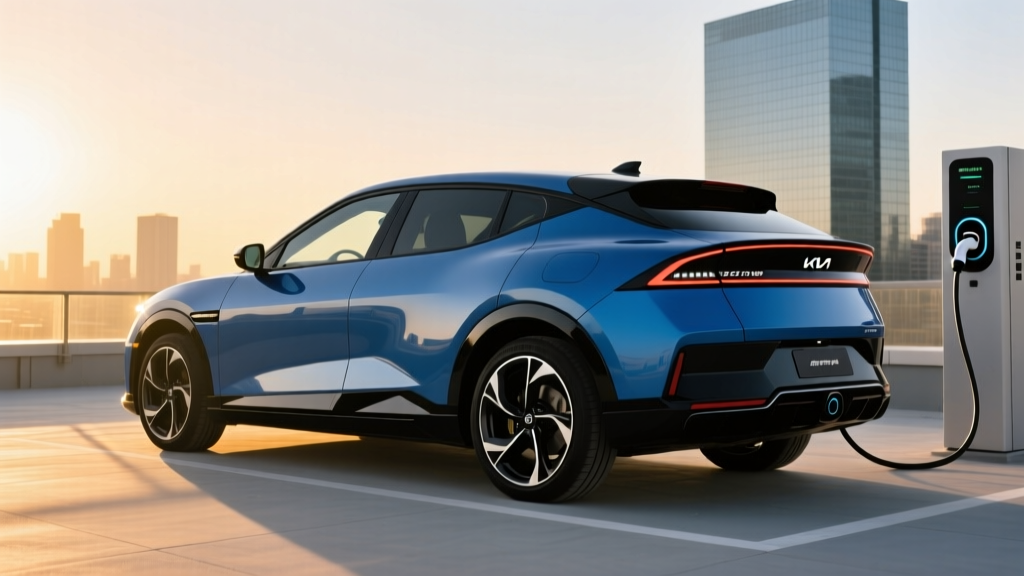
The 2023 Kia EV6 GT-Line sits at the intersection of style, 800-volt fast-charging capability, and practical daily range. Built on the Hyundai Motor Group E-GMP platform, it shares its bones with the Hyundai Ioniq 5 and Genesis GV60 but wears a sleeker, more coupe-like body. For buyers who prioritize striking design and best-in-class DC charging speeds over maximum cargo volume, the GT-Line trim — particularly the dual-motor AWD variant — remains one of the strongest electric crossovers in its class, even as newer competitors enter the market.
The GT-Line designation on the EV6 is an appearance and feature package, not a powertrain upgrade. It layers on sportier bumpers, a unique rear spoiler, suede-and-leatherette upholstery, and a suite of premium tech over the standard Wind trim. You still get the same battery and motor options. That's worth understanding before you cross-shop it against the actual EV6 GT, the 576-hp performance beast that occupies a different price and purpose bracket entirely.
| Spec | Value |
|---|---|
| EPA Range | 282 miles (AWD Long Range) |
| Usable Battery Capacity | 77.4 kWh (NMC chemistry) |
| Drivetrain | Dual-motor AWD |
| Horsepower / Torque | 320 hp / 446 lb-ft |
| 0–60 mph | 4.5 seconds |
| MPGe (Combined) | 106 MPGe |
| Max DC Fast Charge | ~240 kW (800V architecture) |
| 10–80% DCFC Time | ~18 minutes (optimal conditions) |
| Level 2 Home Charge Rate | 10.9 kW (onboard AC charger) |
| Cargo Volume (behind 2nd row) | 24.4 cu ft |
| Rear Legroom | 39.4 inches |
| Base MSRP (GT-Line AWD) | $55,900 |
| Battery/Powertrain Warranty | 10 years / 100,000 miles |
Range and Efficiency: EPA Numbers vs. Real-World Reality
Real-World Expectation: Plan for 240–260 miles on highway-heavy trips at 70–80 mph. In freezing temperatures (below 32°F), expect a 20–30% reduction, dropping usable range to roughly 195–230 miles depending on cabin heat usage and driving style.
The 2023 EV6 GT-Line comes in two drivetrain configurations that significantly affect range. The rear-wheel-drive (RWD) Long Range model pairs the 77.4 kWh battery with a single 225-hp motor and earns an EPA-estimated 310 miles — a strong figure for a crossover in this segment. The dual-motor all-wheel-drive (AWD) version we focus on here trades 28 miles of that range for all-weather traction and substantially quicker acceleration.
According to fueleconomy.gov, the AWD GT-Line achieves 106 MPGe combined, translating to roughly 32 kWh per 100 miles of driving. That efficiency figure is competitive with the Tesla Model Y Long Range (122 MPGe combined) and slightly behind the Hyundai Ioniq 5 AWD (110 MPGe combined), which benefits from marginally better aero tuning.
In real-world mixed driving — suburban commutes with occasional highway stints — owners consistently report achieving 250–270 miles on a full charge in moderate temperatures. The EV6's heat pump, standard on Long Range trims, helps mitigate cold-weather losses compared to EVs without active battery thermal management, but physics still wins in deep winter. If you live in Minnesota or Maine and regularly drive 100+ miles in sub-freezing weather, budget for that 20–30% range reduction in your trip planning.
Charging Speed: 800-Volt Architecture Makes a Difference
The 2023 EV6's headline advantage over most rivals is its 800-volt electrical architecture, shared with the Ioniq 5 and Porsche Taycan. While most EVs in this price range run 400V systems limited to 150 kW peak charging, the EV6 can accept up to roughly 240 kW at a compatible DC fast charger. This isn't just a spec-sheet number — it translates to meaningfully shorter charging stops on road trips.
| Charging Level | Power | Time / Rate | Notes |
|---|---|---|---|
| Level 1 (120V household) | ~1.4 kW | ~3–4 miles per hour | Emergency/trickle only; full charge in 50+ hours |
| Level 2 (240V home/public) | 10.9 kW | ~32 miles per hour; full charge ~7.5 hrs | Requires 48A circuit; recommended for daily use |
| DC Fast Charge (50 kW) | 50 kW | 10–80% in ~65 minutes | Older/slower public stations |
| DC Fast Charge (150 kW) | 150 kW | 10–80% in ~30 minutes | Common Electrify America/EVgo stations |
| DC Fast Charge (240+ kW) | ~240 kW peak | 10–80% in ~18 minutes | Requires 350 kW-capable CCS station; battery preconditioned |
A critical nuance on the 18-minute 10–80% claim: that figure requires a CCS connector station capable of 350 kW output, a battery that has been preconditioned (the EV6 does this automatically when you navigate to a charger in the infotainment system), and moderate ambient temperatures. On a 150 kW station — still the majority of public infrastructure — expect 10–80% in roughly 28–32 minutes. The charging curve tapers noticeably above 80% state of charge to protect the NMC cells, so a full 100% fill takes considerably longer. For road trips, the 10–80% window is what matters, and 18 minutes at a fast station is genuinely competitive with a gas-station stop when you factor in a bathroom break.
The 10.9 kW onboard AC charger is another practical win. Many rivals (including the Tesla Model Y on non-Tesla Level 2 stations) are limited to 7.2 or 9.6 kW AC charging. With a properly installed 48-amp Level 2 home charger, the EV6 will replenish from near-empty overnight in about 7.5 hours — more than sufficient for daily driving needs.
Performance and Driving Dynamics
The GT-Line AWD's dual-motor setup produces 320 horsepower and 446 lb-ft of torque, launching the EV6 to 60 mph in approximately 4.5 seconds. That's brisk enough to feel genuinely quick in daily driving, though it sits well below the 576-hp EV6 GT (3.4 seconds to 60). Instant electric torque gives the GT-Line strong passing punch at highway speeds, and the low center of gravity from the floor-mounted battery pack keeps body roll controlled through corners.
Ride quality leans slightly firm, especially on the GT-Line's 20-inch alloy wheels with 255/45R20 tires. You'll feel sharper pavement imperfections more than in a Hyundai Ioniq 5 or Volkswagen ID.4, but the trade-off is sharper turn-in and less floatiness on undulating roads. The regenerative braking system offers multiple levels, adjustable via steering-wheel paddles, including a full one-pedal driving mode (i-Pedal) that can bring the car to a complete stop without touching the friction brakes.
The EV6 GT-Line also features Kia's Vehicle-to-Load (V2L) capability through an adapter plugged into the exterior charge port or a dedicated interior outlet. V2L can supply up to 3.6 kW of AC power — enough to run a laptop setup, power tools at a job site, or even a small refrigerator during a home outage. It's a genuinely useful feature that most competitors still don't offer.
Interior, Cargo, and Technology
Inside, the GT-Line distinguishes itself with a suede-and-leatherette seat combination, a flat-bottom steering wheel, aluminum pedals, and ambient lighting. The dual 12.3-inch curved display panel handles both the instrument cluster and infotainment, running Kia's UVO Connect system with wireless Apple CarPlay and Android Auto. The head-up display with augmented-reality navigation arrows is a standout feature on higher-optioned GT-Line builds.
Cargo space is where the EV6's sleek fastback design extracts a toll. Behind the second row, you get 24.4 cubic feet — noticeably less than the Tesla Model Y (30.2 cu ft) and Hyundai Ioniq 5 (27.2 cu ft). Fold the rear seats, and capacity expands to 50.2 cubic feet, which is adequate for most hauling needs but still trails the Model Y's 72 cu ft maximum. The front trunk (frunk) on AWD models is a small 0.7 cu ft — essentially a spot for the charging cable, not meaningful storage.
Passenger space is more generous. Rear legroom measures 39.4 inches, which is excellent for a crossover and comfortably accommodates adults on longer trips. The flat floor (no transmission tunnel) makes the middle rear seat more usable than in most gas-powered crossovers.
On the driver-assistance front, the EV6 GT-Line comes equipped with Kia's Highway Driving Assist 2 (HDA2), a Level 2 SAE system that combines adaptive cruise control with lane-centering steering. It works well on divided highways but requires continuous driver supervision — this is not an autonomous system. The EV6 earned a Top Safety Pick+ rating from the IIHS when equipped with specific headlights, reflecting strong crash-test performance.
Pricing, Trims, and Federal Tax Credit Eligibility
The 2023 Kia EV6 GT-Line was offered in a clear trim hierarchy. Pricing below reflects original MSRP at launch; used and certified pre-owned pricing in 2026 will vary based on mileage, condition, and market demand.
| Trim / Config | MSRP | §30D Federal Credit Eligibility |
|---|---|---|
| GT-Line RWD (Long Range) | $52,900 | Eligible — under $55,000 SUV MSRP cap |
| GT-Line AWD (Long Range) | $55,900 | Eligible — under $55,000 SUV MSRP cap |
| GT-Line AWD w/ GT-Line Prestige Pkg | ~$60,400 | Eligible — under $55,000 SUV MSRP cap (check adjusted MSRP classification) |
Federal tax credit nuance is essential here. Under IRS §30D rules, the EV6 qualifies as an SUV for the higher $80,000 MSRP cap, giving it more pricing headroom than sedan-classified EVs. However, the full $7,500 credit depends on two additional factors that vary by buyer and by vehicle production batch:
- Buyer income cap: Adjusted gross income must not exceed $150,000 (single), $225,000 (head of household), or $300,000 (joint filers).
- Battery component sourcing: A percentage of battery components must be manufactured or assembled in North America, and critical minerals must be sourced from the U.S. or free-trade-agreement countries. These thresholds increase annually. For 2023-model vehicles purchased new in 2023, the sourcing thresholds were lower and most EV6 units qualified. For used purchases in 2026, the used clean vehicle credit (up to $4,000 or 30% of sale price, whichever is lower) applies instead, subject to a $25,000 maximum sale price — which typically excludes the EV6 GT-Line from the used credit.
- Point-of-sale transfer: As of 2024, buyers can transfer the credit to the dealer at purchase for an immediate price reduction rather than waiting to claim it on their tax return.
Consult a tax professional and verify current IRS guidance before making a purchase decision based on credit eligibility. Rules and vehicle qualification lists change, and Kia's specific battery sourcing for each production batch determines eligibility on a VIN-by-VIN basis.
How the EV6 GT-Line Stacks Up Against Key Competitors
The 2023 EV6 GT-Line AWD competes in a crowded and talented segment. Here's how it measures up on the metrics that matter most:
| Spec | Kia EV6 GT-Line AWD | Hyundai Ioniq 5 AWD | Tesla Model Y LR AWD | Ford Mustang Mach-E ER AWD |
|---|---|---|---|---|
| EPA Range | 282 mi | 266 mi | 330 mi | 290 mi |
| Battery (usable) | 77.4 kWh | 77.4 kWh | ~75 kWh | 88 kWh |
| Max DCFC | ~240 kW | ~240 kW | ~250 kW | ~150 kW |
| 10–80% DCFC | ~18 min | ~18 min | ~20 min | ~38 min |
| 0–60 mph | 4.5 sec | 5.1 sec | 4.8 sec | 5.1 sec |
| Cargo (rear seats up) | 24.4 cu ft | 27.2 cu ft | 30.2 cu ft | 29.7 cu ft |
| Base MSRP (AWD) | $55,900 | $51,100 | $52,990 | $56,995 |
| Battery Warranty | 10 yr/100k mi | 10 yr/100k mi | 8 yr/120k mi | 8 yr/100k mi |
The EV6's clearest advantages are its 800V fast-charging speed (matched only by the Ioniq 5), its quick acceleration, and Kia's 10-year powertrain warranty. Its most obvious weakness is cargo space — the fastback roofline sacrifices roughly 5–6 cubic feet behind the second row compared to the boxier Model Y and Mach-E. If you regularly haul bulky gear, dog crates, or strollers, test-load your typical cargo before committing.
Ownership Costs and Long-Term Battery Outlook
Kia backs the EV6's high-voltage battery and electric powertrain with a 10-year/100,000-mile warranty — among the longest in the industry. The warranty covers battery capacity retention below 70% of original capacity, which is a common industry threshold. Based on data from the E-GMP platform's real-world performance since 2022, NMC degradation has been moderate, with most high-mileage examples retaining 90%+ state of health after 60,000 miles. The EV6's active liquid thermal management system helps protect the pack from heat-related degradation during repeated DC fast charging.
Insurance costs for the EV6 GT-Line AWD tend to run 10–20% higher than a comparably priced gas crossover, reflecting the higher repair costs associated with EV battery proximity and specialized body panels. Get quotes from your insurer before purchasing — premiums vary significantly by ZIP code, driving record, and carrier.
Charging economics favor the EV6 heavily if you can charge at home on a Level 2 setup. At a national average residential electricity rate of ~$0.16/kWh, fully charging the 77.4 kWh battery costs roughly $12.38, yielding a per-mile energy cost of about $0.044. Compare that to a 25 MPG gas crossover at $3.50/gallon ($0.14/mile), and the EV6 saves approximately $1,400–$1,800 per year in fuel costs at 15,000 miles driven annually.
Pros
- Best-in-class 800V DC fast charging (~240 kW, 10–80% in ~18 min)
- Strong acceleration (4.5 sec 0–60 AWD) with composed handling
- 10-year/100,000-mile battery and powertrain warranty
- Vehicle-to-Load (V2L) capability for off-grid power
- Distinctive, head-turning fastback design
- Heat pump standard on Long Range trims for cold-weather efficiency
Cons
- Cargo space (24.4 cu ft) trails key rivals by 5–6 cubic feet
- Frunk is nearly useless on AWD models (0.7 cu ft)
- Firm ride on 20-inch GT-Line wheels over rough pavement
- Infotainment touch-capacitive climate controls are distracting while driving
- Higher MSRP than Ioniq 5 for mechanically similar package
- Used EV tax credit unlikely to apply (sale price typically exceeds $25,000 cap)
Who Should Buy the 2023 Kia EV6 GT-Line?
- You take regular road trips and want the shortest DC charging stops available in this price class
- You value distinctive design and don't need maximum cargo volume
- You want AWD traction and sub-5-second acceleration without stepping to a performance-price bracket
- Long warranty coverage (10 years) is a priority for your ownership horizon
- You can install a Level 2 home charger to exploit the low per-mile electricity cost
- Maximum cargo and passenger space are non-negotiable — consider the Tesla Model Y or Kia EV9
- Your budget is tighter — the Hyundai Ioniq 5 AWD offers the same 800V platform for ~$4,800 less
- You need over 320 miles of EPA range — the Tesla Model Y Long Range or the RWD EV6 (310 mi) better suit high-mileage commuters
- You want the hands-free highway driving experience of GM's Super Cruise or Ford's BlueCruise
Frequently Asked Questions
What is the real-world range of the 2023 Kia EV6 GT-Line AWD?
The EPA rates it at 282 miles, but real-world highway driving at 70–80 mph in moderate temperatures typically yields 240–260 miles. In sub-freezing winter conditions, plan for 195–230 miles depending on cabin heating usage and whether you precondition the battery.
How fast does the 2023 EV6 GT-Line charge at home and on the road?
On a 48-amp Level 2 home charger, it charges at 10.9 kW, adding roughly 32 miles per hour and reaching a full charge in about 7.5 hours. At a 350 kW-capable DC fast charger, it peaks at approximately 240 kW and can go from 10–80% in about 18 minutes under optimal conditions.
Does the 2023 Kia EV6 GT-Line qualify for the federal EV tax credit?
When purchased new, the EV6 GT-Line generally qualified for up to $7,500 under §30D, subject to buyer income limits ($150K single / $300K joint), battery sourcing requirements, and the $80,000 SUV MSRP cap. For used purchases in 2026, the used clean vehicle credit (up to $4,000) typically does not apply because the sale price exceeds the $25,000 cap. Always verify eligibility on the IRS qualified vehicles list and consult a tax professional.
Is the 2023 EV6 GT-Line worth buying over the Hyundai Ioniq 5?
They share the same E-GMP platform, battery, and 800V charging architecture. The EV6 GT-Line offers sportier styling, slightly quicker acceleration (AWD), and a more premium interior feel. The Ioniq 5 offers more rear cargo space (27.2 vs 24.4 cu ft) and a lower starting price. If design and driving dynamics matter most, the EV6 wins. If cargo and value matter most, the Ioniq 5 is the pragmatic pick.
What is the biggest drawback of the 2023 EV6 GT-Line?
Cargo volume. The fastback roofline limits space behind the second row to 24.4 cubic feet — less than the Model Y, Mach-E, and Ioniq 5. The near-nonexistent frunk on AWD models compounds this. For buyers who regularly carry large items, this is a meaningful compromise.
How long will the EV6 battery last?
Kia warranties the battery for 10 years or 100,000 miles against degradation below 70% capacity. Real-world data from E-GMP platform vehicles suggests most packs retain 90%+ state of health after 60,000 miles with proper charging habits (avoiding frequent 100% charges and excessive DC fast charging in extreme heat). A full battery replacement, if ever needed out of warranty, currently costs in the range of $10,000–$15,000 based on industry estimates, though prices are expected to decline.