Quick Answer: Does Honda Make an Electric Sports Car?
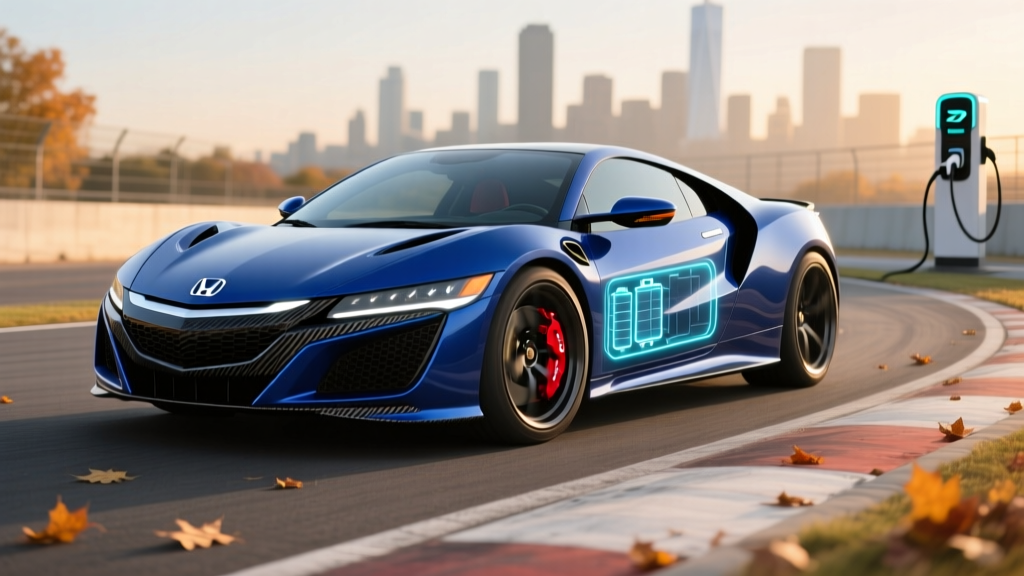
As of 2026, Honda does not sell a dedicated electric sports car in the United States. The brand's closest electrified performance option is the Acura ZDX Type S (Honda's luxury division), which delivers 500 hp, a 3.6-second 0-60 mph time, and an EPA-estimated 278 miles of range from a 102 kWh (usable) Ultium battery. Honda's announced Saloon concept — previewing a future electric sports sedan — remains in development with no confirmed U.S. on-sale date or final specs. Buyers seeking an electric sports car today should cross-shop the Hyundai Ioniq 5 N, Porsche Taycan, and Tesla Model 3 Performance against the Acura ZDX Type S.
Honda's Electrified Performance Lineup: What's Actually Available
Honda's approach to electric performance has funneled through its Acura brand rather than wearing the Honda badge directly. Understanding this distinction matters for buyers researching a "Honda electric sports car" — the engineering DNA is shared, but the product, pricing, and dealership experience differ substantially.
The 2026 Acura ZDX Type S sits atop Honda Motor Company's electric performance portfolio for the U.S. market. Built on GM's Ultium platform, it represents the most potent expression of Honda-group electric performance you can buy today. Here's what the numbers look like:
| Spec | 2026 Acura ZDX Type S |
|---|---|
| Base MSRP | $74,500 (before incentives) |
| Battery (usable) | 102 kWh, NMC lithium-ion |
| EPA Range | 278 miles |
| Real-World Range (highway) | ~225–245 miles |
| Drivetrain | Dual-motor AWD |
| Horsepower | 500 hp |
| 0–60 mph | 3.6 seconds |
| Peak DC Fast Charge | 190 kW |
| 10–80% DC Charge Time | ~32 minutes |
| Level 2 Charge Rate | 11.5 kW (7.7 hrs 0–100%) |
| Battery Warranty | 8 years / 100,000 miles |
| Federal Tax Credit (§30D) | Eligibility varies by sourcing — verify at IRS.gov |
Real-World Range Reality Check
The EPA's 278-mile estimate assumes a mix of city and highway driving at moderate temperatures. On a sustained 75 mph highway run in 40°F weather, expect roughly 195–215 miles before needing to charge. Cold weather combined with high speeds is the worst-case scenario for any EV. If your typical drive includes stop-and-go city traffic with regenerative braking recovery, you'll land closer to the EPA sticker.
Honda Saloon Concept: The Promised Electric Sports Sedan
Honda unveiled the Saloon concept at the 2024 CES show as the flagship preview of its next-generation EV architecture — a low-slung, rear-drive-biased electric sedan targeting the performance space occupied by the Tesla Model S and Porsche Taycan. Honda has confirmed a production version is in development, built on its proprietary "e:Architecture" platform.
However, critical details remain unconfirmed as of 2026:
- U.S. on-sale date: Announced for "later this decade" — no model year commitment
- Battery capacity: Preliminary estimates suggest 80–100 kWh, but Honda has not published final specs
- Range target: Honda has referenced 300+ miles, but no EPA certification exists
- Pricing: No MSRP guidance; industry estimates place it in the $55,000–$75,000 range based on segment positioning
- Performance: Concept demonstrated dual-motor AWD; production powertrain output unconfirmed
Bottom line: The Saloon is announced, not available. Any buyer needing an electric performance car in 2026 cannot wait for it. The sections below focus on what you can actually buy and own today.
Cost Breakdown: Electric Sports Car vs Gas Coupe Ownership
The purchase price of an electric performance vehicle is only the beginning. Here's a 5-year total cost of ownership comparison between the Acura ZDX Type S and a comparably powered gas sports coupe (using the BMW M440i xDrive as a baseline, MSRP ~$65,000, 28 mpg combined):
| Cost Category (5 Years) | Acura ZDX Type S (EV) | BMW M440i xDrive (Gas) |
|---|---|---|
| Purchase Price | $74,500 | $65,000 |
| Federal Tax Credit (§30D) | $0–$7,500 (sourcing dependent) | $0 |
| Fuel / Electricity (60,000 mi) | $3,900–$5,400 | $8,100–$9,500 |
| Maintenance (5 yr) | $1,200–$1,800 | $3,500–$4,500 |
| Insurance (avg) | $12,500–$15,000 | $10,000–$12,500 |
| Estimated Depreciation | $28,000–$35,000 | $22,000–$27,000 |
| 5-Year Total (approx.) | $64,100–$82,200 | $59,100–$71,500 |
Key takeaways:
- Electricity cost varies enormously by where and how you charge. Home Level 2 charging at $0.14/kWh yields roughly $0.055/mile. Exclusive DC fast charging at $0.40/kWh pushes that to $0.14/mile — comparable to gas.
- Maintenance savings are real. No oil changes, no transmission fluid, fewer brake replacements (regenerative braking reduces pad wear by 50–70%). Expect tire rotations, cabin air filter, and brake fluid checks.
- Insurance runs 15–25% higher on electric performance vehicles due to battery replacement cost exposure and specialized repair requirements.
- Depreciation is the wildcard. EV resale values have been volatile. The ZDX Type S benefits from Acura's brand equity, but the EV segment as a whole has seen steeper first-year depreciation than legacy gas performance cars.
Charging at Home vs Public: What Sports Car Buyers Must Plan For
Performance EVs consume more energy per mile than efficiency-focused models. The ZDX Type S averages roughly 2.6–2.8 kWh/mile (about 120 MPGe combined) when driven with enthusiasm. That makes your charging strategy critical to satisfaction.
| Charging Level | Power (kW) | Miles Added per Hour | Typical Use Case |
|---|---|---|---|
| Level 1 (120V household) | 1.2–1.4 kW | ~3–4 miles/hr | Emergency / overnight trickle only |
| Level 2 (240V home) | 7.7–11.5 kW | ~22–32 miles/hr | Daily home charging — recommended |
| DC Fast Charge | Up to 190 kW | ~450–600 mi/hr (peak) | Road trips, 10–80% in ~32 min |
Home charging installation for a 48-amp Level 2 charger (the practical minimum for a 102 kWh battery) typically costs:
| Component | Cost Range |
|---|---|
| Level 2 Charger (hardwired, 48A) | $500–$750 |
| Electrician labor (240V/50A circuit) | $800–$2,000 |
| Permit & inspection | $100–$300 |
| Panel upgrade (if needed, 200A service) | $1,500–$3,500 |
| Total (no panel upgrade) | $1,400–$3,050 |
| Total (with panel upgrade) | $2,900–$6,550 |
A 102 kWh battery charged from 20% to 80% on a 48-amp Level 2 circuit takes approximately 7–8 hours — perfectly suited to overnight charging. On a 190 kW DC fast charger, that same 20–80% fill takes roughly 32 minutes, though the charge curve tapers significantly above 80%, making the final 20% disproportionately slow.
If you cannot install home charging (apartment, street parking, HOA restrictions), owning a performance EV becomes substantially less convenient and more expensive. Reliance on public DC fast charging at $0.35–$0.50/kWh erases most fuel cost savings and adds 30+ minutes per session, 2–3 times per week for a daily commuter.
The Acura ZDX Type S vs the Competition
For buyers searching "Honda electric sports car" who are ready to purchase now, the ZDX Type S competes in a defined segment. Here's how it stacks up against the key rivals:
| Spec | Acura ZDX Type S | Hyundai Ioniq 5 N | Tesla Model 3 Performance | Porsche Taycan (Base) |
|---|---|---|---|---|
| Base MSRP | $74,500 | $67,500 | $54,990 | $99,400 |
| EPA Range | 278 mi | 221 mi | 315 mi | 225 mi (est.) |
| Horsepower | 500 hp | 641 hp (N Grin Boost) | 510 hp | 402 hp (launch control) |
| 0–60 mph | 3.6 sec | 3.4 sec | 2.9 sec | 4.5 sec |
| Peak DC Charge | 190 kW | 238 kW | 250 kW | 270 kW |
| 10–80% DC Time | ~32 min | ~18 min | ~20 min | ~23 min |
| Battery (usable) | 102 kWh NMC | 84 kWh NMC | 79 kWh (est.) NMC | 83.7 kWh NMC |
| Curb Weight | ~5,900 lbs | ~4,850 lbs | ~4,050 lbs | ~4,700 lbs |
| Federal Tax Credit | Verify sourcing | Not eligible (Korea) | Verify sourcing | Not eligible (Germany) |
Where the ZDX Type S wins: Interior refinement, ride comfort for daily driving, Acura dealer service network, and the largest battery in the group (longest range when driven conservatively).
Where it loses: Weight (nearly 6,000 lbs undermines corner-carving dynamics), slower DC charging than rivals, and no track-focused features like the Ioniq 5 N's simulated gear shifts and N e-Shift software. The Tesla Model 3 Performance is dramatically quicker and cheaper. The Porsche Taycan charges fastest and handles best but costs $25,000 more.
Federal Tax Credit Eligibility: What Applies in 2026
The §30D Clean Vehicle Credit can reduce your effective purchase price by up to $7,500, but eligibility for the Acura ZDX Type S is not guaranteed and depends on several factors that change periodically:
- MSRP cap: SUVs/vans capped at $80,000 — the ZDX Type S at $74,500 qualifies on price
- Buyer income cap: Modified AGI must not exceed $300,000 (joint), $225,000 (head of household), or $150,000 (single)
- Battery sourcing: Critical minerals and battery components must meet escalating percentage thresholds from U.S. free-trade-agreement partners — this is where eligibility can shift year to year
- Point-of-sale transfer: As of 2024+, you can transfer the credit to the dealer for an immediate price reduction rather than waiting for tax filing
- Final assembly: Must occur in North America — the ZDX is built in Tennessee, so this requirement is met
Always verify current eligibility on IRS.gov or fueleconomy.gov before committing to a purchase. Sourcing requirements tighten annually, and a model that qualifies in January may not in December.
Common Misconceptions About Honda's Electric Sports Car Plans
| Myth | Fact |
|---|---|
| "Honda sells an electric sports car in the U.S." | Honda does not. Acura (its luxury brand) sells the ZDX Type S, and Honda has announced the Saloon concept with no confirmed U.S. sale date. |
| "Electric sports cars can't match gas coupe performance." | The Tesla Model 3 Performance hits 0–60 in 2.9 seconds — faster than a BMW M3. Instant electric torque destroys most gas cars off the line. Track endurance is where gas still holds an edge. |
| "You'll save $10,000 in fuel over 5 years." | Only if you charge primarily at home at residential electricity rates. Exclusive public DC fast charging narrows savings to $1,000–$2,000 over 5 years, or can even cost more than gas in high-rate markets. |
| "The battery will need replacing within 5 years." | Modern NMC batteries degrade roughly 1.5–2.5% per year under normal use. After 5 years, expect 88–93% of original capacity — well within Acura's 8-year/100,000-mile warranty threshold (typically 70% capacity retention). |
| "The Saloon will be a Honda-badged car under $50,000." | No pricing has been confirmed. Honda's e:Architecture platform targets premium positioning. Industry analysts project $55,000–$75,000 based on segment competition. |
Decision Framework: Should You Wait or Buy Now?
Choose the Acura ZDX Type S now if:
- You want a refined, comfortable electric performance SUV today with Acura dealer support
- You have home Level 2 charging (or can install it)
- Your daily commute is under 80 miles round-trip
- You prioritize ride quality and interior materials over track lap times
- You can verify §30D tax credit eligibility for the current delivery window
Choose the Hyundai Ioniq 5 N instead if:
- Track capability and driving engagement matter more than luxury
- You want faster DC charging (18 min vs 32 min, 10–80%)
- You're willing to sacrifice 57 miles of EPA range for 141 more horsepower
- Lower MSRP ($67,500 vs $74,500) keeps you in budget — though note: Ioniq 5 N does not qualify for the federal tax credit (built in Korea)
Choose the Tesla Model 3 Performance if:
- Straight-line speed is the priority (2.9 sec 0–60 mph, the quickest in this group)
- Lowest purchase price matters ($54,990)
- You want access to the Supercharger network for road-trip convenience
- You can accept Tesla's minimalist interior and panel-quality variance
Wait for the Honda Saloon if:
- You specifically want a Honda-badged electric performance sedan (not Acura, not SUV)
- Your current car is satisfactory and you're not under purchase pressure
- You accept that specs, pricing, and availability remain unconfirmed and the timeline extends to 2028 or later
Frequently Asked Questions
Will Honda ever make a Civic Type R electric?
Honda has not announced an electric Civic Type R. The current Civic Type R remains a manual-transmission gasoline hot hatch. Honda's e:Architecture platform could theoretically underpin a future electric performance compact, but nothing is confirmed. The brand's electric performance efforts are currently channeled through Acura.
How does the Acura ZDX Type S handle compared to a gas sports car?
The ZDX Type S is a performance SUV, not a sports coupe. At roughly 5,900 lbs, it cannot match the cornering agility of a BMW M4 or Porsche Cayman. Its strength is effortless straight-line acceleration (500 hp, instant torque) and composed highway cruising. Think of it as a grand tourer rather than a track car. For a Honda-group EV that handles like a true sports car, you'd need to wait for the Saloon production model or look to the Ioniq 5 N.
What does charging an electric sports car actually cost per month?
Driving 1,000 miles/month in the ZDX Type S at 2.7 kWh/mile requires roughly 2,700 kWh/month. At a residential rate of $0.14/kWh (home charging), that's $378/month. At a public DC fast charger averaging $0.40/kWh, it jumps to $1,080/month. For comparison, a 25 mpg gas coupe at $3.50/gallon costs $560/month for the same distance. Home charging is the key variable.
Does the ZDX Type S qualify for state EV incentives?
State incentives vary by jurisdiction and change frequently. California's CVRP, Colorado's innovative motor vehicle credit, and New York's Charge NY program each have different eligibility criteria. Check your state's energy office or DMV website for current amounts and requirements.
What happens to the battery warranty if I track the car?
Acura's 8-year/100,000-mile battery warranty covers defects and capacity degradation below the stated threshold (typically 70%). However, repeated DC fast charging from very low to very high states of charge, combined with sustained high-discharge track use, can accelerate degradation. Review your warranty terms for any exclusions related to competition or abuse. Most owners who drive spiritedly on public roads will not trigger warranty concerns.
Is it worth buying a used Acura ZDX Type S to save money?
The used EV market offers significant discounts — first-year ZDX models have seen 25–35% depreciation. However, the §30D used EV credit is capped at $4,000 (30% of sale price, max $4,000) and has a $25,000 MSRP cap for used vehicles, which the ZDX Type S will not meet for several years. You'll also want to verify battery state of health (SoH) through a pre-purchase diagnostic. A certified pre-owned example from an Acura dealer with a battery health report is the safest used path.