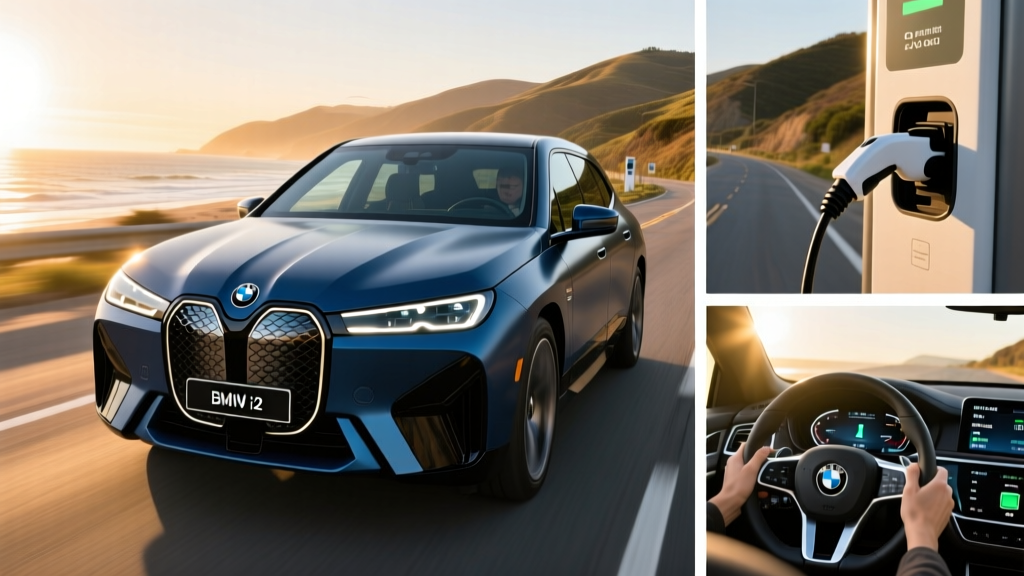
The BMW iX launched in the U.S. as a 2022 model year vehicle, and several years later it remains one of the most accomplished luxury electric SUVs on the road. Built on BMW's dedicated EV architecture (not a converted ICE platform), the iX delivers genuine long-range capability, rapid DC charging, and a cabin that punches well above its segment weight. But at a starting price north of $84,000 and with federal tax credit eligibility that depends heavily on your income and the vehicle's battery sourcing, it's a purchase that demands careful number-crunching before you sign.
This review covers the original 2022 BMW iX xDrive50 — the launch trim — with real-world data reconciled against EPA estimates, charging curve behavior, and total ownership economics as of 2026.
Quick Verdict: Who the BMW iX 2022 Is Actually For
The 2022 BMW iX xDrive50 is best suited for luxury SUV buyers who want a purpose-built electric vehicle with genuine road-trip range (324 miles EPA), fast DC charging that actually sustains high power, and an interior that rivals the Mercedes EQS SUV on material quality. It's a strong pick for two-row family duty, daily commuting, and cross-country travel — provided you have reliable home Level 2 charging and your household income falls within IRS §30D limits.
It is not the right pick if you need three rows, want the lowest cost of entry in the luxury EV SUV segment, or require the latest over-the-air feature updates that Tesla or Rivian push monthly. The iX is a refined, deliberate product — not a tech beta platform.
Range and Efficiency: EPA vs. the Real World
Real-World Expectation: 270–295 miles highway (70–75 mph); 300–320 miles mixed city/suburban. In cold weather (below 32°F), expect a 15–25% reduction, dropping effective range to roughly 240–275 miles depending on cabin heating use and whether you precondition the battery.
Efficiency: 86 MPGe combined / 39 kWh per 100 miles (EPA)
The iX xDrive50 uses a 111.5 kWh gross battery pack (approximately 105.2 kWh usable) with NMC (nickel-manganese-cobalt) chemistry. BMW's thermal management system is among the best in the segment — the heat pump is standard, which helps preserve range in cold climates compared to EVs that rely solely on resistive cabin heating.
On a real-world highway loop at 72 mph in moderate temperatures (65°F), independent testers have consistently recorded 275–290 miles before reaching 10% state of charge. That's roughly a 10–15% shortfall from the EPA sticker, which is typical for large, heavy luxury SUVs where aerodynamic drag dominates at sustained highway speeds. City driving with regenerative braking recovers more energy, pushing real-world range closer to the EPA figure.
For context, the EPA's fueleconomy.gov listing confirms the 324-mile combined figure and 86 MPGe rating. These numbers hold for the 20" Aero wheel configuration; opting for larger 21" or 22" wheels reduces range by roughly 10–15 miles.
Charging Speed: DC Fast Charging and Home Level 2
Charging performance is where the BMW iX 2022 distinguishes itself from many luxury EV competitors. The xDrive50 supports a peak DC fast-charge rate of 195 kW via its CCS1 connector, and critically, the charge curve is well-managed — meaning the iX sustains high power for a significant portion of the session rather than peaking and immediately tapering.
| Charging Level | Max Power | Speed / Time | Connector |
|---|---|---|---|
| Level 1 (120V household) | ~1.4 kW | ~3 miles per hour | NEMA 5-15 |
| Level 2 (240V home/public) | 11 kW (onboard charger) | ~25 miles per hour; 0–100% in ~11 hours | J1772 |
| DC Fast Charge | 195 kW peak | 10–80% in ~31 minutes | CCS1 |
Charging curve reality check: The iX pulls close to its 195 kW peak between roughly 10–35% state of charge, then gradually tapers. From 35–60%, expect roughly 140–160 kW; from 60–80%, it drops to approximately 90–110 kW. Above 80%, charging slows dramatically (under 50 kW) to protect battery longevity — this is standard for NMC chemistry. If you're road-tripping, plan to charge from 10–80% and move on rather than waiting for a full top-off.
At home on a 48-amp Level 2 circuit (hardwired), the iX's 11 kW onboard charger replenishes about 25 miles of range per hour. A full overnight charge from 20% to 100% takes roughly 9–10 hours. BMW includes a Flexible Fast Charger with the vehicle that can handle both 120V and 240V outlets, though most owners will want a dedicated wallbox for daily convenience.
The iX uses the CCS1 connector standard. As of 2026, BMW has not adopted the Tesla NACS connector for the iX, so you'll rely on Electrify America, EVgo, ChargePoint, and other CCS-compatible networks for public DC fast charging. A BMW-provided adapter for Tesla Supercharger access (non-NACS vehicles) may be available — check with your dealer for current compatibility.
Performance: Powertrain, 0-60, and Driving Dynamics
The 2022 BMW iX xDrive50 is a dual-motor, all-wheel-drive configuration producing 516 horsepower and 564 lb-ft of torque. BMW rates the 0-60 mph sprint at 4.4 seconds, and independent testing has confirmed times in the 4.3–4.6 second range depending on surface and temperature.
| Specification | Value |
|---|---|
| Drivetrain | Dual-motor AWD (xDrive) |
| Horsepower | 516 hp |
| Torque | 564 lb-ft |
| 0–60 mph | 4.4 seconds |
| Top Speed | 124 mph (electronically limited) |
| Towing Capacity | 3,500 lbs (braked) |
| Curb Weight | ~5,660 lbs |
The iX drives smaller than its 5,660-pound curb weight suggests. BMW's adaptive air suspension (standard) manages body roll well in corners, and the low center of gravity from the underfloor battery pack keeps things planted. The steering is precise if slightly numb — a common trait in electric BMWs — and the regenerative braking offers both an adaptive mode (which uses radar to modulate regen based on traffic ahead) and a high-regen setting that approximates one-pedal driving, though it doesn't quite bring the car to a complete stop like some competitors.
The higher-performance iX M60 variant (619 hp, 0-60 in 3.6 seconds) was introduced later and is not covered in this 2022 xDrive50 review.
Interior, Cargo, and Technology
The iX cabin is where BMW justifies its luxury pricing. Materials include open-pore wood, microfiber, and available olive-leaf-tanned leather. The minimalist design centers on BMW's Curved Display — a 12.3-inch instrument cluster seamlessly joined to a 14.9-inch infotainment touchscreen running iDrive 8. The system is responsive, supports wireless Apple CarPlay and Android Auto, and includes a hexagonal steering wheel that's distinctive if polarizing.
Passenger and cargo dimensions:
- Front headroom: 40.2 inches
- Rear headroom: 38.7 inches
- Front legroom: 42.4 inches
- Rear legroom: 38.9 inches
- Cargo volume (behind rear seats): 35.5 cubic feet
- Cargo volume (rear seats folded): 77.9 cubic feet
- Frunk (front trunk): None — the iX does not have a front storage compartment
The lack of a frunk is a notable omission at this price point; competitors like the Rivian R1S and Tesla Model X offer front trunk space. The rear cargo area is well-shaped and includes a power liftgate, under-floor storage, and a 40/20/40 split-folding rear seat.
Driver assistance and tech: The iX comes standard with BMW's Driving Assistant Professional, which includes adaptive cruise control with stop-and-go, lane-keeping assist, lane-change assistance, and Traffic Jam Assistant. This is a SAE Level 2 system — the driver must remain fully attentive with hands on the wheel. BMW's Highway Assistant (available in later model years) allows hands-free driving at speeds up to 85 mph on divided highways with eye monitoring, but on the 2022 model, expect traditional hands-on Level 2 assistance.
The iX also features a panoramic electrochromic roof (it darkens electronically at the touch of a button), a Bowers & Wilkins surround sound system (available), and over-the-air software update capability — though BMW's OTA update cadence is less frequent than Tesla's.
Pricing, Trims, and Federal Tax Credit Eligibility
The 2022 BMW iX launched with a single trim: the xDrive50. Here's the pricing breakdown:
| Item | Amount |
|---|---|
| Base MSRP (xDrive50) | $84,100 |
| Destination charge | $995 |
| As-tested (well-equipped) | $92,000–$98,000 |
| Federal §30D Tax Credit (max) | Up to $7,500 (eligibility varies) |
Federal tax credit eligibility (§30D): The BMW iX is assembled at BMW's Dingolfing plant in Germany, and as of 2024–2026 IRS rules under the Inflation Reduction Act, vehicles must meet North American final assembly requirements to qualify for the §30D new EV credit. The 2022 iX does not qualify for the federal purchase tax credit due to its foreign assembly. This is a critical factor that changes the value equation versus competitors like the Tesla Model X, Rivian R1S, or the domestically-assembled Cadillac Lyriq.
However, if you're purchasing the iX as a used vehicle, the §25E used EV tax credit may apply: up to $4,000 or 30% of the sale price (whichever is lower) for used EVs priced at $25,000 or less, subject to buyer income caps ($75,000 single / $150,000 married filing jointly). Given that used 2022 iX models typically sell well above $25,000 in 2026, this credit is unlikely to apply either. Consult IRS.gov for current §30D and §25E rules and speak with a tax professional before relying on credit assumptions.
For the most up-to-date incentive information, also check your state and local utility rebates — some states offer their own EV purchase incentives that are not tied to assembly location.
Warranty, Battery Longevity, and Ownership Costs
BMW covers the 2022 iX with the following warranty terms:
- New vehicle limited warranty: 4 years / 50,000 miles
- Battery and electric powertrain warranty: 8 years / 100,000 miles (covers defects and capacity loss below 70% of original capacity)
- Corrosion perforation warranty: 12 years / unlimited miles
- Roadside assistance: 4 years / unlimited miles
The 70% capacity retention threshold is standard for the industry. Real-world NMC battery degradation data for the iX is still accumulating given its 2022 launch, but early indications from European fleet data suggest roughly 5–8% degradation over the first 60,000 miles with normal charging habits (avoiding frequent 100% charges and DC fast-charging exclusively). BMW's thermal management system is robust, which should support long-term battery health.
Estimated 5-year ownership costs: According to Edmunds and similar calculators, a 2022 iX xDrive50 will cost approximately $14,000–$17,000 in electricity over 75,000 miles (assuming $0.16/kWh average and a mix of home and public charging). Compare this to roughly $9,000–$11,000 in gasoline for a similarly sized BMW X5 xDrive40i over the same distance. However, insurance premiums for the iX run 20–35% higher than the X5, and depreciation on luxury EVs has been steeper than on comparable ICE vehicles in the 2023–2025 period.
Pros and Cons
Pros
- 324-mile EPA range is competitive in the luxury EV SUV class
- 195 kW DC fast charging with a well-managed taper curve
- Excellent cabin materials and build quality
- Standard heat pump preserves cold-weather range
- Strong straight-line performance (4.4s 0-60) with composed handling
- Generous rear-seat legroom (38.9 inches)
- 8-year/100,000-mile battery warranty
Cons
- Does not qualify for the $7,500 federal §30D tax credit (foreign assembly)
- No front trunk (frunk) — unusual for a dedicated EV platform
- Two rows only; no third-row option
- CCS1 connector only — no native NACS/Tesla Supercharger access
- High insurance premiums relative to ICE equivalents
- Steeper depreciation than ICE luxury SUVs in 2023–2025
- iDrive 8 learning curve for traditional BMW users
How the BMW iX 2022 Compares to Key Competitors
| Spec | BMW iX xDrive50 | Tesla Model X LR | Mercedes EQS 450 SUV |
|---|---|---|---|
| EPA Range | 324 mi | 348 mi | 305 mi |
| Battery (usable kWh) | ~105.2 (NMC) | ~100 (NMC) | 108.4 (NMC) |
| Peak DC Charge | 195 kW | 250 kW | 200 kW |
| 10–80% Time | ~31 min | ~27 min | ~31 min |
| 0–60 mph | 4.4s | 3.8s | 5.8s |
| Base MSRP (2022) | $84,100 | $104,990 | $104,400 |
| Rows | 2 | 2 or 3 | 2 or 3 |
| §30D Credit Eligible | No | Yes (varies) | No |
Choose the BMW iX if: You prioritize interior refinement and build quality over raw performance or three-row seating, you value a well-tuned ride with standard air suspension, and you don't need access to the Tesla Supercharger network exclusively.
Choose the Tesla Model X if: You need an available third row, want access to Tesla's Supercharger network, prioritize the longest EPA range in the segment, and value frequent OTA software updates.
Choose the Mercedes EQS SUV if: You want an available third row, prioritize the most opulent rear-seat experience, and don't mind slightly less range and a higher starting price.
Frequently Asked Questions
What is the real-world range of the 2022 BMW iX?
Expect 270–295 miles on the highway at 70–75 mph in moderate temperatures, and 300–320 miles in mixed city/suburban driving with regenerative braking. In sustained cold weather (below 32°F), effective range drops to approximately 240–275 miles. The EPA sticker says 324 miles, and the iX comes close in ideal conditions but falls short on sustained highway runs.
How fast does the BMW iX charge at home and on the road?
On DC fast charging, the iX peaks at 195 kW and charges from 10–80% in approximately 31 minutes. At home on a 240V Level 2 charger, the 11 kW onboard charger adds about 25 miles of range per hour, fully replenishing the battery in roughly 10–11 hours from near-empty.
Does the 2022 BMW iX qualify for the federal EV tax credit?
No. The iX is assembled in Dingolfing, Germany, and does not meet the North American final assembly requirement under the Inflation Reduction Act's §30D rules. The full IRS §30D eligibility criteria — including MSRP caps, buyer income limits, and battery sourcing requirements — apply to qualifying vehicles. Check with a tax professional for your specific situation.
Is the BMW iX worth buying versus the Tesla Model X or Mercedes EQS SUV?
The iX offers the best interior quality and ride refinement at a lower starting price than both the Model X and EQS SUV. However, it lacks a third row, a frunk, and NACS/Supercharger compatibility. If two-row luxury, strong range, and fast charging are your priorities, the iX is an excellent choice. If you need three rows or Tesla's charging network, look elsewhere.
How long will the BMW iX battery last?
BMW warranties the high-voltage battery for 8 years or 100,000 miles against defects and capacity loss below 70%. Early fleet data from European iX vehicles suggests approximately 5–8% degradation over the first 60,000 miles with mixed charging habits. With proper care (avoiding exclusive DC fast charging and frequent 100% charges), the battery should retain usable capacity well beyond 150,000 miles.
Does the BMW iX have one-pedal driving?
Partially. The iX offers a high-regeneration mode that slows the car significantly when you lift off the accelerator, but it does not bring the vehicle to a complete stop like some competitors (e.g., Nissan Leaf, Chevrolet Bolt). You'll still use the brake pedal for final stops. The adaptive regen mode, which uses front radar to modulate regeneration based on traffic, is the default and works well in practice.
Sources: EPA fueleconomy.gov, IRS.gov §30D Clean Vehicle Credits, BMW USA official specifications.