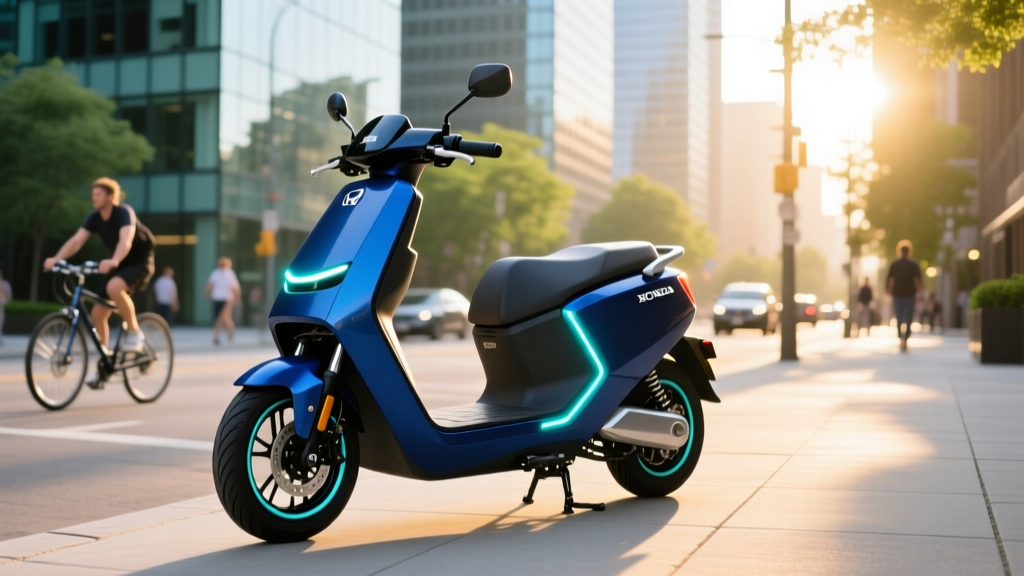
Honda's iconic Ruckus — the rugged, big-wheel 50cc scooter beloved by urban commuters and tinkerers — has been a gas-powered staple for over two decades. But as Honda accelerates its electrification roadmap, the prospect of an electric Ruckus has become one of the most searched topics among scooter enthusiasts and cost-conscious commuters alike. Here's what you need to know right now.
The Bottom Line
As of early 2026, Honda has not yet released a production electric Ruckus for the US market. The company unveiled the Honda EM1 e: electric scooter (a different model) and has shown the Ruckus e-Concept at international shows, but no US-spec electric Ruckus is currently available for purchase. If and when it arrives, expect a target range of 40–65 miles per charge, a top speed around 30–40 mph, and a price likely between $3,500–$5,500 before incentives. For now, the closest alternatives are the Honda EM1 e: (available in select markets), the NIU NQi GT, or the Zero FX for a higher-performance electric two-wheeler.
This guide breaks down what an electric Ruckus would mean for your commute, how the economics stack up against a gas car or gas scooter, and what first-time EV buyers should consider before committing to electric urban mobility.
What Is the Electric Ruckus — And Why Does It Matter?
The Honda Ruckus (known as the Zoomer in some markets) has been in production since 2002, powered by a 49cc four-stroke engine that delivers roughly 100 MPG and a top speed of about 35–40 mph. Its appeal is simple: rugged styling, low running costs, and bulletproof reliability.
An electric version would replace that gas engine with a hub motor or mid-drive electric motor, a lithium-ion battery pack (likely 2–4 kWh usable capacity), and onboard or swappable charging. Honda's broader strategy includes its commitment to carbon neutrality by 2050 and a growing lineup of electric two-wheelers in Asian and European markets. The EM1 e:, Honda's current production electric scooter, offers a useful reference point:
- Battery: 2.94 kWh (swappable Honda Mobile Power Pack e:)
- Range: ~25 miles (WMTC test cycle — real-world urban use is similar)
- Top speed: ~30 mph
- Charging: ~5 hours on standard 120V outlet (no DC fast charging)
- Price (international): ~$3,500 equivalent
If Honda applies the Ruckus e-Concept's larger frame and dual-battery potential, we'd expect a meaningful range bump — potentially 50–65 miles with two swappable packs — while retaining the Ruckus's signature chunky tires and utilitarian design.
Electric Ruckus vs. Gas Car: The Real Cost Comparison
Most people researching the electric Ruckus aren't cross-shopping it with a Tesla Model Y. They're deciding between an electric scooter, a gas scooter, and possibly a used gas car for short urban commutes. Let's put numbers to it.
| Category | Electric Scooter (Est. Electric Ruckus) | Gas Scooter (Current Ruckus 50cc) | Used Gas Car (e.g., 2020 Civic) |
|---|---|---|---|
| Purchase Price | $3,500–$5,500 | $2,900–$3,200 (new, MSRP) | $16,000–$22,000 |
| Fuel / Energy Cost per Mile | $0.01–$0.02 (home charging at $0.15/kWh) | $0.04–$0.06 (100 MPG at $3.80/gal) | $0.12–$0.16 (30 MPG at $3.80/gal) |
| Annual Fuel/Energy (5,000 mi/yr) | $50–$100 | $190–$300 | $600–$800 |
| Annual Maintenance | $50–$100 (tires, brakes) | $150–$300 (oil, belt, spark plug) | $500–$1,000 (oil, filters, brakes, tires) |
| Insurance (Annual) | $100–$300 (scooter policy) | $100–$300 | $800–$1,800 |
| 5-Year Total Operating Cost | $1,000–$2,500 | $2,200–$3,500 | $9,500–$18,000 |
The operating cost advantage of an electric scooter is substantial — roughly $0.01–$0.02 per mile for electricity versus $0.12–$0.16 per mile for a typical gas car. Over five years of urban commuting, that's a savings of $2,500–$7,500 in fuel alone. But the tradeoff is obvious: a scooter can't replace a car for highway driving, cargo hauling, or inclement weather without significant compromise.
Charging an Electric Scooter: What First-Time EV Buyers Must Know
One of the biggest advantages of an electric scooter over an electric car is charging simplicity. You don't need a Level 2 home charger, a 240V outlet, or a $1,500 electrical panel upgrade. Here's what charging looks like in practice:
Charging Options
- Standard 120V outlet (Level 1): Most electric scooters charge on a regular household outlet. Expect 4–6 hours for a full charge from empty. If your scooter uses a swappable battery (like Honda's Mobile Power Pack), you can charge the battery indoors while the scooter stays parked.
- Swappable battery stations: Honda, Gogoro, and others are building battery-swap networks in select cities. A swap takes under 2 minutes and eliminates charging wait time entirely — but availability is limited to specific metro areas.
- No DC fast charging: Unlike electric cars, scooters in this class do not support DC fast charging. The battery packs are too small to benefit from it, and the cost of DCFC hardware isn't justified at this scale.
Home Charging Access
If you have access to any standard outlet — garage, carport, apartment balcony, or even a ground-floor window — you can charge an electric scooter. This eliminates the biggest barrier to EV car ownership: the need for dedicated Level 2 infrastructure. Apartment dwellers who can't install a 240V charger for a car may find a scooter's 120V charging perfectly viable.
Common EV Misconceptions — Scooter Edition
| Myth | Fact |
|---|---|
| "I need a special charger installed at home." | Most electric scooters charge on a standard 120V household outlet — no electrician required. |
| "Electric scooters can't go far enough." | A dual-battery electric Ruckus could realistically cover 50–65 miles — more than the average US urban commute of ~16 miles each way. |
| "Batteries will need replacing every couple of years." | Modern lithium-ion scooter batteries are rated for 1,000–2,000+ charge cycles. At one full cycle per day, that's 3–5+ years before significant degradation. Honda typically warranties batteries for 2–3 years. |
| "It won't work in cold weather." | Cold weather does reduce range by 15–30% in any EV, scooters included. But a 50-mile range dropping to 35–40 miles still covers most urban round trips. |
| "There are no incentives for electric scooters." | The federal §30D tax credit applies to four-wheeled vehicles only, but some states and local utilities offer rebates for electric two-wheelers — check your local programs. |
Real-World Ownership: Climate, Commute, and Practicality
An electric Ruckus — or any electric scooter — is not a universal replacement for a car. Whether it makes sense depends on three variables:
1. Your Commute Distance
The average US one-way commute is approximately 26 minutes, translating to roughly 16 miles. An electric scooter with 50+ miles of range can handle this with margin to spare. But if your round trip exceeds 40 miles, range anxiety becomes real — especially without a swappable battery network.
2. Your Climate
In mild climates (Southern California, Florida, Texas), an electric scooter is viable year-round. In cold-winter regions (Chicago, Minneapolis, Boston), expect 15–30% range loss when temperatures drop below 40°F, and consider whether you'll ride in snow, ice, or heavy rain. Many scooter owners in cold climates use their electric scooter as a fair-weather commuter and keep a car for winter months.
3. Your Storage and Security Situation
Electric scooters are theft targets. You'll need secure parking — a locked garage, a covered carport with a heavy-duty lock, or a building with indoor bike/scooter storage. Swappable-battery designs add a security advantage: you can take the battery inside, making the scooter less attractive to thieves and eliminating the need to run a charging cable outdoors.
Electric Ruckus vs. Alternatives: A Decision Framework
If you're considering an electric scooter for urban commuting, here's how to evaluate your options based on your specific situation:
Choose Based on Your Priorities
Choose the Honda EM1 e: (or wait for the electric Ruckus) if:
- You want Honda reliability and dealer support
- Your daily round trip is under 30 miles
- You value swappable batteries for apartment living
- You prefer a proven brand with parts availability
Choose a NIU NQi GT or similar if:
- You need 40+ miles of range now (NIU offers up to ~50 miles with dual batteries)
- You want smart features (GPS tracking, app connectivity, anti-theft alerts)
- You're comfortable with a newer brand and online-first dealer model
Choose a Zero FX or CSC City Slicker if:
- You need highway-capable speeds (55+ mph)
- Your commute includes faster roads or bridges
- You're willing to spend $6,000–$12,000 for performance
Stick with a gas Ruckus if:
- You regularly ride 50+ miles per day
- You live in a rural area with no charging access
- You need the lowest possible upfront cost (~$3,000 MSRP)
- You ride in extreme cold frequently
Consider an EV car (Chevy Equinox EV, Hyundai Ioniq 5) if:
- You need all-weather capability, cargo space, or passenger seating
- Your commute involves highways
- You qualify for the §30D federal tax credit (up to $7,500, subject to MSRP caps, income limits, and battery sourcing rules)
What a First-Time EV Buyer Should Budget
Whether you're buying an electric scooter or an electric car, the financial calculus follows the same pattern: higher upfront cost, lower ongoing cost. Here's a realistic budget for an electric Ruckus-class scooter:
| Expense | Year 1 | Annual (Years 2–5) |
|---|---|---|
| Purchase price | $3,500–$5,500 | — |
| Helmet and gear | $200–$500 | $50–$100 (replacement) |
| Lock and security | $80–$200 | — |
| Insurance | $100–$300 | $100–$300 |
| Electricity (5,000 mi/yr) | $50–$100 | $50–$100 |
| Maintenance (tires, brakes) | $50–$100 | $50–$100 |
| Total | $3,980–$6,700 | $250–$600/yr |
Compare that to a used gas car at $18,000 purchase + $1,200/year insurance + $700/year fuel + $750/year maintenance = roughly $7,500–$9,000 in year one and $2,650/year ongoing. The scooter's 5-year operating advantage is typically $8,000–$12,000.
Federal and State Incentives: What Applies?
The federal §30D clean vehicle tax credit provides up to $7,500 — but only for four-wheeled vehicles with a gross vehicle weight rating (GVWR) under 14,000 lbs. Electric scooters and motorcycles do not qualify for the §30D credit.
However, other incentives may apply:
- State e-bike and e-scooter rebates: States like California, Colorado, and Connecticut have offered rebates of $300–$1,500 for electric two-wheelers. Check your state energy office for current programs.
- Utility company rebates: Some electric utilities offer $100–$500 rebates for purchasing electric scooters or e-bikes, particularly in areas pursuing grid decarbonization.
- Employer commuter benefits: Pre-tax commuter benefit accounts can sometimes be applied to scooter purchases if used for commuting — check your employer's plan.
Always verify current incentive availability directly with your state agency or utility, as programs change annually.
Frequently Asked Questions
When will the Honda electric Ruckus be available in the US?
Honda has not announced a US release date for an electric Ruckus. The Ruckus e-Concept has been shown internationally, and Honda's EM1 e: scooter is available in select markets. Based on Honda's electrification timeline, a US-market electric scooter in the Ruckus class could arrive by 2027–2028, but this is speculative until Honda makes an official announcement.
How far can an electric Ruckus go on a single charge?
Based on Honda's current EM1 e: (25 miles with one 2.94 kWh battery) and the Ruckus e-Concept's larger frame allowing for dual batteries, a reasonable estimate is 50–65 miles in mixed urban riding. Real-world range will vary with rider weight, terrain, temperature, and speed. Cold weather (below 40°F) can reduce range by 15–30%.
Can I charge an electric scooter at my apartment?
Yes, in most cases. Electric scooters charge on standard 120V outlets. If your scooter has a swappable battery, you can carry the battery pack inside your apartment to charge — no outdoor outlet needed. This makes apartment living far more viable for electric scooters than for electric cars, which typically require a dedicated 240V Level 2 charger.
Is an electric scooter cheaper than a gas car for commuting?
For short urban commutes (under 30 miles round trip), yes — dramatically so. An electric scooter costs roughly $0.01–$0.02 per mile in electricity versus $0.12–$0.16 per mile for a gas car. Over five years, total operating costs for a scooter are typically $2,000–$4,000 less than a used gas car, even before factoring in the lower purchase price.
Do electric scooters qualify for the $7,500 federal EV tax credit?
No. The §30D federal clean vehicle credit applies only to four-wheeled vehicles. Electric scooters and motorcycles are not eligible. However, some states and utilities offer separate rebates for electric two-wheelers — check local programs for current availability.