Quick Answer: Honda Electric Hot Hatch Specs at a Glance
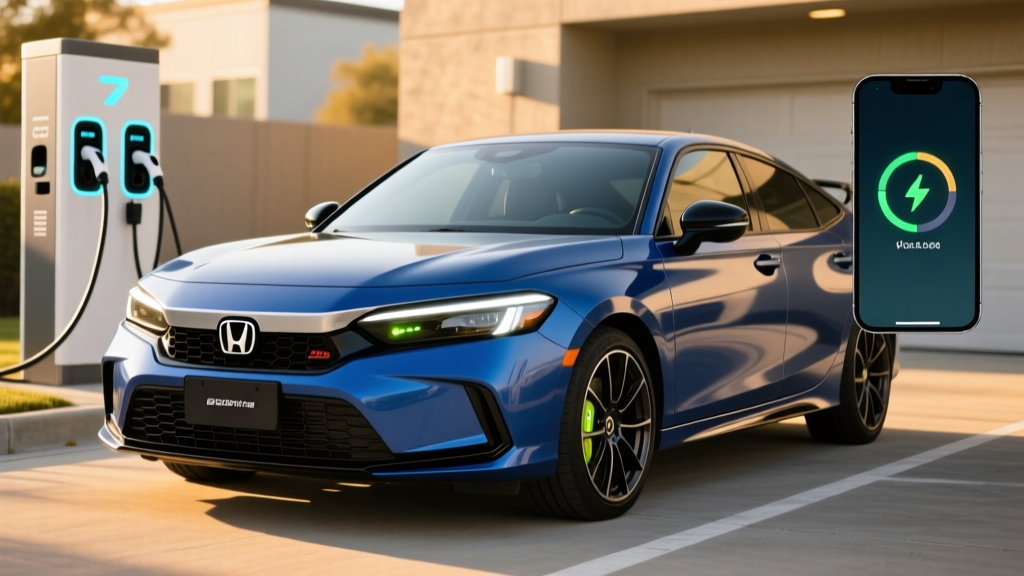
The 2026 Honda electric hot hatch — officially the Honda 0 Series compact hatchback built on the new dedicated EV architecture — targets an EPA-estimated range of approximately 270–300 miles from a ~68 kWh usable NMC battery. Honda has confirmed DC fast-charging capability peaking near 150 kW, with a 10–80% session taking roughly 28–32 minutes. The powertrain is expected to deliver around 220–240 hp to the front wheels, with a 0–60 mph time in the low-to-mid 6-second range. Base pricing is anticipated near $35,000–$38,000 MSRP before incentives. Honda has not yet published final EPA-certified figures; all specs below reflect Honda's announced targets and industry analysis of the platform as of early 2026.
Honda's return to a sporty electric hatchback matters because the original Civic platform set the template for affordable, fun-to-drive compacts. The new 0 Series platform represents Honda's first ground-up EV architecture, replacing the awkwardly adapted e:Ny1 / e:N Series predecessors. For buyers searching for Honda electric hot hatch specs, the core question is whether this car can blend daily practicality with genuine hot-hatch engagement — and whether the numbers actually pencil out versus a Civic Hybrid or a competing EV like the Volkswagen ID.3 or Hyundai Ioniq 5.
Powertrain, Battery, and Performance Targets
Honda's 0 Series platform debuts a thin, flat battery pack integrated into a dedicated skateboard chassis. The compact hatchback variant is expected to use a single rear-mounted or front-mounted electric motor (Honda has shown both configurations in prototypes, with the production hot-hatch variant likely favoring a front-biased setup for weight distribution).
| Specification | Value |
|---|---|
| Battery (usable capacity) | ~68 kWh, NMC chemistry |
| EPA Range (target) | 270–300 miles |
| Real-World Highway Range (est.) | 230–260 miles |
| Cold-Weather Range (est. at 20°F) | 200–230 miles |
| Motor Output | ~220–240 hp / 228–258 lb-ft torque |
| 0–60 mph | ~6.2–6.8 seconds |
| DC Fast Charge (peak) | ~150 kW |
| 10–80% DC Charge Time | ~28–32 minutes |
| Level 2 AC Charge Rate | 11 kW (estimated) |
| Level 2 Full Charge Time | ~6.5–7 hours |
| Connector | NACS (Tesla-standard, confirmed for US market) |
| Drivetrain | FWD (single motor) |
| Estimated Base MSRP | $35,000–$38,000 |
| Battery Warranty (expected) | 8 years / 100,000 miles |
A few notes on the numbers above. The ~68 kWh usable capacity sits below the Hyundai Ioniq 5's 77.4 kWh pack but above the base Nissan Leaf's 40 kWh. Honda's emphasis on a thin pack means less total energy but potentially better handling dynamics — lower center of gravity with less mass concentrated in the floor. The NMC (nickel manganese cobalt) chemistry prioritizes energy density over the longer cycle life of LFP; this is typical for performance-oriented compacts where range-per-kilogram matters.
The 150 kW peak DC charge rate is moderate by 2026 standards. Hyundai's E-GMP platform peaks at 240 kW on 800V architecture, and Tesla's Model 3 Highland can sustain high charge rates on V3 Superchargers. Honda's 150 kW means you'll spend a few extra minutes at the charger on road trips — roughly 30 minutes for 10–80% versus the 18–20 minutes you'd see on the fastest competitors. That said, 150 kW is sufficient for most real-world road-trip scenarios where you're stopping for food and rest anyway.
Real-World Range Expectations
EPA Target: 270–300 miles. In practice, expect ~240–260 miles on mixed highway driving at 70–75 mph, and as low as 200–230 miles in sustained cold weather (below 30°F) without preconditioning. Honda's heat-pump-equipped thermal management system should mitigate some cold-weather loss, but physics is physics — battery chemistry slows in the cold, and cabin heating draws significant energy. If your commute is under 60 miles round-trip, you'll rarely notice; if you regularly drive 250+ miles in winter, plan your charging stops conservatively.
EV vs. Civic Hybrid: The Ownership Math
The most relevant comparison for Honda loyalists isn't another EV — it's the 2026 Civic Hybrid, which delivers 49 MPG combined and starts around $29,000. Here's how the two stack up over five years and 75,000 miles of driving.
| Cost Category | Honda EV Hatch (est.) | Civic Hybrid (est.) |
|---|---|---|
| Purchase Price (base MSRP) | $36,500 | $29,000 |
| Federal Tax Credit (§30D, if eligible) | –$3,750 to –$7,500* | $0 |
| Effective Purchase Price | $29,000–$32,750 | $29,000 |
| Fuel/Energy (75k miles) | $2,400–$3,600** | $7,200*** |
| Maintenance (5 years) | $800–$1,200 | $2,800–$3,500 |
| Insurance (5-year avg.) | $9,500–$11,000 | $7,500–$9,000 |
| Estimated 5-Year Total Cost | $41,700–$48,550 | $46,500–$48,700 |
* §30D credit eligibility depends on battery sourcing, critical-mineral content, buyer income caps ($150k single / $300k joint), and MSRP caps ($55,000 for cars). Honda's US-built EVs may qualify for partial or full credit — verify current status at IRS.gov. Point-of-sale transfer is available through participating dealers.
** Based on $0.12–$0.18/kWh home charging and 3.5 mi/kWh efficiency. Public DC charging costs significantly more ($0.30–$0.48/kWh).
*** Based on $3.45/gal regular and 49 MPG combined.
The math shows a near-breakeven scenario over five years, with the EV pulling ahead primarily through fuel and maintenance savings. The EV's advantage grows if you have access to cheap home electricity (under $0.14/kWh) and shrinks if you rely heavily on public DC fast-charging at premium rates. Insurance tends to run 15–25% higher on EVs due to higher repair costs for battery-adjacent damage — factor this into your budget honestly.
Charging Realities: Home Access Is the Deciding Factor
Every honest EV buying guide must address the elephant in the room: home charging access fundamentally changes the ownership experience. If you can install a Level 2 charger at home, the Honda electric hot hatch will refuel overnight for roughly $0.04–$0.06 per mile (depending on your electricity rate). You'll start every morning with a full battery and rarely visit a public charger except on road trips.
| Level | Power | Miles Added Per Hour | Use Case |
|---|---|---|---|
| Level 1 (120V outlet) | ~1.4 kW | ~4–5 miles | Overnight top-up; insufficient as primary |
| Level 2 (240V, home/public) | ~11 kW | ~35–38 miles | Primary daily charging; full charge in ~7 hrs |
| DC Fast Charge | Up to 150 kW | ~180–200 mi/hr (peak) | Road trips; 10–80% in ~30 min |
Level 2 home installation typically costs $800–$2,500 including a quality EVSE (charge point) and electrician labor, assuming your electrical panel has capacity. If you need a panel upgrade (common in older homes with 100-amp service), add $1,500–$3,000. Honda is expected to bundle a portable Level 1/2 charging cord with the vehicle, but a dedicated wall-mounted Level 2 unit (ChargePoint Home Flex, Emporia Vue, or similar) provides faster, safer daily charging.
For apartment dwellers or those without garage access, the calculus changes. Public Level 2 charging costs $0.20–$0.35/kWh in most metro areas, and DC fast-charging runs $0.30–$0.48/kWh on networks like Electrify America or EVgo. At those rates, your per-mile energy cost climbs to $0.09–$0.14 — still cheaper than gas in most cases, but the convenience penalty of planning charging stops is real. Honda's adoption of the NACS connector means access to Tesla's Supercharger network (via adapter or native plug on 2026 models), which is currently the most reliable DC fast-charging network in the US.
Driving Dynamics and the "Hot Hatch" Promise
Honda's 0 Series platform promises a low center of gravity, near 50/50 weight distribution, and a focus on driving engagement that has been absent from Honda's EV efforts to date. The company's engineering heritage — from the Civic Si to the Integra Type R — sets high expectations.
With ~220–240 hp and instant electric torque (peak torque available from 0 RPM), the electric hatch should feel brisker in city driving than its horsepower figure suggests. Electric motors eliminate the turbo lag and CVT drone of the Civic Hybrid, delivering linear, immediate acceleration. The trade-off is weight: expect a curb weight around 3,600–3,800 lbs, several hundred pounds heavier than a Civic Hatchback. Honda's engineers will need to manage that mass through suspension tuning and a stiff chassis to deliver the agility hot-hatch buyers expect.
Regenerative braking with one-pedal driving capability is confirmed, though Honda typically offers adjustable regen levels rather than the aggressive one-pedal feel of a Nissan Leaf or Chevrolet Bolt. Steering feel and brake-blending (the transition between regenerative and friction braking) will be the true test of whether this car earns the "hot hatch" badge or simply becomes a competent electric commuter.
Tax Credits, Incentives, and What You'll Actually Pay
The federal §30D Clean Vehicle Credit remains the single largest incentive for EV buyers, but qualification has become increasingly complex since the Inflation Reduction Act's sourcing requirements took full effect. Here's what applies to a Honda-badged EV in 2026:
- MSRP cap: The vehicle must have an MSRP at or below $55,000 for sedans/hatchbacks — the Honda EV hatch clears this easily at its ~$35,000–$38,000 target.
- Buyer income cap: Modified adjusted gross income must not exceed $150,000 (single), $225,000 (head of household), or $300,000 (joint filers).
- Battery sourcing: The battery must meet escalating critical-mineral and battery-component requirements sourced from the US or free-trade-agreement partners. Honda's supply chain for its Ohio-built EVs is still being finalized; partial credit ($3,750) is possible if only one of the two sourcing thresholds is met.
- Point-of-sale transfer: You can transfer the credit to the dealer at purchase, reducing your out-of-pocket cost immediately rather than waiting for a tax refund.
- State incentives: Vary widely — check fueleconomy.gov and your state's energy office for local rebates, HOV-lane access, and utility charging incentives.
Because Honda is manufacturing its 0 Series vehicles in Ohio, there is a reasonable pathway to meeting US battery-component requirements, but critical-mineral sourcing depends on supply agreements that may still be in flux. Always verify current eligibility at IRS.gov before purchasing, and consult a tax professional if your situation is complex.
Common Misconceptions About Honda's Electric Hatchback
| Myth | Fact |
|---|---|
| "It's just a rebadged e:Ny1." | The 0 Series uses an entirely new dedicated EV platform, not the adapted architecture of the e:Ny1/e:N Series. |
| "The battery will need replacing in 5 years." | Modern NMC packs typically retain 85–90% capacity after 100,000 miles. Honda's expected 8-year/100,000-mile battery warranty covers drops below ~70% state of health. |
| "It qualifies for the full $7,500 tax credit." | Credit amount depends on battery sourcing compliance. Expect $3,750–$7,500 depending on Honda's supply-chain certifications at time of purchase. |
| "I can charge it at any public charger." | The NACS connector accesses Tesla Superchargers natively (on 2026 models), but CCS-only stations will require an adapter. CHAdeMO stations are largely obsolete in the US. |
| "It's a true Type R competitor." | With ~230 hp and FWD, it's a warm hatch — think Civic Si territory, not Type R. AWD performance variants may follow in later model years. |
| "Range is the same in all weather." | Expect 20–30% range reduction in sustained sub-30°F temperatures. Preconditioning while plugged in mitigates this significantly. |
Decision Framework: Should You Buy It?
Choose the Honda Electric Hot Hatch If:
- You have Level 2 home charging access (garage or driveway with 240V)
- Your daily driving is under 80 miles round-trip, with occasional road trips under 250 miles
- You want a sporty, fun-to-drive compact and prefer the Honda brand
- You qualify for at least the partial §30D tax credit
- You value lower running costs and are willing to accept a higher purchase price for long-term savings
- NACS / Supercharger access matters to you for road-trip reliability
Choose the Civic Hybrid Instead If:
- You lack reliable home or workplace charging
- You regularly drive 300+ miles between stops in rural areas with sparse charging infrastructure
- Upfront budget is your primary constraint (Civic Hybrid starts ~$7,000 less before credits)
- You live in an extreme cold climate and cannot install a Level 2 charger for preconditioning
- You want the absolute lowest insurance premiums
Consider a Competitor EV If:
- You need faster DC charging (Hyundai Ioniq 5: 240 kW peak, 10–80% in ~18 min)
- You want AWD or 300+ hp (VW ID.4 AWD, Tesla Model 3 Long Range AWD)
- You need more cargo space (Ioniq 5 crossover layout offers 27 cu ft behind rear seats)
Frequently Asked Questions
When will the Honda electric hot hatch be available to buy?
Honda's 0 Series production vehicles are expected to begin reaching US dealerships in late 2026 or early 2027, with Ohio assembly. Pre-orders and reservation timelines have not been confirmed as of this writing. Treat any delivery date as preliminary until Honda publishes an official timeline.
Will it have a manual transmission or simulated gears?
No. Like virtually all production EVs, the Honda electric hatch uses a single-speed reduction gear. Honda has not announced any simulated gear-shift feature (similar to Hyundai's Ioniq 5 N e-Shift). Expect smooth, linear, single-speed acceleration.
How does the NACS connector affect my charging options?
Honda's adoption of the North American Charging Standard (NACS) means native access to Tesla's Supercharger network — the largest and most reliable DC fast-charging network in the US with over 25,000 stalls. For non-Tesla CCS chargers (Electrify America, EVgo), a CCS-to-NACS adapter may be needed, though many networks are adding NACS cables throughout 2025–2026.
What will insurance cost compared to a Civic?
Expect insurance premiums 15–25% higher than an equivalent Civic Hybrid, driven by higher repair costs for battery-adjacent damage and EV-specific parts pricing. Average annual premiums for compact EVs in 2026 run $1,800–$2,200 depending on your state, driving record, and coverage level. Get quotes from your insurer before committing.
Is the battery covered if it degrades?
Honda is expected to offer an 8-year / 100,000-mile battery warranty covering capacity loss below approximately 70% state of health. This is the industry-standard threshold. In practice, most modern NMC packs retain 85–92% capacity at 100,000 miles under normal use. Avoid routinely charging to 100% or draining to 0% to maximize longevity; keeping the battery between 20–80% state of charge for daily use is ideal.
Can I tow with the Honda electric hatch?
Compact EV hatchbacks typically offer limited or no towing capacity. Honda has not published a tow rating for the 0 Series hatchback. If towing is a requirement, look at the Honda Prologue SUV or a competitor like the Hyundai Ioniq 5 (up to 2,300 lbs with the tow package).
The Honda electric hot hatch represents a genuine inflection point for the brand — a dedicated-EV platform with sporting pretensions at a price point that could compete with its own Civic lineup once tax credits are applied. The specs are promising but not class-leading: range and charging speed sit in the competent-but-not-best-in-class tier, while the driving dynamics remain the great unknown until independent testing begins. For Honda loyalists with home charging and moderate daily mileage, it's likely worth a test drive when it arrives. For those without charging access or with frequent long-distance needs, the Civic Hybrid remains the pragmatic choice.