The Quick Answer on Honda Electric Dirt Bikes
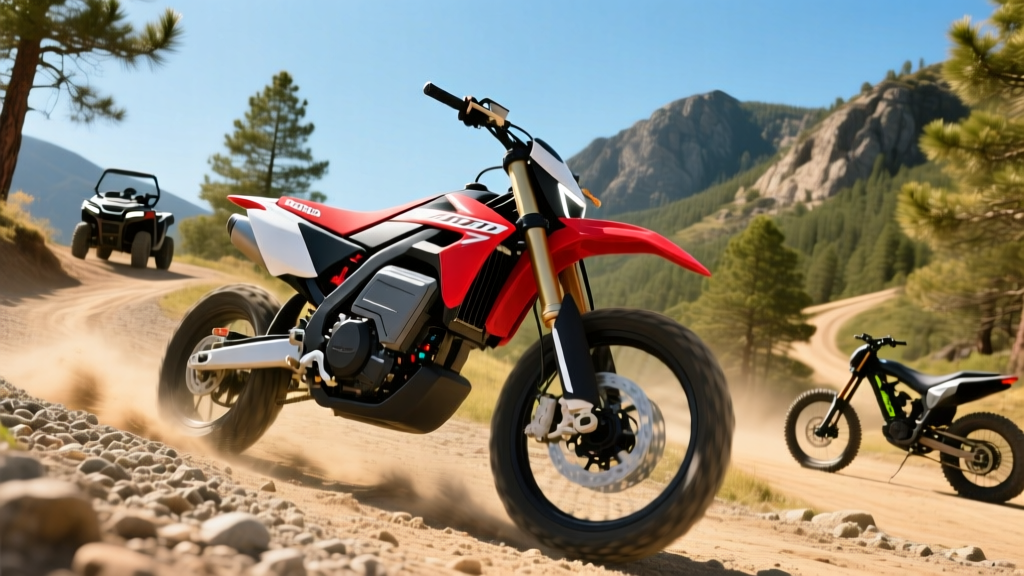
As of 2026, Honda has not released a production electric dirt bike for the U.S. market. The company showed the CR Electric Prototype (based on the CRF450R chassis) at the 2023 Osaka Motorcycle Show and has filed multiple patents for electric off-road powertrains, but no street-legal or competition-ready model is currently available for purchase. Honda's electrification roadmap focuses on road-going EVs and smaller commuter electric motorcycles first. If you need an electric dirt bike today, established brands like KTM (Freeride E-XC), Sur-Ron, and CAKE offer production models ranging from $4,500 to $13,000.
Where Honda Stands on Electric Off-Road Motorcycles
Honda's approach to electric dirt bikes has been cautious and patent-heavy rather than product-heavy. The CR Electric Prototype remains the closest thing to a Honda electric dirt bike, featuring:
- A chassis borrowed from the CRF450R motocross platform
- An electric motor positioned where the combustion engine normally sits
- A battery pack housed in the frame's main cavity
- No published kWh capacity, range estimate, or production timeline
Honda has stated publicly that its motorcycle electrification strategy prioritizes high-volume commuter segments — particularly in Asian markets — before tackling niche performance categories like off-road competition. The company's 2025-2030 roadmap targets 10+ electric motorcycle models globally, but these are overwhelmingly urban scooters and standard bikes.
For context, Honda's first serious production EV in the U.S. was the Prologue SUV (built on GM's Ultium platform), and its four-wheeled EV strategy remains the priority. Off-road electric motorcycles are likely still years away from Honda showrooms.
Electric Dirt Bikes You Can Actually Buy in 2026
Since a Honda electric dirt bike isn't an option yet, here's what the market currently offers. These are production models available in the U.S. with verified specifications:
| Model | Motor Power | Battery (kWh) | Est. Range (miles) | Top Speed (mph) | Weight (lbs) | MSRP |
|---|---|---|---|---|---|---|
| KTM Freeride E-XC | 18 kW (24 hp) | 3.9 kWh | 45-60 (trail riding) | 53 | 245 | $8,299 |
| Sur-Ron Storm Bee | 6 kW (8 hp) | 2.3 kWh | 50-75 (eco mode) | 47 | 123 | $4,899 |
| CAKE Kalk OR | 10 kW (13 hp) | 2.6 kWh | 40-55 (mixed) | 56 | 154 | $13,970 |
| E-Motion RAW | 15 kW (20 hp) | 3.5 kWh | 50-70 (trail) | 50 | 210 | $7,500 |
| Segway Xafari | 6 kW (8 hp) | 1.9 kWh | 40-60 (eco) | 43 | 117 | $3,999 |
Key takeaway: Most electric dirt bikes use small battery packs (2-4 kWh) compared to electric cars (60-100 kWh). This keeps weight manageable for off-road use but limits range to roughly 1-2 hours of aggressive trail riding. Unlike EVs, there's no DC fast charging infrastructure for dirt bikes — you charge from a standard 120V outlet.
Electric vs Gas Dirt Bikes: Real Cost Comparison
| Cost Factor | Electric Dirt Bike (e.g., KTM Freeride E-XC) | Gas Dirt Bike (e.g., KTM 350 EXC-F, ~$12,000) |
|---|---|---|
| Purchase Price | $8,299 | $12,099 |
| Fuel/Energy per Hour of Riding | ~$0.15-$0.25 (home charging at $0.15/kWh, ~1-1.5 kWh/hr) | ~$4-$6 (1-1.5 gal premium at $4.50/gal) |
| Annual Fuel/Energy (100 hrs/yr) | $15-$25 | $400-$600 |
| Oil Changes per Year | None | 3-5 ($15-$25 each = $45-$125) |
| Air Filter Service | None | 2-4 per year ($10-$20 each) |
| Chain Maintenance | Same | Same |
| Valve/Top-End Rebuild | None | $800-$1,500 every 150-300 hrs |
| Estimated 3-Year Operating Cost | $45-$75 | $1,500-$2,500+ |
| 3-Year Total Cost (Purchase + Operating) | ~$8,350-$8,400 | ~$13,600-$14,600 |
The math heavily favors electric on operating costs. Over three years of moderate use, an electric dirt bike saves roughly $1,400-$2,400 in fuel and maintenance. The tradeoff is range and ride time: a gas 350 EXC-F carries 2.4 gallons and can run 3-4 hours hard; an electric bike at full throttle may last 45-90 minutes before needing a multi-hour recharge.
Real-World Ownership Considerations
Buying an electric dirt bike involves different logistics than an electric car. Here's what first-time buyers should understand:
Charging Logistics
Electric dirt bikes charge from standard 120V household outlets using included chargers (typically 0.5-1.5 kW). A full charge on a 3.9 kWh battery at 1 kW takes roughly 4-5 hours. There is no Level 2 or DC fast charging ecosystem for off-road motorcycles. If you ride at a remote trailhead, you cannot recharge on-site unless you bring a portable generator or power station.
Battery Degradation and Replacement
Most electric dirt bikes use lithium-ion cells (NMC chemistry). Expect 70-80% capacity retention after 500-800 full charge cycles — roughly 3-5 years of regular weekend riding. Battery replacement costs are significant: $1,500-$3,000 depending on the model, representing 20-40% of the original purchase price. Store the bike at 50-60% state of charge during off-seasons to minimize degradation.
Climate and Terrain Impact
Cold temperatures (below 40°F) reduce usable range by 15-25% due to increased internal battery resistance and reduced regenerative braking effectiveness. Steep, technical terrain draws more power than flat fire roads — expect 30-40% less range on aggressive singletrack versus moderate trail riding.
Noise and Trail Access
One genuine advantage: electric dirt bikes are nearly silent (60-70 dB vs 95-105 dB for gas). This opens access to trails with noise restrictions and reduces conflicts with hikers and landowners. Some riding areas specifically welcome electric off-road vehicles while restricting gas-powered bikes.
Common Misconceptions About Electric Dirt Bikes
| Myth | Fact |
|---|---|
| "Electric dirt bikes have no power" | The KTM Freeride E-XC produces 24 hp with instant torque — comparable to a 250cc gas bike off the line. It won't match a 450cc gas bike on long straights, but technical sections benefit from electric torque delivery. |
| "You can't ride them hard" | Electric bikes handle aggressive riding, but range drops proportionally. Full-throttle riding may cut range to 20-30 miles. Most riders use variable power modes to extend sessions. |
| "They're heavier than gas bikes" | Not necessarily. The Sur-Ron Storm Bee weighs 123 lbs; a comparable gas bike (Honda CRF250F) weighs 224 lbs. Larger electric bikes like the KTM Freeride E-XC (245 lbs) are competitive with gas equivalents. |
| "Battery replacement makes them uneconomical" | At $1,500-$3,000 every 4-5 years, battery replacement is comparable to a gas bike's top-end rebuild ($800-$1,500 every 2-3 years). Combined with fuel savings, electric still wins on total cost. |
| "Honda already sells an electric dirt bike" | As of 2026, Honda has not released any production electric dirt bike. The CR Electric Prototype remains a concept with no announced production date. |
Federal Tax Credits and Incentives
Electric dirt bikes occupy a gray area in U.S. incentive programs. The IRS §30D Clean Vehicle Credit applies to four-wheeled vehicles with a gross vehicle weight rating under 14,000 lbs — motorcycles are excluded from the $7,500 new-vehicle credit.
However, some state and local programs offer rebates for off-highway vehicles (OHVs) or electric motorcycles. California's Clean Off-Road Equipment Voucher Incentive Project (CORE) has historically offered rebates up to $1,500 for electric off-road motorcycles. Check your state's air resources board or energy commission for current programs — these vary by jurisdiction and funding availability.
Decision Framework: Should You Buy an Electric Dirt Bike?
Buy electric if:
- You ride primarily on private land or trails with noise restrictions
- Your typical rides are under 2 hours and you can charge at home between sessions
- You want to minimize maintenance (no oil, filters, valves, or exhaust)
- You value instant torque for technical, low-speed terrain
- You ride close to home and don't need to transport the bike long distances to remote trails
Stick with gas if:
- You regularly ride 3+ hour sessions or multi-day events
- You ride remote areas with no charging access and no way to carry spare batteries
- You compete in motocross, enduro, or hare scrambles where refueling speed matters
- You need highway-speed capability to reach trailheads (some states allow dual-sport gas bikes on roads; electric dirt bikes are typically off-road only)
- Your budget is under $4,000 — the used gas bike market offers more options at that price point
Wait for Honda if:
- You're specifically loyal to Honda's dealer network, parts availability, and resale value
- You want a proven platform with long-term warranty support
- You're not in a rush — Honda's electric off-road entry is likely 2028-2030 at the earliest based on current roadmap signals
What a Honda Electric Dirt Bike Would Need to Compete
If Honda does bring a production electric dirt bike to market, it will need to address the gaps current offerings leave:
- Swappable batteries: Riders need to swap depleted packs for charged ones at the trailhead, since recharging takes hours. Honda's patent filings suggest they're exploring this.
- 4+ kWh capacity: Anything less limits competitive riding to under an hour.
- Sub-230 lb weight: Heavier bikes struggle in sand, mud, and technical climbs.
- Dealer serviceability: Honda's 1,000+ U.S. dealerships would be a major advantage over boutique brands if they train technicians on high-voltage motorcycle systems.
- Pricing near $8,000-$10,000: Above $12,000, buyers cross into gas 450cc territory where range and power are unlimited.
Frequently Asked Questions
Does Honda make an electric dirt bike I can buy in 2026?
No. Honda has shown the CR Electric Prototype but has not announced a production model, pricing, or release date. Honda's current EV focus is on four-wheeled vehicles like the Prologue SUV and upcoming 0 Series sedans.
What's the best electric dirt bike available right now?
For serious trail riding, the KTM Freeride E-XC ($8,299) offers the best balance of power (24 hp), range (~45-60 miles), and dealer support. For lighter use and lower budgets, the Sur-Ron Storm Bee ($4,899) provides adequate performance at half the price.
How long does an electric dirt bike battery last on a charge?
Expect 45-75 minutes of hard riding or 1.5-2.5 hours of moderate trail riding on a full charge, depending on battery capacity (typically 2-4 kWh) and terrain difficulty. Cold weather reduces this by 15-25%.
Can I charge an electric dirt bike at a public EV charging station?
No. Electric dirt bikes use standard 120V AC chargers (like a laptop charger) and cannot connect to Level 2 or DC fast chargers designed for electric cars. You charge at home, at a cabin, or with a portable power station.
Are electric dirt bikes street legal?
Most are off-road only, lacking the lighting, mirrors, and DOT certification required for street use. A few models (like the CAKE Kalk AP) offer street-legal variants, but they require state-by-state registration. Check your local DMV requirements.
How much does it cost to charge an electric dirt bike?
At the U.S. average electricity rate of ~$0.15/kWh, fully charging a 3.9 kWh battery costs about $0.58. For 100 hours of annual riding, expect $15-$25 in electricity — versus $400-$600 in gasoline for a comparable gas bike.