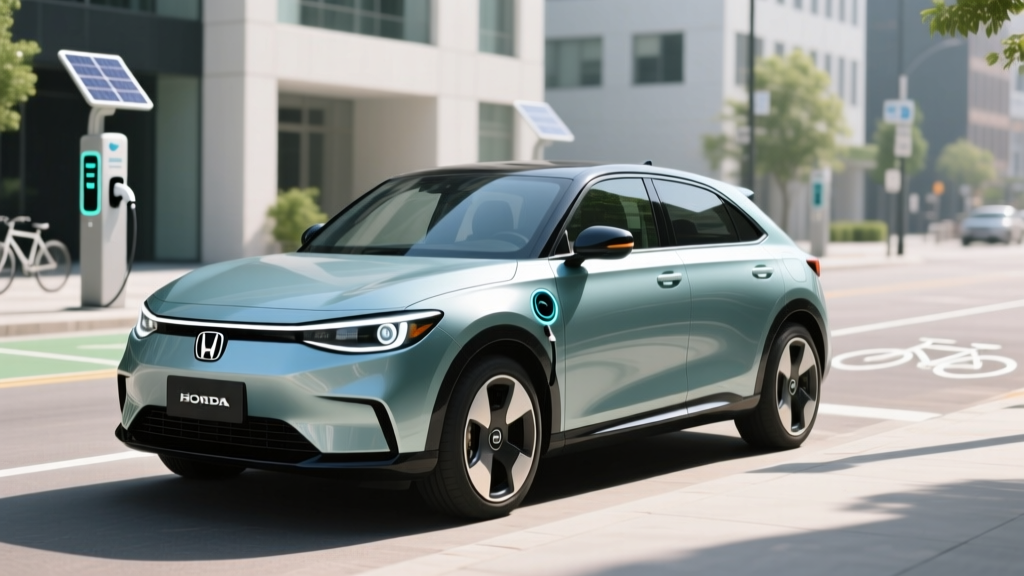
Quick Answer: Honda's electric retro hatchback — the Honda e:Ny1 (sold in Europe and Asia; US availability remains limited as of 2026) and the upcoming Honda 0 Series compact hatchback concepts — pair neo-retro styling with a ~68.8 kWh NMC battery, an EPA-estimated range of roughly 217–256 miles (depending on market and trim), and DC fast charging peaking at ~150 kW (10–80% in approximately 30–35 minutes). Base pricing starts around $38,000–$42,000 before incentives. It does not currently qualify for the full $7,500 federal §30D credit in the US due to battery-sourcing requirements. If you want a retro-styled EV hatchback available in the US today, the closest alternatives are the Hyundai Ioniq 5 (retro-pixel design, EPA 303 mi, ~$42,000) or the Mini Cooper SE (classic retro, EPA 114 mi, ~$30,900).
Honda's Electric Retro Hatchback Lineup: What Exists in 2026
Honda's relationship with retro-styled electric hatchbacks began with the original Honda e (2020–2024), a charming but range-limited city car with just 137 miles of EPA range and a 35.5 kWh battery. Honda discontinued it due to low sales and high pricing relative to its capabilities. In 2026, Honda's electrified retro hatchback strategy has evolved into two tracks:
- Honda e:Ny1: A compact electric SUV/hatchback crossover built on the e:N Architecture F, sold primarily in Europe and Japan. It features a 68.8 kWh NMC lithium-ion battery, front-wheel drive, and 201 hp (150 kW motor output).
- Honda 0 Series (announced): Honda's next-generation EV platform revealed at CES 2024, with production models expected for 2026–2027. The compact hatchback variant carries strong retro-futuristic design cues and a thin-body battery architecture. US specs remain preliminary.
For US buyers searching for a "Honda electric retro hatchback" in 2026, the e:Ny1 is not officially sold through American Honda dealers. The Honda 0 Series hatchback is announced but not yet available for purchase. This guide covers known specs, real-world ownership costs, and practical alternatives.
Specs & Real-World Range: Honda e:Ny1 at a Glance
| Specification | Honda e:Ny1 (2025/2026) | Original Honda e (Discontinued) |
|---|---|---|
| Battery Capacity | 68.8 kWh usable (NMC) | 35.5 kWh usable (NMC) |
| WLTP Range | ~256 miles (412 km) | ~137 miles (220 km) |
| Estimated EPA Range | ~217–230 miles (if US-certified) | 137 miles (EPA) |
| Motor Power | 201 hp (150 kW) | 154 hp (113 kW) |
| 0–60 mph | ~7.6 seconds | ~8.3 seconds |
| Peak DC Fast Charge | ~150 kW (CCS2 in Europe) | ~50 kW (CCS2) |
| 10–80% DC Charge Time | ~30–35 minutes | ~36 minutes |
| Level 2 AC Charging | 11 kW onboard charger (~7 hrs 0–100%) | 6.6 kW (~10 hrs) |
| Drivetrain | Front-wheel drive | Rear-wheel drive |
| Base Price (Europe) | ~€45,000 (~$48,000 USD equiv.) | ~$36,000 (was) |
| Battery Warranty | 8 years / 100,000 miles (Europe) | 8 years / 100,000 miles |
Real-World Range Reality: The e:Ny1's WLTP estimate of 256 miles translates to roughly 217–230 miles under EPA testing methodology (EPA cycles are more conservative). In real-world highway driving at 70 mph, expect ~185–200 miles. In cold weather (below 32°F / 0°C), range can drop to ~160–180 miles due to battery chemistry limitations and cabin heating demand. The e:Ny1 does not appear to include a heat pump in all markets, which worsens cold-weather efficiency. Honda's e:N Architecture uses liquid-cooled thermal management, which helps sustain charging speeds but does not fully offset winter range loss.
EV vs Gas: Honda e:Ny1 Compared to a Civic Hatchback
The natural comparison for a Honda electric retro hatchback buyer is the gasoline Honda Civic Hatchback. Here's how they stack up on cost and efficiency over 5 years of ownership (assuming 12,000 miles/year, US national averages):
| Factor | Honda e:Ny1 (Est. US) | 2026 Honda Civic Hatchback (Sport) |
|---|---|---|
| Base MSRP | ~$42,000 (est.) | ~$28,500 |
| Federal Tax Credit (§30D) | $0–$3,750 (battery sourcing likely fails critical-minerals test) | N/A |
| Effective Purchase Price | ~$38,250–$42,000 | $28,500 |
| Energy/Fuel Cost (5 yr) | ~$3,600 ($0.13/kWh avg, 3.2 mi/kWh) | ~$9,000 ($3.50/gal, 33 MPG combined) |
| Maintenance (5 yr) | ~$1,800 (no oil, fewer brake jobs w/ regen) | ~$4,200 (oil, filters, brakes, belts) |
| Insurance (5 yr est.) | ~$9,500 (EV premium ~15–20%) | ~$7,800 |
| 5-Year Total Cost | ~$53,150–$56,900 | ~$49,500 |
| CO₂ Emissions (5 yr) | ~12–18 metric tons (grid-dependent) | ~24 metric tons |
Key takeaway: The Honda e:Ny1 costs approximately $4,000–$7,000 more over 5 years than a Civic Hatchback, primarily due to the higher purchase price that fuel and maintenance savings cannot fully offset. The breakeven point extends beyond 7 years for most buyers. However, if your local electricity rate is below $0.10/kWh (e.g., Pacific Northwest, parts of the South) and you charge at home exclusively, the gap narrows to ~$2,000–$3,000 over 5 years.
Charging & Home Setup: What US Buyers Need to Know
If Honda brings the e:Ny1 or a 0 Series hatchback to the US, it will almost certainly use the NACS (Tesla-style) connector, as Honda joined the NACS alliance in late 2023. Current European e:Ny1 models use CCS2, which would not carry over to a US version.
| Charging Level | Power (kW) | Miles Added Per Hour | Typical Use Case |
|---|---|---|---|
| Level 1 (120V household) | 1.4 kW | ~4–5 miles/hr | Overnight trickle; emergency only |
| Level 2 (240V home) | 7.7–11 kW | ~25–35 miles/hr | Daily home charging; full charge in 7–9 hrs |
| DC Fast Charge | Up to ~150 kW peak | ~150+ miles in 15 min | Road trips; 10–80% in ~30–35 min |
Charging curve reality: The e:Ny1's 68.8 kWh NMC battery peaks at ~150 kW only between approximately 10–40% state of charge. Above 60%, charging speed tapers to ~80 kW, and above 80% it drops to ~30–40 kW to protect battery longevity. A 10–80% session takes roughly 30–35 minutes, but a 10–100% session can take 50+ minutes. Plan road-trip stops accordingly — charge to 80% and move on rather than waiting for a full battery.
Home charging installation cost:
| Component | Low Estimate | High Estimate |
|---|---|---|
| Level 2 Charger (e.g., ChargePoint Home Flex, Emporia) | $400 | $700 |
| Electrician Labor (240V/50A circuit run) | $800 | $2,500 |
| Electrical Panel Upgrade (if needed, 100A→200A) | $1,500 | $3,500 |
| Permit & Inspection | $100 | $400 |
| Total (no panel upgrade) | $1,300 | $3,600 |
| Total (with panel upgrade) | $2,800 | $7,100 |
Always get a quote from a licensed electrician. Homes built before 1990 frequently need panel upgrades to support a 50A EV circuit alongside existing loads. The federal Residential Clean Energy Credit covers 30% of charger installation costs up to $1,000 (IRS §25E) through 2032.
Federal Tax Credit Eligibility: Will It Qualify?
Under current IRS §30D rules for 2026, the federal new clean vehicle credit offers up to $7,500, split into two halves:
- $3,750 — Battery Components: Battery components must be manufactured or assembled in North America (phased percentages increase yearly).
- $3,750 — Critical Minerals: Critical minerals must be sourced from the US or a free-trade-agreement country.
- MSRP Cap: Sedans/hatchbacks must be under $55,000 MSRP; SUVs/trucks under $80,000.
- Buyer Income Cap: AGI must not exceed $150,000 (single) / $300,000 (joint).
- Point-of-Sale Transfer: Eligible buyers can transfer the credit to the dealer for an immediate price reduction.
- FEOC Exclusion: Vehicles with battery components from a "foreign entity of concern" (China, Russia, etc.) are disqualified.
Honda e:Ny1 / 0 Series outlook: Honda's battery supply chain relies heavily on partnerships with LG Energy Solution and GS Yuasa, with manufacturing in Ohio (for US-market Prologue and future models). However, the e:Ny1 currently sold in Europe uses CATL-supplied cells (China), which would fail the FEOC requirement. A US-spec version would need Honda's Ohio-built LG cells to qualify — and even then, critical-minerals sourcing may only satisfy one half ($3,750) in 2026. Always verify eligibility at fueleconomy.gov before purchasing.
Common Misconceptions About Honda's Electric Hatchbacks
| Myth | Fact |
|---|---|
| "The Honda e is still available in the US." | The Honda e was never officially sold in the US and was discontinued globally in 2024 due to low demand and limited range. |
| "Honda doesn't make real EVs." | Honda sells the Prologue (EPA 296 mi, ~$47,000) in the US and the e:Ny1 in Europe/Japan. The 0 Series platform (2026–2027) represents a major commitment with dedicated EV architecture. |
| "Retro-styled EVs are just novelties with bad range." | Modern retro EVs like the Hyundai Ioniq 5 (EPA 303 mi) and upcoming Honda 0 Series target mainstream range. The original Honda e's 137-mi range was an outlier, not the category standard. |
| "I'll save money immediately by going electric." | Higher purchase prices, insurance premiums, and home-charging installation costs mean EV savings typically take 5–8 years to materialize vs. a comparable gas car — unless you drive high annual miles and have cheap electricity. |
| "All EVs charge at the same speed." | Charge rate varies enormously. The e:Ny1 peaks at ~150 kW; a Hyundai Ioniq 5 peaks at ~240 kW; a Tesla Model Y peaks at ~250 kW. A 150 kW peak means 10–80% in ~35 min vs. ~18 min at 240+ kW. |
Decision Framework: Is This the Right EV for You?
Choose a Honda electric retro hatchback (e:Ny1 if imported, or wait for 0 Series) if:
- You prioritize distinctive, retro-modern design over maximum range.
- Your daily commute is under 60 miles round-trip and you have Level 2 home charging.
- You value Honda's reliability reputation and dealer network for service.
- You're in a mild climate where cold-weather range loss is minimal.
Choose an alternative (Hyundai Ioniq 5, Chevy Equinox EV, VW ID.4) if:
- You need 300+ miles of EPA range for frequent road trips.
- You require DC fast charging above 200 kW for minimal road-trip downtime.
- You want to maximize federal tax credit eligibility ($7,500) — the Chevy Equinox EV and VW ID.4 (US-built trims) currently qualify more reliably.
- You live in a cold-weather state and need a heat pump for winter efficiency (standard on Ioniq 5, not confirmed on all Honda EVs).
- You need AWD — the e:Ny1 is FWD only; Ioniq 5 and ID.4 offer AWD trims.
Choose a Honda Civic Hybrid instead if:
- You don't have reliable home or workplace charging access.
- Your budget is under $30,000 and you want Honda's proven reliability.
- You drive more than 20,000 miles/year and can't afford the upfront EV premium.
First-Time EV Buyer Checklist
If the Honda electric retro hatchback is your gateway into EV ownership, work through this checklist before committing:
- Confirm charging access: Do you have a garage, driveway, or workplace charger? Public-only charging is viable but adds cost ($0.30–$0.50/kWh at DC stations vs. $0.13/kWh at home) and time.
- Check your electrical panel: A 200A panel with available breaker slots can usually support a 50A Level 2 circuit. Older 100A panels may require a costly upgrade.
- Calculate your real daily miles: The average American drives 37 miles/day. If your routine is under 60 miles, even a 200-mile-range EV is plenty — but add a 30% buffer for cold weather and highway driving.
- Get insurance quotes before buying: EV insurance premiums run 15–25% higher than equivalent gas cars due to repair costs and battery replacement risk. Shop quotes from multiple carriers.
- Verify tax credit eligibility: Check fueleconomy.gov for the specific VIN and model year. Income limits, MSRP caps, and battery-sourcing rules all apply.
- Test-drive in conditions you'll actually drive in: Highway merging, regenerative braking feel, one-pedal driving adaptation, and infotainment responsiveness all vary between EVs.
Frequently Asked Questions
Is the Honda e still available anywhere in 2026?
No. Honda discontinued the original Honda e globally after the 2024 model year. It was never officially sold in the United States. Its successor in spirit is the e:Ny1 (Europe/Japan) and the upcoming Honda 0 Series platform vehicles.
When will Honda release an electric retro hatchback in the US?
Honda's 0 Series platform, announced at CES 2024, targets US production starting in 2026–2027 at Honda's Ohio EV hub. A compact hatchback with retro-modern design cues is expected but not yet confirmed with US pricing or specs. Honda's US EV currently available is the Prologue SUV (built on GM's Ultium platform).
How does Honda's EV range compare to Hyundai or Tesla?
Honda's current EVs lag behind competitors. The e:Ny1 (~217–230 mi est. EPA) trails the Hyundai Ioniq 5 (EPA 303 mi), Tesla Model 3 (EPA 341 mi Long Range), and Chevy Equinox EV (EPA 319 mi). Honda's 0 Series aims to close this gap with a more energy-dense, thin battery architecture.
Does Honda's electric hatchback support vehicle-to-load (V2L)?
The e:Ny1 sold in Europe does not prominently feature V2L capability. Honda has indicated that the 0 Series platform will support bidirectional charging (V2H/V2G), but specific US-market features are not yet confirmed.
What is the battery replacement cost for a Honda EV?
Full battery pack replacement for a 68–70 kWh Honda EV is estimated at $10,000–$16,000 out of warranty. However, NMC batteries in liquid-cooled packs typically retain 85–90% capacity after 150,000 miles. Honda's 8-year/100,000-mile battery warranty covers defects and excessive degradation (typically below 70% state of health). Most owners will never need a full replacement.