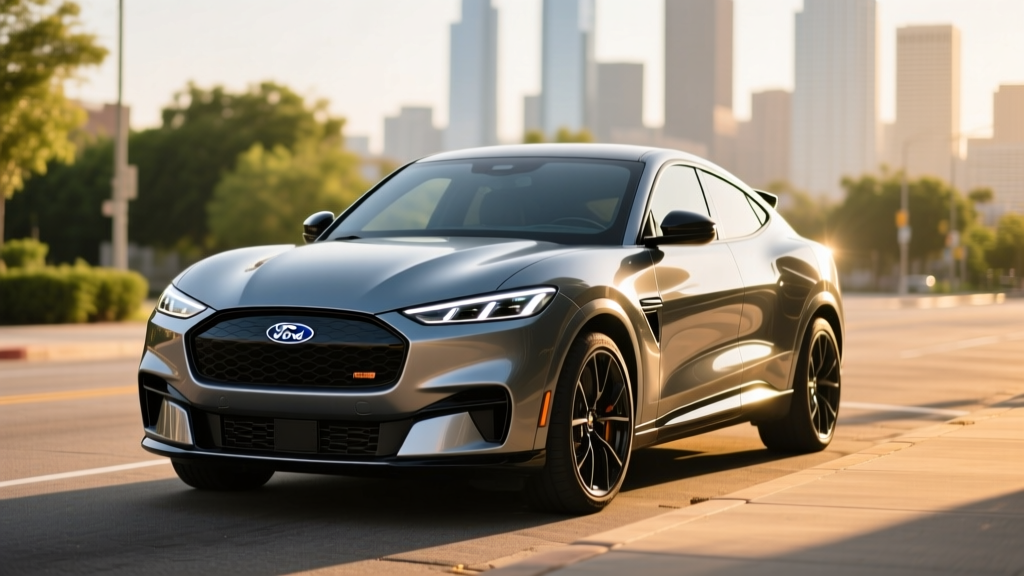
The Ford Mustang Mach-E has evolved steadily since its 2021 debut, and the 2026 model year brings incremental but meaningful refinements to battery efficiency, infotainment responsiveness, and charging reliability. For shoppers researching Mach-E hp figures and how they translate to real-world driving, this review covers every spec that matters — from the 290-hp Select trim all the way to the 480-hp GT Performance Edition — alongside the range, charging, and pricing data you need to make a purchase decision.
The Mach-E occupies a competitive space against the Tesla Model Y, Hyundai Ioniq 5, and Chevrolet Blazer EV. Its advantage has always been a balance of sporty driving dynamics, practical crossover utility, and access to the Tesla Supercharger network via Ford's NACS adoption. Here's the full breakdown.
2026 Mustang Mach-E at a Glance: Spec Table
| Spec | Select (RWD) | Premium (AWD) | GT (AWD) | GT Perf. Edition |
|---|---|---|---|---|
| Horsepower | 290 hp | 346 hp | 480 hp | 480 hp |
| Torque (lb-ft) | 317 | 428 | 600 | 634 |
| 0-60 mph | 5.8 sec | 5.1 sec | 3.5 sec | 3.3 sec |
| Drivetrain | RWD (single motor) | AWD (dual motor) | AWD (dual motor) | AWD (dual motor) |
| Battery (usable) | 72 kWh (LFP) | 91 kWh (NMC) | 91 kWh (NMC) | 91 kWh (NMC) |
| EPA Range | 250 mi | 305 mi | 280 mi | 265 mi |
| MPGe (combined) | 105 | 98 | 89 | 84 |
| kWh/100 mi | 32 | 34 | 38 | 40 |
| Max DC Charge | 115 kW | 150 kW | 150 kW | 150 kW |
| 10-80% DC Time | ~28 min | ~25 min | ~25 min | ~25 min |
| Level 2 Rate | 10.5 kW | 10.5 kW | 10.5 kW | 10.5 kW |
| Base MSRP | $42,495 | $48,995 | $56,495 | $62,995 |
Sources: fueleconomy.gov, Ford Motor Company. MSRP excludes destination charge (~$1,895).
Mustang Mach-E HP Across the Lineup
The 2026 Mach-E lineup spans from adequate daily-driver power to genuine performance-car territory. Here's how the horsepower and drivetrain configurations break down by trim:
Select (RWD): 290 hp and 317 lb-ft of torque from a single rear-mounted motor. This is the efficiency-oriented trim, and 290 hp is more than sufficient for highway merging and passing. The RWD layout also delivers the best range in the lineup.
Premium (AWD): 346 hp and 428 lb-ft via dual motors. The step-up in power is noticeable, particularly in the 30-70 mph passing range. The dual-motor AWD system uses an induction motor on the front axle (which can freewheel to reduce drag) and a permanent-magnet motor on the rear.
GT and GT Performance Edition (AWD): 480 hp in both, with the Performance Edition bumping torque to 634 lb-ft (vs. 600 lb-ft on the standard GT). The GT's 3.5-second 0-60 time places it squarely in sports-car territory. The Performance Edition adds MagneRide adaptive dampers and a Brembo big-brake kit, but its heavier equipment load reduces EPA range to 265 miles.
EPA Range vs. Real-World Range
- EPA Sticker (Premium AWD): 305 miles
- Real-world highway (70-75 mph): ~255–275 miles
- Real-world mixed city/highway: ~270–290 miles
- Cold weather (below 32°F, highway): ~210–240 miles (20–30% reduction)
- GT Performance Edition highway: ~215–235 miles
The Mach-E Premium with the extended-range NMC pack remains the range champion of the lineup. The LFP-equipped Select sacrifices range for lower cost and superior long-term battery cycle life.
The EPA figures are tested under controlled conditions that include a mix of city and highway driving at moderate temperatures. In our experience and consistent third-party testing, highway-heavy trips at 75 mph reduce range by roughly 10–15% below the EPA sticker. Cold weather compounds this — lithium-ion batteries lose efficiency in low temperatures, and cabin heating (even with the Mach-E's heat pump) draws significant energy.
The Select trim's LFP battery (72 kWh usable) delivers a lower EPA rating but compensates with a chemistry that degrades more slowly over time and tolerates repeated 100% charges — something Ford actually recommends for LFP packs to maintain accurate state-of-charge calibration.
Charging Speed: DC Fast, Level 2, and the NACS Advantage
| Charging Level | Power | Miles Added/Hour | Notes |
|---|---|---|---|
| Level 1 (120V) | ~1.4 kW | ~4–5 mi/hr | Emergency/trickle only |
| Level 2 (240V, 48A) | 10.5 kW | ~30–34 mi/hr | Full charge in ~9–10 hrs |
| DC Fast (Select) | Peak 115 kW | ~200+ mi in 30 min | 10-80% in ~28 min |
| DC Fast (Premium/GT) | Peak 150 kW | ~230+ mi in 30 min | 10-80% in ~25 min |
Ford's decision to adopt the NACS (North American Charging Standard) connector — the Tesla plug — is a significant practical advantage. The 2026 Mach-E ships with a native NACS charge port, meaning it can access Tesla Superchargers (now over 20,000 stalls in North America) without an adapter. This dramatically expands the reliable DC fast-charging network available to Mach-E owners, especially on road trips through rural corridors.
Charging curve reality check: The 150 kW peak rate on Premium and GT trims is sustained roughly between 10% and 40% state of charge. Beyond 50%, the rate tapers — dropping to ~90 kW around 60% and ~50 kW above 80%. This is normal for NMC lithium-ion packs and is managed by the battery management system to protect cell health. The 10-80% time of ~25 minutes assumes you precondition the battery (the Mach-E does this automatically when you navigate to a charger).
Home charging: At 10.5 kW on a 240V Level 2 circuit (requiring a 60A breaker and hardwired connection, or a NEMA 14-50 outlet on a 50A circuit), the extended-range pack charges from empty to full in roughly 9–10 hours. This is the primary refueling method for most EV owners and covers 95%+ of weekly driving needs.
Pricing, Trims, and Federal Tax Credit Eligibility
| Trim | Base MSRP | Destination | Total Before Credit | Est. After §30D Credit |
|---|---|---|---|---|
| Select RWD | $42,495 | $1,895 | $44,390 | ~$36,890* |
| Premium AWD | $48,995 | $1,895 | $50,890 | ~$43,390* |
| GT AWD | $56,495 | $1,895 | $58,390 | ~$50,890* |
| GT Perf. Edition | $62,995 | $1,895 | $64,890 | ~$57,390* |
*Estimated after $7,500 federal tax credit, assuming buyer eligibility. Verify via IRS §30D guidelines.
Federal tax credit eligibility (§30D) for 2026 requires:
- MSRP cap: SUVs/crossovers must be under $80,000 — all Mach-E trims qualify.
- Buyer income cap: AGI ≤ $150,000 (single) / $300,000 (joint).
- Battery sourcing: Critical minerals and battery components must meet phased-in domestic/free-trade sourcing thresholds. The Select's LFP battery sourcing may differ from the NMC packs. Ford has confirmed that multiple Mach-E trims qualify for the full $7,500, but always verify the specific VIN on the IRS qualified vehicle list before purchasing.
- Point-of-sale transfer: You can transfer the credit to the dealer at purchase, reducing your out-of-pocket cost immediately rather than waiting for a tax refund.
Interior, Cargo, and Technology
Cargo volume: 29.7 cubic feet behind the rear seats, expanding to 59.7 cubic feet with the rear seats folded. The front trunk (frunk) adds 4.7 cubic feet of drainable, lockable storage — useful for wet items or charging cables.
Passenger space: Front legroom is 43.3 inches; rear legroom is 38.9 inches. Two adults in the rear seat are comfortable on long trips; a third rear passenger is tight. The panoramic fixed glass roof (standard on Premium and above) creates an airy cabin but does not open.
Infotainment: The 15.5-inch vertical touchscreen runs Ford's latest SYNC 4A system with wireless Apple CarPlay and Android Auto, native Google Maps navigation, and over-the-air update capability. The interface is responsive, though the climate controls are buried in the touchscreen rather than having physical buttons — a common complaint among owners.
Driver assistance: Ford Co-Pilot360 2.0 is standard, including adaptive cruise control with stop-and-go, lane centering, blind-spot monitoring, and rear cross-traffic braking. BlueCruise (Ford's hands-on-wheel, eyes-on-road Level 2 system) is available on Premium and above, enabling hands-free driving on over 130,000 miles of pre-mapped divided highways. Note: BlueCruise is SAE Level 2 — it is not autonomous driving and requires the driver to remain attentive at all times.
Warranty and Battery Longevity
Ford provides the following coverage for the 2026 Mach-E:
- Bumper-to-bumper: 3 years / 36,000 miles
- Powertrain: 5 years / 60,000 miles
- EV battery components: 8 years / 100,000 miles (retaining ≥70% of original capacity)
The 8-year/100,000-mile battery warranty with a 70% capacity retention threshold is industry-standard. Real-world data from earlier Mach-E model years suggests that the NMC extended-range packs lose roughly 5–8% capacity over the first 60,000 miles before the degradation curve flattens. The LFP pack in the Select trim is expected to show even slower degradation, as LFP chemistry offers superior cycle life — often exceeding 3,000 full cycles before reaching 80% state of health.
Who Should Buy the Mustang Mach-E?
- You want a sporty-driving electric crossover with genuine performance (GT trims)
- Supercharger network access via NACS is a priority for road trips
- You prefer a traditional automotive dealer experience for service and purchase
- You need a practical daily driver with 305 miles of range (Premium) and decent cargo space
- Maximum range is your top priority (Hyundai Ioniq 5 offers 311 mi; Tesla Model Y up to 330 mi)
- You need 3-row seating or significant towing capacity (Mach-E is rated for only 1,500–2,200 lbs)
- You want the fastest DC charging in the segment (Ioniq 5 peaks at 240 kW, 10-80% in ~18 min)
- You prefer physical climate control buttons over touchscreen-only operation
Frequently Asked Questions
What is the real-world range of the Mustang Mach-E?
The Premium AWD with the 91 kWh NMC pack is rated at 305 miles EPA. In real-world mixed driving, expect 270–290 miles. Highway-only trips at 75 mph drop that to roughly 255–275 miles, and cold weather (below freezing) can reduce range by 20–30%, yielding 210–240 miles on a full charge.
How fast does the Mach-E charge at home and on the road?
On a 240V Level 2 home charger at 10.5 kW, the extended-range pack fills in about 9–10 hours. On DC fast chargers, the Premium and GT trims peak at 150 kW and achieve a 10–80% charge in roughly 25 minutes. The Select's LFP pack peaks at 115 kW with a 10–80% time of about 28 minutes.
Does the 2026 Mustang Mach-E qualify for the federal EV tax credit?
Multiple Mach-E trims qualify for the full $7,500 federal tax credit under IRS §30D, subject to buyer income caps ($150K single / $300K joint), the $80K MSRP cap for SUVs, and battery sourcing requirements. The credit can be transferred to the dealer at point of sale. Always verify eligibility for your specific VIN on the IRS qualified vehicles list before finalizing a purchase.
How much horsepower does the Mustang Mach-E GT have?
The Mach-E GT and GT Performance Edition both produce 480 hp. The GT makes 600 lb-ft of torque (0-60 in 3.5 seconds), while the Performance Edition bumps torque to 634 lb-ft (0-60 in 3.3 seconds) thanks to revised motor calibration and the MagneRide suspension.
Is the Mach-E worth buying over the Tesla Model Y or Ioniq 5?
The Mach-E is worth strong consideration if you value driving dynamics, Supercharger access via NACS, and a conventional dealer purchase/service experience. The Model Y still leads in range (up to 330 mi) and charging infrastructure density. The Ioniq 5 charges faster (240 kW peak) and offers a slightly roomier rear seat. Test-drive all three — the Mach-E's ride quality and steering feel often win the subjective comparison.
What is the Mach-E's towing capacity?
The 2026 Mach-E is rated to tow up to 1,500 lbs (Select RWD) or 2,200 lbs (AWD trims with the factory tow package). This is light-duty only — suitable for a small utility trailer or a pair of dirt bikes, but not a boat or camper. Towing significantly reduces range, often by 30–50% depending on trailer weight and aerodynamics.