Quick Answer: Is There a Honda CRF Electric Dirt Bike You Can Buy?
As of 2026, Honda has not released a full-size CRF electric dirt bike for consumer purchase in the United States. Honda has showcased electric off-road prototypes — most notably the Honda CR Electric Prototype at the 2024 Tokyo Motorcycle Show — and has filed multiple patents for electric motocross platforms. However, no production model carrying the CRF-E badge is currently available for order.
If you're searching for a "CRF electric dirt bike" because you want a zero-emission, quiet, low-maintenance off-road machine, you have viable alternatives right now from brands like KTM (Freeride E-XC), Stark (Varg EX), and Sur-Ron/Surbee for lighter trail use. Below, we break down what Honda has announced, what a production CRF electric dirt bike would likely cost and spec at, and how the electric off-road segment stacks up against gas-powered CRF models today.
What Honda Has Shown: The CR Electric Prototype
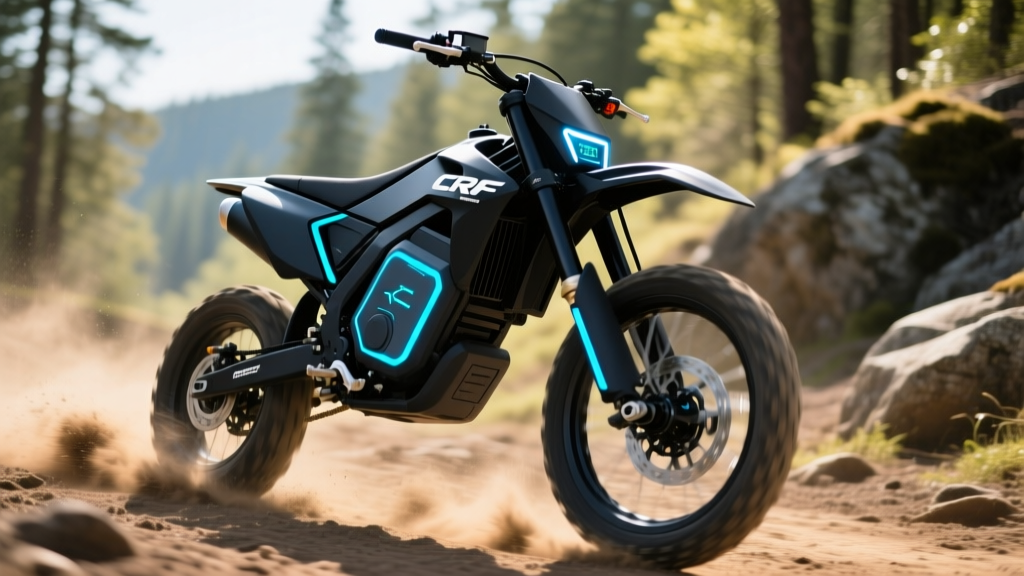
Honda's most concrete step toward an electric dirt bike came with the CR Electric Prototype, revealed in Japan in spring 2024. The prototype is based on the chassis architecture of the CRF450R but swaps the 449cc single-cylinder engine for a compact electric motor and a swappable battery pack.
Key details Honda disclosed or that can be inferred from patent filings and show-floor reporting:
- Motor output: Estimated 35–45 kW (roughly 47–60 HP) peak, consistent with the 450cc motocross class
- Battery: Swappable lithium-ion pack, likely in the 3–5 kWh range based on physical size and weight targets
- Weight target: Approximately 230–245 lbs (104–111 kg), competitive with the gas CRF450R's ~237 lbs wet
- Charging: Swappable battery system (swap in under 60 seconds) plus conventional plug-in charging, likely Level 1 (120V) at ~1 kW
- Ride modes: Multiple power delivery maps selectable via handlebar switch
Honda has not confirmed a production timeline, MSRP, or market availability. Industry analysts expect a production version no earlier than the 2027 or 2028 model year, likely debuting first in Japan and Europe before a U.S. launch.
Speculated Specs: What a Production CRF Electric Dirt Bike Would Look Like
Based on the prototype, Honda's patent portfolio, and the competitive landscape, here's a reasonable projection of what a production Honda CRF electric dirt bike could offer. These are estimates, not confirmed specifications.
| Specification | Estimated CRF-E (Production) | Current CRF450R (Gas) |
|---|---|---|
| Motor / Engine | ~40 kW (54 HP) electric motor | 449cc single-cylinder, ~55 HP |
| Battery Capacity | 3.5–5 kWh (swappable, Li-ion) | N/A (1.7 gal fuel tank) |
| Estimated Ride Time | 25–45 minutes (motocross pace) | ~1.5–2 hours per tank |
| Charge Time (Level 1, 120V) | 3–5 hours (full charge) | Refuel in ~2 minutes |
| Battery Swap Time | Under 60 seconds | N/A |
| Weight | ~235–245 lbs | ~237 lbs (wet) |
| Estimated MSRP | $11,000–$14,000 | $9,699 (2026 MSRP) |
Important caveat on ride time: Electric dirt bike "range" is measured in minutes of riding, not miles. At full motocross intensity, a 4 kWh battery will deplete in roughly 25–30 minutes. At trail-riding pace with moderate throttle use, that extends to 40–50 minutes. This is the single biggest practical limitation of electric off-road motorcycles compared to gas models, which can run 1.5+ hours on a tank.
Electric vs. Gas Dirt Bikes: The Real Comparison
The decision between an electric and gas dirt bike isn't just about power — it's about where and how you ride. Here's a data-driven breakdown:
| Factor | Electric Dirt Bike | Gas Dirt Bike (CRF450R-class) |
|---|---|---|
| Power Delivery | Instant torque, linear, no clutch or shifting | Peak power at high RPM, requires clutch/shift technique |
| Noise Level | Near-silent (~60 dB) | 94–100+ dB (hearing protection required) |
| Ride Duration | 25–50 min per charge | 90–120 min per tank |
| "Refuel" Time | 3–5 hr charge or 60-sec battery swap | ~2 min refuel |
| Maintenance | Minimal — no oil, filters, piston rings, valve adjustments | Regular — oil changes, air filters, top-end rebuilds every 30–50 hrs |
| Operating Cost / Hour | ~$0.30–$0.60 (electricity) | ~$3.00–$5.00 (fuel + oil + consumables) |
| Trail Access | Allowed on many noise-restricted trails; some public land bans still apply | Banned from noise-restricted areas; OHV permits required |
| Cold Weather Impact | Battery loses 15–25% capacity below 40°F | Minimal cold impact; may need jetting adjustments |
| Weight | Similar (235–250 lbs) | Similar (230–245 lbs) |
The operating cost advantage is stark. If you ride 100 hours per year, an electric dirt bike saves roughly $300–$500 annually in fuel and maintenance consumables alone — and that's before factoring in top-end engine rebuilds on gas bikes, which run $800–$1,500 every 30–50 hours of hard riding.
What's Actually Available Now: Electric Dirt Bikes You Can Buy in 2026
Since the Honda CRF electric dirt bike isn't yet a reality, here are the closest alternatives currently on the U.S. market:
KTM Freeride E-XC
- Motor: 18 kW (24 HP) continuous, 22 kW peak
- Battery: 3.9 kWh (swappable, KTM PowerPack)
- Ride time: ~1.5 hours (trail pace), ~30 minutes (hard enduro)
- Charge time: ~110 minutes (0–100% with included charger, 220V)
- Weight: ~245 lbs
- MSRP: ~$9,299
- Best for: Trail riding, technical terrain, noise-restricted areas
Stark Varg EX (Enduro)
- Motor: 60 kW (80 HP) peak
- Battery: 6 kWh
- Ride time: Up to 6 hours (trail pace), ~1–2 hours (hard riding)
- Charge time: ~1–2 hours (with optional fast charger)
- Weight: ~242 lbs
- MSRP: ~$13,890
- Best for: Riders wanting 450-class gas power with electric delivery
Sur-Ron Light Bee X / Surbee
- Motor: 6 kW peak (Light Bee X)
- Battery: 2.0 kWh (removable)
- Ride time: ~40–60 minutes (moderate trail)
- Charge time: ~2.5 hours
- Weight: ~110 lbs
- MSRP: ~$4,200–$4,500
- Best for: Light trail, beginner riders, backyard riding, younger riders
Cost of Ownership: Electric vs. Gas Dirt Bike Over 5 Years
Assuming 100 riding hours per year for 5 years (500 total hours), here's how the total cost of ownership compares between a hypothetical $13,000 CRF electric dirt bike and a $9,699 gas CRF450R:
| Cost Category | CRF Electric (Est.) | CRF450R Gas |
|---|---|---|
| Purchase Price | $13,000 | $9,699 |
| Fuel/Energy (500 hrs) | $150–$300 | $1,500–$2,500 |
| Oil & Filters | $0 | $400–$600 |
| Top-End Rebuilds (×8–10) | $0 | $2,400–$4,000 |
| Air Filters & Misc. | $50–$100 | $300–$500 |
| Battery Replacement (if needed) | $1,500–$2,500 (year 4–5) | N/A |
| 5-Year Total | $14,700–$15,900 | $14,300–$17,300 |
The 5-year totals are remarkably close. The electric bike's higher purchase price is offset by dramatically lower operating costs. The wildcard is battery replacement — if the pack degrades below 70–80% capacity by year 4 or 5 (which depends on charge cycles, heat, and storage habits), a replacement pack adds significant cost. However, most modern lithium-ion packs in off-road applications are rated for 500–1,000 full charge cycles before hitting 80% state of health, which translates to many years of weekend riding.
Common Misconceptions About Electric Dirt Bikes
| Myth | Fact |
|---|---|
| "Electric dirt bikes have no power." | The Stark Varg produces 80 HP — more than most 450cc gas bikes. Instant torque means power is available at zero RPM, unlike gas engines that need to rev. |
| "You can't ride them on public trails." | Many public land managers prefer electric bikes due to low noise. Some areas still restrict them under outdated "motorized vehicle" rules, but access is expanding, not contracting. |
| "The battery will die in 15 minutes." | At full motocross race pace, yes — 20–30 minutes. At trail-riding pace with moderate throttle, 45–90 minutes is typical depending on battery capacity. KTM's Freeride E-XC gets up to 1.5 hours on trails. |
| "Electric bikes are heavier." | Not anymore. The Stark Varg EX weighs ~242 lbs, and Honda's prototype targets ~235–245 lbs — directly comparable to gas 450s at ~237 lbs wet. |
| "They qualify for the $7,500 federal EV tax credit." | No. The IRS §30D clean vehicle credit applies to four-wheeled vehicles with a gross vehicle weight under 14,000 lbs. Motorcycles and dirt bikes do not qualify. |
Decision Framework: Should You Wait for Honda or Buy Now?
Choose to Wait for the Honda CRF Electric if:
- You're a loyal Honda rider and want OEM dealer support, warranty service, and parts availability
- You ride primarily motocross or supercross and need 450-class power with proven suspension geometry
- You can wait until 2027–2028 for a production release and want to see real-world reviews before committing
- Swappable battery infrastructure matters to you (Honda may partner with swap stations at tracks)
Choose an Available Electric Dirt Bike Now if:
- You ride trails, enduro, or in noise-restricted areas where electric access is a major advantage today
- You want the maintenance savings and instant torque of electric now, not in 2+ years
- You're a newer rider who would benefit from the clutch-free, shift-free simplicity of electric power delivery
- You have a riding property or nearby trails where 30–90 minutes of ride time per charge is sufficient
Stick with Gas (CRF450R/CRF250R) if:
- You compete in motocross or hare scramble events where 2+ hour run times and instant refueling are non-negotiable
- You ride in remote areas with no access to electrical outlets for charging between sessions
- Your budget is strictly under $10,000 and you need maximum ride time per dollar
- You ride in extreme cold (below 30°F) regularly, where battery performance drops significantly
Charging and Battery Care for Electric Dirt Bikes
If you buy an electric dirt bike — whether a KTM, Stark, or eventually a Honda CRF-E — proper battery care is essential for longevity. Here are practical ownership considerations:
Charging Setup
Most electric dirt bikes charge from a standard 120V household outlet (Level 1 equivalent). Expect 2–5 hours for a full charge depending on battery size and charger amperage. You do not need a dedicated 240V circuit for a dirt bike the way you would for an electric car — the battery packs are small enough (2–6 kWh) that standard wall power is adequate.
Practical tip: If you ride at a track or trailhead, bring a heavy-duty 25-foot extension cord (12-gauge) and confirm outlet access beforehand. Many motocross parks now install charging stations specifically for electric bikes.
Battery Longevity
- Storage: Store at 40–60% state of charge (SoC) in a cool, dry place. Never leave at 100% or 0% for extended periods.
- Heat: Avoid charging immediately after a hard ride when the battery is hot. Let it cool for 20–30 minutes first.
- Cold: Expect 15–25% range loss below 40°F. Store the battery indoors and install it just before riding.
- Cycle life: Modern Li-ion packs are rated for 500–1,000 full cycles to 80% state of health. At one full cycle per weekend, that's 10–20 years of casual use.
Frequently Asked Questions
Will Honda release a CRF electric dirt bike in the United States?
Honda has shown the CR Electric Prototype and filed related patents, but has not confirmed a U.S. release date or pricing. A production model is plausible for the 2027–2028 timeframe, but nothing is officially on sale as of 2026.
How much would a Honda CRF electric dirt bike cost?
Based on the gas CRF450R's $9,699 MSRP and the pricing of existing electric competitors (KTM Freeride E-XC at ~$9,299, Stark Varg at ~$13,890), a production Honda CRF-E would likely be priced between $11,000 and $14,000 depending on battery size and motor output.
Do electric dirt bikes qualify for any federal tax credits?
No. The federal §30D Clean Vehicle Credit applies only to four-wheeled motor vehicles. Electric motorcycles and dirt bikes are not eligible for the $7,500 credit. Some states may offer separate incentives for electric off-road vehicles — check your state's energy or environmental agency for current programs.
Can I ride an electric dirt bike on public trails and BLM land?
In most cases, yes. Electric dirt bikes are generally classified as off-highway vehicles (OHVs) and are subject to the same trail designations as gas bikes. However, their near-silent operation makes them welcome on noise-restricted trails where gas bikes are banned. Always check local land management rules and carry any required OHV permits or spark-arrestor certifications (some jurisdictions require a "green sticker" or equivalent even for electric models).
How long do electric dirt bike batteries last before needing replacement?
Most quality lithium-ion packs in off-road applications are rated for 500–1,000 full charge cycles before degrading to 80% of original capacity. For a weekend rider doing one full cycle per week, that's roughly 10–20 years. Replacement packs currently cost $1,500–$2,500 depending on the brand and capacity.
Is an electric dirt bike good for beginners?
Yes — electric dirt bikes are among the best options for new riders. There's no clutch, no shifting, no stalling, and no kick-starting. Power delivery is linear and predictable, and most models offer adjustable power maps so you can limit output while building skills. The Sur-Ron Light Bee X (~$4,200) is a popular entry point.