Quick Verdict: The Mach-E That Finally Delivers on Its Promise
The 2026 Ford Mustang Mach-E with BlueCruise represents the culmination of Ford's electric crossover strategy — a vehicle that now pairs competitive range with genuinely useful hands-free highway driving. After spending time with the updated model, the Mach-E has matured from a promising but flawed first effort into a refined, data-backed alternative to the Tesla Model Y and Hyundai Ioniq 5. The headline feature remains Ford's BlueCruise hands-free driving system, which now covers over 130,000 miles of divided highways across North America. But the real story is the package around it: improved battery chemistry, faster DC charging, and pricing that undercuts key rivals when the federal tax credit applies.
This review breaks down every number that matters — from real-world highway range to charging-curve behavior to out-the-door pricing after incentives — so you can decide whether the Mach-E belongs on your shortlist.
Range, Battery, and Efficiency: The Numbers That Matter
The 2026 Mustang Mach-E is offered with two battery packs across multiple trims. The Standard Range pack uses a 72 kWh usable lithium iron phosphate (LFP) battery, while the Extended Range pack steps up to a 91 kWh usable nickel-manganese-cobalt (NMC) pack. Ford's shift to LFP for the base battery is significant: LFP chemistry trades some energy density for superior longevity, thermal stability, and the ability to routinely charge to 100% without accelerating degradation — a practical advantage for daily commuters who charge at home overnight.
| Spec | Standard Range (RWD) | Extended Range (RWD) | Extended Range (AWD) | GT (AWD) |
|---|---|---|---|---|
| EPA Range | 250 mi | 320 mi | 290 mi | 280 mi |
| Battery (usable) | 72 kWh (LFP) | 91 kWh (NMC) | 91 kWh (NMC) | 91 kWh (NMC) |
| Horsepower | 266 hp | 290 hp | 346 hp | 480 hp |
| 0-60 mph | 6.1 sec | 5.6 sec | 4.8 sec | 3.5 sec |
| Drivetrain | RWD | RWD | Dual-Motor AWD | Dual-Motor AWD |
| MPGe (combined) | 105 MPGe | 101 MPGe | 95 MPGe | 84 MPGe |
| Efficiency | 32 kWh/100mi | 33 kWh/100mi | 35 kWh/100mi | 40 kWh/100mi |
| Base MSRP | $39,995 | $45,995 | $48,995 | $59,995 |
Real-World Range vs. EPA Estimate
EPA sticker: 320 miles (Extended Range RWD)
Real-world highway (70-80 mph, moderate temps): Expect approximately 270-285 miles on a full charge. At sustained 80 mph, aerodynamic drag reduces efficiency by roughly 12-15% compared to the mixed-drive EPA cycle.
Cold weather (below 32°F): Plan for 220-250 miles depending on cabin heating use and whether you precondition the battery. The Mach-E's liquid thermal management system helps, but LFP chemistry in the Standard Range pack is more cold-sensitive than NMC.
City/regenerative driving: Can match or slightly exceed the EPA estimate thanks to aggressive regen recapturing energy in stop-and-go traffic.
The Extended Range RWD model at 320 miles EPA is the sweet spot for most buyers. It provides enough buffer for 250+ mile road-trip legs while keeping efficiency above 100 MPGe. Per fueleconomy.gov, the Mach-E ER RWD achieves 33 kWh per 100 miles — competitive with the Model Y Long Range but slightly behind the Ioniq 5's 30 kWh/100mi.
Charging Speed: DC Fast, Level 2, and the Curve Reality
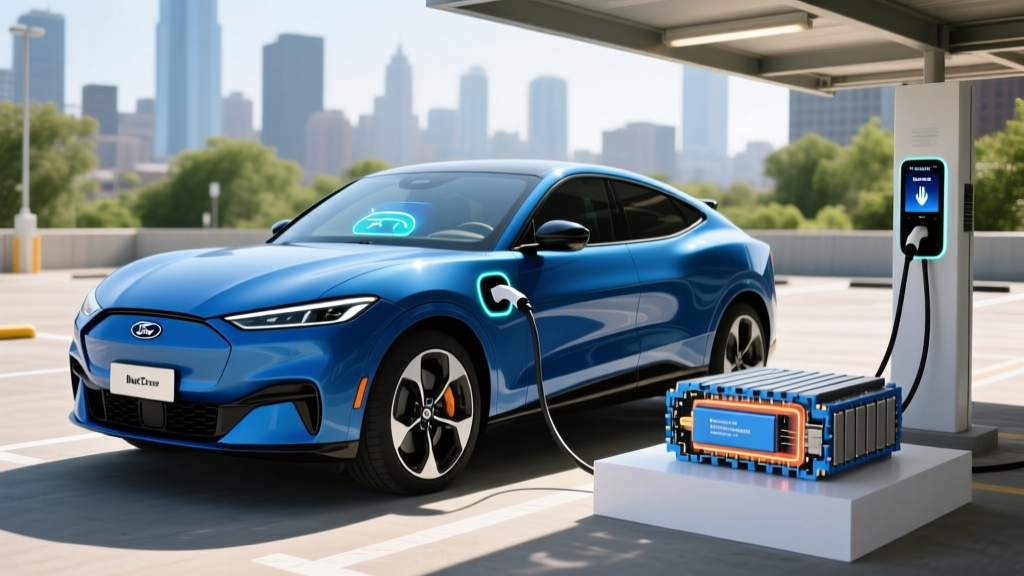
The 2026 Mach-E supports a peak DC fast-charge rate of 150 kW on Extended Range models and 135 kW on Standard Range. Ford quotes a 10-80% charge time of approximately 32 minutes on a 150+ kW station for the Extended Range pack. That's respectable but no longer class-leading — the Ioniq 5's 800V architecture achieves 10-80% in roughly 18 minutes, and the Tesla Model Y on V3 Superchargers hits 10-80% in about 25 minutes.
The critical detail many spec sheets bury is the charging curve. The Mach-E peaks near 150 kW only between roughly 10-35% state of charge. From 35-60%, it sustains around 110-120 kW. Above 80%, the rate tapers sharply to under 40 kW as the battery management system protects cell health. This means the last 20% can add 15+ minutes to your stop. For road trips, the practical strategy is to charge from 10-80% and move on — which takes about 32 minutes at a functioning 150 kW charger.
| Charge Level | Power / Rate | Miles Added Per Hour | Notes |
|---|---|---|---|
| Level 1 (120V household) | 1.2 kW | ~3 mi/hr | Emergency/trickle only; ~100+ hrs for full charge |
| Level 2 (240V, 32A) | 7.7 kW | ~22 mi/hr | Standard home install; full charge overnight (~12-14 hrs ER) |
| Level 2 (240V, 48A) | 11.5 kW | ~33 mi/hr | Requires hardwired 60A circuit; ~8-9 hrs for ER pack |
| DC Fast Charge (peak) | 150 kW (ER) / 135 kW (SR) | ~150-190 mi in 20 min | 10-80% in ~32 min; tapers above 80% |
For home charging, Ford includes the Ford Mobile Power Cord capable of 32A on a NEMA 14-50 outlet. We recommend a hardwired Level 2 wall connector at 48A for any Mach-E owner with an Extended Range pack — the 11.5 kW onboard charger can accept it, and it cuts overnight charging time meaningfully. Budget $800-$2,000 for a professional Level 2 installation depending on your panel capacity and run length (a licensed electrician should verify your 200A panel can accommodate the 60A circuit).
The Mach-E now ships with the NACS (North American Charging Standard) port as standard equipment on 2026 models, replacing the previous CCS1 connector. This grants native access to Tesla's Supercharger network — over 25,000 stalls in North America — without an adapter. This is a significant practical advantage for road-trip charging reliability.
BlueCruise: What Hands-Free Driving Actually Means
Ford's BlueCruise is the Mach-E's signature technology differentiator, and it's essential to understand what it does and does not do. BlueCruise is an SAE Level 2 driver-assistance system. That means the vehicle controls steering, acceleration, and braking on pre-mapped divided highways, but you remain the responsible driver. A driver-facing camera monitors your eyes, and the system will escalate alerts — then disengage — if you look away for too long.
SAE Level 2 — Not Self-Driving
BlueCruise is classified as SAE Level 2 automation. The system handles longitudinal and lateral control simultaneously on qualified highway sections, but the driver must remain attentive and ready to resume control at any moment. This is fundamentally different from Level 4 robotaxi services like Waymo, which operate without a human driver. Think of BlueCruise as an advanced, hands-allowed cruise control — not autonomy.
In practice, BlueCruise works well on long interstate stretches. The system handles lane centering with confidence, manages speed adjustments for slower traffic, and even performs hands-free lane changes when you activate the turn signal (on equipped trims). The 2026 update adds improved merge-assist behavior and better performance in construction-zone lane shifts.
BlueCruise Limitations You Need to Know
- Geofenced to pre-mapped highways: BlueCruise activates only on approximately 130,000+ miles of qualified divided highways. It will not engage on surface streets, rural two-lane roads, or unmapped routes.
- Does not handle exits: The system will alert you to take over before an upcoming exit ramp.
- Weather sensitivity: Heavy rain, snow, or fog can degrade camera and radar performance, causing the system to disengage.
- Driver monitoring is strict: The infrared camera tracks eye gaze. Looking at your phone, even briefly, triggers escalating warnings.
- Subscription cost: BlueCruise includes a 90-day free trial on new vehicles. After that, expect a subscription of approximately $75/month or $800/year (pricing subject to change by Ford).
For buyers who regularly commute or road-trip on major interstates, BlueCruise meaningfully reduces fatigue. On a 400-mile drive, you might spend 70-80% of the time in hands-free mode, which is a genuine quality-of-life improvement. But it is not a substitute for attention, and it does not work everywhere.
Pricing, Tax Credits, and Total Cost
The 2026 Mustang Mach-E lineup starts at $39,995 for the Select trim with the Standard Range RWD powertrain and scales up to $59,995 for the GT. The volume seller — and the configuration we recommend for most buyers — is the Premium Extended Range RWD at $45,995, which includes BlueCruise hardware, the 15.5-inch vertical touchscreen, panoramic roof, and a comprehensive feature set.
| Trim | MSRP | Est. After §30D Credit | Credit Eligibility Notes |
|---|---|---|---|
| Select SR RWD | $39,995 | ~$32,495 | Eligible if buyer income & battery sourcing requirements met |
| Premium SR RWD | $42,995 | ~$35,495 | Same sourcing/income rules apply |
| Premium ER RWD | $45,995 | ~$38,495 | Under $80,000 MSRP cap for SUVs |
| Premium ER AWD | $48,995 | ~$41,495 | Under $80,000 MSRP cap |
| GT ER AWD | $59,995 | ~$52,495 | Under $80,000 MSRP cap |
Federal tax credit eligibility (§30D): The Mach-E qualifies for up to $7,500 under current IRS rules, but eligibility is not automatic. Per IRS §30D guidelines, you must meet all of the following:
- Income caps: Modified adjusted gross income (MAGI) must not exceed $150,000 (single), $225,000 (head of household), or $300,000 (joint filers).
- MSRP cap: The vehicle's MSRP must be under $80,000 for SUVs — all Mach-E trims qualify.
- Battery sourcing: The credit is split into two halves ($3,750 each): one tied to critical minerals sourcing and one to battery component manufacturing. Sourcing requirements tighten annually. Verify current-year compliance on the IRS qualified vehicles list before purchasing.
- Point-of-sale transfer: As of 2024, you can transfer the credit to the dealer at purchase, reducing your out-of-pocket cost immediately rather than waiting for tax filing. The dealer must be IRS-registered.
Because battery sourcing rules change and are model-year-specific, we strongly recommend confirming eligibility on the official fueleconomy.gov tax credit page and consulting a tax professional before finalizing your purchase. Never assume the full $7,500 applies without verification.
Cargo, Interior, and Daily Practicality
The Mach-E is classified as a midsize SUV, and its interior dimensions reflect that. Rear-seat legroom measures 38.9 inches — adequate for adults on longer trips, though it trails the Hyundai Ioniq 5's 41.7 inches. The front trunk (frunk) provides 4.7 cubic feet of drainable storage, useful for charging cables or a small cooler. Behind the rear seats, cargo volume is 29.7 cubic feet, expanding to 59.7 cubic feet with the rear seats folded — competitive with the Model Y but less than the Ioniq 5's 56.2 cu ft (seats up) in some configurations.
The cabin design centers on a 15.5-inch vertical touchscreen running Ford's SYNC 4A system with wireless Apple CarPlay and Android Auto. The screen dominates the dash and handles most climate and vehicle settings — there are very few physical buttons. Whether you find this elegant or frustrating depends on your tolerance for menu-diving to adjust cabin temperature. A configurable 10.2-inch digital instrument cluster sits behind the steering wheel, and a Bang & Olufsen premium audio system is available on higher trims.
Build quality has improved noticeably in the 2026 model year. Panel gaps are tighter, the soft-touch materials extend further down the door panels, and the redesigned center console offers better small-item storage. The panoramic fixed glass roof is standard on Premium and above, creating an airy cabin but adding no ventilation option — a consideration in hot climates.
Warranty and Long-Term Ownership
Ford backs the Mach-E with the following warranty coverage:
- Bumper-to-bumper: 3 years / 36,000 miles
- Powertrain: 5 years / 60,000 miles
- Battery (high-voltage): 8 years / 100,000 miles, with a capacity retention threshold of 70%. If the battery degrades below 70% of original capacity within this period, Ford will repair or replace it.
- Corrosion perforation: 5 years / unlimited miles
The 8-year/100,000-mile battery warranty is industry-standard, matching Tesla, Hyundai, and most competitors. The 70% retention threshold is also typical, though some buyers may wish for a higher guarantee. Based on current degradation data from Mach-E fleets, NMC packs typically lose 8-12% capacity over the first 100,000 miles under normal use patterns — well within the warranty buffer. LFP packs in the Standard Range model are expected to degrade more slowly, often losing only 5-8% over the same distance, owing to LFP's superior cycle life.
Maintenance costs for the Mach-E are substantially lower than a comparable gas-powered SUV. There are no oil changes, no spark plugs, no transmission fluid. Expect to budget for tire rotation/replacement (EVs tend to wear tires faster due to instant torque and heavier weight), cabin air filter replacement, brake fluid checks, and windshield washer fluid. Annual maintenance typically runs $200-$400 versus $800-$1,200 for a gas equivalent.
Pros, Cons, and the Competition
Pros
- BlueCruise hands-free driving is polished and genuinely useful on long highway commutes
- NACS port provides native Tesla Supercharger access (2026 models)
- LFP battery option for Standard Range — charge to 100% daily without degradation worry
- Competitive pricing under $46,000 for the volume Premium ER RWD trim
- Engaging driving dynamics, especially the GT's 3.5-second 0-60
- Spacious frunk (4.7 cu ft) with drain plug for practical utility
- Ford dealer network for service — broader than most EV startups
Cons
- DC fast charging peaks at 150 kW — slower than Ioniq 5 (240 kW) and Model Y (~250 kW on V4)
- BlueCruise requires a paid subscription after the 90-day trial
- Rear legroom (38.9 in) trails Ioniq 5 and Model Y
- Minimal physical controls — climate and settings require touchscreen menu navigation
- Cold-weather range loss is more pronounced with the LFP Standard Range pack
- No 800V architecture — limits future-proofing for ultra-fast charging stations
Choose the Mach-E If...
- You regularly drive on major interstates and want the best hands-free driving system outside of Tesla
- You value access to the Tesla Supercharger network via native NACS port
- You prefer a traditional dealership service experience over mobile technicians
- You want a sporty-driving electric crossover with genuine performance in GT trim
Look Elsewhere If...
- Fastest possible DC charging is your top priority (consider Ioniq 5 or Kia EV6)
- You need maximum rear-seat space for tall passengers or rear-facing car seats (Model Y or Ioniq 5)
- You want to avoid subscription fees for driver-assistance features
- You need towing capacity above 2,300 lbs (the Mach-E is not rated for heavy towing)
Frequently Asked Questions
What is the real-world range of the 2026 Mustang Mach-E?
The Extended Range RWD model carries a 320-mile EPA estimate. In real-world highway driving at 70-80 mph in moderate temperatures, expect 270-285 miles. In cold weather below freezing, plan for 220-250 miles depending on preconditioning and cabin heat use. The Standard Range model's 250-mile EPA figure drops to roughly 200-215 miles on the highway.
How fast does the Mach-E charge at home and on the road?
On a DC fast charger, the Extended Range model peaks at 150 kW and charges from 10-80% in approximately 32 minutes. At home on a 48A Level 2 charger (240V hardwired), the onboard 11.5 kW charger adds about 33 miles per hour, fully replenishing the Extended Range pack in roughly 8-9 hours. On a standard 120V outlet, expect only about 3 miles per hour — suitable for emergencies or topping off, not daily use.
How much does the Mach-E cost after federal tax credits?
The Premium Extended Range RWD starts at $45,995. If you qualify for the full $7,500 federal §30D credit (meeting income caps, battery sourcing, and MSRP requirements), the effective price drops to approximately $38,495. Point-of-sale transfer allows the dealer to apply the credit at purchase, reducing your upfront cost. Always verify current eligibility on IRS.gov before committing.
Does the 2026 Mustang Mach-E qualify for the $7,500 federal EV tax credit?
The Mach-E is listed as eligible, but qualification depends on your individual tax situation and current battery-sourcing rules. You must meet MAGI income caps ($150K single / $300K joint), the vehicle MSRP must be under $80,000 (all trims qualify), and the battery must meet critical-mineral and component-manufacturing thresholds that tighten each year. Confirm on the IRS qualified vehicles list and consult a tax professional.
Is BlueCruise included in the purchase price?
BlueCruise hardware is included on Premium and GT trims, and Ford provides a 90-day free trial. After the trial, a subscription is required — approximately $75/month or $800/year. Without the subscription, you still get standard adaptive cruise control with lane centering (hands-on), but not the hands-free functionality.
Is the Mach-E worth buying versus the Tesla Model Y or Hyundai Ioniq 5?
The Mach-E earns its place on any shortlist. It offers the most polished hands-free driving system among non-Tesla rivals, native Supercharger access via NACS, and competitive pricing after tax credits. The Model Y wins on charging speed, cargo space, and Supercharger network maturity. The Ioniq 5 wins on DC fast-charge speed (240 kW, 800V), rear-seat room, and interior design. If BlueCruise and Ford's dealer network matter to you, the Mach-E is the strongest choice in this segment.