The Honda CR Electric in 60 Seconds
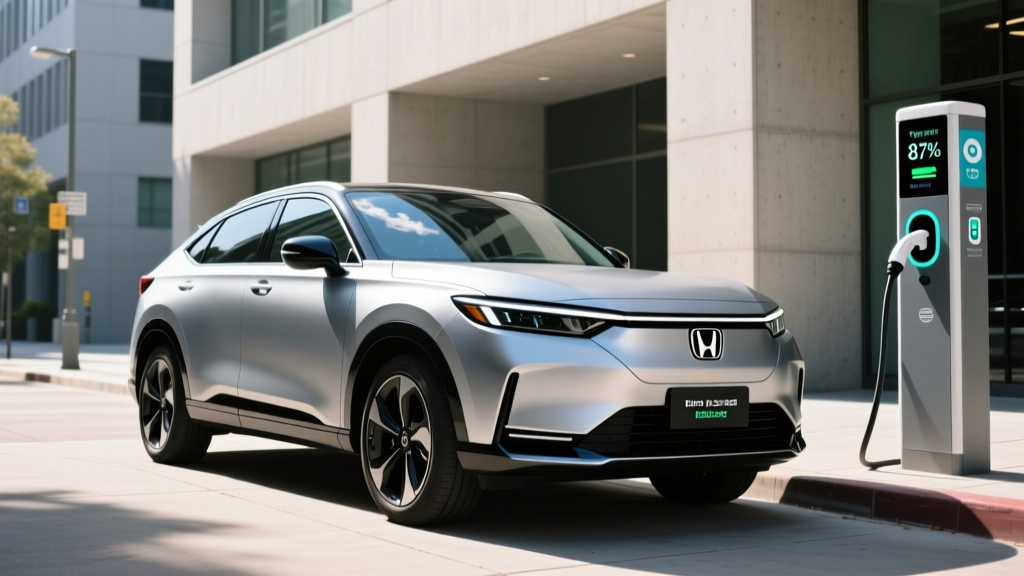
Bottom line: The Honda CR Electric (the production name for Honda's next-generation global electric SUV previewed by the 0 Series concept lineup) is Honda's answer to the Tesla Model Y, Hyundai Ioniq 5, and Ford Mustang Mach-E. As of early 2026, Honda has confirmed the 0 Series SUV platform for North America with production beginning at its Ohio EV Hub, but final EPA range, pricing, and trim specs remain preliminary and subject to certification. What we know from Honda's official disclosures: a dedicated EV architecture, a thin high-density battery pack targeting 300+ miles of EPA range, an 800-volt-class electrical system enabling ~200 kW DC fast charging, and a starting MSRP Honda has signaled in the mid-$40,000 range before incentives. If you need a car today, the closest Honda electrified option is the Prologue (a GM Ultium-based midsize SUV with an EPA-estimated 296 miles of range and a starting MSRP around $47,400). If you can wait for the CR Electric, you're betting on Honda's in-house platform with better efficiency and faster charging than the Prologue.
What Is the Honda CR Electric — and How Does It Relate to Honda's 0 Series?
The name "Honda CR Electric" has circulated since Honda trademark filings and early concept previews hinted at a CR-V-sized battery-electric SUV. Honda's official umbrella for its next-gen EVs is the 0 Series, unveiled at CES 2024, with a sedan and an SUV slated for 2026–2027 production. The SUV variant — widely expected to wear CR Electric or a closely related badge in production — is the model most relevant to US buyers who want a compact-to-midsize family crossover. Honda is building it on its new e-Architecture, developed in-house after the company moved away from its GM Ultium partnership for future models.
Key engineering claims from Honda's official CES 2024 disclosure:
- Thin, low-mount battery pack using high-energy-density cells (chemistry not publicly confirmed, likely NMC-based given energy-density targets)
- 800-volt electrical system for fast DC charging
- Targeted 10–80% DC fast charge in approximately 20 minutes
- Heat pump standard for cold-climate efficiency
- New "Space Hub" packaging: longer wheelbase, shorter overhangs, flat floor
- Level 2+ ADAS suite (Honda Sensing 360+) with planned over-the-air updates
Important caveat: Until Honda publishes a US-spec window sticker and EPA certification, treat every range, price, and charging number as a manufacturer estimate. We'll flag what's confirmed vs. preliminary throughout this guide.
Estimated Specs: Range, Battery, and Charging
Below is our best current read of the CR Electric's numbers, synthesized from Honda disclosures, supplier reporting, and comparable 800V-class crossovers already on the market. Final EPA figures may differ by ±10%.
| Spec | Estimated Figure | Status |
|---|---|---|
| EPA Range (target) | 300–340 miles | Preliminary |
| Real-World Highway Range (75 mph) | ~250–285 miles | Analyst estimate |
| Cold-Weather Range (20°F, mixed) | ~210–250 miles | Analyst estimate (heat pump helps) |
| Battery Usable Capacity | ~85–95 kWh | Preliminary |
| Battery Chemistry | Likely NMC (energy-density focus) | Unconfirmed |
| Peak DC Fast Charge Rate | ~200 kW | Preliminary |
| 10–80% DC Fast Charge | ~20 minutes (target) | Honda-stated target |
| Level 2 (240V, 11.5 kW) Charge Time | ~8–9 hours (0–100%) | Estimated |
| Drive | RWD base / AWD available | Likely |
| Horsepower | ~280 hp (RWD) / ~400 hp (AWD) | Estimated |
| 0–60 mph | ~6.5 sec (RWD) / ~4.8 sec (AWD) | Estimated |
| Starting MSRP (est.) | ~$44,000–$48,000 | Honda-suggested range |
| Battery Warranty (expected) | 8 years / 100,000 miles | Industry-standard |
Real-world range reality check: Honda is targeting 300+ EPA miles. In practice, expect roughly 85% of EPA on sustained 75-mph highway runs in mild weather, and 70–75% of EPA in sub-freezing temperatures — even with a heat pump, which reduces cabin-heating losses but doesn't eliminate cold-chemistry slowdown. If your daily commute is under 60 miles round-trip, even worst-case winter range leaves ample buffer. If you regularly drive 250+ miles between charging stops in January, plan your routes around DC fast chargers.
How the CR Electric Compares to Gas and Hybrid Alternatives
The natural cross-shops aren't other EVs — they're the Honda CR-V Hybrid and the CR-V itself. Here's how the numbers stack up using current EPA data for the 2025 CR-V Hybrid AWD (40 mpg combined) against our CR Electric projections.
| Metric | CR Electric (est.) | CR-V Hybrid AWD | CR-V Gas AWD |
|---|---|---|---|
| Efficiency | ~110 MPGe / ~30 kWh/100mi | 40 mpg combined | 29 mpg combined |
| Annual miles | 12,000 | 12,000 | 12,000 |
| Energy used/year | ~3,600 kWh | ~300 gallons | ~414 gallons |
| Home charging cost ($0.16/kWh avg) | ~$576 | — | — |
| Public DCFC cost ($0.45/kWh avg) | ~$1,620 | — | — |
| Gasoline cost ($3.40/gal avg) | — | ~$1,020 | ~$1,408 |
| Annual "fuel" savings vs. gas (home) | ~$832 | ~$388 | Baseline |
The takeaway: The CR Electric saves the most money when you charge at home at residential rates. If you rely entirely on public DC fast charging, the cost advantage over a CR-V Hybrid largely evaporates — and the hybrid actually wins on per-mile cost in many markets. This is not an argument against EVs; it's an argument for home charging access as the single biggest variable in EV ownership economics.
Real Costs of Ownership: A 5-Year Breakdown
| Category | CR Electric (est.) | CR-V Hybrid AWD |
|---|---|---|
| Purchase price (base MSRP) | $46,000 | $36,600 |
| Federal tax credit (§30D, if eligible) | –$0 to –$7,500* | $0 |
| Net purchase | $38,500–$46,000 | $36,600 |
| Fuel/energy (5 years, 75% home / 25% DCFC) | $4,230 | $5,100 |
| Maintenance (no oil, fewer brake jobs) | ~$1,800 | ~$3,200 |
| Insurance (EV premium ~12–18%) | ~$9,600 | ~$8,300 |
| Home Level 2 charger install (one-time) | $800–$2,000 | $0 |
| 5-year total | $54,930–$63,630 | $53,200 |
* §30D credit eligibility for any Honda-built EV depends on final battery sourcing, critical-mineral content, buyer AGI caps ($150k single / $300k joint), and MSRP caps ($80k for SUVs). Check IRS.gov before assuming the full $7,500. Honda's Ohio-built EVs may qualify for point-of-sale transfer, but battery-component and critical-mineral rules are strict and evolving.
At near parity on purchase price after incentives, the CR Electric wins on ongoing fuel and maintenance. Without the credit, the hybrid is cheaper over five years unless you drive well above average miles or have very low electricity rates.
First-Time EV Buyer: What You Actually Need to Know
If the CR Electric is your first battery-electric vehicle, these are the non-obvious realities that spec sheets don't highlight:
Home charging is make-or-break
A Level 2 home charger (240V, 40–48 amps, ~9.6–11.5 kW) refills roughly 30–35 miles of range per hour. Overnight, that's a full battery every morning. Budget $800–$2,000 for a quality Level 2 unit plus electrician labor; if your panel is maxed out, a 200-amp service upgrade can add $1,500–$3,500. Without home charging, EV ownership becomes a weekly chore of public-charger hunting — and your per-mile cost roughly triples.
Charging curves taper above 80%
Honda's "20-minute 10–80%" target is the fast part of the curve. The final 20% can take nearly as long as the first 80% because the battery management system reduces current to protect cell health. On road trips, plan to hop chargers at 80% rather than sitting through the taper.
Tires, not oil, are your main consumable
EVs are heavier and deliver instant torque, which accelerates tire wear. Budget for a set of EV-rated tires (often $1,000–$1,400 installed) every 30,000–40,000 miles. Regenerative braking, conversely, means brake pads often last 80,000+ miles.
NACS vs. CCS: Honda's connector choice matters
Honda has committed to adopting the North American Charging Standard (NACS, Tesla's connector) on future EVs. The CR Electric should ship with a native NACS port, giving it direct access to Tesla Superchargers — currently the most reliable DC network in the US — without an adapter. Confirm this at launch; if CCS is fitted, you'll need a NACS adapter for Superchargers.
| Myth | Fact |
|---|---|
| "EV batteries need replacing every few years." | Modern NMC packs degrade ~10–15% over 100k miles. Honda's expected 8-year/100k-mile warranty covers drops below 70% capacity. |
| "Cold weather makes EVs unusable." | Range drops 20–30% in deep cold, but preconditioning while plugged in and a heat pump mitigate most daily-driver pain. |
| "EVs are always cheaper than gas." | Not if you rely on public DCFC exclusively, or if you drive fewer than ~8,000 miles/year. Run your own numbers. |
| "Level 2 driver-assist means self-driving." | Honda Sensing 360+ will be SAE Level 2 — you must remain attentive and keep hands available. No consumer Honda is Level 4. |
Decision Framework: Should You Wait for the CR Electric?
Buy the CR Electric (when available) if:
- You have Level 2 home charging or can install it
- You want Honda's in-house EV engineering over a rebadged platform
- You value Supercharger access via native NACS
- You drive 10,000–18,000 miles/year (where fuel savings compound)
- You can wait for 2026–2027 production and early-build uncertainty
Buy a CR-V Hybrid now if:
- You lack reliable home or workplace charging
- You regularly tow (CR-V Hybrid: 1,000 lbs; CR Electric: TBD, likely similar)
- Your annual mileage is under 8,000 (savings don't offset the EV price premium)
- You live in a region with sparse DC fast-charging infrastructure
- You want proven long-term reliability data today
Consider the Honda Prologue if:
- You want a Honda-badged EV immediately
- You're fine with the GM Ultium platform and CCS charging (with adapter for Superchargers)
- EPA 296-mile range and ~$47k MSRP work for your budget
Frequently Asked Questions
Is the Honda CR Electric the same as the Honda Prologue?
No. The Prologue is built on GM's Ultium platform and is already on sale. The CR Electric is Honda's in-house e-Architecture product, expected later, with Honda-engineered battery, motors, and software. It should be more efficient and faster-charging than the Prologue.
Will the Honda CR Electric qualify for the $7,500 federal tax credit?
It's too early to confirm. §30D eligibility requires final assembly in North America (Ohio production satisfies this), but battery-component and critical-mineral sourcing thresholds must also be met. Buyer income caps ($150k single / $225k head of household / $300k joint) and an $80,000 MSRP cap for SUVs also apply. Check fueleconomy.gov once the model is EPA-certified.
How long will the CR Electric's battery last?
Honda hasn't published degradation data for this pack yet. Industry benchmarks for modern NMC chemistry with active thermal management show roughly 85–90% state-of-health after 100,000 miles. Honda's expected warranty — 8 years / 100,000 miles with a 70% capacity retention floor — aligns with the industry standard.
Can I charge the CR Electric at Tesla Superchargers?
Honda has committed to NACS for future EVs. If the CR Electric ships with a native NACS port, yes — directly, no adapter needed. Confirm at launch, as early-build vehicles sometimes carry transitional connectors.
What's the real-world range on a road trip?
For a targeted 320-mile EPA rating, expect roughly 260–280 miles of usable range at 75 mph in 65–75°F weather before you need to stop. In winter (below 30°F), budget 210–240 miles between stops. Plan conservatively; chargers aren't always where maps say they are.
Should I get the RWD or AWD version?
RWD will deliver the longest range and lowest price — ideal for mild climates and commuting. AWD adds ~$3,000–$4,000, shaves nearly 2 seconds off 0–60, and provides traction confidence in snow, at the cost of ~10–15 miles of EPA range. If you live north of I-80, AWD is usually worth it.
Specs in this article reflect Honda disclosures and analyst estimates as of early 2026. Final EPA, MSRP, and §30D eligibility will be confirmed at launch. Always verify against Honda's official newsroom and fueleconomy.gov before purchasing.