Where Is the Homelink Icon on a Tesla?
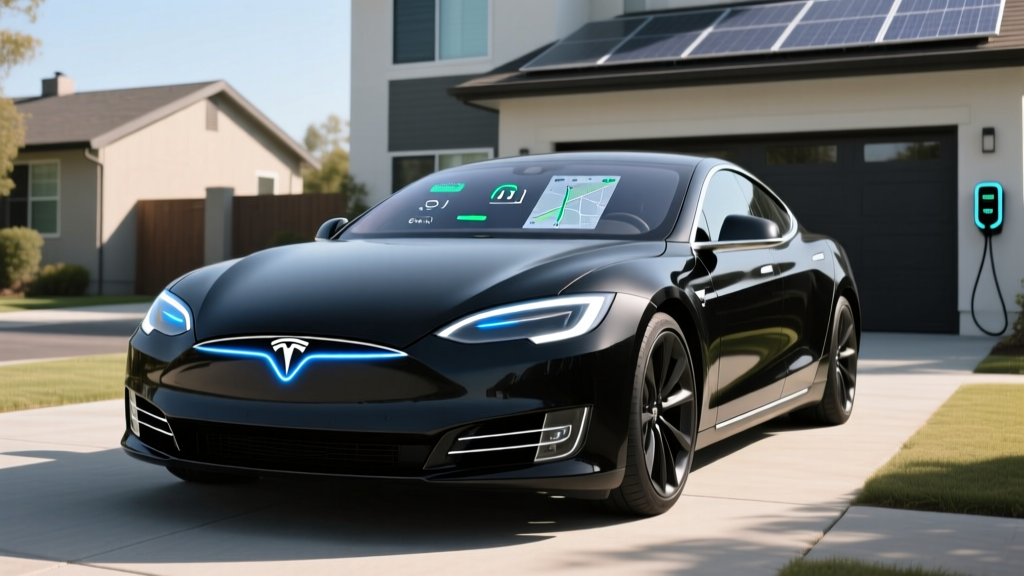
If you've just taken delivery of a Tesla and are searching for the Homelink icon, you won't find it buried in the main settings menu where you might expect. In current Tesla software (2025–2026 releases), the Homelink controls are accessed through the Controls menu on the touchscreen. Tap the car icon at the bottom-left of the screen, then look for "Homelink" in the quick-access panel — it displays as a small garage-door or house icon. You can also pin it to your bottom toolbar for one-tap access when pulling into your driveway.
Homelink is Tesla's integrated universal transceiver that replaces traditional clip-on garage door openers. It supports up to three programmable devices (garage doors, gates, smart-home entry systems) and includes an auto-open/auto-close feature that triggers based on GPS proximity — meaning your garage door opens as you approach home and closes after you pull away, without you touching the screen.
Not every Tesla ships with Homelink hardware pre-installed. On the Model S and Model X, Homelink is standard. On the Model 3 and Model Y (2024+ Highland and Juniper refreshes), Tesla moved Homelink to an optional accessory — a $300 add-on module that installs behind the rearview mirror and activates through a software update. If you don't see the Homelink icon in Controls, your vehicle likely doesn't have the hardware yet.
Now that we've covered the Homelink setup, let's look at the vehicle most associated with it: the flagship 2026 Tesla Model S, which continues to set the bar for luxury electric sedan performance, range, and tech.
2026 Tesla Model S: Range, Battery, and Efficiency
The 2026 Model S is available in two trims: the Long Range (dual-motor AWD) and the Plaid (tri-motor AWD). Both use a ~100 kWh (usable) NMC (nickel-manganese-cobalt) battery pack — Tesla has not migrated the Model S to LFP chemistry, which remains reserved for the standard-range Model 3 and Model Y due to its lower energy density.
| Trim | EPA Range | Real-World Range (Highway) | MPGe (Combined) | kWh/100 mi |
|---|---|---|---|---|
| Long Range AWD | 402 mi | ~320–350 mi | 120 MPGe | 28 |
| Plaid AWD | 359 mi | ~285–310 mi | 116 MPGe | 29 |
The Model S uses a heat pump as standard, which significantly reduces cabin-heating energy draw in cold weather compared to older resistive heaters. Preconditioning the battery (automatic when a Supercharger is set as your navigation destination) also helps recover range by warming the pack to optimal charging temperature.
Charging Speed: DC Fast, Level 2, and Home Setup
The Model S supports up to 250 kW peak DC fast charging on Tesla's V3 and V4 Superchargers. Unlike some competitors pushing 350 kW on 800V architectures (Hyundai Ioniq 5, Porsche Taycan), Tesla's ~400V pack architecture caps peak charge rate lower — but the sustained charge curve is among the best in the industry, holding above 150 kW well past 50% SoC.
| Charging Level | Power | Speed | Notes |
|---|---|---|---|
| DC Fast Charge (Supercharger V3/V4) | 250 kW peak | 10–80% in ~25 min | Taper begins ~55% SoC |
| Level 2 (Tesla Wall Connector) | 11.5 kW (48A) | ~44 mi/hr | Requires 60A circuit |
| Level 2 (Mobile Connector, 240V) | 7.2 kW (32A) | ~28 mi/hr | NEMA 14-50 outlet |
| Level 1 (120V household) | 1.4 kW | ~5 mi/hr | Emergency/trickle only |
For home charging, Tesla's Wall Connector ($475 for the unit) delivers up to 11.5 kW on a 60-amp dedicated circuit, adding roughly 44 miles of range per hour of charging. A full overnight session (8 hours) replenishes about 350 miles — more than enough for daily driving. Professional installation with a licensed electrician typically runs $500–$2,000 depending on panel capacity and wire-run distance. If your home's electrical panel is maxed out, a panel upgrade to 200A can add $1,500–$3,000.
The Model S also ships with the NACS (North American Charging Standard) connector natively — it's Tesla's own plug. With the broader industry adopting NACS through 2025–2026, the Model S can also access non-Tesla DC fast chargers (Electrify America, EVgo) that have added NACS cables, dramatically expanding the available fast-charging network.
Performance: 0-60, Horsepower, and Drivetrain
| Trim | Drivetrain | Horsepower | 0-60 mph | Top Speed |
|---|---|---|---|---|
| Long Range AWD | Dual-Motor AWD | 670 hp | 3.1 sec | 155 mph |
| Plaid AWD | Tri-Motor AWD | 1,020 hp | 1.99 sec | 200 mph |
The Long Range's 3.1-second 0-60 time is already supercar territory from a decade ago. The Plaid's 1.99-second claim (with rollout subtracted) makes it one of the quickest production cars ever built. In independent testing by Car and Driver, the Plaid has achieved 2.1 seconds to 60 mph on a prepared surface — still devastatingly quick.
Both trims use adaptive air suspension with automatic ride-height adjustment. The Plaid adds carbon-ceramic brake rotors (included in the price, not an extra-cost option) and track-tuned torque vectoring across its three motors. For daily commuting, the Long Range is the sweet spot — it's still brutally fast, slightly more efficient, and offers 43 more miles of EPA range.
Pricing, Trims, and Federal Tax Credit Eligibility
| Trim | Base MSRP | As-Tested (Typical Options) |
|---|---|---|
| Long Range AWD | $74,990 | $79,490 (w/ FSD, premium paint) |
| Plaid AWD | $89,990 | $94,490 (w/ FSD, premium paint) |
Here's where the math gets complicated for tax-credit seekers. Under the current IRS §30D rules, the federal EV tax credit offers up to $7,500 — but the Model S faces multiple hurdles:
- MSRP cap: Sedans must be priced at or below $55,000 to qualify. The Model S Long Range at $74,990 exceeds this cap, making it ineligible for the new-vehicle credit regardless of battery sourcing.
- Income cap: Even if the MSRP qualified, buyers must have modified AGI ≤ $150,000 (single) or ≤ $300,000 (joint) to claim the credit.
- Battery sourcing: Critical-mineral and battery-component sourcing requirements further restrict which vehicles qualify — and as of 2026, most Tesla vehicles built for the U.S. market do not fully meet the sourcing thresholds for the full $7,500.
Interior, Cargo, and Daily Livability
The Model S interior is minimalist by design — a 17-inch landscape touchscreen dominates the dash, with a 12.3-inch instrument cluster behind the yoke (or optional round steering wheel, which Tesla reintroduced in 2024 after widespread yoke complaints). Build quality on 2025–2026 models has improved noticeably: panel gaps are tighter, materials are softer-touch, and the ventilated front seats are a welcome addition.
| Measurement | Value |
|---|---|
| Cargo (rear trunk) | 28.0 cu ft |
| Cargo (front trunk/frunk) | 5.3 cu ft |
| Total cargo | 33.3 cu ft |
| Rear legroom | 35.4 in |
| Front headroom | 38.8 in |
| Seating capacity | 5 passengers |
The hatchback-style liftback trunk is enormously practical — the 28 cu ft rear cargo area swallows golf bags, luggage for a family road trip, or a week's worth of groceries without folding the rear seats. The 5.3 cu ft frunk is useful for charging cables and smaller items. Compared to the BMW i7 (which uses a traditional sedan trunk), the Model S offers substantially more usable cargo volume.
On the tech front, the Model S includes Tesla's Premium Connectivity (live traffic, satellite maps, streaming media), a 22-speaker audio system, and wireless phone charging. The rear passengers get their own 8-inch touchscreen for climate and media control. Full Self-Driving (Supervised) remains a $8,000 option — it's an SAE Level 2 driver-assist system that requires active driver supervision at all times. It is not autonomous driving.
Warranty and Long-Term Ownership
| Coverage | Term |
|---|---|
| Basic Vehicle | 4 years / 50,000 miles |
| Battery & Drive Unit | 8 years / 150,000 miles |
| Battery Capacity Retention | ≥ 70% over warranty term |
Tesla's 8-year/150,000-mile battery warranty on the Model S is generous and covers degradation below 70% of original capacity. Real-world data from Tesla's fleet (published in annual Impact Reports) shows average battery degradation of approximately 12% after 200,000 miles — meaning most packs retain 88% of their original capacity well beyond the warranty period. The NMC chemistry in the Model S has proven durable, though it's more sensitive to repeated 100% charges than LFP. Tesla recommends daily charging to 80–90% and only charging to 100% for long trips.
Insurance costs for the Model S run higher than average for the luxury sedan segment. Expect annual premiums of $2,800–$4,200 depending on your state, driving record, and coverage level — roughly 40–60% more than a comparable BMW 5 Series, driven by Tesla's higher repair costs and parts pricing.
Pros and Cons
Pros
- Class-leading EPA range (402 mi Long Range)
- Access to Tesla Supercharger network — the most reliable DC fast-charging network in the U.S.
- Devastating performance even in base trim (3.1 sec 0-60)
- Practical hatchback cargo layout with frunk
- Over-the-air updates continuously add features
- Homelink standard with auto-open/close
Cons
- Does not qualify for $7,500 federal tax credit (MSRP cap)
- Peak DC charge rate (250 kW) trails 800V competitors
- Insurance premiums significantly above segment average
- FSD (Supervised) is $8,000 and still requires full driver attention
- Yoke steering remains polarizing (round wheel now optional)
- Rear-seat comfort trails Mercedes EQS and BMW i7
Who Should Buy the 2026 Tesla Model S?
The Model S is best suited for performance-oriented commuters and road trippers who value Supercharger network access, cutting-edge tech, and hatchback practicality. It's a strong pick if you regularly drive 200+ miles in a day and want the confidence of a 402-mile EPA range plus 250 kW fast charging to minimize stops.
It's less ideal if you're primarily shopping for rear-seat luxury (the Mercedes EQS and BMW i7 offer more opulent back seats), if you need the federal tax credit to make the math work, or if you prefer a more traditional luxury dealership experience with in-person service. Tesla's mobile-ranger and service-center model works well for software-related issues but can involve longer wait times for body and hardware repairs.
Frequently Asked Questions
Does every Tesla have the Homelink icon?
No. The Model S and Model X include Homelink hardware as standard. The Model 3 and Model Y (2024 and newer) require the optional Homelink module ($300) — without it, the Homelink icon will not appear in the Controls menu. You can check for the hardware by navigating to Controls > Homelink; if the option is greyed out or missing, the module is not installed.
What is the real-world range of the 2026 Tesla Model S?
The Long Range achieves an EPA-estimated 402 miles. In real-world highway driving at 75 mph in moderate temperatures, expect 320–350 miles. In cold weather (below 32°F), plan for 260–290 miles on the highway. The Plaid delivers approximately 285–310 miles in real-world highway conditions.
How fast does the Model S charge at home and on the road?
On a Tesla Supercharger (250 kW peak), the Model S charges from 10–80% in approximately 25 minutes. At home with a Tesla Wall Connector (11.5 kW), it adds about 44 miles of range per hour, fully recharging overnight. On a standard NEMA 14-50 outlet with the Mobile Connector, expect roughly 28 miles per hour.
Does the 2026 Model S qualify for the federal EV tax credit?
No. The Model S Long Range ($74,990) and Plaid ($89,990) both exceed the IRS §30D MSRP cap of $55,000 for sedans. They do not qualify for the $7,500 new-vehicle federal tax credit regardless of buyer income or battery sourcing. Check IRS.gov for the latest eligibility rules.
Is the Tesla Model S worth buying over the Mercedes EQS or BMW i7?
The Model S wins on range (402 vs. ~350 mi for the EQS), performance (3.1 sec vs. ~5.3 sec 0-60 for the EQS), and charging network access. The EQS and i7 win on rear-seat luxury, ride refinement, and interior material quality. If driving dynamics and road-trip efficiency matter most, the Model S is the stronger pick. If back-seat comfort and traditional luxury are priorities, test-drive the EQS and i7.
Can Homelink control more than one garage door?
Yes. Tesla's Homelink supports up to three programmable devices. You can program your home garage, a work parking gate, and a third device (such as a smart-home entry system or a second residence). Each device can be set with its own auto-open/auto-close geofence radius.