Quick Answer: Is a Home Built Electric Car Worth It?
A home built electric car—typically a gas-to-EV conversion of an existing vehicle—costs between $12,000 and $35,000+ in parts alone, yields 40 to 150 miles of real-world range depending on battery size, and takes 100 to 500+ hours of labor. While it's a rewarding engineering project for hobbyists, it rarely saves money compared to purchasing a used production EV like a 2023 Chevrolet Bolt EV (starting around $18,000–$22,000 used with 259 miles of EPA range). A home built electric car makes sense as a passion project, not as a budget-friendly daily driver.
What Is a Home Built Electric Car, Exactly?
When people search for a "home built electric car," they're usually referring to one of two things:
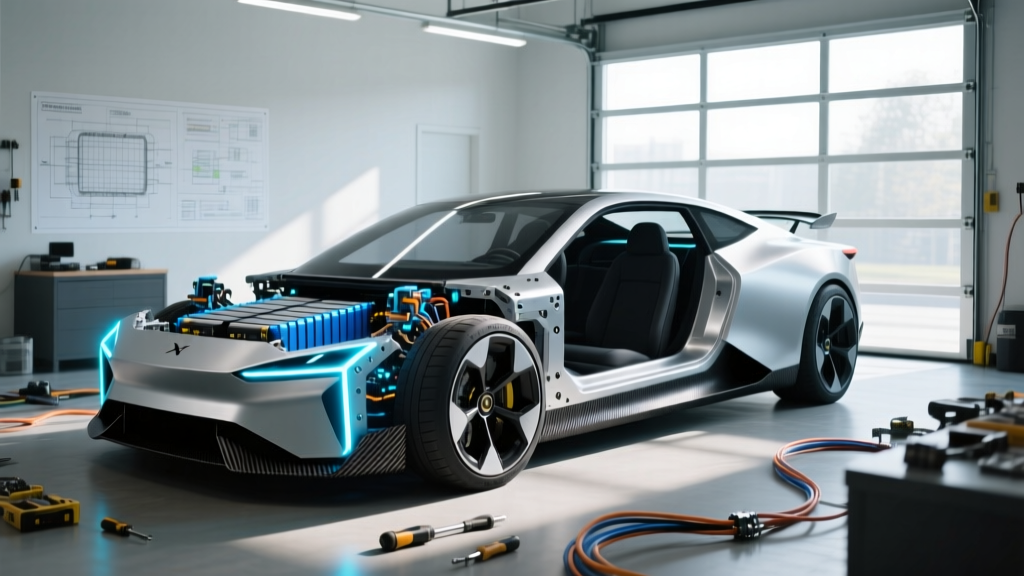
- EV conversion: Taking a conventional gas-powered vehicle and replacing the internal combustion engine, fuel tank, and exhaust system with an electric motor, battery pack, and controller.
- Kit car or scratch-built EV: Building a vehicle from a kit or custom frame and outfitting it with electric drivetrain components.
Both approaches share the same core components: an electric motor (typically 50–150 kW), a battery pack (usually 15–60 kWh of usable capacity), a motor controller, a DC-DC converter to power accessories, and a charging system. The most popular donor vehicles for conversions include lightweight classics like the VW Beetle, Porsche 914, older Honda Civics, and Chevrolet S-10 pickups—their low curb weight helps maximize range from limited battery budgets.
The Real Cost of a Home Built Electric Car
Let's be precise about what you're actually spending. Here's a component-level breakdown based on current 2026 pricing from major EV conversion suppliers:
| Component | Budget Build | Mid-Range Build | High-End Build |
|---|---|---|---|
| Electric motor (50–150 kW) | $1,500–$3,000 | $3,000–$6,000 | $6,000–$12,000 |
| Battery pack (15–60 kWh) | $3,000–$8,000 | $8,000–$18,000 | $18,000–$30,000 |
| Motor controller | $1,200–$2,500 | $2,500–$5,000 | $5,000–$8,000 |
| BMS (battery management system) | $400–$800 | $800–$1,500 | $1,500–$3,000 |
| Charger (Level 2 onboard) | $500–$1,200 | $1,200–$2,500 | $2,500–$4,000 |
| DC-DC converter, wiring, adapters | $1,000–$2,000 | $2,000–$3,500 | $3,500–$6,000 |
| Instrumentation & safety systems | $500–$1,000 | $1,000–$2,000 | $2,000–$4,000 |
| Donor vehicle | $2,000–$5,000 | $5,000–$15,000 | $15,000–$40,000 |
| Total (parts only) | $10,100–$23,500 | $23,500–$53,500 | $53,500–$107,000 |
This does not include professional fabrication, which can add $5,000–$20,000 if you need custom motor mounts, battery enclosures, or high-voltage cabling done by a shop. It also doesn't include your own labor at any hourly rate. At 200 hours of work (a realistic mid-point for an experienced hobbyist), even valuing your time at $30/hour adds $6,000 in implicit cost.
Range and Performance: What You Actually Get
The single biggest constraint on any home built electric car is the battery. Energy density and cost per kWh are the fundamental physics you're fighting:
- Budget builds (15–25 kWh): Expect 40–70 miles of real-world range. These often use salvaged Nissan Leaf modules or second-life LFP (lithium iron phosphate) cells. Highway driving at 70 mph and cold weather (below 40°F) can reduce this by 25–40%.
- Mid-range builds (30–45 kWh): Expect 80–130 miles real-world. These typically use new LFP or NMC (nickel manganese cobalt) prismatic cells. This is the sweet spot for a usable daily driver with a modest commute.
- High-end builds (50–70+ kWh): Expect 130–200+ miles real-world. These use Tesla-grade modules or new high-density NMC packs. At this point, you're spending as much as a used production EV with more range and a factory warranty.
For context, a 2026 Chevrolet Equinox EV starts at roughly $33,000 MSRP before incentives and delivers 315 miles of EPA range with a full factory warranty, DC fast charging up to 150 kW (10–80% in about 30 minutes), and modern ADAS features. Your conversion will almost certainly lack DC fast charging, regenerative braking sophistication, thermal battery management, and crash-tested battery enclosures.
Home Built Electric Car vs. Buying a Production EV
| Factor | Home Built EV | Used Production EV (e.g., 2023 Bolt EV) | Used Gas Car (e.g., 2020 Civic) |
|---|---|---|---|
| Upfront cost | $15,000–$50,000+ | $18,000–$24,000 | $16,000–$22,000 |
| Real-world range | 40–150 mi | 220–259 mi (EPA) | 350–400 mi (tank) |
| Charging/refuel time | 4–10+ hrs (Level 2) | ~7 hrs (L2) / 30 min (DC) | 5 minutes |
| DC fast charging | Almost never | Yes (50–55 kW on Bolt) | N/A |
| Battery warranty | None | 8 yr / 100,000 mi (transferable) | N/A |
| Federal tax credit (§30D) | Not eligible | Up to $4,000 (used EV credit) | Not eligible |
| Regenerative braking | Basic or none | Full one-pedal capable | N/A |
| Thermal management | Rarely | Active liquid cooling/heating | N/A |
| Safety (crash-tested) | No | Yes (NHTSA/IIHS rated) | Yes |
| Insurance availability | Limited, specialty insurers | Standard carriers | Standard carriers |
| Build time | 100–500+ hours | Buy and drive today | Buy and drive today |
The data is stark. A used 2023 Chevrolet Bolt EV—available for $18,000–$24,000 depending on mileage and condition—offers more range, a factory battery warranty, DC fast charging capability, NHTSA safety ratings, and eligibility for the IRS used clean vehicle credit (up to $4,000, subject to income and dealer requirements). A home built electric car simply cannot match this value proposition on purely financial terms.
Real-World Ownership Considerations
Before committing to a conversion, honestly evaluate these factors:
Home Charging Access
A converted EV charges on Level 1 (120V, ~1.4 kW) or Level 2 (240V, typically 3.3–7.2 kW if you install an onboard charger). With a 40 kWh pack and a 6.6 kW Level 2 charger, a full charge takes roughly 6–7 hours. On Level 1, that same pack takes 28+ hours—a dealbreaker unless your daily driving is under 30 miles. If you lack a garage or dedicated parking with electrical access, a home built electric car becomes extremely impractical. Budget $500–$2,000 for a Level 2 home charging setup, plus potential electrical panel upgrades ($1,500–$3,500 if your panel needs to go from 100A to 200A service).
Climate and Range Loss
Most conversions lack active battery thermal management. In cold weather (below 32°F), expect 30–45% range loss due to increased internal resistance in the cells and energy used for cabin heating. A conversion that delivers 80 miles in mild weather may only manage 45–55 miles on a cold January commute. Production EVs mitigate this with liquid-cooled/heated battery packs and heat pump HVAC systems—luxuries that are extremely difficult to engineer into a conversion.
Registration, Insurance, and Inspection
Every state has different rules for registering a converted vehicle. Many require a special inspection, a rebuilt-title process, or a "constructed vehicle" designation. Insurance is another hurdle: mainstream carriers often won't insure conversions, forcing you toward specialty insurers (Hagerty, Grundy) at higher premiums. Research your state's DMV requirements before purchasing a single component.
Resale Value
A home built electric car has near-zero resale market liquidity. Unlike a production EV with a Carfax and known battery health, a conversion's value depends entirely on the next buyer's trust in your engineering. Expect to recover 20–40% of your investment at best.
Common Misconceptions About Home Built EVs
| Myth | Fact |
|---|---|
| "Converting my car to electric saves thousands vs. buying an EV." | After parts, labor, and lost time, conversions typically cost $20,000–$50,000—often more than a used production EV with superior range and warranty. |
| "I can get 200+ miles of range on a budget." | At $150–$250/kWh for quality cells, a 60 kWh pack (needed for ~180 mi real-world) costs $9,000–$15,000 in batteries alone. Budget builds rarely exceed 70 miles. |
| "It's just swapping an engine for a motor." | You must engineer custom motor mounts, adapter plates, battery enclosures, high-voltage safety cutoffs, 12V system integration, and often modify the suspension to handle battery weight distribution. |
| "I'll qualify for the $7,500 federal EV tax credit." | The IRS §30D credit applies only to new qualifying vehicles from manufacturers. Conversions are not eligible for any federal EV tax credit. |
| "Any car can be converted." | Heavy vehicles (full-size trucks, large SUVs) require massive battery packs to achieve even modest range. Power steering, A/C compressors, and brake boosters all need electric replacements if they were engine-driven. |
| "I'll save on maintenance." | While you eliminate oil changes and exhaust repairs, you introduce new risks: battery cell imbalance, BMS failures, controller faults, and custom wiring issues that no mechanic can diagnose with a standard OBD-II scanner. |
Decision Framework: Should You Build or Buy?
Build a Home Built Electric Car If:
- You're an experienced fabricator/electrician with 200+ hours to invest and access to a garage with 240V power.
- You're converting a classic or specialty vehicle (Porsche 914, VW Bus, vintage truck) where the goal is preservation and electrification—not budget transportation.
- You value the engineering process as much as the end result and accept that this is a hobby expenditure, not a financial optimization.
- Your daily driving is under 40 miles round-trip and you have reliable home charging.
Buy a Production EV If:
- You need reliable daily transportation with 200+ miles of range, DC fast charging for road trips, and a factory warranty.
- You want to minimize total cost of ownership. A used Bolt EV at ~$20,000 (potentially $16,000 after the $4,000 used-EV credit) delivers far more range per dollar than any conversion.
- You lack fabrication skills or a dedicated workspace. High-voltage DC systems (100–400V) carry serious electrocution and fire risks if improperly assembled.
- You need insurance, registration, and resale liquidity. Production EVs work within existing systems; conversions fight against them.
Frequently Asked Questions
How much does it cost to convert a car to electric at home?
A realistic budget for a drivable conversion with 60–80 miles of range is $15,000–$30,000 in parts. High-performance or long-range builds using Tesla drive units and large NMC packs can exceed $50,000. This does not include professional labor or the value of your own time (typically 150–400 hours).
What's the best donor car for an EV conversion?
Lightweight vehicles with simple mechanical layouts work best: the VW Beetle, Porsche 944, Honda Civic (1990s–2000s), Chevrolet S-10, and Mazda Miata are popular choices. Avoid heavy vehicles, modern cars with complex CAN bus systems, and anything with electric power steering or brake boosters that are difficult to replicate.
Can I fast-charge a home built electric car?
Almost never. DC fast charging requires a sophisticated battery management system, liquid-cooled battery thermal management, and communication protocols (CCS or NACS) that are extremely difficult to integrate into a custom build. Most conversions are limited to Level 2 (240V) charging at 3.3–7.2 kW, meaning a full charge takes 5–12 hours depending on pack size.
Is a home built electric car street legal?
It can be, but the process varies by state. Most states require a special inspection (often by the state patrol or DMV), proof of component sourcing, and a "constructed" or "specially constructed" vehicle title. Some states have emissions exemptions for EVs; others require additional paperwork. Check with your local DMV before starting your build. The NHTSA provides federal guidance, but state-level rules are what you'll navigate.
How long do conversion batteries last?
It depends on chemistry and usage. LFP cells typically last 2,000–5,000+ charge cycles before degrading to 80% capacity; NMC cells last 1,000–2,000 cycles. In practical terms, a well-managed pack should last 8–15 years with normal use. However, without active thermal management, degradation accelerates in extreme heat or cold. Replacement cost for a 40 kWh pack is $6,000–$12,000 at current cell prices.
Does a home built electric car qualify for any tax credits or incentives?
No. The federal §30D new clean vehicle credit and the used clean vehicle credit both require the vehicle to be manufactured by a qualified OEM. Home conversions, kit cars, and custom builds do not qualify. Some states offer EV registration fee exemptions or HOV lane access, but these also typically require a manufacturer-certified EV.
A home built electric car remains one of the most rewarding projects an EV-enthusiast can undertake—but it's a passion project, not a cost-saving strategy. If your goal is affordable electric transportation, the used EV market in 2026 offers vehicles with 200+ miles of range, factory warranties, and fast charging for less than most conversions cost in parts alone. If your goal is to learn, build, and drive something uniquely yours, start by researching EV conversion communities like OpenInverter and EV-CREATE, budget realistically, and choose a lightweight donor car that matches your range needs.