Quick Answer: What Is Hilux Auto Electric Inc.?
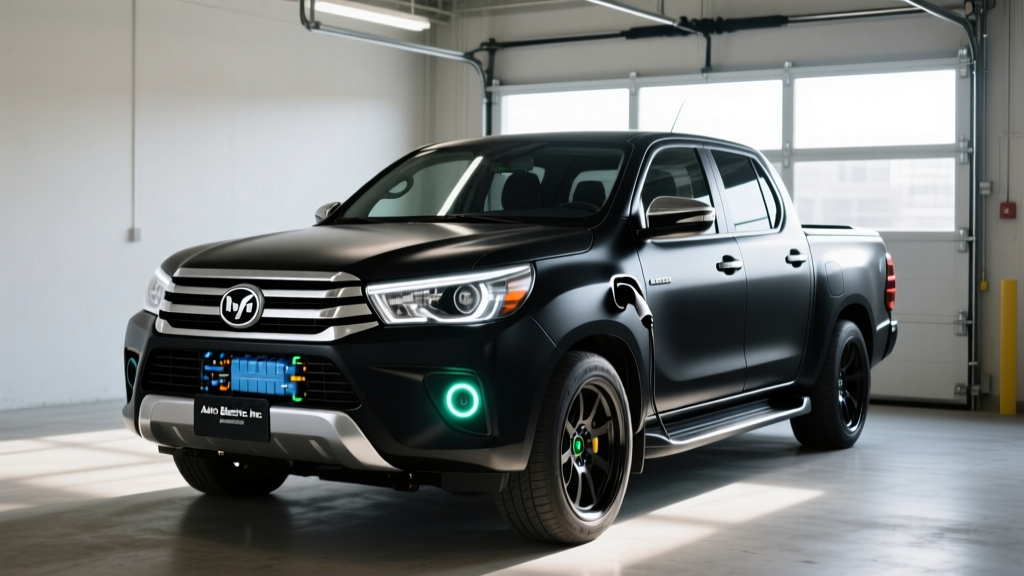
Hilux Auto Electric Inc. is an independent automotive electrical shop that has been referenced in EV conversion and custom electric-vehicle project discussions. As of 2026, the company is not a mainstream OEM or certified EV manufacturer — it operates in the niche of aftermarket electrical work, custom EV swaps, and vehicle electrification projects. If you're researching them for a potential EV conversion of a Toyota Hilux or similar truck, expect project costs between $15,000 and $40,000+ depending on battery size and motor selection, with realistic converted range of 80–150 miles on a single charge.
The EV market in 2026 is dominated by factory-built electric vehicles from Tesla, Ford, Hyundai, Rivian, and others. But a persistent niche exists: drivers who want to electrify a beloved gas-powered truck or SUV rather than buy new. Shops like Hilux Auto Electric Inc. cater to this audience. Before committing tens of thousands of dollars to a conversion, you need hard data on costs, range, charging, and how the result compares to buying a production EV outright.
What Hilux Auto Electric Inc. Actually Does
Independent auto electric shops that take on EV conversions typically handle:
- Motor swaps — replacing an internal combustion engine with an electric motor (commonly NetGain Hyper9, Tesla drive unit salvages, or similar)
- Battery pack integration — sourcing and wiring lithium-ion modules (often salvaged Nissan Leaf, Tesla, or Chevrolet Bolt packs)
- Charging system installation — adding an onboard charger for Level 2 (J1772) compatibility, typically 3.3–7.2 kW
- Instrumentation and controls — custom gauge clusters, throttle-by-wire mapping, and BMS (Battery Management System) configuration
These are not factory-warrantied vehicles. The workmanship warranty from the shop (if offered) typically covers 90 days to 1 year on labor, with no standardized battery warranty comparable to the federal requirements OEMs must meet (8 years/100,000 miles minimum on emission-related components, with EV battery warranties typically 8 years/100,000 miles at 70% capacity retention).
EV Conversion Costs vs. Buying a Production EV
This is where most conversion-curious buyers face a reality check. Here's a concrete cost breakdown comparing a typical truck EV conversion to purchasing a new production electric vehicle:
| Category | Truck EV Conversion | New Ford F-150 Lightning (XLT) | New Rivian R1T (Dual-Motor) |
|---|---|---|---|
| Vehicle / Donor Truck | $5,000–$15,000 (used) | $54,995 MSRP | $69,900 MSRP |
| Conversion / Purchase Cost | $15,000–$40,000 | — | — |
| Total Out-of-Pocket | $20,000–$55,000 | $54,995 | $69,900 |
| Federal §30D Tax Credit | $0 (not eligible) | Up to $7,500* | Up to $7,500* |
| EPA Range | No EPA rating; ~80–150 mi est. | ~320 mi (Std Range) | ~352 mi (Dual-Motor Max) |
| DC Fast Charging | Rarely supported; Level 2 only | 150 kW peak, 10-80% in ~38 min | 200+ kW peak, 10-80% in ~25 min |
| Battery Warranty | None / shop discretion | 8 yr / 100,000 mi | 8 yr / 175,000 mi |
| Safety Ratings (NHTSA/IIHS) | None post-conversion | 5-Star NHTSA | IIHS Top Safety Pick+ |
*The IRS §30D clean vehicle credit has income caps ($150K single / $300K joint), MSRP caps ($80K trucks/SUVs), and battery sourcing requirements. Eligibility varies — consult a tax professional. Converted vehicles do not qualify.
Real-World Range and Charging: What to Expect from a Conversion
Most EV conversions performed by independent shops use battery packs in the 20–60 kWh range, constrained by the physical space available in a truck chassis and the budget of the owner. Here's what that translates to in real-world driving:
| Battery Capacity (usable kWh) | Ideal Range (mi) | Highway/Cold Weather Range (mi) | Approx. Cost (Battery Only) |
|---|---|---|---|
| 20 kWh | 60–70 | 40–55 | $3,000–$6,000 |
| 40 kWh | 120–140 | 85–110 | $6,000–$12,000 |
| 60 kWh | 180–210 | 130–165 | $9,000–$18,000 |
Cold-weather reality: Lithium-ion batteries lose 20–35% of usable capacity in sub-freezing temperatures. Production EVs mitigate this with active thermal management (liquid heating/cooling loops). Most conversions lack sophisticated thermal management, meaning a 40 kWh pack that delivers 130 miles in July may only provide 85–95 miles in January in northern climates.
Charging speed: The vast majority of conversions support only Level 2 AC charging via an onboard charger rated at 3.3 kW or 6.6 kW. That means:
- 3.3 kW: ~10–12 miles of range added per hour of charging
- 6.6 kW: ~20–24 miles of range added per hour
- DC fast charging: Extremely rare in conversions; requires additional hardware (CHAdeMO or CCS controller), high-voltage contactors, and BMS integration that most shops don't support
For context, a 2026 Hyundai Ioniq 5 charges at up to 240 kW on DC, adding 10–80% in roughly 18 minutes. A conversion vehicle will typically need 6–12 hours on Level 2 for a full charge.
Common Misconceptions About EV Conversions
| Myth | Fact |
|---|---|
| "A conversion costs less than buying a new EV." | Total conversion cost (donor + parts + labor) often reaches $35,000–$55,000. A new Chevrolet Equinox EV starts around $33,000 with 315+ miles of EPA range and full warranty. |
| "I'll get 200+ miles of range." | Only achievable with a 60+ kWh pack ($9K–$18K for batteries alone), plus the weight penalty reduces efficiency. Most conversions land at 80–150 miles realistically. |
| "I can use Tesla Superchargers." | Supercharger access requires NACS connector integration and Tesla handshake protocol — not supported in aftermarket conversions. You're limited to J1772 Level 2 and whatever public Level 2 networks (ChargePoint, EVgo L2) are available. |
| "It qualifies for the $7,500 federal tax credit." | The IRS §30D credit applies only to new qualified clean vehicles from certified manufacturers. Conversions and aftermarket EV swaps are ineligible. |
| "I can insure it normally." | Many insurers will not cover modified/conversion vehicles at agreed value. You may need a specialty insurer (Hagerty, Grundy) and should confirm coverage before starting the project. |
EV vs. Gas: Operating Cost Comparison for Trucks
Where conversions do shine — if you can absorb the upfront cost — is in operating expenses. Here's a 5-year cost comparison assuming 12,000 miles/year:
| Category | Converted EV Truck (Home Charging) | 2026 Toyota Tacoma (Gas, 22 MPG Combined) |
|---|---|---|
| Fuel / Electricity (60,000 mi total) | $2,700 (at $0.15/kWh, 3.2 mi/kWh) | $9,545 (at $3.50/gal, 22 MPG) |
| Maintenance (oil, filters, brakes, etc.) | $800 (tires, cabin filter, brake fluid) | $3,200 (oil changes, filters, brake pads, coolant) |
| Insurance (estimated annual avg.) | $7,500 (specialty insurer, higher premiums) | $6,000 |
| Total 5-Year Operating Cost | $11,000 | $18,745 |
| 5-Year Savings (EV) | ~$7,745 saved — but note the higher upfront conversion cost and lack of tax credit offset | |
The fuel savings are real — roughly $6,845 saved on energy alone over 5 years. But when you factor in the $20,000–$40,000 conversion cost, the lack of a tax credit, higher insurance, and no resale value guarantee, the total cost of ownership rarely beats buying a production EV at a comparable price point.
Decision Framework: Should You Convert or Buy?
Choose an EV Conversion (via a shop like Hilux Auto Electric Inc.) If:
- ✅ You have a sentimental or rare vehicle (classic truck, Land Cruiser, vintage Bronco) that has no modern EV equivalent
- ✅ You have access to home Level 2 charging (240V, 30A+ circuit) and drive under 100 miles/day
- ✅ You view this as a hobby/passion project, not a cost-saving measure
- ✅ You understand there is no factory warranty, no NHTSA crash testing, and no federal tax credit
- ✅ You have a relationship with the shop and can inspect their prior conversion work
Choose a Production EV If:
- ✅ You need 250+ miles of reliable, EPA-rated range
- ✅ You want DC fast charging for road trips (10-80% in 20-35 minutes)
- ✅ You want full warranty coverage (8 yr battery, 5-star safety ratings)
- ✅ You want to claim the federal §30D tax credit (up to $7,500 at point of sale, income and sourcing rules apply)
- ✅ You need predictable insurance, financing, and resale value
What to Verify Before Hiring Any EV Conversion Shop
If you've decided a conversion is the right path, perform this due diligence regardless of which shop you choose:
- Ask for 3+ completed conversion references — contact those owners directly and ask about range accuracy, charging reliability, and post-conversion support
- Confirm BMS (Battery Management System) details — which BMS is used, how cell balancing is handled, and what safety cutoffs exist for over-voltage, under-voltage, and over-temperature
- Verify battery source and age — salvaged packs degrade; a 7-year-old Nissan Leaf pack may have only 60–70% of original capacity. Request State of Health (SoH) data
- Get the warranty in writing — what's covered, for how long, and what voids it
- Check your state's registration requirements — some states require special inspections for converted vehicles; others may not allow registration of home-built EVs without DOT certification
- Confirm insurance coverage before handing over a deposit
Frequently Asked Questions
Can any truck be converted to electric?
Physically, most trucks can be converted, but the practicality depends on available space for batteries, total weight (electric components often add 500–1,000 lbs), and the condition of the donor vehicle's transmission, suspension, and brakes. Lighter trucks (Toyota Hilux, Ford Ranger) convert more efficiently than heavy-duty models.
How long does an EV conversion take?
Typical timelines from independent shops range from 3 to 8 months, depending on parts availability, shop workload, and project complexity. Custom fabrication (battery boxes, motor mounts, wiring harnesses) is labor-intensive.
Will a converted EV pass state inspection?
This varies significantly by state. Some states (California, Washington) have established processes for registering converted EVs with smog-exempt status. Others have no clear pathway. Check with your state DMV and NHTSA certification requirements before starting a project.
Is it cheaper to convert or buy a used EV?
In almost every case, buying a used production EV is cheaper and more practical. A 2022–2024 Ford Mustang Mach-E (230–312 mi EPA range) can be found for $22,000–$32,000 on the used market, comes with remaining factory battery warranty, supports DC fast charging, and is eligible for the used EV tax credit (up to $4,000 under IRS §25E for qualifying vehicles under $25,000).
What happens if the conversion battery fails?
Unlike OEM batteries with 8-year/100,000-mile warranties, a conversion battery failure is entirely out-of-pocket. Replacement costs for a 40 kWh pack range from $6,000 to $12,000 for cells alone, plus labor. This is the single largest financial risk of a conversion project.