Electric-vehicle owners face a unique detailing dilemma: you want the cleaning power of a high-PSI pressure washer to blast road salt, brake dust, and bug splatter off your EV, but you also need to protect sensitive charging-port seals, sensor arrays, and glossy paint finishes. If you've searched for the highest pressure electric pressure washer and wondered which model balances raw cleaning force with EV-safe usability, this guide gives you the exact numbers, models, and ownership costs to make the right choice in 2026.
Quick Answer: What Is the Highest Pressure Electric Pressure Washer?
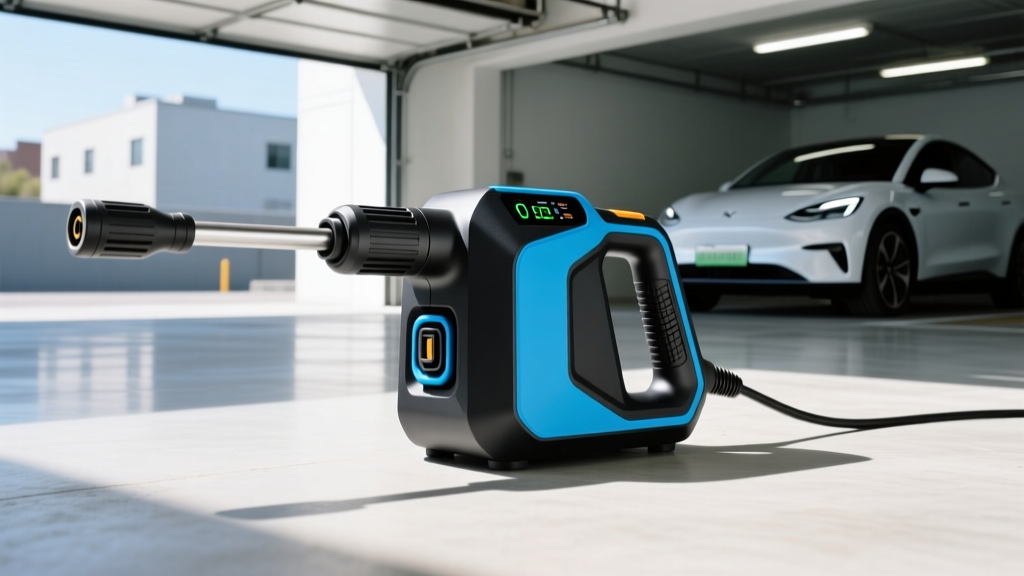
The highest pressure electric pressure washers available to consumers in 2026 peak between 3,500 and 4,000 PSI (pounds per square inch), delivered by 15-amp, 120V or 240V induction motors. Top models like the Kärcher K7 Premium (3,200 PSI, 2.0 GPM) and Greenworks GPW3200 (3,200 PSI, 2.3 GPM) represent the practical ceiling for residential electric units. Commercial electric units can reach 4,000+ PSI but require 240V circuits and cost $1,500+. For EV owners, a 2,000–3,200 PSI unit with adjustable nozzles is the sweet spot — enough to clean wheels and undercarriages without risking damage to charge-port gaskets or ADAS sensor housings.
Why EV Owners Need a Different Pressure-Washing Strategy
Electric vehicles are engineered differently from internal-combustion cars, and those differences affect how you should approach exterior cleaning:
- Charging ports and seals: NACS, CCS, and J1772 charge ports are weather-sealed to IP55 or IP67 ratings, but sustained high-pressure spray (above 3,000 PSI at close range) can compromise rubber gaskets over time.
- ADAS sensor arrays: Cameras, ultrasonic sensors, and radar units behind bumpers and windshields can be misaligned or damaged by direct high-pressure impact.
- Underbody battery enclosure: While EV battery packs are sealed (typically IP67/IP69K), the surrounding aerodynamic undertrays and cooling lines benefit from gentler cleaning.
- Paint and clear coat: Many EVs use water-based paints optimized for low-drag finishes; aggressive pressure can etch or chip these surfaces.
For context, a standard garden hose delivers roughly 40–60 PSI. A 2,000 PSI electric pressure washer multiplies that force by 30–50x. The highest pressure electric pressure washer units at 3,200+ PSI represent an 80x multiplier — powerful enough to strip paint if misused.
Top Electric Pressure Washers Compared (2026 Models)
| Model | Max PSI | GPM | Motor (Amps) | Voltage | Price (MSRP) | EV-Safe? |
|---|---|---|---|---|---|---|
| Kärcher K7 Premium | 3,200 | 2.0 | 15A | 120V | $399 | Yes (with Vario nozzle) |
| Greenworks GPW3200 | 3,200 | 2.3 | 15A | 120V | $349 | Yes (adjustable) |
| Ryobi RY142300 | 2,300 | 1.2 | 13A | 120V | $199 | Yes (low risk) |
| Sun Joe SPX4001 | 2,030 | 1.76 | 14.5A | 120V | $189 | Yes |
| Kärcher K5 Compact | 2,000 | 1.4 | 13A | 120V | $229 | Yes |
What the numbers mean: PSI (pounds per square inch) measures force — how hard the water hits the surface. GPM (gallons per minute) measures volume — how much water flows. Cleaning power is a product of both. A 3,200 PSI / 2.3 GPM unit (like the Greenworks GPW3200) delivers roughly 30% more cleaning energy than a 2,000 PSI / 1.4 GPM model, which matters for stubborn brake dust on EV alloy wheels or road-salt buildup on undercarriages.
Cost Breakdown: Electric Pressure Washer vs. Professional Detailing
| Expense | DIY Electric Pressure Washer (Year 1) | Professional EV Detailing (Year 1) |
|---|---|---|
| Equipment / Service | $200–$400 (unit) | $150–$300 per visit |
| Annual uses (typical) | 12–24 washes | 4–6 visits |
| Soap / chemicals | $40–$80/year | Included |
| Water cost | $15–$30/year | N/A |
| Electricity (motor) | $5–$12/year | N/A |
| Total Year 1 | $260–$522 | $600–$1,800 |
| Year 2+ (no equipment cost) | $60–$122 | $600–$1,800 |
The break-even point for owning the highest pressure electric pressure washer versus paying for professional detailing is typically 4–6 months for EV owners who wash biweekly. Over five years, DIY pressure washing saves $2,000–$7,000 compared to professional services — money that can offset home Level 2 charger installation costs or EV insurance premiums.
EV vs. Gas Car: Does Pressure Washing Differ?
| Factor | Electric Vehicle | Gas-Powered Car |
|---|---|---|
| Charging port / fuel cap | Sealed charge port (IP55–IP67); avoid direct spray | Fuel cap is sealed; less sensitivity |
| Undercarriage | Battery enclosure (sealed); cooling lines exposed | Exhaust system, muffler (heat-resistant) |
| Sensor arrays | Cameras, radar, ultrasonic (delicate) | Fewer exterior sensors on most models |
| Brake dust | Less (regen braking reduces pad wear) | More accumulation on wheels |
| Road salt exposure | Same risk; underbody rinse critical | Same risk |
| Recommended max PSI | 2,000–3,200 (with wide-angle nozzle) | 2,000–3,500 (more tolerance) |
One advantage EV owners have: regenerative braking significantly reduces brake-pad wear, meaning less metallic brake dust accumulates on wheels. This reduces the need for the highest pressure settings. A 2,000–2,500 PSI unit with a 25-degree (green) nozzle is usually sufficient for routine EV cleaning, reserving the 3,200 PSI zero-degree (red) tip for concrete driveways or heavily soiled undercarriage work.
Real-World Ownership Considerations
Before purchasing the highest pressure electric pressure washer available, evaluate these practical factors:
Home Electrical Capacity
Most residential electric pressure washers draw 13–15 amps on a standard 120V / 15A or 20A circuit. If your garage or exterior outlet is on a shared circuit (common in older homes), running a 15A pressure washer simultaneously with a Level 1 EV charger (12A) will trip the breaker. Solutions:
- Dedicate a 20A circuit for exterior use ($150–$350 electrician cost)
- Wash when the EV is not charging
- Upgrade to a 240V unit if you already have a NEMA 14-50 outlet (installed for Level 2 EV charging)
Climate and Seasonal Use
In cold-weather states (Minnesota, Colorado, Maine), pressure washing an EV in winter risks ice formation on door seals, charge-port latches, and sensor housings. Best practice: wash in a garage above 40°F, or use a waterless rinseless wash product for spot cleaning between full washes. Store the pressure washer indoors — residual water in the pump will freeze and crack housings below 32°F.
Driving Patterns and Wash Frequency
- Highway commuters (15,000+ miles/year): Wash every 1–2 weeks; bug splatter and road grime accumulate quickly on EV front fascias (which lack grille openings and have smooth, sensor-dense surfaces).
- Urban / garage-parked EVs: Wash every 3–4 weeks; less exposure to contaminants.
- Road-salt regions: Underbody rinse every 7–10 days during winter; this is where higher PSI (2,500–3,200) and GPM matter most for flushing salt from the battery enclosure area.
Common Misconceptions About Electric Pressure Washers and EVs
| Myth | Fact |
|---|---|
| "You can't use a pressure washer on an EV at all." | You can — maintain 12+ inches of distance, use a 25° or 40° nozzle, and avoid direct spray on charge ports and sensor housings. |
| "Higher PSI always means better cleaning." | Cleaning power = PSI × GPM. A 2,300 PSI / 2.0 GPM unit cleans faster than a 3,200 PSI / 1.0 GPM unit due to greater water volume. |
| "Electric pressure washers are weak compared to gas." | Top electric models now match mid-range gas units (3,200 PSI). Gas models still lead above 4,000 PSI, but electric units are quieter (75–85 dB vs. 90–100 dB), emit zero local emissions, and require no oil or fuel. |
| "Pressure washing voids my EV warranty." | It does not, provided you follow the owner's manual guidance on water exposure. Damage caused by misuse (e.g., spraying directly into a charge port at close range) is not warranty-covered, but normal exterior washing is fine. |
| "I need 4,000 PSI to clean my EV properly." | No consumer EV requires 4,000 PSI. 2,000–3,200 PSI with the correct nozzle and technique handles every EV cleaning task safely. |
Decision Framework: Which Pressure Washer Should You Buy?
Choose a 2,000 PSI unit (Sun Joe SPX4001, Kärcher K5) if:
- You primarily garage-park and wash every 3–4 weeks
- Your EV sees light highway use (<10,000 miles/year)
- You want the lightest, most compact unit for apartment or townhome use
- Budget is under $230
Choose a 2,300–2,500 PSI unit (Ryobi RY142300) if:
- You commute daily and wash biweekly
- You want a balance of power and portability
- You share the washer with a gas car that needs more brake-dust removal
- Budget is $180–$250
Choose the highest pressure electric pressure washer (3,200 PSI — Kärcher K7, Greenworks GPW3200) if:
- You live in a road-salt region and need aggressive underbody cleaning
- You wash multiple vehicles (EV + gas car + trucks)
- You plan to clean driveways, decks, and fences in addition to vehicles
- You have a dedicated 20A circuit and budget of $350–$400
FAQ: Electric Pressure Washers for EV Owners
Can I use a pressure washer near my EV's charging port?
Maintain at least 18 inches of distance and use a wide-angle (40° white) nozzle. Never spray directly into an open charge port. Close the port cover before washing. EV charge ports are sealed to IP55 or better, meaning they resist low-pressure water jets, but sustained high-PSI spray at close range can force moisture past gaskets over time.
Will a 3,200 PSI electric pressure washer damage my EV's paint?
At 12+ inches of distance with a 25° or 40° nozzle, no. At close range (<6 inches) with a 0° nozzle, yes — any pressure washer above 1,500 PSI can chip or etch clear coat. Always start with the widest spray pattern and narrow only if needed for stubborn spots.
How much electricity does an electric pressure washer use?
A 15-amp, 120V pressure washer draws approximately 1,800 watts (1.8 kW). A 30-minute wash session consumes about 0.9 kWh — roughly $0.12–$0.18 at the US average electricity rate of $0.16/kWh (EIA data). Over 24 washes per year, that's under $5 in electricity.
Do I need a special circuit to run a pressure washer and charge my EV simultaneously?
Yes, in most cases. A Level 1 EV charger draws 12A and a pressure washer draws 13–15A — together they exceed a standard 15A or 20A circuit. Run them on separate circuits, or wash when the EV isn't charging. If you have a Level 2 charger on a dedicated 240V circuit, it won't conflict with a 120V pressure washer on a different circuit.
Is an electric pressure washer better than a gas model for EV owners?
For most EV owners, yes. Electric models produce zero tailpipe emissions (aligning with the EV ownership ethos), operate 15–25 dB quieter, require no fuel storage or winterization, and start instantly. Gas models still offer higher peak PSI (4,000+) and unlimited runtime, which matters for large properties or commercial use — but for vehicle washing, electric units at 2,000–3,200 PSI are the practical and environmental match for EV ownership.
What nozzle should I use on my EV?
Use a 40° (white) nozzle for general body rinsing, a 25° (green) nozzle for wheels and lower-body grime, and reserve the 15° (yellow) or 0° (red) nozzle for non-vehicle surfaces like concrete. Never use the 0° nozzle on any vehicle surface.
For more on EV ownership costs and maintenance, see fueleconomy.gov's EV guide and the IRS clean vehicle credit page for current federal incentive rules that can free up budget for EV accessories like a quality pressure washer.