If you are searching for the highest mileage Tesla Model 3 available today, the answer is straightforward: the 2026 Tesla Model 3 Long Range AWD. With an EPA-estimated 363 miles of range on a full charge, it outdistances every other Model 3 variant and remains one of the longest-range mainstream electric sedans on the market. But EPA stickers only tell part of the story. This review breaks down what that number means in real-world driving, how quickly the battery replenishes, what you will actually pay after incentives, and whether this trim justifies its premium over the base rear-wheel-drive Model 3.
Range and Efficiency: EPA Sticker vs. Real-World Miles
EPA Estimated Range: 363 miles
Real-World Highway (70-75 mph, mild weather): ~300-325 miles
Real-World Cold Weather (below 32°F, mixed driving): ~240-275 miles
EPA Efficiency: 130 MPGe combined / 26 kWh per 100 miles
The Model 3 Long Range AWD achieves its class-leading range through a combination of aerodynamic efficiency (a drag coefficient around 0.219), a heat pump for cabin and battery thermal management, and a usable battery capacity of approximately 75 kWh on an NMC (nickel manganese cobalt) chemistry pack. Tesla's NMC packs prioritize energy density, which is how the Long Range stores more kilowatt-hours in the same physical footprint as the base RWD's smaller LFP (lithium iron phosphate) battery.
On paper, 363 miles is exceptional. In practice, expect to see 300 to 325 miles on a road trip at highway speeds in moderate temperatures. Pushing 80 mph or climbing sustained grades will pull that closer to 270-285 miles. In freezing conditions, the heat pump helps, but cabin heating, battery preconditioning overhead, and increased rolling resistance typically reduce range by 20-30%. Plan for roughly 240-275 miles in deep winter before needing a charger. According to fueleconomy.gov, the Long Range AWD posts 130 MPGe combined, which translates to roughly 26 kWh consumed per 100 miles of driving — a benchmark figure for efficiency in the compact luxury EV segment.
Battery Chemistry and Longevity
The 2026 Model 3 Long Range AWD uses an NMC lithium-ion battery pack. NMC chemistry delivers higher energy density than LFP, which is why the Long Range achieves its range advantage, but it comes with different care requirements. Tesla recommends charging NMC packs to 80% for daily use and reserving 100% charges for road trips. By contrast, the base RWD model uses an LFP pack that Tesla says can be charged to 100% regularly without accelerated degradation.
Battery degradation data from high-mileage Tesla fleets suggests NMC packs typically retain 90-93% of original capacity after 100,000 miles when charged responsibly. The battery warranty backs this up: 8 years or 120,000 miles, whichever comes first, with at least 70% capacity retention. The drive unit and powertrain carry the same 8-year/120,000-mile coverage. For context, replacing a Model 3 Long Range battery out of warranty currently costs between $12,000 and $16,000 depending on labor and sourcing, though most packs outlast the warranty period with significant capacity remaining.
Charging Speed: DC Fast, Level 2, and Level 1
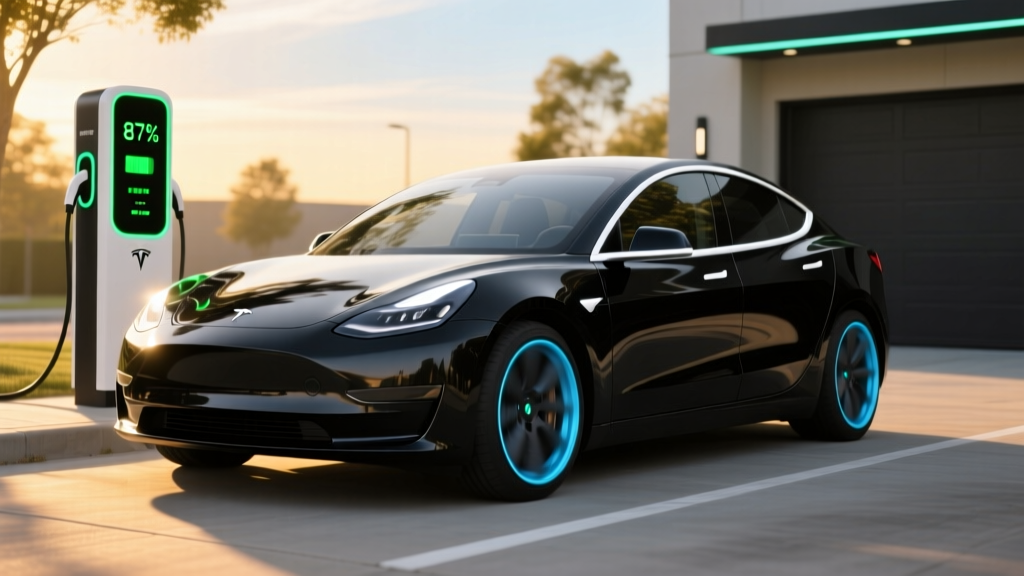
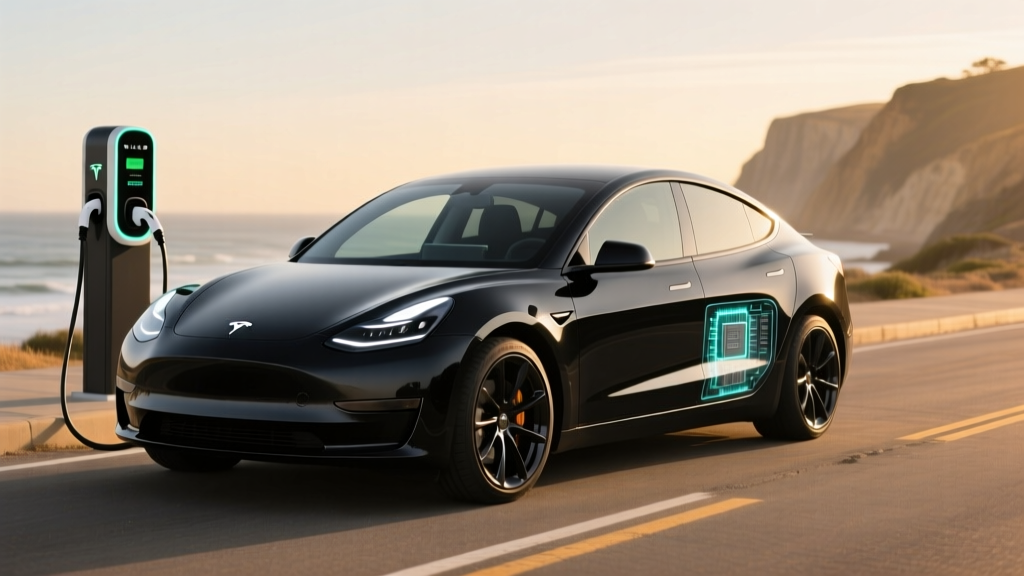
Charging speed is where the Model 3 Long Range shows its maturity. The peak DC fast-charge rate is 250 kW at a V3 or V4 Tesla Supercharger. However, peak rate and sustained rate are different things — as with all EVs, the charge curve tapers as the battery fills.
| Charging Level | Power (kW) | Miles of Range Added | Notes |
|---|---|---|---|
| Level 1 (120V outlet) | ~1.2 kW | ~3-4 miles/hour | Emergency/trickle only |
| Level 2 (240V, 48A Wall Connector) | 11.5 kW | ~44 miles/hour | Full charge in ~7 hours |
| DC Fast Charge (Tesla Supercharger V3/V4) | Peak 250 kW | ~175 miles in 15 min | 10-80% in ~25-28 minutes |
| DC Fast Charge (CCS adapter, non-Tesla) | Up to ~150-200 kW | Varies by station | Adapter required; speed depends on station |
The 10-80% DC fast-charge time of approximately 25-28 minutes is competitive but no longer class-leading — vehicles on 800-volt architectures (like the Hyundai Ioniq 6 or Porsche Taycan) can complete the same swing in 18-20 minutes. The Model 3's 400-volt platform limits its peak charge rate, but Tesla's Supercharger network reliability and plug-and-charge simplicity remain a significant ownership advantage. For home charging, the Tesla Wall Connector at 48 amps delivers 11.5 kW, adding roughly 44 miles of range per hour — enough to fully replenish the battery overnight.
A critical note on preconditioning: when you navigate to a Supercharger using the car's built-in navigation, the Model 3 automatically warms or cools the battery to its optimal charging temperature. Skipping this step — for instance, by driving to a charger without using the nav — can add 5-10 minutes to your charging session, especially in cold weather.
Performance and Driving Dynamics
The Long Range AWD pairs dual electric motors — one on each axle — for all-wheel drive and a combined output of approximately 346 horsepower and 389 lb-ft of torque. The 0-60 mph time lands at 4.2 seconds, which is brisk by any measure and more than adequate for highway merging and passing. The dual-motor setup also provides confident traction in rain and snow, with torque vectoring that feels neutral rather than nose-heavy.
Ride quality improved significantly with the current-generation Model 3 refresh. Tesla added frequency-selective dampers, additional acoustic glass, and revised suspension bushings that reduce road noise and harshness. It is still a firm-riding sedan — you will feel expansion joints and rough pavement — but it is no longer the teeth-rattling experience of earlier model years. Steering remains quick and precise, if somewhat numb on center.
Interior, Cargo, and Technology
The Model 3 cabin follows Tesla's minimalist ethos: a single 15.4-inch central touchscreen handles virtually every function, from climate control to mirror adjustment. There is no traditional instrument cluster; speed and navigation appear in the upper-left corner of the main display. Build quality on the current generation is noticeably improved, with ventilated front seats, ambient lighting, and higher-grade materials throughout.
Passenger space is adequate for four adults. Front legroom measures 42.2 inches, while rear legroom is 35.3 inches — sufficient for most passengers but tighter than a midsize sedan. The rear seat is best suited for two adults; the middle position is narrow. Cargo volume behind the rear seats is 23 cubic feet, with a 60/40 split-folding rear seat for longer items. The front trunk (frunk) adds another 3.1 cubic feet for charging cables or a small bag.
On the technology front, the Model 3 includes:
- Tesla's proprietary infotainment with navigation, streaming apps, and over-the-air updates
- Basic Autopilot (lane centering, adaptive cruise, automatic emergency braking)
- Optional Full Self-Driving (Supervised) at $8,000 — an SAE Level 2 system that requires constant driver attention and is not autonomous driving
- Dashcam and Sentry Mode recording via external cameras
- Phone-as-key access and Tesla app remote controls
Pricing, Trims, and Federal Tax Credit Eligibility
The 2026 Tesla Model 3 is offered in three main trims. The Long Range AWD sits in the middle of the lineup:
| Trim | Base MSRP | EPA Range | Federal Credit Eligibility (§30D) | Est. After-Credit Price* |
|---|---|---|---|---|
| Rear-Wheel Drive | $38,990 | 272 mi | Up to $7,500 (if sourcing/income rules met) | ~$31,490 |
| Long Range AWD | $45,240 | 363 mi | Up to $7,500 (if sourcing/income rules met) | ~$37,740 |
| Performance AWD | $52,990 | 315 mi | Up to $7,500 (if sourcing/income rules met) | ~$45,490 |
*Estimated after-credit prices assume the buyer qualifies for the full $7,500 federal tax credit under IRS §30D and elects the point-of-sale transfer option. Actual eligibility depends on individual circumstances.
The $7,500 federal EV tax credit under IRS §30D is not automatic. Eligibility for the 2026 tax year requires meeting all of the following:
- MSRP Cap: The vehicle must have an MSRP at or below $55,000 for sedans (all Model 3 trims qualify).
- Buyer Income Limits: Modified adjusted gross income must not exceed $150,000 (single), $225,000 (head of household), or $300,000 (joint filers).
- Battery Sourcing Requirements: A percentage of critical minerals and battery components must be sourced from the U.S. or free-trade-agreement countries. These thresholds increase annually, and Tesla's supply chain compliance varies by production batch — always verify the specific VIN's eligibility on the IRS qualified vehicles list before purchase.
- Point-of-Sale Transfer: Buyers can transfer the credit to Tesla at purchase, reducing the upfront cost rather than waiting for a tax refund.
Because battery-sourcing rules tighten each year, a Model 3 that qualifies in January may not qualify in December. Confirm eligibility at the time of purchase with your Tesla advisor and consult a tax professional for your specific situation.
Who Should Buy the Model 3 Long Range AWD?
- You regularly drive 200+ miles between charging opportunities (commutes, road trips, rural areas)
- You need all-wheel drive for snow or rain but do not want an SUV
- You value Supercharger network access and Tesla's software ecosystem
- You want the highest range Model 3 without paying Performance-trim pricing
- You need rear-seat space for tall adults or child seats (consider Model Y or Hyundai Ioniq 6)
- You want faster 800V DC charging (Hyundai Ioniq 6, Kia EV6)
- You prefer physical buttons and a traditional instrument cluster
- You cannot install a Level 2 home charger and rely solely on public infrastructure
The Model 3 Long Range AWD is best suited for tech-savvy commuters and road-trippers who prioritize range and efficiency over cabin space. It excels as a primary vehicle for a one- or two-person household with home charging access. Families needing more cargo room should look at the Model Y or a compact electric SUV.
Pros and Cons
- 363-mile EPA range — highest of any Model 3 variant
- Supercharger network access with reliable plug-and-charge experience
- Strong efficiency (26 kWh/100 mi) keeps charging costs low
- Dual-motor AWD provides excellent all-weather traction
- Over-the-air updates continuously add features
- Strong resale value relative to competitors
- Rear seat space is tight for taller passengers
- Minimalist interior lacks physical controls — everything routes through the touchscreen
- 400V architecture limits DC fast-charge speed vs. 800V competitors
- NMC battery should not be charged to 100% daily (unlike LFP in base trim)
- No Apple CarPlay or Android Auto — Tesla's proprietary system only
- Tax credit eligibility depends on evolving battery-sourcing rules
Frequently Asked Questions
What is the real-world range of the Tesla Model 3 Long Range AWD?
The EPA rates it at 363 miles. In real-world highway driving at 70-75 mph in mild weather, expect 300-325 miles. In freezing temperatures, plan for 240-275 miles before needing to charge. Your results will vary based on speed, terrain, climate control usage, and tire condition.
How fast does the Model 3 Long Range charge at home and on the road?
At home on a 48-amp Tesla Wall Connector (Level 2, 11.5 kW), it adds roughly 44 miles of range per hour, fully charging overnight in about 7 hours. On a 250 kW Tesla Supercharger, it charges from 10% to 80% in approximately 25-28 minutes. Charging slows significantly above 80% to protect battery health — plan to charge to 80% on road trips and top off at your destination.
How much does the Model 3 Long Range cost after tax credits?
The base MSRP is $45,240 for 2026. If you qualify for the full $7,500 federal tax credit under IRS §30D and use the point-of-sale transfer, your effective price drops to approximately $37,740 before destination fees, taxes, and options. Eligibility depends on your income, the vehicle's battery sourcing, and MSRP caps — always verify before purchasing.
Does the Model 3 Long Range AWD qualify for the $7,500 federal EV tax credit?
It can, but eligibility is not guaranteed for every buyer or every production batch. The vehicle's MSRP is under the $55,000 sedan cap, but you must also meet income limits ($150K single / $300K joint) and the vehicle must meet critical-mineral and battery-component sourcing thresholds set by the IRS. These sourcing requirements tighten annually. Check the fueleconomy.gov tax credit database for the specific VIN's status.
Is the Model 3 Long Range AWD worth buying over competitors like the Hyundai Ioniq 6?
The Model 3 Long Range wins on total EPA range (363 mi vs. Ioniq 6's ~361 mi for the Long Range SE trim) and Supercharger network convenience. The Ioniq 6 counters with faster 800V charging (10-80% in ~18 min), Apple CarPlay, and more rear-seat room. If Supercharger access and software ecosystem matter most, the Model 3 holds the edge. If charging speed and physical controls are priorities, the Ioniq 6 is a strong alternative. Both are excellent vehicles — the right choice depends on your specific needs and charging situation.
What is the warranty coverage on the battery and drivetrain?
Tesla covers the Model 3 Long Range AWD battery and drive unit for 8 years or 120,000 miles (whichever comes first) with at least 70% capacity retention guaranteed. The basic vehicle limited warranty covers 4 years or 50,000 miles. These terms are in line with industry standards and provide reasonable long-term protection.