Quick Answer: Is a Hero Electric Boat Right for You?
Hero Electric is an Indian manufacturer known for electric scooters, not marine vessels. As of 2026, Hero Electric does not produce, sell, or officially market any electric boat. If you're searching for a "Hero electric boat," you may be conflating the brand with dedicated electric marine manufacturers such as Candela, Arc Boats, X Shore, or Navier — or you may have encountered an unofficial conversion or third-party listing.
This guide breaks down what electric boat ownership actually looks like in 2026, compares electric marine propulsion to gas outboards with real numbers, and provides a decision framework so you can determine whether an electric boat fits your use case — or whether you should look at a different brand entirely.
Why "Hero Electric Boat" Searches Are Surging — and What Buyers Actually Want
Hero Electric dominates the Indian electric two-wheeler market with models like the Optima and Photon, but the brand has no marine division. Searches for "Hero electric boat" typically stem from one of three scenarios:
- Brand confusion: Buyers associate "Hero" with affordable EVs and assume the company has expanded into marine applications.
- Aftermarket conversions: Some boat owners in South and Southeast Asia retrofit hulls with electric motors sourced from EV scooter powertrains, sometimes informally calling them "Hero electric boats."
- Generic search behavior: Shoppers new to electric marine craft use broad terms before discovering dedicated manufacturers.
Regardless of intent, the practical questions remain the same: How far can an electric boat go? What does charging look like at a dock? How do costs compare to a gas-powered outboard? Let's address those with concrete data.
Electric Boat Range, Battery, and Charging: The Numbers That Matter
Electric marine propulsion operates on the same fundamental principles as EVs — a lithium-ion battery pack (measured in kWh, or kilowatt-hours, representing total energy capacity) powers an electric motor (rated in kW, or kilowatts, representing power output). But the marine environment introduces unique constraints.
| Model | Battery (kWh) | Motor (kW) | Range (nmi) at Cruise | Top Speed | Charge Time (0-100%) | Base MSRP (USD) |
|---|---|---|---|---|---|---|
| Candela C-8 | 69 kWh (NMC) | 55 kW (electric hydrofoil) | ~50 nmi at 22 knots | 27 knots | ~2 hrs (22 kW AC) | ~$390,000 |
| Arc One | 226 kWh (NMC) | 373 kW (500 HP equiv.) | ~40 nmi at 35 mph | 40+ mph | ~4 hrs (Level 2); DC fast option TBD | ~$300,000 |
| X Shore Eelex 8000 | 126 kWh (NMC) | 225 kW | ~50 nmi at 20 knots | 35 knots | ~3 hrs (44 kW DC) | ~$340,000 |
| Navier N30 | 60 kWh (NMC) | 30 kW (hydrofoil) | ~75 nmi at 15 knots | 25 knots | ~3 hrs (shore power) | ~$350,000 |
| Generic pontoon conversion | 15-30 kWh (LFP or NMC) | 5-15 kW | ~10-20 nmi at 5 mph | 8-12 mph | 6-10 hrs (120V/240V) | $15,000-$40,000 (motor + battery) |
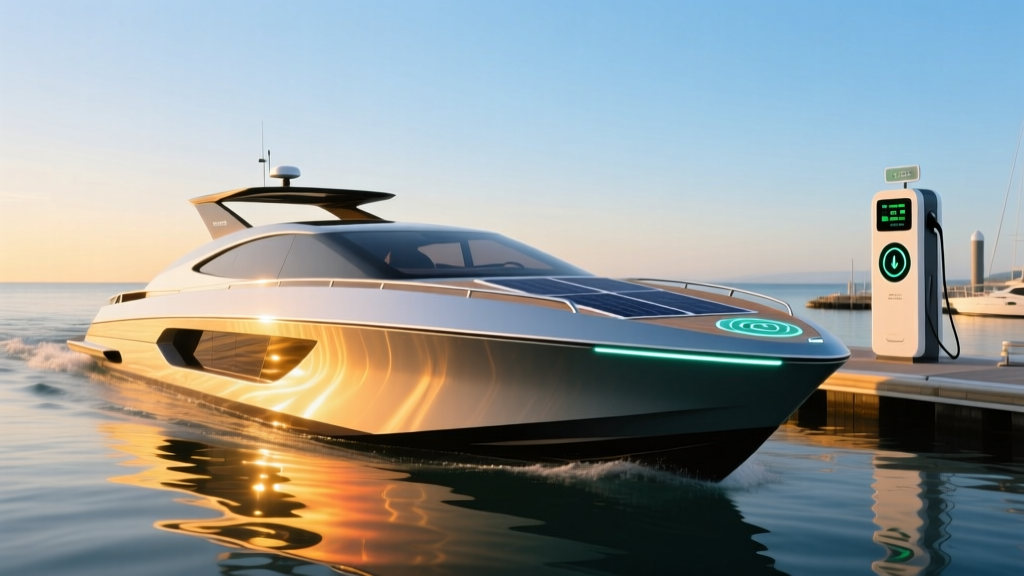
Key takeaway: Hydrofoil-equipped boats like the Candela C-8 and Navier N30 achieve dramatically better range per kWh because they lift the hull out of the water, reducing hydrodynamic drag by up to 80%. Conventional displacement hulls require far more energy to push through water, which is denser than air by a factor of ~800.
Real-World Range vs. Manufacturer Claims: Electric boat range figures are highly sensitive to speed. A Candela C-8 rated for 50 nautical miles at 22 knots may deliver only 25-30 nmi at 27 knots (top speed) and up to 57 nmi at 15 knots. Cold water temperatures (below 50°F / 10°C) can reduce battery efficiency by 10-15%, similar to cold-weather range loss in EVs. Always plan routes using 70-80% of the rated range as your practical maximum.
Electric Boat vs. Gas Outboard: Full Cost Comparison
The upfront cost of electric boats is significantly higher than comparable gas-powered vessels, but operating costs tell a different story — especially for frequent boaters. Here's a five-year cost breakdown comparing a typical 20-foot gas bowrider with a 150 HP outboard against a mid-range electric equivalent.
| Cost Category | Gas Outboard (150 HP) | Electric Equivalent |
|---|---|---|
| Purchase Price | $45,000 - $65,000 | $120,000 - $300,000+ |
| Fuel/Energy (5 years) | $18,750 (15 gal/hr × $5/gal × 200 hrs/yr) | $4,800 (30 kWh/hr × $0.16/kWh × 200 hrs/yr) |
| Maintenance (5 years) | $7,500 (oil, impeller, lower unit, winterization) | $1,500 (minimal — no oil, fewer moving parts) |
| Insurance (5 years) | $6,000 ($1,200/yr avg.) | $9,000 ($1,800/yr avg. — higher replacement cost) |
| Dock Charging Install | $0 | $2,000 - $8,000 (240V/50A marine shore power) |
| Depreciation (est.) | -$20,000 | -$80,000+ (limited resale data) |
| 5-Year Total | ~$57,250 - $77,250 | ~$57,300 - $134,500+ |
The math is clear: Electric boats save substantially on fuel and maintenance — roughly $20,000 over five years for a frequent boater. But the massive purchase-price premium and steeper depreciation (due to limited resale history and rapid tech evolution) mean that most recreational boaters will not break even on an electric boat within five years. The economics favor high-utilization commercial operators (water taxis, tour boats, ferries) who rack up thousands of hours and can amortize the upfront cost.
Charging Infrastructure: The Dock Power Reality
Just as home charging access is the single biggest factor in EV car ownership, shore power availability is the make-or-break factor for electric boats. Here's what you need to know:
- Marina shore power: Most modern marinas offer 30-amp or 50-amp 240V AC connections (120V/240V split-phase in North America). A 50-amp connection delivers up to 12 kW — sufficient to charge a 69 kWh Candela battery in roughly 6 hours, or a 226 kWh Arc One in 19+ hours.
- DC fast charging at docks: This is extremely rare in 2026. Unlike the EV road-trip network (Tesla Supercharger, Electrify America), marine DC fast-charging infrastructure is in pilot stages only. Candela has demonstrated 22 kW AC charging; no mainstream marine equivalent of a 350 kW DC fast charger exists for recreational boaters.
- Solar trickle charging: Some owners supplement with marine solar panels (200-600W typical), adding 1-3 kWh per day — enough to offset standby losses but not meaningful propulsion energy.
- No home charging assumption: If your boat is stored on a trailer in a driveway, you can charge from a residential 240V outlet (like a home EV charger). If it lives in a slip, you are entirely dependent on marina infrastructure. Confirm shore power availability and amperage before purchasing.
Federal Tax Credits and Incentives: Do They Apply to Electric Boats?
A common misconception is that the federal EV tax credit applies to any electric vehicle. It does not.
| Claim | Fact |
|---|---|
| "I get the $7,500 federal EV tax credit for an electric boat." | False. The IRS §30D Clean Vehicle Credit applies to qualified plug-in electric motor vehicles for highway use (cars, trucks, SUVs, vans). Boats are not eligible. See IRS §30D guidelines. |
| "There are no incentives for electric boats at all." | Partially false. Some state and local clean-energy programs, port authorities, and commercial maritime grants (e.g., EPA Clean Ports Program, CARB in California) offer funding for electric marine vessels — particularly for commercial operators. Check your state's environmental agency. |
| "I can write off an electric boat as a business expense." | Sometimes true. If used commercially (charter, tour, ferry), Section 179 depreciation or bonus depreciation may apply. Consult a tax professional — this is not tax advice. |
| "Electric boats have no maintenance." | Misleading. Electric drivetrains have fewer moving parts (no oil changes, no lower-unit gear lube, no winterization of cooling systems), but hull maintenance, antifouling, battery management, and marine electronics still require regular attention. |
Decision Framework: Should You Buy an Electric Boat?
Not every boating use case suits electric propulsion in 2026. Use this framework to determine if it's right for you:
Choose an electric boat if:
- You boat primarily on lakes, calm bays, or protected waters within 20-40 nautical miles of your dock.
- You have confirmed 240V/50A shore power at your marina slip, or you trailer-store and can charge at home.
- You prioritize silent operation, zero local emissions, and minimal vibration (ideal for wildlife observation, swimming platforms, and conversation on the water).
- You boat 150+ hours per year, making the fuel savings meaningful.
- You can absorb the higher upfront cost without relying on a federal tax credit that doesn't exist for marine vessels.
Stick with a gas outboard if:
- You regularly run offshore, cover long distances at speed, or need the range flexibility of carrying extra fuel cans.
- Your marina lacks adequate shore power, and you cannot install it.
- You boat fewer than 50 hours per year — the fuel savings will never offset the purchase premium.
- You need to tow water-skiers or wakeboarders at sustained high speeds, which drains electric batteries extremely quickly.
- Your budget is under $100,000 — current electric boats from reputable manufacturers start well above that threshold (with the exception of small electric tenders and DIY conversions).
What First-Time Electric Boat Buyers Must Know
If you've decided electric marine propulsion fits your needs, keep these practical considerations front of mind:
- Battery degradation is real. Marine NMC lithium-ion batteries degrade similarly to EV batteries — expect 10-20% capacity loss over 8-10 years depending on charge cycles, depth of discharge, and thermal management. Saltwater environments add corrosion risk to battery enclosures. Ask the manufacturer for the battery warranty (typically 5-8 years, with a capacity retention threshold of 70-80%).
- Weight matters more on water. Battery packs are heavy. A 226 kWh pack can weigh 3,000+ lbs. Hull design must account for this; you cannot simply swap a gas outboard for an electric motor on any hull and expect good performance.
- There is no "range extender" equivalent. Unlike some PHEVs or EREVs on the road (e.g., BMW i3 REx), most pure electric boats have no backup generator. If you run out of charge on the water, you need a tow — and marine towing is expensive ($500-$2,000+).
- Insurance costs more. Marine insurers price electric boats higher due to limited actuarial data, expensive battery replacement costs ($20,000-$80,000+ depending on pack size), and a smaller pool of qualified marine electric-technician repair facilities.
- Resale value is uncertain. The electric boat market is young. Unlike Tesla's established resale market, electric boat depreciation curves are unproven. Factor in potentially steep depreciation if you plan to sell within 5 years.
Frequently Asked Questions
Does Hero Electric make an electric boat?
No. As of 2026, Hero Electric (India) manufactures electric scooters and two-wheelers only. They do not produce electric boats, marine motors, or watercraft. If you've seen a "Hero electric boat" listing, it is likely an unofficial aftermarket conversion or a mislabeled product.
What is the most affordable electric boat I can buy in 2026?
Small electric tenders and dinghies from brands like Torqeedo or ePropulsion start around $3,000-$8,000 for the motor/battery system (hull not included). For a complete, purpose-built electric day boat, expect to spend $80,000-$150,000 at minimum. Premium models (Candela, Arc, X Shore) range from $300,000-$400,000+.
Can I convert my existing gas boat to electric?
Yes, conversion kits exist from companies like Electric Yacht, Elco Motor Yachts, and ePropulsion. A typical conversion for a 20-foot sailboat or pontoon costs $15,000-$40,000 including motor, batteries, and controller. However, conversions are best suited for displacement-hull sailboats and slow pontoons — not planing powerboats that require high horsepower.
How long do electric boat batteries last?
Marine lithium-ion (NMC) battery packs are typically rated for 2,000-5,000 charge cycles before reaching 70-80% capacity. At 100 cycles per year, that translates to 20-50 years of use — though calendar aging (typically 10-15 years) will likely be the limiting factor. LFP (lithium iron phosphate) batteries offer longer cycle life (4,000-6,000+ cycles) but are heavier and less common in marine applications due to space constraints.
Are electric boats allowed on all lakes?
Most lakes that allow motorized craft permit electric motors, and some lakes that ban gas motors specifically allow electric. Check local regulations — bodies of water managed by the National Park Service or local water authorities often have specific rules. In many jurisdictions, electric-only lakes are expanding as noise and emission concerns grow.
How does electric boat efficiency compare to a gas outboard?
Electric motors convert 85-95% of battery energy into propulsion. Gas outboards convert only 20-30% of fuel energy into useful thrust — the rest is lost as heat, noise, and exhaust. This means an electric boat uses roughly 3-4× less energy (in BTU-equivalent terms) to travel the same distance at the same speed, though the higher energy density of gasoline (33.7 kWh per gallon) still gives gas boats a practical range advantage for long-distance, high-speed use.
Sources: Manufacturer specifications from Candela, Arc Boats, and X Shore official sites; IRS §30D Clean Vehicle Credit guidelines; marine energy analysis from the U.S. Department of Energy Marine and Hydrokinetic program.