Henrik Fisker has spent decades chasing a vision: a beautifully designed, sustainably built electric vehicle that undercuts legacy automakers on price while outperforming them on style. The culmination of that vision was the Fisker Ocean, a midsize electric SUV that launched for the 2023 model year and became one of the most talked-about — and ultimately most cautionary — EV stories of the decade. With Fisker Inc. having filed for Chapter 11 bankruptcy in mid-2024 and the company's assets subsequently acquired, the Ocean exists in a complicated space for 2026 buyers: a genuinely capable EV now sold on the used market, often at steep discounts, but carrying real ownership risks.
This review examines the Fisker Ocean through the lens of Henrik Fisker's design and engineering philosophy, evaluates the SUV's hard specs against 2026 competitors, and gives prospective used-EV buyers the data they need to decide whether the Ocean's value proposition outweighs its orphan-brand baggage.
Fisker Ocean by the Numbers: Full Spec Breakdown
| Specification | Ocean Sport (FWD) | Ocean Ultra / Extreme (AWD) |
|---|---|---|
| EPA Range | 250 miles | 360 miles (Extreme w/ Hyper Range pack) |
| Battery Capacity | ~75 kWh (LFP, BYD Blade) | ~113 kWh (NMC, CATL) |
| Horsepower | 275 hp | 564 hp (Ultra/Extreme) |
| 0–60 mph | 6.9 seconds | 3.7 seconds (Ultra Boost mode) |
| Drivetrain | Single-motor FWD | Dual-motor AWD |
| Max DC Fast Charge | ~120 kW (estimated) | ~250 kW (peak, Hyper Range pack) |
| 10–80% DC Charge Time | ~34 minutes (est.) | ~30 minutes (est.) |
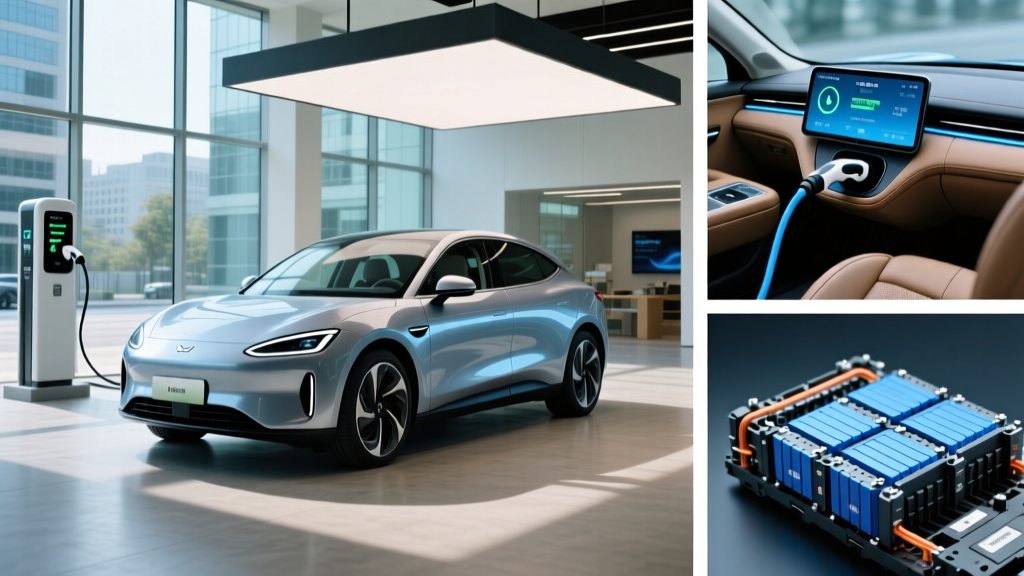
| Level 2 Home Charge Rate | 10.5 kW (AC onboard charger) | 10.5 kW (AC onboard charger) |
| MPGe (Combined) | ~97 MPGe | ~88 MPGe (Ultra) |
| Cargo Volume (behind 2nd row) | 32.5 cu ft | 32.5 cu ft |
| Cargo Volume (seats folded) | ~65 cu ft | ~65 cu ft |
| Original Base MSRP | $37,499 | $68,999 (Extreme) |
| Battery/Powertrain Warranty | 6 yr / 60,000 mi (original) | 6 yr / 60,000 mi (original) |
Sources: fueleconomy.gov, Fisker Inc. press materials (2023).
Real-World Range: What the EPA Sticker Doesn't Tell You
Highway driving at 70 mph: expect ~290–310 miles.
Cold weather (below 32°F): expect ~250–280 miles.
Mixed city/highway in moderate temps: ~320–340 miles achievable with conservative driving.
Fisker Ocean Sport (250 mi EPA):
Highway at 70 mph: expect ~200–220 miles.
Cold weather: ~175–200 miles.
The 360-mile EPA figure on the Extreme trim was among the highest of any production SUV when it launched. However, that number came from the 113 kWh NMC "Hyper Range" pack supplied by CATL — a massive, heavy battery that trades efficiency for raw capacity. In EPA testing, the Ultra trim achieved roughly 360 miles, but real-world highway driving at sustained speeds consistently knocked 15–20% off that figure, which is typical for a heavy dual-motor AWD SUV.
The Sport trim's LFP (lithium iron phosphate) BYD Blade battery is smaller but has inherent advantages: LFP chemistry tolerates daily 100% charges better than NMC, degrades more slowly over thousands of cycles, and avoids cobalt/nickel supply-chain concerns. The trade-off is lower energy density, meaning 250 miles from a ~75 kWh pack — adequate for commuting but tight for road trips without planning.
Cold-weather range loss is significant for the Ocean. Without a confirmed heat pump on all trims (Fisker listed it as standard on Ultra/Extreme), the Sport's LFP pack is particularly susceptible to cold-induced range reduction. LFP batteries are more sensitive to low temperatures than NMC, and real-world testing by owners reported 25–30% range loss in sub-freezing conditions.
Charging Performance: DC Fast Charging and Home Level 2
| Charging Level | Power / Rate | Sport (75 kWh LFP) | Extreme (113 kWh NMC) |
|---|---|---|---|
| Level 1 (120V household) | ~1.4 kW | ~3–4 mi/hr | ~3–4 mi/hr |
| Level 2 (240V home) | 10.5 kW | ~25–28 mi/hr (~7 hr full) | ~25–28 mi/hr (~11 hr full) |
| DC Fast Charge (peak) | ~120–250 kW | ~120 kW peak | ~250 kW peak |
| DC 10–80% time | — | ~34 min (est.) | ~30 min (est.) |
The Ocean's charging story is one of its weaker points relative to 2026 competitors. The Hyper Range pack on the Extreme trim was rated for up to 250 kW peak DC charging, but independent testing and owner reports indicated that sustained charging rates tapered significantly after 50% state of charge (SoC). The charge curve — the rate at which charging speed drops as the battery fills — was not as aggressive as rivals like the Hyundai Ioniq 5 (which sustains high rates through ~70% SoC) or the Tesla Model Y.
At home on a Level 2 charger, the 10.5 kW onboard AC charger is competitive. A full charge of the 113 kWh pack takes roughly 11 hours, meaning overnight charging is straightforward for most owners with a dedicated 48-amp Level 2 circuit. The Sport's smaller 75 kWh pack fills in about 7 hours — easily handled by a standard overnight session.
Important note for 2026 buyers: The Ocean uses a CCS1 connector. With the industry's shift toward NACS (the Tesla-standard connector now adopted by Ford, GM, Rivian, and others), CCS1 public charging infrastructure is still widely available at Electrify America and EVgo stations, but NACS is becoming the dominant standard. Adapters exist, but this is a factor for long-term charging convenience.
Design, Tech, and the Henrik Fisker Signature
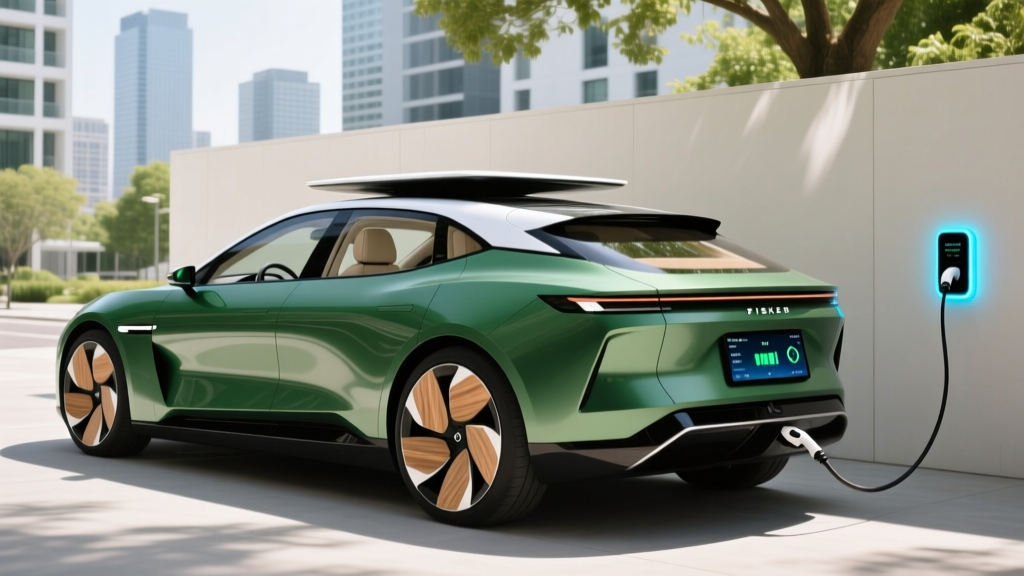
Henrik Fisker made his name designing the BMW Z8 and Aston Martin DB9 — vehicles defined by dramatic proportions and surfacing. The Ocean carried that DNA into the electric-SUV segment. The "California Mode" feature, which simultaneously lowers all windows including the rear hatch glass, was a genuine differentiator that no competitor offered. The optional solar roof (the "Fisker Intelligent Solar Roof" on the Extreme trim) could theoretically add up to 1,500 miles of range per year under ideal conditions — roughly 4 miles per day of supplemental charging. It's a niche feature, but it reflected Fisker's sustainability-first branding.
The 17.1-inch rotating center touchscreen (called the "Revolve" screen) was visually striking but drew mixed reviews for software stability. The infotainment system, built on a custom Android-based platform, suffered from bugs and sluggishness that Fisker promised to fix via over-the-air (OTA) updates. With the company's bankruptcy, the future of OTA updates is uncertain — a critical consideration for 2026 used buyers. Some third-party software support may emerge, but official Fisker OTA updates have ceased.
Driver-assistance features included adaptive cruise control, lane-keeping assist, automatic emergency braking, and a 360-degree camera system. These are SAE Level 2 driver-assist features — the driver must remain fully engaged and hands-on (or eyes-on, depending on the system state). The Ocean was never equipped with anything approaching autonomous driving capability.
Pricing in 2026: Used Market Value and Tax Credit Reality
Original MSRP for the Fisker Ocean ranged from $37,499 (Sport) to $68,999 (Extreme), with the Ultra trim landing around $52,999. These prices were aggressively positioned against the Tesla Model Y, Ford Mustang Mach-E, and Hyundai Ioniq 5 at launch.
Following Fisker's June 2024 bankruptcy filing and the subsequent liquidation and asset sale, the Ocean's used-market values collapsed. As of early 2026, expect to find:
| Trim | Original MSRP | Typical Used Price (2026) | Depreciation |
|---|---|---|---|
| Sport (FWD) | $37,499 | $18,000–$24,000 | ~35–52% |
| Ultra (AWD) | $52,999 | $26,000–$34,000 | ~36–51% |
| Extreme (AWD) | $68,999 | $32,000–$42,000 | ~39–54% |
Federal Used-EV Tax Credit (§25E)
Because the Ocean is now only available as a used vehicle, the relevant federal incentive is the §25E Used Clean Vehicle Credit, not the new-vehicle §30D credit. Key rules per the IRS:
- Credit amount: 30% of the sale price, up to a maximum of $4,000.
- Vehicle price cap: The sale price must be $25,000 or less.
- Buyer income caps: AGI must not exceed $75,000 (single), $112,500 (head of household), or $150,000 (married filing jointly).
- Vehicle age: Must be at least 2 model years old (qualifying Ocean models meet this).
- Dealer requirement: Must be purchased from a licensed dealer (private-party sales do not qualify).
- One-time use: The buyer cannot have claimed the used-EV credit in the prior 3 years.
Practical implication: A Fisker Ocean Sport purchased from a dealer for $22,000 could yield a $4,000 credit (30% of $22,000 = $6,600, capped at $4,000), bringing effective cost to $18,000. Ultra and Extreme trims priced above $25,000 do not qualify for this credit. Consult a tax professional to confirm eligibility.
Pros and Cons: Honest Assessment for 2026 Buyers
Pros
- Striking design by Henrik Fisker — stands out in a sea of crossover look-alikes
- 360-mile EPA range on Extreme trim (among the highest of any SUV)
- LFP battery on Sport trim offers superior cycle life and daily-charge tolerance
- Aggressive used pricing — Extreme trim for under $40K is exceptional value on paper
- California Mode and solar roof are genuine conversation starters
- Spacious interior with 32.5 cu ft cargo room behind second row
- Strong performance: 3.7-second 0–60 on Ultra/Extreme
Cons
- Fisker Inc. is bankrupt — no official dealer network, no OTA updates, uncertain parts supply
- Battery/powertrain warranty (6 yr/60,000 mi) may be unenforceable post-bankruptcy
- CCS1 connector in a market shifting to NACS
- Software bugs in infotainment that will likely never be patched
- Charging speeds are mid-pack; charge curve tapers early vs. competitors
- Limited service-center network — repairs may require independent EV specialists
- Insurance costs may be elevated due to parts scarcity
- Resale value is highly uncertain going forward
Fisker Ocean vs. 2026 Competitors: Is It Worth the Risk?
| Attribute | Fisker Ocean Extreme (Used) | Tesla Model Y LR (2025) | Hyundai Ioniq 5 (2025) | Ford Mustang Mach-E ER (2025) |
|---|---|---|---|---|
| Price (effective) | ~$35,000–$42,000 | ~$44,000–$48,000 | ~$42,000–$47,000 | ~$43,000–$50,000 |
| EPA Range | 360 mi | 320 mi | 305 mi | 312 mi |
| Max DC Charge kW | ~250 kW (peak) | ~250 kW | ~238 kW | ~150 kW |
| NACS Compatible? | No (CCS1) | Yes | Yes (2025+) | Yes (2025+) |
| Warranty (remaining) | Likely void/uncertain | 8 yr / 120,000 mi | 10 yr / 100,000 mi | 8 yr / 100,000 mi |
| OTA Updates | No (ceased) | Yes (active) | Yes (active) | Yes (active) |
| Service Network | Very limited | Extensive | Extensive | Extensive |
The Ocean wins on raw range and used-market price. It loses — decisively — on ownership security. A 2025 Tesla Model Y or Hyundai Ioniq 5 costs more upfront but comes with an active warranty, ongoing software support, NACS charging access (including the Tesla Supercharger network for the Model Y), and a robust dealer/service network. For most buyers, the peace of mind is worth the premium.
The Ocean makes sense for a specific buyer: someone who values design, is mechanically self-sufficient or has access to an independent EV specialist, wants maximum range per dollar, and accepts the risk that warranty claims, software fixes, and certain replacement parts may be difficult or impossible to obtain.
Henrik Fisker's Broader EV Vision: What Comes Next?
The Fisker Ocean was Henrik Fisker's second attempt at building an EV company. His first, Fisker Automotive (2007–2014), produced the Karma plug-in hybrid — a stunning car plagued by battery and quality issues that ultimately led to its own bankruptcy. The Karma's assets were acquired by Wanxiang Group and later evolved into the Karma Revero.
Fisker Inc. (the second venture, founded in 2016) was supposed to be different: an "asset-light" automaker that outsourced manufacturing to Magna Steyr in Austria, focused on design and software, and kept capital requirements low. The Ocean was well-reviewed at launch for its design and ambition, but production ramp-up delays, software issues, and the brutal price war initiated by Tesla in 2023 eroded the company's financial position. Fisker Inc. filed for Chapter 11 bankruptcy in June 2024.
As of 2026, Fisker Inc.'s assets have been acquired, and Henrik Fisker has not announced a third automotive venture. The Ocean remains his most accomplished production EV — a vehicle that proved his design instincts were as sharp as ever, but also demonstrated that building a car company requires more than beautiful sheet metal. It requires software reliability, service infrastructure, supply-chain resilience, and the financial stamina to survive a market downturn.
Who Should (and Shouldn't) Buy a Used Fisker Ocean in 2026
Buy the Fisker Ocean if:
- You find a Sport trim under $25,000 from a dealer and can claim the $4,000 used-EV credit, bringing effective cost below $21,000.
- You prioritize range-per-dollar and can accept the orphan-brand risk.
- You have access to an independent EV mechanic or are comfortable self-advocating on repairs.
- You mostly drive in moderate climates (LFP cold-weather loss is significant).
- You value distinctive design and want something you won't see in every parking lot.
Skip the Fisker Ocean if:
- You need a reliable warranty — the 6-year/60,000-mile battery warranty is likely unenforceable.
- You live in a cold climate where LFP range loss will compound the issue.
- You want NACS charging compatibility without adapters.
- You depend on OTA updates for feature improvements and bug fixes.
- You plan to own the vehicle long-term and want predictable resale value.
Frequently Asked Questions
What is the real-world range of the Fisker Ocean?
The Extreme trim's 360-mile EPA rating translates to roughly 290–310 miles at highway speeds in moderate weather, and 250–280 miles in cold conditions. The Sport trim's 250-mile EPA rating drops to about 200–220 highway miles and 175–200 in cold weather.
How fast does the Fisker Ocean charge?
The Extreme trim peaks at approximately 250 kW on DC fast chargers, with a 10–80% charge in roughly 30 minutes. The Sport trim peaks around 120 kW, taking about 34 minutes for 10–80%. At home on Level 2 (10.5 kW), expect 25–28 miles of range added per hour.
Does the Fisker Ocean qualify for any federal tax credit?
As a used vehicle, the Ocean may qualify for the §25E Used Clean Vehicle Credit — up to $4,000 — but only if the purchase price is $25,000 or less (effectively limiting this to the Sport trim) and the buyer meets income caps ($75K single / $150K joint). The original §30D new-vehicle credit no longer applies. Always verify with a tax professional.
Is the Fisker Ocean's warranty still valid after the bankruptcy?
This is the biggest ownership risk. Fisker Inc.'s bankruptcy means the original 6-year/60,000-mile battery and powertrain warranty is likely unenforceable. Some consumer protections may apply depending on your state and how the bankruptcy asset sale was structured, but buyers should assume they are purchasing the vehicle without manufacturer warranty backing.
Can I still get the Fisker Ocean serviced?
There is no official Fisker dealer network as of 2026. Service must be handled by independent EV specialists or general mechanics with EV experience. Parts availability — particularly body panels and proprietary components — is uncertain and may become more difficult over time. Routine maintenance (tires, cabin filters, brake fluid) is straightforward, but high-voltage battery or powertrain repairs could be challenging.
Is it worth buying a Fisker Ocean vs. a Tesla Model Y or Hyundai Ioniq 5?
On paper, the Ocean Extreme offers more range (360 mi EPA) for less money than either competitor on the used market. In practice, the lack of warranty, ceased software updates, CCS1 connector, and uncertain parts supply make it a significantly riskier ownership proposition. Buyers who prioritize reliability, warranty coverage, and long-term support should choose the Model Y or Ioniq 5. Buyers chasing maximum range-per-dollar and willing to accept risk may find the Ocean compelling at the right price.
What battery chemistry does the Fisker Ocean use?
The Sport trim uses an LFP (lithium iron phosphate) BYD Blade battery (~75 kWh), which offers excellent cycle life and can be charged to 100% daily without accelerated degradation. The Ultra and Extreme trims use an NMC (nickel manganese cobalt) CATL battery (~113 kWh) with higher energy density but greater sensitivity to sustained high-SoC storage.