The Short Answer on a "Hellcat EV"
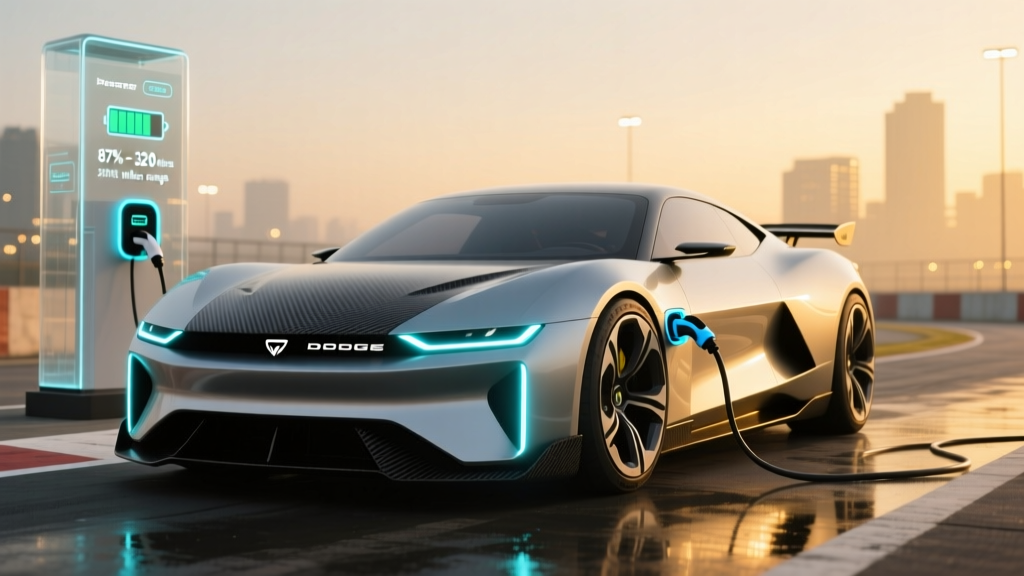
There is no vehicle officially called the "Hellcat EV" and there never will be — Dodge retired the Hellcat nameplate (supercharged 6.2L V8) after the 2023 model year. What most shoppers searching for a Hellcat EV actually want is the 2026 Dodge Charger Daytona Scat Pack, the all-electric muscle car that delivers Hellcat-rivaling performance: 670 hp, 627 lb-ft of torque, and a 3.3-second 0-60 mph time. It's the spiritual successor to the Hellcat, just without the supercharger whine and with a 100.5 kWh battery instead of a gas tank. Below, we break down what it actually costs to buy, charge, and own — and whether it makes sense versus a used gas Hellcat or a Tesla Model S Plaid.
Why Dodge Killed the Hellcat (And What Replaced It)
The Dodge Challenger and Charger Hellcat defined an era: a supercharged 6.2L HEMI V8 producing up to 807 hp in the Demon 170 variant. But CAFE fuel-economy standards tightened, and Stellantis made the strategic call to end the HEMI V8 after 2023. The replacement platform is the STLA Large architecture, purpose-built for electric powertrains.
The 2026 Dodge Charger Daytona lineup comes in two main flavors:
- Daytona R/T — 496 hp, 404 lb-ft, 0-60 in 4.7 seconds, starting at ~$59,590 MSRP
- Daytona Scat Pack — 670 hp, 627 lb-ft, 0-60 in 3.3 seconds, starting at ~$72,590 MSRP
Neither carries the Hellcat badge, but the Scat Pack is what Hellcat loyalists are cross-shopping. The power delivery is instant (electric motors don't need to build boost), and the 3.3-second 0-60 matches the outgoing Hellcat Redeye's real-world times.
2026 Charger Daytona Scat Pack: Full Spec Breakdown
| Specification | Daytona Scat Pack (AWD) | Daytona R/T (AWD) |
|---|---|---|
| Horsepower | 670 hp | 496 hp |
| Torque | 627 lb-ft | 404 lb-ft |
| 0-60 mph | 3.3 sec | 4.7 sec |
| Battery (usable) | 100.5 kWh (NMC) | 100.5 kWh (NMC) |
| EPA Range (est.) | ~260 miles | ~317 miles |
| Peak DC Fast Charge | ~175 kW | ~175 kW |
| 10-80% DC Charge | ~27 min | ~27 min |
| Level 2 Charge Rate | 11.5 kW | 11.5 kW |
| Connector | CCS1 (NACS adapter avail.) | CCS1 (NACS adapter avail.) |
| Drivetrain | Dual-motor AWD | Dual-motor AWD |
| Curb Weight | ~5,838 lbs | ~5,838 lbs |
| Base MSRP | $72,590 | $59,590 |
| Battery Warranty | 8 yr / 100,000 mi | 8 yr / 100,000 mi |
Real-World Range vs. EPA Sticker
The Scat Pack's estimated 260-mile EPA range drops significantly under performance driving. Expect ~180-200 miles during aggressive highway runs or track use, and ~210-230 miles in cold weather (below 32°F) due to battery resistance and cabin heating load. The R/T's 317-mile EPA figure is more livable day-to-day, translating to roughly 260-280 miles in mixed real-world driving. If you plan to drag-race this car, plan your charging stops accordingly.
Hellcat EV vs. Gas Hellcat vs. Tesla Model S Plaid: Cost & Performance
Here's how the electric Dodge stacks up against the car it's replacing and the benchmark electric sedan:
| Metric | Charger Daytona Scat Pack | 2023 Challenger Hellcat Redeye (used) | Tesla Model S Plaid |
|---|---|---|---|
| Horsepower | 670 hp | 797 hp | 1,020 hp |
| 0-60 mph | 3.3 sec | 3.4 sec | 1.99 sec |
| EPA Range / MPG | ~260 mi (81 MPGe) | 15 MPG combined | 396 mi (120 MPGe) |
| Purchase Price | ~$72,590 new | ~$65,000-$95,000 used | $89,990 new |
| Annual Fuel/Energy Cost* | ~$1,100/yr | ~$3,500/yr | ~$900/yr |
| Annual Maintenance | ~$300/yr | ~$1,200/yr | ~$400/yr |
| Insurance (est. avg) | ~$3,200/yr | ~$3,000/yr | ~$3,800/yr |
| Federal Tax Credit | Likely ineligible** | N/A | Likely ineligible** |
*Based on 12,000 miles/year, $0.16/kWh home charging, $3.50/gal gas. Actual costs vary by region and driving habits. Source: fueleconomy.gov.
**The §30D federal EV tax credit has strict battery-component and critical-mineral sourcing requirements. As of 2026, most vehicles with non-compliant supply chains do not qualify. Check IRS qualified vehicle list before purchasing. The Scat Pack's $72,590 MSRP falls under the $80,000 sedan cap, but buyer income limits ($150K single / $300K joint AGI) and sourcing rules apply.
The Real Cost to Own: 5-Year Breakdown
Performance cars cost more to own than the sticker suggests. Here's a realistic 5-year / 60,000-mile ownership projection for the Charger Daytona Scat Pack:
| Cost Category | 5-Year Total | Notes |
|---|---|---|
| Purchase (MSRP + dest.) | $74,090 | Before dealer markups or incentives |
| Energy (charging) | $5,500 | Assumes 80% home L2, 20% DC fast |
| Insurance | $16,000 | High-performance EV surcharge applies |
| Maintenance | $1,500 | Tire rotation, cabin filter, brake fluid, tires |
| Tires (replacement set) | $1,800 | Heavy EVs wear tires faster; expect ~30K mi life |
| Depreciation (est.) | -$28,000 | Performance EVs depreciate steeply early |
| Total 5-Year Cost | ~$70,890 net | Purchase + operating - residual value |
The biggest surprise for ex-Hellcat owners: tire costs. At 5,838 lbs with 670 hp of instant torque, the Scat Pack will consume a set of performance tires in 25,000-35,000 miles. Budget $1,500-$2,000 per replacement set. On the plus side, you'll never pay for an oil change, spark plugs, a supercharger belt, or a transmission fluid flush again.
Charging at Home: What Scat Pack Buyers Need to Know
The Charger Daytona's 11.5 kW Level 2 onboard charger means a full 0-100% charge at home takes roughly 9 hours on a 48-amp Level 2 station (hardwired, 240V/60A circuit). This is adequate for overnight replenishment but slower than rivals like the Hyundai Ioniq 5 (10.9 kW, but smaller battery) or the Ford Mustang Mach-E (extended range, similar timing).
Here's what home charging setup costs look like:
| Item | Cost Range | Details |
|---|---|---|
| Level 2 Charger (hardware) | $400 - $700 | ChargePoint Home Flex, Emporia Vue, Wallbox Pulsar |
| Electrician (install) | $800 - $2,500 | Depends on panel proximity, conduit run length |
| Electrical panel upgrade | $1,500 - $3,500 | If your panel is 100A or maxed out; 200A recommended |
| Permit & inspection | $100 - $400 | Varies by municipality |
| Total typical install | $1,300 - $3,600 | Most homes with 200A panels: ~$1,800 |
Critical for apartment/condo dwellers: If you lack access to home or workplace Level 2 charging, owning a 100.5 kWh battery EV becomes a logistical challenge. Relying solely on DC fast charging at 175 kW peak means 27-minute stops for 10-80%, but sustained rates taper significantly above 80% SoC. Plan your living situation before you sign the purchase order.
Common Misconceptions About the "Hellcat EV"
| Myth | Fact |
|---|---|
| "Dodge is making an electric Hellcat" | Dodge retired the Hellcat nameplate. The EV successor is the Charger Daytona Scat Pack (670 hp). No Hellcat EV exists or is planned. |
| "It'll do 300+ miles of range" | The Scat Pack's performance tuning and 5,838-lb weight limit it to ~260 miles EPA. Only the R/T approaches 317 miles. |
| "Electric muscle cars have no soul" | Dodge installed a "Fratzonic" exhaust system — a chambered speaker array that produces up to 126 dB of synthetic V8-style sound. It's polarizing, but it's not silent. |
| "I'll save $7,500 on taxes" | Federal §30D credit eligibility depends on battery sourcing, MSRP caps, and buyer income. Check the IRS qualified list — many performance EVs do not qualify in 2026. |
| "It charges as fast as a Tesla" | At ~175 kW peak, the Daytona charges slower than Tesla's 250 kW V3 Superchargers or Hyundai/Kia's 800V architecture (350 kW capable). Expect ~27 min for 10-80%, not 15. |
Should You Buy It? The Decision Framework
Buy the Charger Daytona Scat Pack if:
- You want American muscle-car styling with 670 hp and don't need 300+ miles of range
- You have reliable home Level 2 charging (garage or driveway with 240V access)
- You value the Dodge brand identity and want a two-door coupe form factor
- You're willing to accept ~$3,200/year insurance premiums for a high-performance EV
- You drive primarily in urban/suburban environments with DC fast-charging corridors nearby
Consider alternatives if:
- You need 350+ mile road-trip range: Tesla Model S (402 mi EPA) or Lucid Air Pure (419 mi EPA) are superior distance cruisers
- You want maximum straight-line speed: Model S Plaid hits 0-60 in 1.99 seconds for $89,990 — quicker by a wide margin
- You live in an apartment without charging: A used gas Hellcat or a PHEV like the BMW M5 plug-in hybrid avoids charging dependency
- You're budget-conscious: The R/T trim at $59,590 delivers 496 hp and 317 miles — significantly more practical for daily use
- You need back-seat practicality: The Charger Daytona is a coupe with limited rear-seat access; the Model S or Ioniq 5 N are more family-friendly
Frequently Asked Questions
Will Dodge ever bring back the Hellcat name for an EV?
As of 2026, Stellantis has not announced any plans to use the Hellcat badge on an electric vehicle. The brand is positioning "Daytona" and "Scat Pack" as its performance EV identifiers. If a higher-output variant arrives (rumors of an 800+ hp "Banshee" trim persist), it may get a new nameplate rather than recycling Hellcat.
How does the Charger Daytona handle in cold weather?
Like all EVs with NMC chemistry, the 100.5 kWh battery loses efficiency in cold temperatures. Expect 15-25% range reduction below 32°F, meaning the Scat Pack's ~260-mile range could drop to 195-220 miles in winter. The heat pump (standard) helps mitigate cabin-heating energy draw, but battery preconditioning for DC fast charging is essential — always use navigation to a charger to trigger thermal prep.
Can I tow with the Charger Daytona?
Dodge has not published an official towing rating for the 2026 Charger Daytona. As a performance coupe, it's not designed for towing. If you need an electric vehicle with towing capability, look at the Ford F-150 Lightning (up to 10,000 lbs) or Rivian R1T (11,000 lbs).
Is the Fratzonic exhaust sound mandatory?
No. The Fratzonic chambered exhaust system can be turned off or adjusted in volume through the drive-mode settings. In "Stealth" mode, the car operates nearly silently. At maximum setting, it produces synthetic engine sounds through exterior and interior speakers — reviews are mixed, with some owners loving the drama and others finding it gimmicky.
What's the battery replacement cost out of warranty?
A full 100.5 kWh NMC battery pack replacement for the Charger Daytona is estimated at $18,000-$25,000 (parts and labor) based on current large-pack pricing. However, the 8-year/100,000-mile warranty covers defects and capacity loss below 70% State of Health. Most NMC packs retain 85-90% capacity at 100,000 miles under normal use, making out-of-warranty replacement uncommon within the first decade.