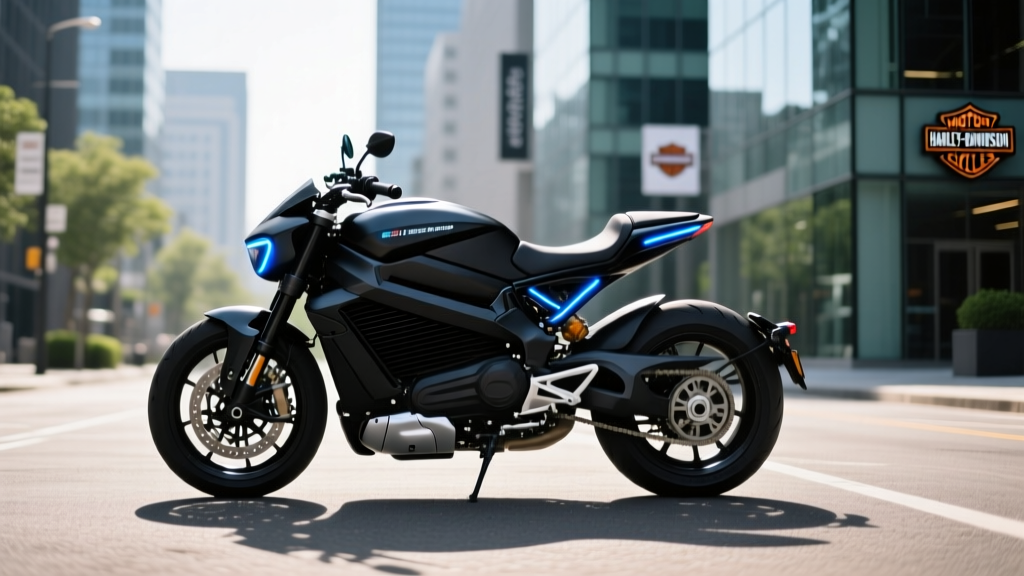
Quick Answer: Is the Harley-Davidson LiveWire Electric Motorbike Worth It?
The Harley-Davidson LiveWire ONE delivers 146 miles of city range (EPA) from its 15.5 kWh battery, with DC fast charging reaching 80% in about 40 minutes at peak 24 kW. Starting at $21,999 MSRP, it targets urban commuters who want instant torque (0-60 mph in 3.0 seconds) and zero tailpipe emissions. Real-world highway range drops to ~95-110 miles, making it best for riders with home Level 2 charging and daily commutes under 80 miles. It does not qualify for the federal §30D EV tax credit (motorcycles are excluded), though some state incentives may apply.
LiveWire Range & Battery: What the EPA Numbers Actually Mean
The LiveWire ONE uses a 15.5 kWh lithium-ion battery pack (Revelation powertrain) producing 105 horsepower and 86 lb-ft of instant torque. The EPA rates it at:
- City range: 146 miles
- Combined range: 110 miles
- Highway range: ~95 miles (real-world testing)
These figures assume moderate speeds and temperatures. In real-world riding:
- Highway cruising at 70+ mph: Expect 85-95 miles before needing a charge
- Cold weather (below 40°F): Range can drop 15-25%, reducing city range to ~110-120 miles
- Aggressive riding: Hard acceleration and high speeds drain the battery faster than EPA estimates
The battery uses NMC (nickel-manganese-cobalt) chemistry, which offers good energy density but requires careful thermal management. Harley-Davidson provides a 5-year/unlimited-mile warranty on the battery and powertrain, with a guarantee of at least 70% capacity retention over that period.
Charging the LiveWire: Level 1, Level 2, and DC Fast Charging
Understanding charging speeds requires distinguishing between kW (power, the rate of energy flow) and kWh (energy, the battery capacity). The LiveWire's 15.5 kWh battery determines how far you can ride; the charging kW determines how quickly you refill it.
| Charging Level | Power (kW) | Time to Full Charge | Miles Added Per Hour |
|---|---|---|---|
| Level 1 (120V household) | 1.4 kW | ~11 hours | ~13 miles |
| Level 2 (240V home/public) | 7.2 kW | ~2.25 hours | ~65 miles |
| DC Fast Charge (CCS) | 24 kW peak | 0-80% in ~40 min | ~150 miles (at peak) |
The LiveWire uses a CCS1 connector for DC fast charging and a J1772 connector for Level 1 and Level 2 AC charging. Most public DC fast chargers in the U.S. support CCS1, though the expanding Tesla Supercharger network (now NACS) requires an adapter that LiveWire does not currently offer.
DC fast charging follows a curve: the battery accepts peak power (24 kW) up to about 50-60% state of charge, then tapers to protect battery health. A 10-80% charge takes roughly 40 minutes, but 80-100% can add another 30+ minutes as the charge rate slows dramatically.
LiveWire vs Gas Motorcycle: Cost & Performance Comparison
| Factor | LiveWire ONE (Electric) | Sportster S (Gas) |
|---|---|---|
| MSRP | $21,999 | $15,999 |
| Fuel/Energy Cost (per mile) | $0.02-0.04 (electricity) | $0.12-0.16 (gasoline) |
| Annual Fuel Cost (6,000 miles) | $120-240 | $720-960 |
| Maintenance (annual) | $100-200 (tires, brakes, fluid) | $400-700 (oil, filters, chain, valves) |
| 0-60 mph | 3.0 seconds | 4.0 seconds |
| Range | 95-146 miles (EPA) | ~180 miles (3.1-gal tank, 55 mpg) |
| Refuel/Recharge Time | 40 min (DC fast) to 11 hrs (Level 1) | 3-5 minutes |
| Federal Tax Credit | Not eligible (§30D excludes motorcycles) | Not applicable |
The LiveWire costs $6,000 more upfront but saves $600-900 annually on fuel and maintenance. Break-even occurs around 7-10 years for a rider covering 6,000 miles per year. However, the LiveWire's range is roughly half that of a gas Sportster, and refueling takes minutes versus 40+ minutes for a fast charge.
Real Ownership Costs: 5-Year Breakdown
| Cost Category | LiveWire ONE | Sportster S (Gas) |
|---|---|---|
| Purchase Price | $21,999 | $15,999 |
| Fuel/Energy (5 years) | $900 | $4,200 |
| Maintenance (5 years) | $750 | $2,750 |
| Insurance (5 years, avg) | $4,500 | $3,800 |
| Depreciation (est. 5 years) | $8,800 (40%) | $6,400 (40%) |
| Total 5-Year Cost | $36,949 | $33,149 |
| Cost Per Mile | $1.23 | $1.10 |
The LiveWire remains about $3,800 more expensive over five years, primarily due to higher purchase price and insurance premiums (electric motorcycles often carry 10-20% higher insurance rates). The gap narrows if electricity costs are low (home solar, off-peak rates) or if you ride more miles annually.
Home Charging Setup: What You Need to Know
Most LiveWire owners charge at home. Here's what's required:
- Level 1 (included): Plug into any standard 120V outlet. Adds ~13 miles per hour. A full charge takes 11 hours, making this viable only if you ride less than 50 miles daily and can charge overnight.
- Level 2 (recommended): Requires a 240V outlet (NEMA 14-50 or hardwired station). Adds ~65 miles per hour. A full charge takes 2.25 hours. Installation costs $500-2,000 depending on electrical panel capacity and distance from the panel to your parking spot.
If your home's electrical panel is at capacity (common in older homes), you may need a panel upgrade ($1,500-3,000) before installing a Level 2 charger. Always consult a licensed electrician for a site assessment.
Public charging infrastructure for motorcycles remains limited. While the LiveWire can use CCS-equipped DC fast chargers, many are designed for cars and may be difficult to access with a motorcycle. Apps like PlugShare and ChargePoint can help locate motorcycle-friendly stations.
Common Misconceptions About Electric Motorcycles
| Myth | Fact |
|---|---|
| "Electric bikes have no power" | The LiveWire produces 86 lb-ft of instant torque, hitting 60 mph in 3.0 seconds—faster than most gas sportbikes. |
| "The battery will need replacement in 3-5 years" | Harley warranties the battery for 5 years with 70% capacity retention. Real-world data from early adopters shows minimal degradation when following proper charging practices (avoiding frequent 100% charges and deep discharges). |
| "You can't ride in the rain" | The LiveWire is fully weather-sealed (IP67-rated battery) and safe to ride in rain. However, wet roads reduce traction regardless of powertrain. |
| "Charging takes too long" | Level 2 home charging fully replenishes the battery in 2.25 hours—overnight charging is more than adequate for daily commuting. DC fast charging adds 80% in 40 minutes for longer rides. |
| "Electric motorcycles are silent and unsafe" | The LiveWire produces a distinctive whine from its belt drive and motor. While quieter than a gas bike, it's not silent, and riders should use the same defensive riding strategies as on any motorcycle. |
Decision Framework: Is the LiveWire Right for You?
Choose the LiveWire ONE if:
- Your daily commute is under 80 miles round-trip
- You have access to Level 2 home charging (or can install it)
- You prioritize instant torque and low maintenance over long-distance touring
- You ride primarily in urban/suburban environments
- You want to reduce your carbon footprint and local air pollution
- You're willing to pay a $6,000 premium for electric technology
Choose a gas motorcycle (like the Sportster S) if:
- You regularly ride more than 120 miles in a day
- You lack access to home or workplace charging
- You tour long distances and need quick refueling
- You ride in extreme cold (below 20°F) frequently
- Upfront cost is a primary concern
- You value the sound, feel, and tradition of a gas V-twin engine
Frequently Asked Questions
Does the Harley-Davidson LiveWire qualify for the federal EV tax credit?
No. The IRS §30D tax credit applies only to four-wheeled vehicles. Electric motorcycles are excluded from the federal credit, though some states (California, Oregon, New York) offer separate incentives for electric two-wheelers. Check your state's energy office or DMV for current programs.
How long does the LiveWire battery last before needing replacement?
Harley-Davidson warranties the battery for 5 years with unlimited miles, guaranteeing at least 70% capacity retention. With proper care (avoiding frequent 100% charges, minimizing DC fast charging, and not letting the battery sit at 0% for extended periods), the battery should last 8-10 years or 60,000+ miles before dropping below 70% capacity. A replacement battery (if needed out of warranty) costs approximately $4,000-6,000 based on current pricing.
Can I take the LiveWire on a road trip?
Yes, but with planning. The 95-146 mile range means you'll need to stop every 60-90 minutes for a 30-40 minute DC fast charge. Use apps like PlugShare to map CCS-equipped chargers along your route. Long-distance touring is possible but requires more patience than a gas motorcycle. Most owners use the LiveWire as a commuter and keep a gas bike (or car) for long trips.
How does cold weather affect the LiveWire's range?
Battery chemistry becomes less efficient in cold temperatures. Expect 15-25% range loss when riding in temperatures below 40°F, and up to 30% loss below 20°F. The LiveWire includes battery preconditioning when you set a departure time while plugged in, which warms the battery for better performance and faster charging. For winter riders, garage parking and preconditioning are essential.
What maintenance does the LiveWire require?
Electric motorcycles require far less maintenance than gas bikes. The LiveWire has no engine oil, oil filter, air filter, spark plugs, or valve adjustments. Annual maintenance includes:
- Tire inspection/replacement (tires wear similarly to gas bikes)
- Brake fluid flush (every 2 years)
- Belt tension check and adjustment
- Coolant check (the battery and motor are liquid-cooled)
- Software updates (often delivered over-the-air)
Expect to spend $100-200 annually on maintenance versus $400-700 for a comparable gas motorcycle.
Is the LiveWire safe to ride in the rain?
Yes. The LiveWire's battery and electrical systems are sealed to IP67 standards (submersible in 1 meter of water for 30 minutes). Rain, puddles, and wet roads pose no electrical hazard. However, all motorcycles have reduced traction in wet conditions, so ride with appropriate caution and allow longer braking distances.
For official specifications, visit Harley-Davidson LiveWire. For EV incentive information, consult IRS.gov §30D guidelines. For safety ratings and motorcycle regulations, see NHTSA.gov.