The Electric G-Wagon in 60 Seconds
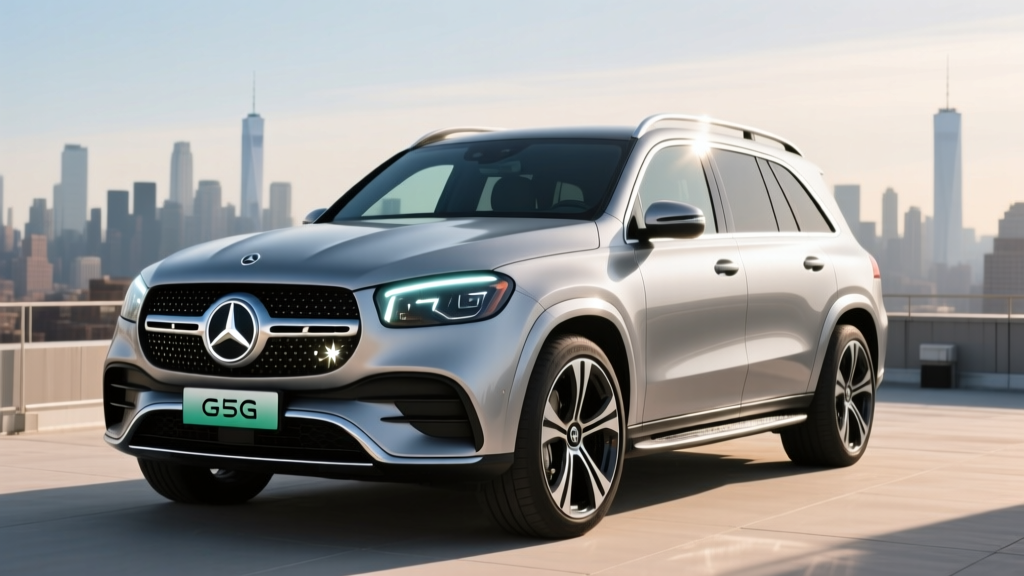
The Mercedes-Benz G580 with EQ Technology — the electric G-Wagon — starts at $164,900 for the 2025 model year (carried into 2026 production). It pairs a 116 kWh usable battery (NMC chemistry) with a four-motor drivetrain producing 576 horsepower and an EPA-estimated 239 miles of range. DC fast charging peaks at 200 kW, reaching 10–80% in roughly 32 minutes. It qualifies for no federal §30D tax credit because it exceeds the $80,000 MSRP cap. If you want a body-on-frame luxury off-roader that runs on electrons and can still ford 33.5 inches of water, this is currently the only option. If you need 350+ miles of range or sub-$100K pricing, look elsewhere.
What the Electric G-Wagon Actually Is
Mercedes didn't build an EV that happens to look like a G-Class. They took the iconic ladder-frame architecture, removed the twin-turbo V8, and bolted in four individually controlled electric motors — one at each wheel. The result is a vehicle that retains the G-Wagon's boxy silhouette, three differential locks (now simulated via torque vectoring), and extreme off-road capability while trading fuel stops for charging sessions.
The official name is the Mercedes-Benz G580 with EQ Technology. Mercedes avoids calling it "EQG" in marketing, but the chassis and intent are unmistakably G-Class. It went on sale in the U.S. in mid-2025, and 2026-model allocations remain tight, with dealer markups common in major metros.
Range, Battery, and Real-World Efficiency
The headline number is 239 miles EPA. But a vehicle shaped like a brick and weighing roughly 6,700 pounds faces physics that no software update can fix.
| Spec | Value |
|---|---|
| Battery (usable) | 116 kWh, NMC lithium-ion |
| EPA Range | 239 miles |
| Real-World Highway (70 mph) | ~190–210 miles |
| Real-World Cold Weather (30°F) | ~165–185 miles |
| MPGe (combined) | 54 MPGe |
| Efficiency | ~2.0 kWh/mile (485 Wh/mi) |
| Max DC Fast Charge | 200 kW (peak) |
| 10–80% DC Charge Time | ~32 minutes |
| Level 2 Charge Rate | 9.6 kW (onboard charger) |
| Level 2 Full Charge Time | ~12 hours (0–100%) |
| Drivetrain | Quad-motor AWD, 576 HP, 830 lb-ft |
| 0–60 mph | 4.6 seconds |
| Towing Capacity | Not yet EPA-rated (est. ~4,400 lbs) |
| Base MSRP | $164,900 (before options/destination) |
| Federal Tax Credit (§30D) | $0 — exceeds $80K MSRP cap |
| Battery Warranty | 10 years / 155,000 miles |
Real-World Range Reality Check
The EPA's 239-mile figure blends city and highway driving. On a pure highway road trip at 75 mph, expect closer to 190–210 miles before you need a charger. The G580's aerodynamic profile (drag coefficient ~0.53) and 6,700-lb curb weight punish efficiency at speed. In freezing temperatures, the NMC pack loses roughly 20–30% of range, dropping effective miles to 165–185. Plan road trips around 150-mile charging segments to maintain a comfort buffer.
For context, the gas-powered Mercedes-AMG G63 earns an EPA combined 14 MPG, giving it a roughly 290-mile range from its 22.5-gallon tank. The electric G-Wagon trades ~50 miles of range for dramatically lower per-mile energy cost and instant torque.
Charging: Home Setup and Public Network Reality
The G580 uses the CCS1 connector for DC fast charging and J1772 for Level 2 AC. Mercedes has not yet adopted NACS (Tesla's connector) on the G-Class platform as of the 2026 model year, though a NACS transition is expected in future production runs. For now, CCS adapters for Tesla Superchargers are available from Mercedes and third-party vendors.
| Charging Level | Power | Miles Added per Hour | Use Case |
|---|---|---|---|
| Level 1 (120V household) | 1.4 kW | ~3 mi/hr | Emergency only — not practical for 116 kWh pack |
| Level 2 (240V home) | 9.6 kW | ~22 mi/hr | Overnight charging; full charge in ~12 hours |
| DC Fast Charge | 200 kW peak | ~150 mi in 15 min (peak) | Road trips; 10–80% in ~32 min |
Home Charging Installation Costs
With a 116 kWh battery, Level 1 (standard outlet) is essentially useless — it would take over 80 hours for a full charge. A Level 2 home charger on a 48-amp circuit is mandatory for practical ownership.
| Item | Typical Cost Range |
|---|---|
| Level 2 charger hardware (48A, hardwired) | $500–$800 |
| Electrician labor (240V/60A circuit run) | $800–$2,500 |
| Electrical permit | $50–$200 |
| Panel upgrade (if 200A service insufficient) | $1,500–$4,000 |
| Total (no panel upgrade) | $1,350–$3,500 |
| Total (with panel upgrade) | $2,850–$7,500 |
At a public DC fast charger, the 200 kW peak rate is strong but not class-leading. The Hyundai Ioniq 5 peaks at 350 kW on an 800V architecture. The G580's charging curve tapers significantly above 80% SoC — expect the final 20% to add another 25–30 minutes. For road trips, plan to charge from 10–80% and move on rather than waiting for a full top-off.
Cost of Ownership: Electric G-Wagon vs. Gas G63
The financial case for the electric G-Wagon isn't about saving money in absolute terms — it's about spending less than the gas alternative while gaining a radically different driving experience.
| Cost Factor | G580 EQ (Electric) | AMG G63 (Gas V8) |
|---|---|---|
| Base MSRP | $164,900 | $183,000 |
| Federal Tax Credit | $0 (over MSRP cap) | $0 |
| Fuel/Energy Cost per Mile | ~$0.07 (home L2 @ $0.14/kWh) | ~$0.28 (premium @ $4.20/gal, 14 MPG) |
| Annual Fuel/Energy (12,000 mi) | ~$840 | ~$3,360 |
| Annual Maintenance (est.) | ~$400 | ~$1,800 |
| 5-Year Fuel/Energy Total | ~$4,200 | ~$16,800 |
| 5-Year Maintenance Total | ~$2,000 | ~$9,000 |
| 5-Year Combined Operating Cost | ~$6,200 | ~$25,800 |
Over five years and 60,000 miles, the G580 saves roughly $19,600 in operating costs compared to the G63. Factor in the $18,100 lower starting price, and the electric version comes out ~$37,700 ahead on total spend — before accounting for insurance, depreciation, or options. Energy cost calculations assume 2.0 kWh/mile and a national average electricity rate of $0.14/kWh. Owners paying $0.30+/kWh in states like California will see smaller savings.
Insurance is a wildcard. Early quotes for the G580 run $4,500–$7,000 annually depending on zip code and driving record — roughly on par with the G63, though some insurers still apply EV surcharges for high-value electric vehicles. Get quotes before committing.
Off-Road Capability: Does Electrification Help or Hurt?
This is where the electric G-Wagon genuinely distinguishes itself. The four-motor layout enables G-Turn (tank turns by spinning wheels on opposite sides in reverse), G-Steering (tightening the turning radius by braking the inside rear wheel), and G-Roar (a synthetic sound experience that some will love and others will disable immediately).
Ground clearance sits at 9.8 inches, approach/departure/breakover angles remain competitive with the gas G-Class, and the sealed battery pack enables a 33.5-inch water fording depth — slightly better than the gas version because there's no air intake to submerge.
The tradeoff is weight. At ~6,700 pounds, the G580 is roughly 700 pounds heavier than the G63. On loose surfaces, that mass is noticeable. The low center of gravity from the floor-mounted battery helps on-curve stability but increases momentum on descents. Mercedes' off-road driving modes manage this well, but physics is physics.
Common Misconceptions About the Electric G-Wagon
| Myth | Fact |
|---|---|
| "It qualifies for the $7,500 federal tax credit." | It does not. The IRS §30D credit caps eligible SUVs at $80,000 MSRP. The G580 starts at $164,900. |
| "Electric means it can't off-road." | The quad-motor torque vectoring and sealed battery actually improve some off-road metrics. It fords deeper water than the gas G-Class. |
| "You can charge it at any Tesla Supercharger." | Not natively. The G580 uses CCS1. You need a NACS adapter (sold separately) to access Tesla's Supercharger network. |
| "The battery will need replacing in 5 years." | Mercedes warranties the battery for 10 years / 155,000 miles against degradation below 70% capacity. NMC packs in liquid-cooled systems typically retain 85–90% after 100,000 miles. |
| "It's basically a Tesla in a G-Wagon body." | The G580 uses a completely different architecture — a modified ladder frame with four independent motors. Its software, build quality, and dealer network are Mercedes-specific. |
Decision Framework: Should You Buy the Electric G-Wagon?
Buy the G580 EQ if:
- You want a G-Class and prefer not to burn premium fuel at 14 MPG.
- You have reliable Level 2 home charging (garage or driveway with a 240V circuit).
- Your daily driving is under 150 miles and road trips are infrequent or planned around DC chargers.
- You value instant torque, silent crawling off-road, and tech-forward features like G-Turn.
- You're comfortable with a $165K+ purchase price and no federal tax credit.
Stick with the gas G63 or look elsewhere if:
- You regularly drive 300+ miles between stops in areas with sparse DC charging (rural West, parts of the South).
- You don't have access to home or workplace Level 2 charging — public-only charging at 2.0 kWh/mile will cost $0.35–$0.50/mile and eat the fuel savings.
- You need to tow more than ~4,400 pounds (the G580's rating is modest for its class).
- You prioritize maximum range over novelty — the Rivian R1S offers ~350+ miles (Max Pack) for roughly $100K less.
- You want a federal tax credit to offset the purchase — it simply doesn't apply here.
First-Time EV Buyer Essentials for the G580
If the electric G-Wagon is your first EV, here's what you need to know before signing:
- kWh vs kW: The battery holds 116 kWh of energy (like a gas tank size). The charger delivers power in kW (like a fuel pump flow rate). A 200 kW charger fills the 116 kWh battery faster than a 50 kW one.
- Precondition the battery: Before a DC fast-charge stop, use the navigation system to route to the charger. The G580 will warm the battery to optimal temperature, which can shave 5–10 minutes off charge time in cold weather.
- Charge curve taper is real: The 200 kW peak only holds from roughly 10–40% SoC. From 80–100%, the rate drops to under 50 kW. Don't plan trips around charging to 100%.
- Regenerative braking: The G580 offers adjustable regen but not true one-pedal driving in all modes. Expect to use the brake pedal more than in a Tesla or Hyundai.
- Dealer service vs. mobile: Mercedes offers some over-the-air updates, but the G-Class platform still requires dealer visits for suspension, brake, and drivetrain service. Confirm your nearest dealer's EV service capability.
Frequently Asked Questions
How long does the G580 battery last?
Mercedes warranties the battery for 10 years or 155,000 miles, guaranteeing it will retain at least 70% of original capacity. Real-world data from similar NMC packs in liquid-cooled systems suggests 85–90% retention at 100,000 miles is typical. Full battery replacement, if ever needed outside warranty, is estimated at $25,000–$35,000 based on current NMC pack pricing at this capacity.
Can I charge the G580 at Tesla Superchargers?
Only with a CCS-to-NACS adapter. The G580 ships with a CCS1 port. Mercedes offers an official NACS adapter, and third-party options exist. Once adapted, you can access Tesla's Supercharger network — the largest in the U.S. — though charge speeds will be limited to the G580's 200 kW peak regardless of the stall's capability.
What's the real cost to charge at home?
At the U.S. average residential rate of ~$0.14/kWh, a full 0–100% charge costs roughly $16.24 (116 kWh × $0.14). For a typical 20–80% daily charge, expect about $9.75. That equates to roughly $0.07 per mile. Compare that to the G63's $0.28/mile on premium gas — the per-mile savings are substantial, but you're starting from a $165K purchase price.
Is the G580 eligible for any state EV incentives?
Federal §30D credit is off the table due to the MSRP cap. However, some states offer their own rebates or HOV-lane access regardless of price. California's Clean Vehicle Rebate Project (CVRP) and New York's Drive Clean Rebate have income and price limits that may exclude the G580. Check your state's specific EV incentive programs and consult a tax professional for current eligibility.
How does the G580 handle in winter?
The four-motor AWD system provides exceptional traction in snow and ice, with independent torque control at each wheel. Range drops 20–30% in sub-freezing temperatures — plan for ~165–185 miles of real-world range at 30°F. The heat pump (standard) helps minimize cabin-heating energy draw. Preconditioning while plugged in is strongly recommended to preserve range and enable faster DC charging.
What competitors should I cross-shop?
In the luxury electric SUV space, the Rivian R1S Quad-Motor ($100K–$115K, ~352 mi Max Pack range) offers more range and lower cost but less brand cachet. The Mercedes EQS SUV ($105K+, 305 mi range) is more refined on-road but far less capable off-road. The Lotus Eletre (~$110K, 304 mi range) is sportier but unproven in the U.S. market. None match the G580's combination of heritage, off-road chops, and boxy styling.