The Tesla Model Y in Stealth Grey and Quicksilver: What Buyers Need to Know
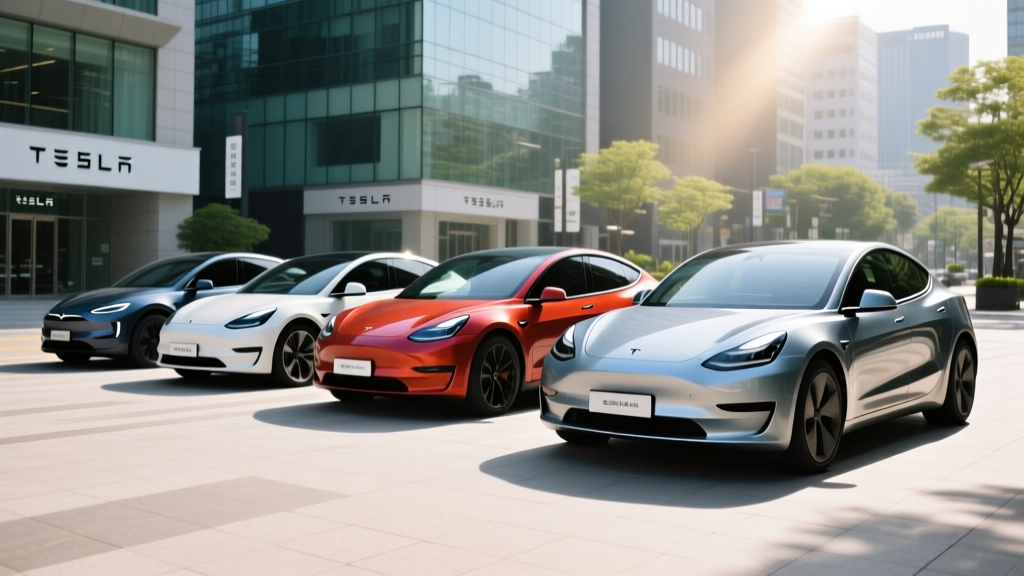
If you've spent any time in a Tesla showroom or browsing the configurator, you've likely noticed that grey has become the default choice for Model Y buyers who want something understated but not plain white. For the 2026 model year, Tesla offers two grey options: Stealth Grey (a no-cost standard paint, replacing the older Midnight Silver Metallic) and Quicksilver (a premium multi-coat option at $2,500). Beyond aesthetics, the 2026 Model Y — internally refreshed as the "Juniper" update — brings meaningful changes to range, ride quality, cabin noise, and charging performance that make it a substantively different vehicle from the 2024 predecessor.
This review breaks down the exact specs, real-world ownership data, and tax-credit math you need before configuring a grey Model Y in 2026.
2026 Tesla Model Y Spec Sheet at a Glance
| Specification | Long Range RWD | Long Range AWD | Performance AWD |
|---|---|---|---|
| EPA Range | 320 mi | 292 mi | 277 mi |
| Battery (usable) | ~75 kWh (NMC) | ~75 kWh (NMC) | ~75 kWh (NMC) |
| Drivetrain | Rear-Wheel Drive | Dual-Motor AWD | Dual-Motor AWD |
| Horsepower | ~346 hp | ~384 hp | ~456 hp |
| 0-60 mph | 5.8 sec | 4.8 sec | 3.5 sec |
| MPGe (combined) | 122 MPGe | 111 MPGe | 106 MPGe |
| Efficiency | 28 kWh/100 mi | 30 kWh/100 mi | 32 kWh/100 mi |
| Max DC Fast Charge | 250 kW | 250 kW | 250 kW |
| 10-80% DCFC Time | ~25 min | ~25 min | ~25 min |
| Level 2 Charge Rate | 11.5 kW (~44 mi/hr) | 11.5 kW (~44 mi/hr) | 11.5 kW (~44 mi/hr) |
| Base MSRP | $44,990 | $47,990 | $52,490 |
| Cargo (rear seats up) | 30.2 cu ft (behind 2nd row); 72.0 cu ft (seats folded) | ||
| Battery Warranty | 8 years / 120,000 miles (≥70% capacity retention) | ||
Sources: EPA fueleconomy.gov, Tesla Model Y configurator.
Real-World Range: What the EPA Sticker Doesn't Tell You
- EPA sticker: 292 miles
- Real-world highway (70-75 mph, moderate temps): ~255-270 miles
- Real-world city/suburban mixed: ~280-295 miles
- Cold weather (below 32°F, highway): ~210-235 miles (20-25% reduction)
The Model Y Long Range AWD uses a ~75 kWh usable nickel-manganese-cobalt (NMC) battery pack. NMC chemistry offers higher energy density than LFP (lithium iron phosphate), which is why Tesla reserves it for Long Range and Performance trims — but it also means Tesla recommends daily charging to 80% for longevity, reserving 100% for road trips. This is a meaningful ownership difference versus the Standard Range RWD Model Y (which uses LFP and can be charged to 100% daily without degradation concern).
On a 300-mile highway drive at 75 mph in 65°F weather, expect to arrive with roughly 15-25 miles of range remaining in the Long Range AWD. In winter conditions — especially below freezing with cabin heat running — that buffer disappears, and you'll need at least one Supercharger stop. The Juniper refresh improved thermal management with a more efficient heat pump, which reduces cold-weather range loss compared to pre-2025 models, but physics still applies: cold batteries are less efficient, and heating the cabin draws real energy.
The RWD Long Range variant's 320-mile EPA rating is genuinely impressive for the segment, but achieving it requires moderate speeds (under 65 mph), mild temperatures, and light HVAC use. Plan for ~280 real-world miles in mixed driving.
Charging Speed: DC Fast Charging and Home Level 2
| Charging Level | Power | Speed (miles added per hour) | Notes |
|---|---|---|---|
| Level 1 (120V household) | ~1.4 kW | ~3-5 mi/hr | Emergency/trickle only; ~60+ hours for full charge |
| Level 2 (240V home, 48A) | 11.5 kW | ~44 mi/hr | Full charge in ~7-8 hours; requires NEMA 14-50 or hardwired Wall Connector |
| DC Fast Charge (Supercharger V3/V4) | Peak 250 kW | ~150-200 mi in 15 min | 10-80% in ~25 min; tapers significantly above 80% |
The Model Y's 250 kW peak DC fast-charge rate is competitive but no longer class-leading — rivals like the Hyundai Ioniq 5 (peak 240 kW but with an 800V architecture enabling a faster 10-80% curve) and the Porsche Macan EV (up to 270 kW) have closed the gap or surpassed it. The critical detail is the charge curve: the Model Y peaks near 250 kW only between roughly 10-30% state of charge, then tapers to ~150 kW by 50%, and drops below 50 kW past 80%. This means charging from 80-100% at a Supercharger can take as long as 10-80%. For road trips, the optimal strategy is to charge to 80% and move on.
At home with a Tesla Wall Connector on a 60A circuit (48A continuous), the onboard charger accepts up to 11.5 kW, adding about 44 miles of range per hour. A full overnight charge from 20% to 80% takes roughly 4-5 hours — more than adequate for daily driving. Installation of a 240V/60A circuit typically costs $800-$2,000 depending on panel proximity and local electrical rates. If your home's electrical panel is at capacity (common in older homes with 100A service), a panel upgrade to 200A can add $1,500-$3,000.
One Juniper-specific improvement: the 2026 Model Y now supports NACS natively (no adapter required), and with Tesla opening the Supercharger network to other brands, station congestion at popular corridors has increased slightly in 2026. Plan Supercharger stops during off-peak hours when possible.
Performance, Ride Quality, and the Juniper Refresh
The 2026 Model Y Long Range AWD delivers 384 horsepower across its dual-motor setup, achieving a 4.8-second 0-60 mph time. The Performance trim pushes that to 3.5 seconds with 456 hp — genuinely quick for a crossover, and more than sufficient for any real-world merging or passing scenario.
But the bigger Juniper story is ride quality. Pre-2025 Model Ys were widely criticized for firm, jittery suspension tuning that transmitted road imperfections directly into the cabin. The 2026 refresh introduces frequency-selective dampers, improved bushings, and revised spring rates that noticeably reduce harshness over broken pavement. Cabin noise has also dropped — Tesla claims a ~20% reduction in road noise through added acoustic glass and insulation. In practice, the 2026 Model Y is meaningfully quieter at highway speed than its predecessor, though still not as hushed as a Genesis GV60 or BMW iX.
The steering remains precise but heavy, and the regenerative braking (one-pedal driving) is still among the strongest in the segment. Tesla removed the driver-adjustable regen setting several years ago; you get one aggressive regen profile, which most owners adapt to within a week but can surprise new EV drivers accustomed to coasting.
Pricing, Trim Levels, and Federal Tax Credit Eligibility
| Trim | Base MSRP | As-Tested (Stealth Grey + common options) | §30D Federal Credit | Effective Price |
|---|---|---|---|---|
| Long Range RWD | $44,990 | $46,490 (w/ Stealth Grey, no premium add-ons) | Up to $7,500 | ~$38,990 (if eligible) |
| Long Range AWD | $47,990 | $50,490 (w/ Quicksilver, tow hitch) | Up to $7,500 | ~$42,990 (if eligible) |
| Performance AWD | $52,490 | $55,990 (w/ Quicksilver, FSD transfer) | Up to $7,500 | ~$48,490 (if eligible) |
Critical tax credit caveats for 2026: The federal §30D credit of up to $7,500 is not automatic. Eligibility depends on three factors per IRS guidelines:
- Buyer income caps: Modified adjusted gross income (MAGI) must not exceed $150,000 (single), $225,000 (head of household), or $300,000 (joint filing).
- MSRP cap: The vehicle's manufacturer's suggested retail price must be $80,000 or less for SUVs (the Model Y qualifies as an SUV per IRS classification — all trims clear this bar).
- Battery sourcing requirements: At least 60% of critical minerals must be sourced from the US or a free-trade-agreement country, and at least 75% of battery components must be manufactured or assembled in North America. Tesla has largely localized its supply chain for US-built Model Ys, but the exact credit amount ($3,750 or $7,500) can shift as sourcing percentages change. Always verify current eligibility on the IRS clean vehicle credit page before purchasing.
As of 2026, the credit can be transferred to the dealer at point of sale, effectively reducing your purchase price at delivery rather than waiting for a tax refund. This is a significant cash-flow advantage — confirm with your Tesla advisor that the point-of-sale transfer is applied to your order.
Interior Space, Cargo, and Daily Practicality
The Model Y remains one of the most practical vehicles in its class:
- Cargo behind second row: 30.2 cu ft
- Cargo with second row folded: 72.0 cu ft
- Front trunk (frunk): 4.1 cu ft — useful for charging cables, groceries, or a small bag
- Rear legroom: 41.6 inches (generous for adults)
- Front headroom: 41.0 inches; rear headroom: 39.7 inches
- Towing capacity: 3,500 lbs (with optional $1,000 tow hitch — available on AWD trims)
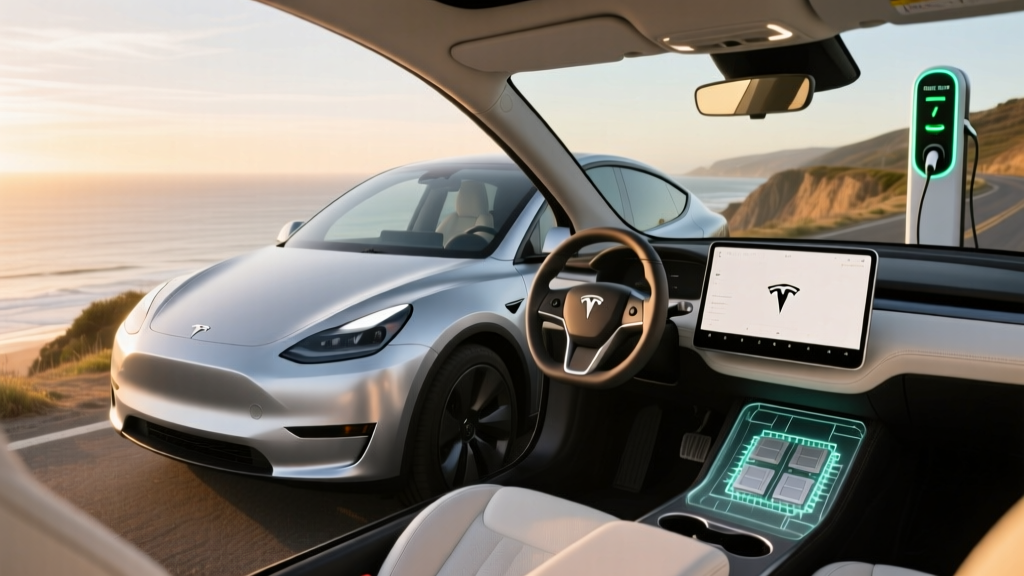
The Juniper interior redesign replaced the polarizing all-touchscreen approach of earlier models with a few welcome additions: ventilated front seats (previously absent), ambient lighting, a rear-seat touchscreen for climate and media, and improved material quality on the dashboard and door panels. The steering-wheel-mounted turn signal buttons (introduced with Juniper) remain divisive — some owners adapt quickly, others find them unintuitive in roundabouts. The stalkless design is a love-it-or-hate-it choice that's worth testing in a demo drive before committing.
For families, the Model Y fits two rear-facing car seats with room to spare, and the low, flat load floor makes loading strollers and gear straightforward. The 3,500-lb towing capacity is adequate for a small trailer or pair of dirt bikes but won't handle a large boat or camper.
Tech, Autopilot, and Driver Assistance
The 2026 Model Y ships with Tesla's current infotainment stack on a 15.4-inch center touchscreen. Wireless Apple CarPlay and Android Auto are still not supported — Tesla's proprietary interface is the only option. This remains a dealbreaker for some buyers who prefer phone-mirroring for navigation and media.
Standard Basic Autopilot includes traffic-aware cruise control and autosteer (lane centering) and is classified as SAE Level 2 — meaning the driver must remain fully attentive with hands on the wheel at all times. This is driver assistance, not self-driving.
The optional FSD (Supervised) package ($8,000 one-time or $99/month subscription as of 2026) adds automatic lane changes, traffic light/stop sign recognition, and city-street autosteer. FSD has improved substantially since 2023, but it still requires active supervision — it can misread construction zones, struggle with unprotected left turns, and occasionally brake-check for phantom obstacles. It's a compelling convenience feature for long highway stretches, but it does not replace an attentive driver.
Pros and Cons of the Grey Model Y
Pros
- Class-leading efficiency (28-32 kWh/100 mi depending on trim)
- Access to the Tesla Supercharger network — the most reliable DC fast-charging network in the US
- Over-the-air updates continuously add features and refinements
- Strong resale value relative to other EVs
- Juniper ride and NVH improvements address the biggest historical complaints
- Stealth Grey is a no-cost option with broad appeal
- Spacious cargo area and practical frunk
Cons
- No Apple CarPlay or Android Auto support
- 250 kW peak DC charging is no longer best-in-class
- Steering-wheel turn signal buttons are polarizing
- FSD (Supervised) is expensive and still requires full driver attention
- NMC battery requires 80% daily charge limit (vs. LFP's 100% tolerance)
- No heads-up display (available in competitors like Hyundai Ioniq 5)
- Insurance costs tend to be higher than segment average
Who Should Buy the Grey Tesla Model Y?
Choose the Model Y Long Range AWD if: You need all-wheel drive for snow/rain, regularly carry passengers or cargo, and want the balance of range (292 mi), performance (4.8 sec 0-60), and practicality.
Choose the Model Y Performance if: Acceleration matters to you (3.5 sec 0-60), you accept the range tradeoff (277 mi), and you want the upgraded brakes and sport suspension.
Consider a competitor (Hyundai Ioniq 5, Ford Mustang Mach-E, Kia EV6) if: You need Apple CarPlay, prefer 800V ultra-fast charging, want a head-up display, or prefer a more traditional interior layout with physical controls.
Frequently Asked Questions
What is the real-world range of the grey Tesla Model Y?
For the most popular Long Range AWD trim, expect ~255-270 miles on the highway and ~280-295 miles in mixed city/suburban driving. In cold weather (below 32°F), plan for 210-235 miles on highway trips. The Long Range RWD variant adds roughly 25-30 miles to these figures thanks to its 320-mile EPA rating.
How fast does the Model Y charge at home and on the road?
On a home Level 2 charger (11.5 kW / 48A), the Model Y adds about 44 miles of range per hour — a full overnight session covers most daily needs. At a Tesla Supercharger (V3/V4), it peaks at 250 kW and charges from 10-80% in approximately 25 minutes, though the charge curve tapers significantly above 80%, making 80-100% top-ups inefficient.
How much does a grey Model Y cost after the federal tax credit?
The Long Range RWD starts at $44,990 MSRP. With Stealth Grey (no-cost paint), the price stays at $44,990 before destination fees. If you qualify for the full $7,500 §30D federal tax credit (income, MSRP, and battery-sourcing requirements apply), the effective price drops to approximately $37,490. Quicksilver paint adds $2,500. Always verify current eligibility at irs.gov before purchasing.
Does the grey Tesla Model Y qualify for the $7,500 federal EV tax credit?
As of 2026, the US-built Model Y qualifies for up to $7,500 under §30D, provided the buyer meets income caps ($150K single / $300K joint), the vehicle MSRP is under $80,000 (all trims qualify), and battery critical-mineral and component sourcing thresholds are met. Tesla has localized most of its supply chain, but the exact credit amount can vary. The credit can be applied at point of sale as an instant discount. Confirm with your tax professional and the IRS clean vehicle credit listing before finalizing your order.
Is the Model Y worth buying versus the Hyundai Ioniq 5 or Ford Mustang Mach-E?
The Model Y wins on efficiency, Supercharger network access, cargo space, and software. The Ioniq 5 wins on 800V charging architecture (faster 10-80% times at compatible chargers), Apple CarPlay support, and available head-up display. The Mach-E offers a more traditional crossover feel with physical controls and BlueCruise hands-free driving on mapped highways. If Supercharger reliability and over-the-air updates are priorities, the Model Y remains the default choice. If you value CarPlay and ultra-fast charging flexibility, the Ioniq 5 is a strong alternative.
What's the difference between Stealth Grey and Quicksilver on the Model Y?
Stealth Grey is a standard no-cost solid paint with a dark, neutral tone — it replaced Midnight Silver Metallic and is the most popular grey among 2026 buyers. Quicksilver is a $2,500 premium multi-coat paint with a brighter, more reflective silver appearance that shifts subtly in different lighting. Both hide road dust and minor scratches better than black or white, making them practical choices for daily-driven vehicles.
What is the battery warranty on the 2026 Model Y?
Tesla covers the Model Y battery and drive unit for 8 years or 120,000 miles (whichever comes first) with a guaranteed minimum of 70% capacity retention. This is competitive with the segment standard (Hyundai, Kia, and Ford offer similar 8-year/100,000-120,000-mile battery warranties). NHTSA safety data for the Model Y can be reviewed at nhtsa.gov.