Quick Verdict: The R1T as a Genuine Green Truck
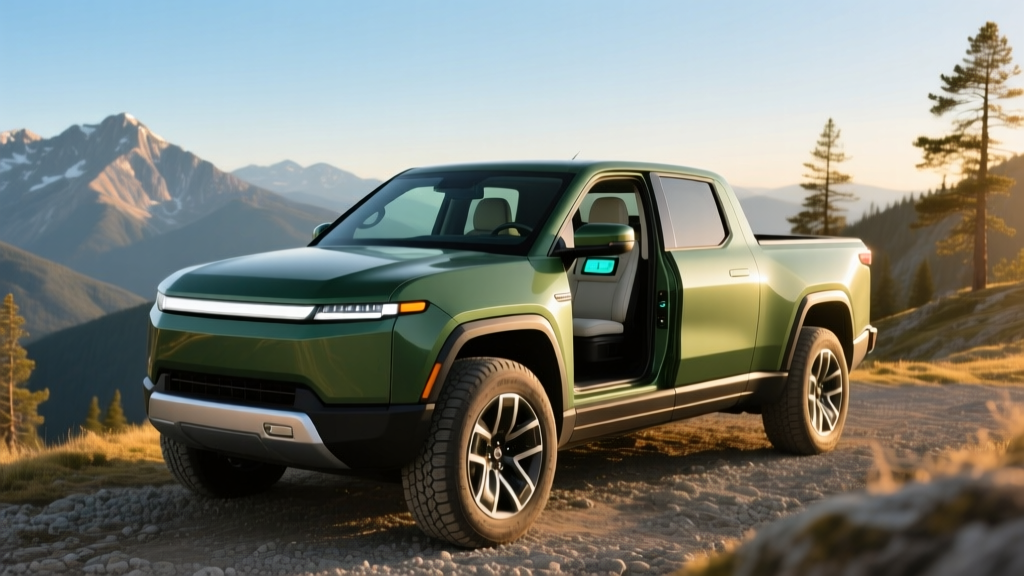
Rivian's R1T occupies a rare position in the electric truck market: it's a full-size-capable pickup that actually delivers on the environmental promise of electrification without compromising utility. For 2026, the R1T continues to offer a combination of range, charging speed, and genuine off-road capability that few competitors match. With EPA-estimated ranges up to 420 miles on the Max Pack, a NACS charge port granting access to Tesla Superchargers, and a carbon-neutral manufacturing commitment at its Normal, Illinois facility, the R1T makes a credible case as the greenest full-capability pickup you can buy.
But "green" doesn't mean cheap or without trade-offs. Pricing starts well above traditional trucks, real-world highway range drops meaningfully below EPA estimates, and the tax credit picture is more nuanced than a simple $7,500 discount. This review breaks down every spec that matters for a real buyer in 2026.
Range and Efficiency: EPA Numbers vs. Reality
The 2026 Rivian R1T offers three battery configurations, each with distinct range and weight trade-offs. Here's the official EPA data from fueleconomy.gov:
| Pack | Usable Capacity | Chemistry | EPA Range | MPGe (Combined) | kWh/100 mi |
|---|---|---|---|---|---|
| Standard | ~95 kWh | NMC (Samsung SDI) | 270 mi | 70 MPGe | 48 |
| Large | ~128 kWh | NMC (Samsung SDI) | 352 mi | 69 MPGe | 49 |
| Max | ~149 kWh | NMC (Samsung SDI) | 420 mi | 65 MPGe | 52 |
- Highway-only at 70 mph: Subtract 15–20% from EPA. A Large Pack R1T realistically delivers ~280–300 miles at sustained highway speed.
- Cold weather (below 30°F): Subtract 20–30% without preconditioning. The Max Pack's 420-mile sticker can drop to ~295–335 miles in freezing conditions.
- Towing: Expect a 40–50% range reduction when towing near the 11,000-lb max capacity. A Large Pack truck towing a 7,000-lb trailer may see as little as 175 miles of range.
The R1T uses nickel-manganese-cobalt (NMC) cells across all packs, supplied by Samsung SDI. NMC offers higher energy density than LFP chemistry, which is why Rivian can fit up to 149 kWh usable into the Max Pack without making the truck impossibly heavy. The trade-off is that NMC cells prefer not to sit at 100% state of charge for extended periods — daily charging to 80–90% is recommended for longevity, with 100% reserved for road trips.
Charging Speed: DC Fast, Level 2, and NACS Access
Rivian transitioned the R1T to the North American Charging Standard (NACS) port starting with 2025 models, meaning 2026 R1Ts charge natively on Tesla Supercharger V3 and V4 stations without an adapter. This is a significant practical advantage for road-trip charging reliability.
| Charging Level | Power / Rate | Speed | Notes |
|---|---|---|---|
| Level 1 (120V) | 1.4 kW | ~3 mi/hr | Emergency/trickle only |
| Level 2 (240V, 48A) | 11.5 kW | ~25 mi/hr | Home charging; ~13 hr for full Large Pack |
| DC Fast (Large Pack) | Peak 220 kW | 10–80% in ~21 min | Sustained ~180 kW to 60%, tapers above |
| DC Fast (Max Pack) | Peak 190 kW | 10–80% in ~30 min | Larger battery = longer session despite similar peak |
| DC Fast (Standard) | Peak 190 kW | 10–80% in ~18 min | Smallest pack charges fastest overall |
Charging curve reality: The peak 220 kW rate on the Large Pack holds only between roughly 15–40% state of charge. Above 60%, the rate drops to ~120 kW, and above 80% it falls further to ~50 kW. This is why the 10–80% time is the meaningful metric — charging from 80–100% can add another 25+ minutes for relatively few miles gained. On road trips, plan stops around the 10–80% window for optimal time efficiency.
At home, the R1T's 11.5 kW onboard charger is competitive. On a 48-amp Level 2 circuit (requiring a 60-amp breaker), you'll add roughly 25 miles of range per hour of charging. A full overnight session (10 hours) recovers about 250 miles — enough to replenish a Standard Pack entirely or a Large Pack nearly completely. Home Level 2 installation typically costs $800–$2,000 including a hardwired wall connector and electrical work, assuming your panel has capacity. A 200-amp service upgrade, if needed, can add $1,500–$3,500.
Performance and Drivetrain
The 2026 R1T continues with Rivian's dual-motor and quad-motor configurations, all featuring all-wheel drive with torque vectoring.
| Configuration | Horsepower | Torque (lb-ft) | 0–60 mph | Towing Capacity |
|---|---|---|---|---|
| Dual-Motor AWD | 533 hp | 610 | 4.5 sec | 11,000 lbs |
| Performance Dual-Motor | 665 hp | 829 | 3.5 sec | 11,000 lbs |
| Quad-Motor AWD | 1,025 hp | 1,198 | 3.0 sec | 11,000 lbs |
The dual-motor setup is the volume seller and the one we'd recommend for most buyers. At 533 hp and a 4.5-second 0–60 time, it's quicker than any conventional half-ton truck and provides confident highway merging and passing. The quad-motor's 1,025 hp is impressive engineering, but it adds weight, reduces range slightly, and costs significantly more. For a truck marketed on its green credentials, the dual-motor strikes the better efficiency-to-performance balance.
Off-road, the R1T uses an adjustable air suspension with up to 14.9 inches of ground clearance in Max mode, approach/departure angles that rival dedicated off-roaders, and a tank-turn capability on quad-motor models (spinning the truck in place by driving wheels on opposite sides in opposing directions). The gear tunnel — a pass-through storage compartment between the cab and bed — is a signature Rivian feature offering 11 cubic feet of lockable, weather-sealed storage that no competitor offers.
Pricing, Tax Credits, and Ownership Cost
The R1T is positioned as a premium electric truck, and its pricing reflects that. Here's the 2026 MSRP structure:
| Trim / Configuration | MSRP | §30D Credit Eligible? | Effective Price (if eligible) |
|---|---|---|---|
| Adventure Dual-Motor (Standard Pack) | $69,900 | Yes (if under caps) | ~$62,400 |
| Adventure Dual-Motor (Large Pack) | $75,900 | Yes (if under caps) | ~$68,400 |
| Adventure Performance Dual-Motor (Large) | $81,900 | Yes (if under caps) | ~$74,400 |
| Ascend Quad-Motor (Max Pack) | $99,000+ | No (exceeds MSRP cap) | $99,000+ |
The R1T's dual-motor trims fall under the $80,000 MSRP cap for trucks, making them potentially eligible for up to $7,500 in federal tax credits. However, eligibility depends on multiple factors per IRS §30D guidelines:
- Buyer income caps: Modified AGI must not exceed $300,000 (joint), $225,000 (head of household), or $150,000 (single).
- MSRP cap: Trucks/vans/SUVs must have an MSRP at or below $80,000. Quad-motor and Max Pack combinations exceeding this are ineligible.
- Battery sourcing: A percentage of critical minerals and battery components must be sourced from the U.S. or free-trade-agreement countries. Rivian's Samsung SDI cells and supply chain have met partial requirements in recent years — the exact credit amount ($3,750 or $7,500) depends on current-year sourcing thresholds.
- Point-of-sale transfer: As of 2024, eligible buyers can transfer the credit to the dealer at purchase, receiving it as a price reduction rather than waiting for a tax refund.
Always confirm eligibility with your tax professional before purchase. Rules change, and your specific situation may differ.
Total cost of ownership: According to EPA efficiency data, the R1T Large Pack consumes about 49 kWh per 100 miles. At the national average electricity rate of ~$0.17/kWh, that's roughly $8.33 per 100 miles, or $0.083 per mile. A comparable gas truck averaging 18 MPG at $3.40/gallon costs ~$0.189 per mile — more than double. Over 15,000 miles annually, the R1T saves approximately $1,590 per year in fuel costs. Insurance, however, runs 15–25% higher than equivalent gas trucks due to repair costs and battery replacement considerations.
Interior, Cargo, and Technology
The R1T's cabin seats five comfortably, with 41.5 inches of front legroom and 38.2 inches in the rear — competitive with crew-cab midsize trucks. The interior materials are premium (vegan leather standard, genuine wood and aluminum accents), and the minimalist design centers around a 15.6-inch landscape touchscreen running Rivian's proprietary infotainment system.
Cargo dimensions:
- Bed length: 54.5 inches (4.5 feet) — shorter than most full-size trucks, closer to midsize
- Bed volume: ~33.9 cubic feet
- Gear tunnel: 11 cubic feet (lockable, weatherproof, pass-through)
- Frunk (front trunk): 11 cubic feet, drainable, with a power-operated tonneau-style cover
- Max payload: 1,764 lbs
The short bed is the R1T's most commonly cited limitation for traditional truck buyers. You can't fit a standard 4x8 sheet of plywood flat. For most lifestyle-truck use cases (bikes, camping gear, home improvement runs), the bed plus gear tunnel plus frunk provide ample, well-organized storage. But if you regularly haul sheet goods or need a 6+ foot bed, the R1T isn't the right tool.
Driver assistance: The R1T includes Rivian's Driver+ system, which combines adaptive cruise control and lane centering on divided highways. This is an SAE Level 2 system — it does not drive the truck autonomously, and you must keep your hands on the wheel and eyes on the road. It's competent for reducing highway fatigue but does not perform automatic lane changes, navigate interchanges, or handle city streets without driver input. Rivian has been developing a more advanced hands-free system, but as of 2026, the production R1T ships with hands-on Level 2 assistance only.
Warranty and Long-Term Battery Outlook
Rivian's warranty coverage for the 2026 R1T:
- Battery pack: 8 years / 175,000 miles (retains ≥70% capacity)
- Electric drivetrain: 8 years / 175,000 miles
- Limited vehicle warranty: 5 years / 60,000 miles
- Corrosion perforation: 12 years / unlimited miles
The 175,000-mile battery warranty exceeds the industry-standard 100,000 miles and reflects confidence in the Samsung SDI NMC cells. Rivian's battery management system includes active liquid thermal management, which keeps cells within optimal temperature ranges during charging, driving, and extreme ambient conditions. For context, NMC cells typically retain 85–90% capacity after 150,000 miles of normal use with proper charging habits (avoiding prolonged 100% SoC, using preconditioning before DC fast charging in cold weather).
Out-of-warranty battery replacement costs remain high — estimated at $15,000–$25,000 depending on pack size. However, module-level repair (replacing degraded cell groups rather than the entire pack) may reduce costs as the R1T fleet ages and third-party EV repair shops gain experience.
Pros and Cons
Pros
- Up to 420 miles EPA range (Max Pack) — among the longest of any EV truck
- NACS port gives native Tesla Supercharger access
- Genuine off-road capability with air suspension and tank turns (quad-motor)
- Gear tunnel and frunk offer creative, secure storage
- 11,000-lb towing capacity matches conventional half-tons
- 175,000-mile battery warranty exceeds most competitors
- Carbon-neutral manufacturing commitment (Normal, IL facility)
Cons
- Short 4.5-foot bed limits traditional truck utility
- Real-world highway range drops 15–20% below EPA
- Base price near $70,000; well-equipped models exceed $80,000
- Higher insurance premiums than gas trucks
- No hands-free highway driving system (Level 2 only)
- Towing cuts range by 40–50%
- Service center network still expanding in rural areas
Who Should Buy the Green Rivian R1T?
Buy the R1T if:
- You want an electric truck for outdoor recreation (biking, skiing, camping) and value the gear tunnel and frunk for organized storage
- You need genuine off-road capability with EV efficiency
- Your daily commute is under 200 miles and you can charge at home
- You want Supercharger access for road trips via the NACS port
- You value premium interior quality and tech-forward design
- You want a truck built in a carbon-neutral facility
Look elsewhere if:
- You need a 6+ foot bed for commercial or construction use
- Your budget is under $60,000 — consider the Ford F-150 Lightning or wait for more affordable electric trucks
- You tow heavy trailers long distances frequently (range drops severely)
- You live in a rural area far from Rivian service centers or reliable DC fast charging
Frequently Asked Questions
What is the real-world range of the Rivian R1T?
The EPA rates the R1T Large Pack at 352 miles, but expect 280–300 miles at sustained highway speeds (70+ mph) and as low as 245–280 miles in freezing temperatures. The Max Pack's 420-mile EPA rating translates to roughly 340–360 miles highway in fair weather. City driving with regenerative braking can actually exceed EPA estimates.
How fast does the R1T charge at home and on the road?
On a 48-amp Level 2 home charger, the R1T adds about 25 miles of range per hour (11.5 kW). On DC fast chargers, the Large Pack peaks at 220 kW and charges from 10–80% in approximately 21 minutes. The Max Pack, despite a slightly lower peak rate of 190 kW, takes about 30 minutes for the same 10–80% session due to its larger battery.
Does the 2026 Rivian R1T qualify for the federal EV tax credit?
Dual-motor trims with an MSRP at or below $80,000 can qualify for up to $7,500 under IRS §30D, subject to buyer income limits ($300K joint / $150K single), battery-sourcing requirements, and the point-of-sale transfer option. Quad-motor and high-option configurations exceeding $80,000 MSRP are ineligible. Always verify current-year rules at IRS.gov and consult a tax professional.
Is the R1T worth buying over the Ford F-150 Lightning or Chevy Silverado EV?
The R1T wins on range (up to 420 vs. the Lightning's ~320 miles), off-road capability, and premium interior quality. The F-150 Lightning offers a longer bed, lower starting price (~$55,000), and a broader dealer/service network. The Silverado EV (4WT trim) targets commercial fleets with a 400-mile range option but lacks the R1T's lifestyle features. If you prioritize range, off-road chops, and build quality over bed length and budget, the R1T is the stronger choice.
Can the R1T really tow 11,000 pounds?
Yes — the dual-motor R1T is rated for 11,000 lbs, matching many gas half-ton trucks. However, towing at or near capacity reduces range by 40–50%. Plan for 150–180 miles between charging stops when towing a heavy trailer, and ensure your route has reliable DC fast chargers spaced accordingly.
What does it cost to maintain an R1T compared to a gas truck?
The R1T eliminates oil changes, transmission fluid, spark plugs, and exhaust system maintenance. Routine service includes cabin air filter replacement, brake fluid checks (regen braking extends pad life significantly), tire rotation, and windshield washer fluid. Rivian estimates annual maintenance costs at roughly $300–$500, compared to $800–$1,200 for a comparable gas truck. However, tire costs are higher — the R1T's weight and instant torque wear through tires faster than a gas truck, and replacement all-terrain tires can run $1,200–$1,800 for a set.