Quick Answer: Should You Wait for the Grand Wagoneer Electric?
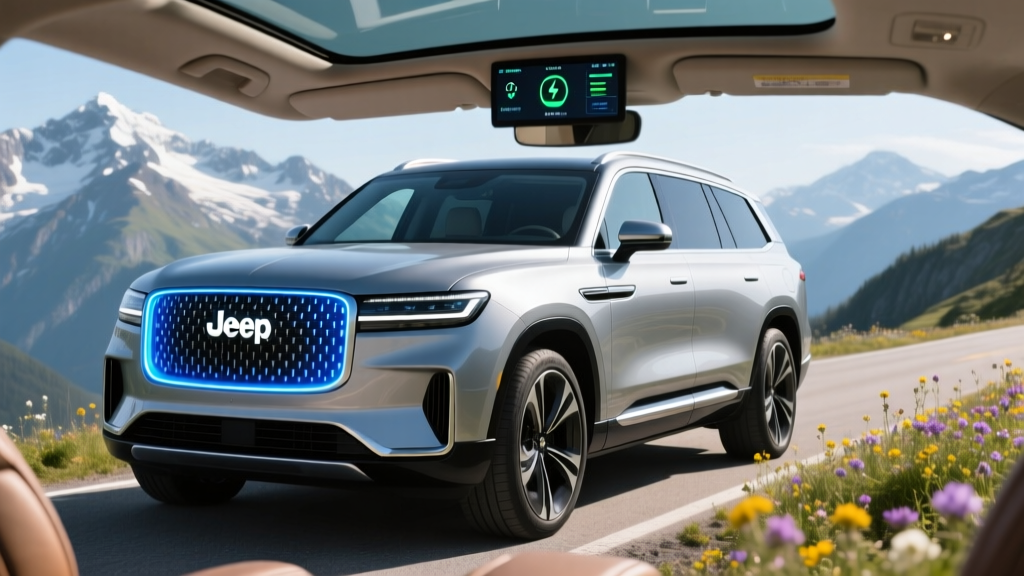
The Grand Wagoneer Electric is Jeep's upcoming all-electric luxury SUV built on the STLA Large platform. As of early 2026, it remains announced but not yet available for purchase. Stellantis has confirmed the nameplate and platform but has not released final EPA range, pricing, or delivery timelines. Based on platform targets, expect an EPA range in the 300–350 mile ballpark, 800V-class architecture supporting DC fast charging above 200 kW peak, and a starting MSRP likely between $70,000–$85,000 before incentives. If you need a full-size three-row electric luxury SUV today, the Rivian R1S, Kia EV9, or Tesla Model X are available now. If you're loyal to Jeep heritage and can wait, the Grand Wagoneer Electric could be worth monitoring — but treat all current specs as preliminary.
What We Know About the Grand Wagoneer Electric So Far
Stellantis unveiled the Recon concept in 2022 and confirmed that the Grand Wagoneer nameplate would eventually transition to an all-electric powertrain using the STLA Large platform. This skateboard architecture underpins several upcoming Stellantis products and is designed for vehicles ranging from midsize crossovers to full-size SUVs. The platform supports both rear-wheel-drive and all-wheel-drive configurations, battery capacities likely ranging from roughly 85 kWh to over 115 kWh usable, and 800V nominal electrical architecture for rapid DC charging.
What the Grand Wagoneer Electric specifically brings to the table is the brand's flagship luxury positioning: three rows of seating, premium materials, advanced air suspension, and Jeep's trademark off-road capability — now delivered with electric torque and zero tailpipe emissions. The current gas-powered Grand Wagoneer (with its 3.0L Hurricane inline-six twin-turbo) already commands prices north of $90,000 in Obsidian and High Altitude trims, so the electric variant will occupy the same premium tier.
However, Stellantis has been cautious about timelines. The company has faced production delays across its EV portfolio, and as of this writing, final specifications — including exact battery chemistry, usable kWh, EPA-certified range, and horsepower figures — have not been published. Everything below is based on platform capabilities and informed industry estimates, clearly labeled as such.
Preliminary Specs: Range, Battery, and Charging Estimates
Because the STLA Large platform has been described by Stellantis as supporting up to 500 miles of range in optimized configurations (likely sedans or lighter vehicles), a heavy, boxy, three-row luxury SUV will fall well short of that ceiling. Here's what we project based on comparable full-size electric SUVs:
| Attribute | Estimated Figure | Comparable Benchmark |
|---|---|---|
| EPA Range | ~300–350 miles | Rivian R1S Dual-Motor: 352 mi (EPA) |
| Battery (Usable) | ~100–115 kWh | Rivian R1S Max Pack: 141 kWh usable |
| Chemistry | Likely NMC (energy-dense) | Most large premium EVs use NMC/NCA |
| Peak DC Fast Charge | ~200–250 kW (800V) | Hyundai Ioniq 9: ~210 kW peak |
| 10–80% DC Charge Time | ~22–28 minutes (est.) | Kia EV9 GT-Line AWD: ~24 min |
| Level 2 AC Charge Rate | ~11–19.2 kW | Typical for large-platform EVs |
| Horsepower | ~400–600 hp (AWD est.) | Gas Grand Wagoneer: 510 hp (Hurricane I6 TT) |
| 0–60 mph | ~4.5–5.5 seconds (est.) | Gas Grand Wagoneer: ~5.0 sec |
| Towing Capacity | ~6,000–7,500 lbs (est.) | Rivian R1S: 7,700 lbs |
| Starting MSRP | ~$70,000–$85,000 | Gas Grand Wagoneer base: ~$91,995 (2025) |
Real-World Range Reality Check
Even if the Grand Wagoneer Electric achieves a 340-mile EPA sticker, plan for ~250–280 miles of real-world highway range at 70+ mph in moderate temperatures. In sub-freezing winter conditions, expect a further 20–30% reduction, bringing usable range down to ~200–230 miles before you need to find a charger. A boxy, heavy luxury SUV with large frontal area is inherently less efficient than a sleek sedan — this is physics, not a flaw.
Grand Wagoneer Electric vs. Gas Grand Wagoneer: Cost Comparison
The current gas-powered Grand Wagoneer with the Hurricane twin-turbo inline-six delivers roughly 14 city / 19 highway / 16 combined MPG (source: fueleconomy.gov). At $3.40/gallon for premium (required), fueling costs add up fast. Here's how the economics stack up over five years and 75,000 miles:
| Cost Category | Gas Grand Wagoneer (~$92K) | Grand Wagoneer Electric (~$80K est.) |
|---|---|---|
| Purchase Price | $91,995 | $80,000 (est.) |
| Federal Tax Credit (§30D) | $0 | Up to $7,500 (if eligible*) |
| Fuel / Energy (75K mi) | $15,938 (16 MPG, $3.40/gal premium) | $5,250 (home L2 at $0.14/kWh, ~3 mi/kWh) |
| Maintenance (5 yr) | ~$4,500 (oil, filters, plugs, brakes) | ~$1,800 (cabin filter, wipers, tire rotation, brake fluid) |
| Insurance (5 yr avg.) | ~$14,000 | ~$15,500 (EVs typically 10–15% higher) |
| Estimated Total (5 yr) | ~$126,433 | ~$95,050 (est.) |
*Federal §30D tax credit eligibility for 2026 depends on MSRP caps (SUVs capped at $80,000), buyer income limits ($300K joint / $150K single AGI), and battery critical-mineral and component sourcing requirements. The credit can be transferred to the dealer at point of sale. Rules are subject to legislative change. Always verify current eligibility at IRS.gov and consult a tax professional.
Charging at Home: What Grand Wagoneer Electric Owners Will Need
Charging a 100+ kWh battery at home is the backbone of EV ownership — and for a vehicle this size, Level 1 (120V) charging is effectively useless. At 1.4 kW, adding range to a depleted battery would take over 70 hours. You need a proper Level 2 setup.
| Charging Level | Power (kW) | Miles of Range Added per Hour | Full Charge Time (10–100%) |
|---|---|---|---|
| Level 1 (120V / 12A) | ~1.4 kW | ~3–4 mi/hr | ~78 hours |
| Level 2 (240V / 48A) | ~11.5 kW | ~30–34 mi/hr | ~9–10 hours |
| Level 2 (240V / 80A) | ~19.2 kW | ~50–57 mi/hr | ~5.5–6 hours |
| DC Fast Charge (200 kW peak) | ~200 kW | ~500+ mi/hr (peak) | 10–80% in ~25 min |
For most owners, a 48-amp Level 2 home charger (hardwired, on a 60-amp breaker) is the sweet spot. It'll replenish a full day's driving overnight. Expect installation costs of $800–$2,500 depending on your electrical panel's capacity and the run distance from panel to garage. If your home has a 100-amp main panel, you may need a $1,500–$3,000 panel upgrade to 200 amps before adding a high-amperage EV circuit. Always hire a licensed electrician and pull a permit.
Common Misconceptions About the Grand Wagoneer Electric
| Myth | Fact |
|---|---|
| "It'll tow just like the gas Grand Wagoneer." | Electric SUVs can tow, but towing cuts range by 40–60%. A 340-mile range drops to ~150–200 miles while towing a 6,000-lb trailer at highway speed. |
| "It qualifies for the full $7,500 tax credit." | Not guaranteed. The §30D credit requires meeting MSRP caps, buyer income limits, and battery sourcing rules. If the SUV MSRP exceeds $80,000 or critical-mineral requirements aren't met, the credit may be reduced or unavailable. |
| "Electric means no maintenance." | Tires wear faster on heavy EVs (often 20–30% quicker due to torque and weight). Cabin filters, wiper fluid, brake fluid, and coolant still need periodic service. But you eliminate oil changes, spark plugs, and transmission fluid. |
| "I can charge it on a regular outlet." | Technically yes, but at 1.4 kW it would take over 3 days to fully charge a ~110 kWh battery. Level 2 home charging is essentially mandatory for practical daily ownership. |
| "It's self-driving with Jeep's ADAS." | Any driver-assist system (likely an advanced version of Stellantis' Active Driving Assist) will be SAE Level 2 — meaning the driver must remain fully engaged, hands on or near the wheel, eyes on the road. It is not autonomous. |
First-Time EV Buyer: What to Know Before Committing
If the Grand Wagoneer Electric would be your first EV, several ownership realities deserve honest consideration:
- Home charging is non-negotiable for convenience. Relying solely on public DC fast charging is possible but adds significant time and cost. Public fast-charging rates average $0.35–$0.50/kWh, making it nearly as expensive as gasoline per mile for a heavy SUV. Confirm you can install a Level 2 charger before buying.
- Cold weather is real. If you live in the upper Midwest, Northeast, or Mountain West, plan for 20–30% range loss in sustained sub-32°F weather. Battery preconditioning helps but doesn't eliminate the physics of lithium-ion chemistry in the cold.
- Insurance will likely cost more. EVs carry higher repair costs (specialized parts, battery-adjacent damage protocols), and insurers price this in. Budget 10–15% more than you'd pay for the gas equivalent.
- Depreciation is still uncertain. EV resale values have been volatile. Luxury EVs in particular can depreciate steeply. The gas Grand Wagoneer already suffers from steep luxury-SUV depreciation; the electric variant may follow a similar pattern until the market stabilizes.
- Road trips require planning. With an estimated 250–280 miles of real-world highway range, you'll stop every 3–3.5 hours for 20–30 minutes on long trips. The 800V architecture should make these stops quick, but charging-desert gaps remain on some interstate corridors.
ADAS Note: Driver-Assist, Not Self-Driving
Expect the Grand Wagoneer Electric to feature Stellantis' latest Active Driving Assist system with hands-on-wheel or hands-off (eyes-on) capability on mapped highways. This is SAE Level 2 automation. You remain the driver and are legally responsible for the vehicle at all times. It does not navigate unmapped roads, handle construction zones autonomously, or replace attentive driving.
Decision Framework: Is the Grand Wagoneer Electric Right for You?
Choose the Grand Wagoneer Electric (when available) if:
- You want a full-size three-row luxury SUV with genuine off-road capability and Jeep brand heritage
- You have reliable home Level 2 charging access
- Your daily commute is under 100 miles round-trip (covering 90%+ of driving on battery alone)
- You value instant electric torque and quiet operation over the Hurricane I6's engine note
- You're willing to wait for production and delivery — likely late 2026 or 2027
Consider an alternative available now if:
- You need a vehicle immediately — the Grand Wagoneer Electric is not yet on sale
- You regularly tow heavy trailers long distances (range loss makes this impractical for most EVs)
- You lack home charging access and your area has sparse public charging infrastructure
- You want a proven track record — Rivian R1S and Kia EV9 have real-world ownership data today
- Your budget is under $65,000 — this vehicle will be firmly in the $70K+ luxury tier
Frequently Asked Questions
When will the Grand Wagoneer Electric be available to buy?
Stellantis has not confirmed an exact sale date. Industry estimates point to a reveal in late 2025 or 2026 with deliveries potentially beginning in late 2026 or 2027. Treat any date as preliminary until the company officially opens orders.
Will the Grand Wagoneer Electric qualify for the $7,500 federal tax credit?
It depends on final MSRP, battery sourcing, and your income. The §30D credit for 2026 caps SUVs at $80,000 MSRP and buyer AGI at $300,000 (joint) or $150,000 (single). Battery critical-mineral and component sourcing must also meet phased-in thresholds. Verify at IRS.gov closer to launch.
What battery chemistry will it use?
Stellantis has not confirmed chemistry for this specific model. Given the vehicle's size, weight, and range targets, an NMC (nickel-manganese-cobalt) chemistry is most likely for its higher energy density. LFP (lithium iron phosphate) is possible for a base trim with lower range, but NMC is the norm for premium long-range applications. NMC offers more range per pound but degrades slightly faster than LFP over thousands of cycles.
Can it handle off-road trails like a gas Jeep?
Stellantis has positioned the electric Grand Wagoneer as Trail Rated-capable, with features like selectable terrain modes, air suspension for ground clearance adjustment, and precise low-speed torque control that EVs excel at. However, remote trail use means limited charging access — plan carefully and understand that rock crawling and deep sand are energy-intensive.
How does it compare to the Rivian R1S?
The Rivian R1S is the closest current competitor: three rows, strong off-road capability, and up to 410 miles of EPA range (Max Pack). The R1S starts around $75,900 and has an established service and charging ecosystem. The Grand Wagoneer Electric will likely compete on luxury interior quality and brand cachet rather than outright range or performance. Wait for side-by-side reviews once both are available.