Wall Street analysts don't usually shape EV shopping lists, but the Goldman Sachs Tesla Q3 estimate matters to buyers for one reason: it telegraphs where pricing, incentives, and trim availability are heading before Tesla officially reports. In Q3 2025, Goldman projected Tesla deliveries near 460,000 vehicles globally, with Model Y continuing to carry the bulk of U.S. volume. For 2026, that forecast translates into a mid-cycle refresh lineup, aggressive lease offers, and continued eligibility questions around the federal §30D tax credit.
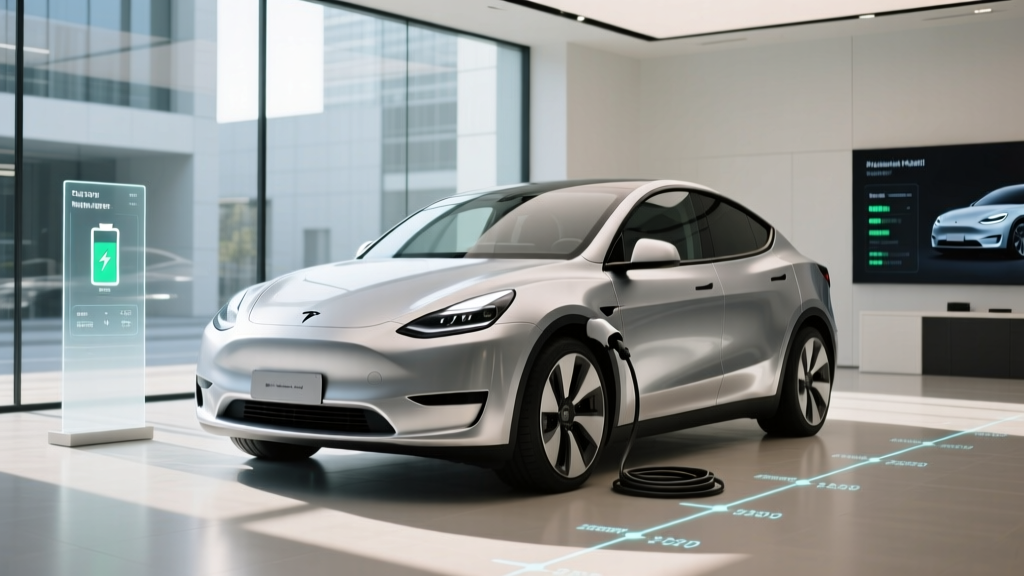
Below, we separate the analyst narrative from what actually matters in the driveway: the 2026 Tesla Model Y's real-world range, charging speeds, interior space, and total cost after credits.
What the Goldman Sachs Tesla Q3 Estimate Actually Says
Goldman's Q3 delivery estimate focused on Tesla's ability to sustain volume despite rising competition from the Hyundai Ioniq 5, Ford Mustang Mach-E, and a wave of new Chinese-market EVs. The bank highlighted two buyer-relevant takeaways:
- Pricing pressure is real. Tesla has held Model Y base MSRPs relatively flat year-over-year while adding features, a signal that lease and inventory incentives will continue into 2026.
- Mix shift toward Long Range AWD. Goldman noted stronger attach rates on higher-margin trims, which matters because only certain configurations clear the §30D MSRP cap for the federal credit.
For shoppers, the implication is clear: negotiate on inventory, watch lease money factors, and verify credit eligibility at the point of sale rather than assuming the sticker qualifies.
2026 Tesla Model Y: Range, Battery, and Real-World Efficiency
The 2026 Model Y continues on two battery architectures. The Long Range AWD uses a ~75 kWh usable NMC (nickel-manganese-cobalt) pack, while the Standard Range RWD has shifted to a ~60 kWh LFP (lithium iron phosphate) battery in most markets.
- Long Range AWD: EPA 320 miles. Expect ~270–290 miles on highway road trips at 75 mph; ~220–240 miles in sub-30°F winter conditions.
- Standard Range RWD: EPA 260 miles. Expect ~220–235 miles highway; ~180–200 miles in cold weather.
- Efficiency: Long Range rates at 122 MPGe combined / 28 kWh per 100 miles (EPA). Real-world highway driving often lands closer to 30–32 kWh/100 mi.
LFP chemistry in the Standard Range trim trades energy density for longevity and the ability to charge routinely to 100% without accelerated degradation — a meaningful advantage for daily commuters who can install a Level 2 home charger. NMC in the Long Range offers more range per pound but benefits from an 80% daily charge limit for long-term health.
| Spec | Long Range AWD | Standard Range RWD |
|---|---|---|
| EPA Range | 320 miles | 260 miles |
| Battery (usable) | ~75 kWh (NMC) | ~60 kWh (LFP) |
| Drivetrain | Dual-motor AWD | Single-motor RWD |
| Horsepower | 384 hp | 295 hp |
| 0–60 mph | 4.8 seconds | 6.6 seconds |
| MPGe (combined) | 122 MPGe | 119 MPGe |
| Cargo (rear seats up) | 30.2 cu ft | 30.2 cu ft |
| Cargo (seats folded) | 72.1 cu ft | 72.1 cu ft |
| Rear Legroom | 38.7 inches | 38.7 inches |
Charging Speed: DC Fast Charge and Home Level 2
Charging remains a Model Y strength, particularly for buyers with Supercharger access. The 2026 Long Range AWD peaks at approximately 250 kW on V3 Superchargers and CCS-equipped public networks (via the NACS adapter now standard on non-Tesla networks).
| Charging Level | Rate | Time / Miles Added |
|---|---|---|
| Level 1 (120V, 12A) | ~1.4 kW | ~4 miles per hour |
| Level 2 (240V, 48A) | 11.5 kW | ~44 miles per hour |
| DC Fast (V3 Supercharger) | Peak 250 kW | 10–80% in ~25 minutes (Long Range) |
| DC Fast (50 kW public) | 50 kW | 10–80% in ~55 minutes |
A critical ownership note: the charge curve tapers hard above 80%. The 250 kW peak is sustained roughly from 10% to 45% SoC; above 60% you'll see rates drop below 100 kW. Plan road-trip stops to 80% and move on — the last 20% can take as long as the first 70%.
Pricing, Trims, and the Federal Tax Credit Math
As of early 2026, Tesla lists the Model Y Long Range AWD starting near $47,990 (including destination), with the Standard Range RWD around $43,990. Performance trims push past $54,000.
| Trim | Base MSRP | §30D Credit | Effective Price |
|---|---|---|---|
| Standard Range RWD | $43,990 | Up to $7,500* | ~$36,490 |
| Long Range AWD | $47,990 | Up to $7,500* | ~$40,490 |
| Performance AWD | $54,490 | Up to $7,500* | ~$46,990 |
*Under IRS §30D rules, the 2026 credit depends on three moving targets: (1) the SUV MSRP cap of $80,000 (all trims clear this), (2) buyer income limits ($150,000 single / $300,000 joint MAGI), and (3) battery-component and critical-mineral sourcing requirements that shift annually. Tesla has generally qualified for at least a partial credit, but the exact amount — $3,750 or $7,500 — must be confirmed at point of sale via the IRS energy-credit portal. Always verify with a tax professional before signing.
Interior, Tech, and Driver Assistance
The refreshed Model Y interior adds ventilated front seats, ambient lighting, and a rear-seat touchscreen — addressing the most common complaints from 2023–2024 owners. The 15.4-inch front touchscreen runs Tesla's current UI with integrated navigation, streaming, and a phone-as-key system that remains the segment benchmark.
Autopilot (basic) is standard and includes adaptive cruise, lane centering, and automatic emergency braking. Full Self-Driving (Supervised) remains a $8,000 option or $99/month subscription.
Warranty and Long-Term Ownership
Tesla covers the Model Y with a 4-year/50,000-mile basic warranty and an 8-year/120,000-mile battery and drive-unit warranty. The battery warranty guarantees at least 70% capacity retention over that period. Real-world data from Tesla's fleet reports average degradation of roughly 12–15% over 200,000 miles for NMC packs, and somewhat better retention for LFP.
Insurance remains a budget line item: average Model Y premiums run 20–35% higher than comparable ICE crossovers, per insurer data. Offset this with home-charging savings — at the U.S. average electricity rate of $0.16/kWh, a Long Range Model Y costs roughly $4.50 per 100 miles to fuel, versus $12–$15 for a 25-MPG gas crossover.
- Best-in-class Supercharger network access
- Strong efficiency (28 kWh/100 mi EPA)
- Class-leading cargo volume (72.1 cu ft)
- OTA updates add features post-purchase
- LFP option for daily 100% charging
- Ride quality still firm on rough pavement
- No Apple CarPlay / Android Auto
- Insurance costs above segment average
- Visibility compromised by sloping roofline
- FSD subscription cost adds up over time
Model Y vs. the Competition: Is It Still the Default?
The 2026 Model Y competes against a refreshed Hyundai Ioniq 5 (310 miles EPA, 800V charging), Ford Mustang Mach-E (320 miles extended-range), and the Kia EV6. Where the Model Y still wins is the Supercharger ecosystem and efficiency. Where it loses: the Ioniq 5 charges faster on non-Tesla networks (10–80% in ~18 minutes at 350 kW stations), and the Mach-E offers a more traditional crossover driving feel.
The Goldman Sachs Tesla Q3 estimate essentially confirms that Tesla is defending volume through pricing discipline rather than dramatic hardware changes. If you already have home Level 2 charging and live near Superchargers, the Model Y remains the lowest-friction EV ownership experience in 2026. If public charging is your primary use case, the Ioniq 5's 800V architecture is worth cross-shopping.
Who Should Buy the 2026 Model Y?
- Commuters with home charging: LFP Standard Range is ideal — charge to 100% nightly, low degradation.
- Families needing cargo space: 72 cu ft with seats folded beats every competitor.
- Road-trippers on Supercharger corridors: Long Range AWD plus V3 chargers = minimal stop time.
- Not ideal for: Buyers in rural charging deserts, or those who demand CarPlay integration.
Frequently Asked Questions
What is the real-world range of the 2026 Model Y?
EPA rates the Long Range AWD at 320 miles and Standard Range RWD at 260 miles. Real-world highway driving at 75 mph typically yields 270–290 miles (Long Range) and 220–235 miles (Standard Range). Cold weather below 30°F can reduce range 20–30%.
How fast does the Model Y charge at home and on the road?
Home Level 2 at 48 amps / 11.5 kW adds roughly 44 miles per hour, fully replenishing overnight. DC fast charging peaks at 250 kW on V3 Superchargers, achieving 10–80% in about 25 minutes for the Long Range. Expect tapering above 80% SoC.
Does the 2026 Model Y qualify for the federal EV tax credit?
All trims fall under the $80,000 SUV MSRP cap. Buyer income must be under $150,000 (single) or $300,000 (joint) MAGI. Battery sourcing requirements determine whether the credit is $3,750 or $7,500 — verify at point of sale via the IRS §30D portal.
Is the Model Y still worth buying over the Ioniq 5 or Mach-E?
For Supercharger-dependent buyers and those prioritizing efficiency and cargo space, yes. For buyers who rely on Electrify America or third-party DC networks, the Ioniq 5's 800V charging architecture delivers faster real-world stops.
What is the battery warranty?
Tesla covers the battery and drive unit for 8 years / 120,000 miles with a 70% capacity-retention guarantee. Fleet data suggests most packs retain 85%+ capacity at that mileage.
Sources: EPA Fuel Economy – 2026 Tesla Model Y, IRS Clean Vehicle Credits (§30D), Tesla.com official specifications.