Quick Verdict: The Sierra EV Delivers Range and Refinement, at a Premium
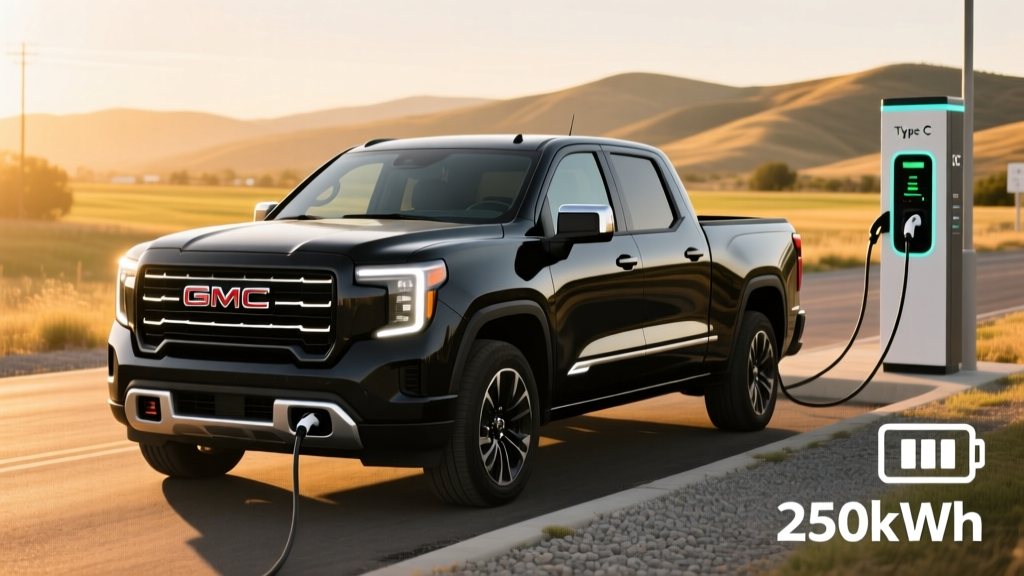
The 2026 GMC Sierra EV truck is General Motors' flagship electric pickup, built on the Ultium platform and targeting buyers who want maximum range, premium comfort, and serious capability without burning a drop of gasoline. With an EPA-estimated 440 miles on the Denali Edition 1 and a more accessible Elevation trim joining the lineup, GMC is positioning the Sierra EV as both a luxury cruiser and a work-capable hauler. But does it justify its starting price, and how does it perform once you leave the spec sheet behind?
After analyzing the data, driving impressions, and ownership economics, here's what matters most for prospective buyers.
| Spec | Elevation (Extended Range) | Denali Edition 1 |
|---|---|---|
| EPA Range | ~390 mi (est.) | 440 mi |
| Battery (usable) | ~200 kWh (NMC, est.) | ~200+ kWh (NMC) |
| Drivetrain | Dual-Motor AWD (e4) | Dual-Motor AWD (e4) |
| Horsepower | ~665 hp (Max Power mode) | ~754 hp (Max Power mode) |
| 0–60 mph | ~4.7 sec (est.) | ~4.5 sec |
| Max DC Charge Rate | 350 kW | 350 kW |
| 10–80% DC Fast Charge | ~28 min (est.) | ~28 min |
| Level 2 Home Charging | 19.2 kW (~56 mi/hr) | 19.2 kW (~56 mi/hr) |
| Towing Capacity | 10,000 lbs (up to 12,000 available) | 10,000 lbs (up to 12,000 available) |
| Base MSRP | ~$57,000 (est.) | $99,495 |
| Battery Warranty | 8 yr / 100,000 mi | 8 yr / 100,000 mi |
Range and Efficiency: EPA Numbers Meet Reality
The headline figure is 440 miles EPA for the Denali Edition 1, making the Sierra EV one of the longest-range electric vehicles on sale in any body style. The Elevation Extended Range targets approximately 390 miles. Both figures are remarkable for a full-size crew-cab pickup.
EPA 440 mi (Denali) / ~390 mi (Elevation). Expect approximately 350–380 miles on mixed highway driving at 70 mph in mild weather. In cold weather (below 32°F), plan for a 15–25% reduction, bringing effective range to roughly 275–330 miles depending on conditions and use of cabin heat. Highway-only efficiency at sustained 80 mph will fall short of the combined EPA figure. The Sierra EV's massive battery helps buffer these losses better than smaller-pack EVs, but physics still applies to a 9,000+ lb truck.
Efficiency lands around 62 MPGe combined (EPA est. for Denali), or roughly 54 kWh/100 miles. That's thirsty by EV sedan standards but competitive for an electric truck of this mass and frontal area. The Ford F-150 Lightning Extended Range sits in a similar efficiency band, while the Rivian R1T with its smaller pack trades range for lighter weight.
Charging: 350 kW Peak, but Mind the Curve
The Sierra EV supports up to 350 kW DC fast charging on compatible 800V-class chargers (Electrify America, select EVgo stations). GMC estimates a 10–80% session takes approximately 28 minutes under ideal conditions. However, that peak rate is not sustained across the entire curve.
| Charging Level | Power / Rate | Miles Added | Notes |
|---|---|---|---|
| Level 1 (120V) | 1.4 kW | ~4 mi/hr | Emergency/trickle only |
| Level 2 (240V, 48A) | 11.5 kW | ~33 mi/hr | Standard home charger |
| Level 2 (240V, 80A) | 19.2 kW | ~56 mi/hr | Requires hardwired 100A circuit |
| DC Fast (150 kW station) | ~150 kW peak | ~190 mi in 30 min | Common at older stations |
| DC Fast (350 kW station) | Up to 350 kW | ~270 mi in 28 min (10–80%) | Requires preconditioning |
Charging curve reality: The Sierra EV will sustain its highest charge rates between roughly 10–40% State of Charge. Above 60%, the rate tapers significantly to protect battery longevity. Above 80%, charging slows dramatically — expect the final 80–100% to take nearly as long as the 10–80% session. For road trips, plan stops to 80% and keep moving.
At home, the Sierra EV's 19.2 kW onboard charger is a major advantage. A full overnight session (10 hours at 19.2 kW) adds roughly 560 miles of range — more than a full recharge. This requires a hardwired Wall Connector or equivalent on a 100-amp dedicated circuit. Most homes will need a panel upgrade; budget $2,000–$4,000 for the electrician work depending on your existing panel capacity. At the more common 11.5 kW (48A on a 60A circuit), expect ~330 miles overnight — still sufficient for daily needs.
The Sierra EV uses the NACS (Tesla-style) charge port natively for 2026, giving direct access to Tesla Superchargers with V4 cabinets (which support non-Tesla vehicles) as well as CCS networks via the NACS standard adoption across the industry.
Performance and Capability
The dual-motor e4 all-wheel-drive system delivers serious performance. In Max Power mode (available on Denali), the Sierra EV produces up to 754 horsepower and 785 lb-ft of torque, launching to 60 mph in approximately 4.5 seconds. That's sports-sedan acceleration in a truck that weighs over four tons.
The Elevation trim delivers approximately 665 hp in its top mode, with a 0–60 time estimated around 4.7 seconds. Both trims feature GM's Adaptive Air Ride suspension, which can lower the truck for highway efficiency or raise it for ground clearance on rough terrain.
Towing and payload: Maximum towing capacity is rated at 10,000 pounds (with up to 12,000 lbs available on properly equipped configurations). The 5'11" bed with the available MultiPro MidGate can extend to nearly 9 feet with the tailgate down and midgate folded, swallowing items like kayaks or lumber that would require a long-bed conventional truck. Payload sits around 1,800 lbs depending on configuration.
One critical towing note: expect range to drop by 40–55% when towing a heavy trailer at highway speeds. A 440-mile truck becomes a 200–250-mile truck with a loaded 7,000 lb trailer in tow. This is common to all electric trucks and is driven by aerodynamic drag and mass — plan charging stops accordingly.
Pricing, Trims, and Tax Credit Eligibility
The 2026 Sierra EV lineup spans from the accessible Elevation to the ultra-premium Denali Edition 1:
| Trim | Base MSRP | §30D Credit Eligibility | Est. Net Price |
|---|---|---|---|
| Elevation (Extended Range) | ~$57,000 | Eligible (below $80K truck cap) | ~$49,500 (if full $7,500 applies) |
| AT4 (if available) | TBD | Eligible (below $80K truck cap) | Varies |
| Denali Edition 1 | $99,495 | NOT eligible (exceeds $80K truck MSRP cap) | $99,495 |
- MSRP Cap: Trucks, SUVs, and vans must have an MSRP at or below $80,000 to qualify. The Denali Edition 1 at $99,495 does NOT qualify. The Elevation does.
- Buyer Income Cap: Modified AGI must not exceed $150,000 (single), $225,000 (head of household), or $300,000 (joint filers).
- Battery Sourcing: The full $7,500 requires meeting both critical-minerals and battery-component sourcing requirements set by the IRS. Partial credit ($3,750) may apply if only one requirement is met. Verify current-year compliance on irs.gov.
- Point-of-Sale Transfer: Buyers can transfer the credit to the dealer at purchase, reducing the purchase price directly rather than waiting for a tax refund.
Consult a tax professional before purchase. Rules are subject to change. Source: IRS Clean Vehicle Credits.
Interior, Tech, and Daily Livability
The Sierra EV's cabin is where GMC's premium aspirations are most visible. The Denali Edition 1 features a portrait-oriented 16.8-inch infotainment touchscreen paired with an 11-inch digital instrument cluster and a 14.9-inch passenger display. Wireless Apple CarPlay and Android Auto are standard, and the Google Built-in infotainment system integrates Maps, Assistant, and the Play Store directly.
Interior space is generous. Rear-seat legroom measures approximately 44.2 inches — competitive with the largest crew-cab trucks. The flat floor (no transmission tunnel) makes the middle rear seat genuinely usable for adults. Cargo volume behind the rear seats is approximately 42 cu ft, expanding with the 60/40 split-folding rear bench.
The MultiPro MidGate is the Sierra EV's party trick. By folding down the partition between the bed and cabin (with the rear window retracted), you gain a pass-through that extends the effective load floor to over 9 feet. This is ideal for long cargo like lumber, ladders, or camping gear while still keeping items partially enclosed.
Driver assistance: GMC offers Super Cruise on the Sierra EV — GM's hands-free driving system for compatible divided highways. This is a SAE Level 2 system: it controls steering, acceleration, and braking on mapped roads, but the driver must remain attentive and ready to take over. A driver-monitoring camera ensures eyes are on the road. Super Cruise covers over 750,000 miles of compatible roads in North America. It is not autonomous driving — think of it as an advanced, hands-free cruise control for long highway stretches.
Notable drawbacks: The Sierra EV's sheer size (over 233 inches long) makes parking lots and tight urban streets challenging. Visibility is aided by camera systems but the bulk is undeniable. The Denali's near-$100K price pushes it into luxury territory where buyers may also cross-shop the Tesla Cybertruck, Rivian R1T, or even the Cadillac Escalade IQ. And while the MultiPro tailgate is clever, its multiple configurations have a learning curve.
Sierra EV vs. the Competition
The electric truck segment is stacked. Here's how the Sierra EV stacks up against its most direct rivals:
| Spec | GMC Sierra EV Denali | Ford F-150 Lightning Ext. Range | Rivian R1T Dual Max | Tesla Cybertruck AWD |
|---|---|---|---|---|
| EPA Range | 440 mi | 320 mi | ~410 mi | 340 mi |
| Battery | ~200+ kWh NMC | 131 kWh NMC | 149 kWh NMC | ~123 kWh (est.) |
| Max DC Charge | 350 kW | 150 kW | ~220 kW | 250 kW |
| 0–60 mph | ~4.5 sec | ~5.0 sec | ~3.5 sec | ~4.1 sec |
| Starting MSRP | $99,495 (Denali) | ~$62,000 | ~$87,000 | ~$81,000 |
| Towing | 10,000 lbs | 10,000 lbs | 11,000 lbs | 11,000 lbs |
The Sierra EV's advantage is clear: range dominance. At 440 miles, it outdistances every competitor by a significant margin, reducing charging stops on road trips and easing range anxiety. Its 350 kW charge capability also leads the pack.
However, the Ford F-150 Lightning remains the value leader, offering practical truck capability at a significantly lower entry price and qualifying for the full federal credit on eligible trims. The Rivian R1T offers superior off-road capability and a more adventure-focused design with its quad-motor option. The Cybertruck brings polarizing design and Tesla's Supercharger network but trails in range and interior refinement.
Warranty, Ownership Costs, and Longevity
GMC backs the Sierra EV's battery and drive unit with an 8-year / 100,000-mile warranty, with a capacity retention threshold of 60% (meaning GMC will repair or replace the battery if it degrades below 60% of original capacity within the warranty period). The vehicle limited warranty covers 3 years / 36,000 miles bumper-to-bumper, with 5 years / 60,000 miles on the powertrain.
For context, GM's Ultium battery chemistry (NMC-based) is expected to show moderate degradation of roughly 8–12% over the first 100,000 miles based on early fleet data and similar-platform vehicles like the Hummer EV. The large battery pack actually works in the Sierra EV's favor: because the truck uses a smaller percentage of total capacity for daily driving, the battery undergoes fewer full charge cycles, which can extend longevity.
Running costs: At the national average electricity rate of $0.17/kWh and the Sierra EV's ~54 kWh/100mi efficiency, fuel cost works out to roughly $0.09 per mile (home charging). Compare this to a gas Sierra 1500 at 19 MPG combined and $3.50/gallon: ~$0.18 per mile. Over 15,000 miles annually, that's approximately $1,350/year in electricity vs. $2,700/year in gasoline — a savings of $1,350/year before factoring in reduced maintenance (no oil changes, fewer brake replacements due to regen braking).
Insurance premiums for the Sierra EV, particularly the Denali, will be higher than a gas Sierra. Expect $2,500–$3,500/year depending on your profile and state, driven by the vehicle's high replacement cost and repair complexity for the battery and advanced electronics.
- Class-leading 440-mile EPA range eliminates most road-trip charging anxiety
- 350 kW DC fast charging is among the fastest in any electric truck
- 19.2 kW Level 2 onboard charger enables rapid home charging
- MultiPro MidGate provides unique cargo flexibility
- Super Cruise hands-free driving for long highway commutes
- Premium, quiet cabin with massive screens and Google Built-in
- Strong towing capacity (up to 12,000 lbs available)
- Denali Edition 1 at $99,495 does not qualify for the $7,500 federal tax credit
- Real-world range drops significantly when towing (40–55% loss)
- Massive footprint makes urban driving and parking difficult
- Home charging at 19.2 kW likely requires a $2,000–$4,000 electrical panel upgrade
- Efficiency of ~54 kWh/100mi means high electricity consumption vs. smaller EVs
- Denali pricing overlaps with luxury SUVs and the Rivian R1T
Who Should Buy the Sierra EV?
- You need maximum range in an electric truck and regularly drive 300+ miles between charges
- You have home charging access (ideally with panel capacity for a 19.2 kW charger)
- You want a premium, quiet daily driver that can also tow a boat or trailer on weekends
- Long highway commutes make Super Cruise hands-free driving a daily benefit
- Budget allows for a $60K–$100K truck purchase
- You need a sub-$50K electric truck (consider the Ford F-150 Lightning or Chevrolet Silverado EV lower trims)
- Your primary use case is off-roading (the Rivian R1T is more capable on trails)
- You tow heavy loads long-distance frequently (diesel still wins for 500-mile towing runs with no charging infrastructure)
- You lack reliable home or workplace charging access
Frequently Asked Questions
What is the real-world range of the GMC Sierra EV?
The Denali Edition 1 carries a 440-mile EPA estimate. In real-world mixed highway driving at 70 mph in moderate temperatures, expect approximately 350–380 miles. In cold weather below freezing, plan for 275–330 miles depending on cabin heat usage and driving speed. When towing a heavy trailer, range can drop to 200–250 miles.
How fast does the Sierra EV charge at home and on the road?
On a 350 kW DC fast charger with preconditioning, the Sierra EV can charge from 10–80% in approximately 28 minutes. At home on a 19.2 kW Level 2 charger (hardwired, 100A circuit), it adds about 56 miles of range per hour, fully recharging overnight. On a standard 48A Level 2 (11.5 kW), expect about 33 miles per hour.
Does the GMC Sierra EV qualify for the federal EV tax credit?
The Elevation trim (estimated ~$57,000 MSRP) should qualify for up to $7,500 under IRS §30D, provided the buyer meets income caps ($300K joint / $150K single) and the battery meets critical-mineral and component sourcing requirements. The Denali Edition 1 at $99,495 does NOT qualify because it exceeds the $80,000 MSRP cap for trucks. Always verify current rules at irs.gov and consult a tax professional.
Is the Sierra EV worth buying over the F-150 Lightning or Rivian R1T?
If range is your top priority, the Sierra EV's 440-mile EPA figure is unmatched. The F-150 Lightning offers better value at lower trims and qualifies for the tax credit, but tops out around 320 miles. The Rivian R1T excels at off-road capability and adventure use but costs more and has a smaller charging network. Your decision should hinge on budget, use case, and which compromises you're willing to accept.
How long will the Sierra EV battery last?
GM's Ultium NMC battery is warrantied for 8 years / 100,000 miles at 60% capacity retention. Based on similar Ultium-platform vehicles and industry data, expect roughly 8–12% degradation over 100,000 miles. The Sierra EV's very large battery means daily driving uses a shallow cycle depth, which can help extend overall battery life well beyond the warranty period.
Can I tow with the Sierra EV, and how does it affect range?
Yes — the Sierra EV is rated for up to 10,000 lbs (12,000 lbs on properly equipped configurations). However, towing a heavy trailer at highway speeds typically reduces range by 40–55%. A 440-mile truck may deliver 200–250 miles with a loaded 7,000 lb trailer. Plan charging stops accordingly and use route-planning tools that account for towing.
Sources: EPA Fuel Economy, GMC Sierra EV Official Page, IRS Clean Vehicle Credits.