Quick Answer: Is the GMC Sierra EV Worth It in 2026?
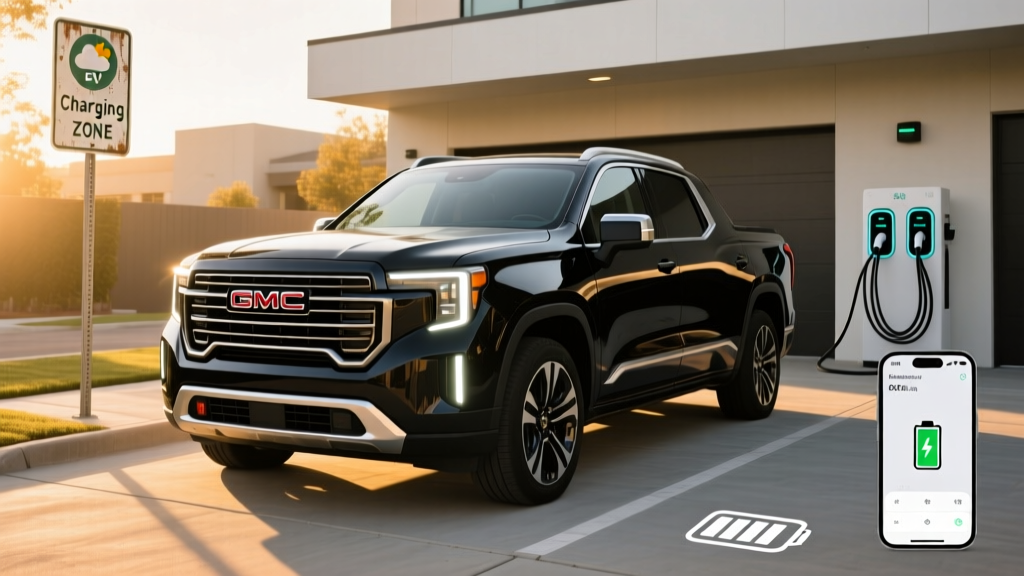
The 2026 GMC Sierra EV delivers 390 to 440 miles of EPA-estimated range depending on trim, charges at up to 350 kW on DC fast chargers (10–80% in roughly 20 minutes), and starts around $57,000 before incentives. It qualifies for the §30D federal tax credit (up to $7,500) on eligible trims for buyers meeting income and sourcing requirements. Compared to a gas Silverado 1500, Sierra EV owners can save $1,500–$2,500 annually on fuel if charging mostly at home, but face higher insurance premiums and a significantly higher purchase price. Best for: truck buyers with reliable Level 2 home charging who want a daily-driver pickup with serious range and towing capability.
2026 GMC Sierra EV: The Core Specs Buyers Need
GM's Ultium-platform electric pickup has matured past its 2024 launch-year growing pains. The 2026 model year brings broader trim availability and incremental software refinements to the battery management and thermal preconditioning systems. Here is what matters for purchase decisions:
| Specification | Elevation (Base) | AT4 | Denali |
|---|---|---|---|
| EPA Range | ~390 mi | ~410 mi | ~440 mi |
| Battery (usable) | ~200 kWh (NMC) | ~200 kWh (NMC) | ~200 kWh (NMC) |
| Horsepower | 510 hp | 625 hp | 754 hp (Denali Edition 1) |
| 0–60 mph | ~5.9 sec | ~4.9 sec | ~4.3 sec |
| Max DC Fast Charge | 350 kW (peak) | 350 kW (peak) | 350 kW (peak) |
| 10–80% DC Charge | ~20 min (preconditioned) | ~20 min | ~20 min |
| Level 2 Home Charge | 19.2 kW (11.5 kW std) | 19.2 kW | 19.2 kW |
| Max Towing | ~9,500 lbs | ~10,000 lbs | ~10,000 lbs |
| Base MSRP | ~$57,000 | ~$72,000 | ~$87,000+ |
| Battery/Powertrain Warranty | 8 yr / 100,000 mi | 8 yr / 100,000 mi | 8 yr / 100,000 mi |
Real-world range caveat: The EPA numbers above assume mixed driving. On sustained highway trips at 70+ mph, expect 80–85% of sticker range (roughly 310–370 miles). In cold weather (below 30°F), range can drop 15–25% depending on cabin heating use and whether you precondition the battery. Towing a heavy trailer can cut range by 40–50%. These are physics, not flaws — every EV behaves this way, and the Sierra EV's massive battery gives it a larger real-world cushion than most.
EPA vs. Reality: The Denali's 440-mile EPA rating is among the highest of any production EV. In real-world mixed driving, owners report 370–400 miles comfortably. Highway-only at 75 mph in mild weather: ~340–360 miles. Cold-weather highway: ~290–320 miles. Still exceptional for a full-size truck.
Sierra EV vs. Gas Silverado 1500: Real Cost Comparison
The most common question from truck shoppers: does the Sierra EV actually save money over a gas Silverado? The answer depends on your driving patterns, electricity rates, and how long you keep the vehicle. Here is a five-year ownership comparison for a driver covering 15,000 miles per year:
| Cost Category (5 Years / 75K Miles) | GMC Sierra EV (Elevation) | Chevy Silverado 1500 Gas (LT) |
|---|---|---|
| Purchase Price (MSRP) | ~$57,000 | ~$48,000 |
| Federal Tax Credit (§30D) | Up to -$7,500* | $0 |
| Effective Purchase | ~$49,500 | ~$48,000 |
| Fuel / Electricity (5 yr) | ~$3,750 (home charging at $0.14/kWh) | ~$12,000 (19 MPG avg at $3.40/gal) |
| Maintenance (5 yr) | ~$800 | ~$3,200 |
| Insurance (5 yr avg) | ~$11,500 | ~$8,500 |
| Estimated Depreciation | ~$22,000 | ~$18,000 |
| Total 5-Year Cost | ~$87,550 | ~$89,700 |
*§30D tax credit eligibility requires buyer income below caps ($150K single / $300K joint), MSRP under $80,000 for trucks, and battery critical-mineral/component sourcing compliance. The Elevation trim qualifies; Denali trims over $80K do not. Rules are subject to change — verify at IRS.gov and consult a tax professional.
The Sierra EV reaches cost parity with a comparably equipped gas Silverado around year four for most owners charging primarily at home. The savings widen if your utility offers off-peak EV rates (as low as $0.08–$0.10/kWh in some regions). However, if you rely exclusively on public DC fast charging at $0.35–$0.50/kWh, your fuel cost jumps to roughly $6,500–$9,000 over five years — erasing much of the advantage.
Charging the Sierra EV: Home Setup and Public Network Reality
The Sierra EV's 200 kWh battery is enormous — roughly double the capacity of a Tesla Model Y. This gives it outstanding range but means charging logistics matter more than with smaller-battery EVs.
| Charging Level | Power (kW) | Miles Added per Hour | Full 10–80% Time |
|---|---|---|---|
| Level 1 (120V household) | ~1.4 kW | ~3–4 mi/hr | ~80+ hours (impractical) |
| Level 2 (240V, 48A standard) | 11.5 kW | ~30 mi/hr | ~14 hours |
| Level 2 (240V, 80A upgrade) | 19.2 kW | ~50 mi/hr | ~8 hours |
| DC Fast Charge (peak) | 350 kW | ~800+ mi/hr (peak) | ~20 min (10–80%) |
Home charging is essential for Sierra EV ownership. Level 1 (standard outlet) is effectively unusable for daily needs — adding just 30–40 miles overnight on a battery this large. A Level 2 home charger is non-negotiable. Most Sierra EV buyers should invest in a hardwired 80-amp Level 2 station (such as the ChargePoint Home Flex or Emporia ChargePro) paired with a NACS connector, which GM adopted for the 2025+ model years.
Home installation costs: Expect $1,200–$2,800 total for a professional Level 2 install if your electrical panel has capacity. Homes with older 100-amp panels may need a $2,000–$4,000 panel upgrade to support an 80-amp EV circuit. Always get a licensed electrician's assessment before purchasing equipment.
Public charging: With the NACS connector, the Sierra EV can access Tesla Supercharger stations (the largest US DC fast-charging network) as well as Electrify America, EVgo, and other providers. On a 350 kW-capable station with battery preconditioning active, the Sierra EV can add roughly 100 miles of range in under 7 minutes. However, real-world charging curves taper significantly above 80% state of charge — that 350 kW peak is sustained only in the 10–40% SoC window, then drops progressively. Plan road-trip stops around 10–80% charges for the fastest experience.
First-Time EV Buyer Guide: What Sierra EV Shoppers Must Know
If the Sierra EV is your first electric vehicle, several ownership realities differ from the gas-truck experience:
1. Preconditioning matters for fast charging. The Sierra EV's battery thermal management system needs to warm the pack before DC fast charging reaches peak speed. Use the navigation system to route to a charger — this triggers automatic preconditioning. Arriving at a fast charger with a cold battery can double your charge time.
2. Regenerative braking changes how you drive. The Sierra EV offers adjustable regen, including a one-pedal driving mode that slows the truck significantly when you lift off the accelerator. Most owners adapt within a week and prefer it, but expect a learning curve.
3. Maintenance drops dramatically. No oil changes, no transmission fluid, no spark plugs, no exhaust system. You will still need tire rotations (EVs wear tires faster due to instant torque and heavy weight), cabin air filter replacement, brake fluid checks, and wiper fluid. Budget roughly $150–$200/year in maintenance versus $600–$800 for a gas truck.
4. Insurance costs more. EV pickups carry higher insurance premiums due to repair costs, battery replacement value, and higher MSRP. Expect quotes 25–40% higher than a comparable gas Silverado. Shop multiple insurers — some offer EV-specific discounts.
5. The MultiPro MidGate is the Sierra EV's killer feature. GM's fold-down partition between the bed and cabin allows extended cargo (up to nearly 11 feet with the tailgate down) while maintaining a sealed cabin. This is genuinely useful for hauling lumber, kayaks, or ladders and is a functional advantage over many competitors.
Common Misconceptions About the Sierra EV
| Myth | Fact |
|---|---|
| "The battery will need replacing in a few years" | GM warranties the battery for 8 years / 100,000 miles against degradation below 60% capacity. NMC batteries in large packs like this typically retain 85–90% capacity at 100K miles based on Ultium fleet data. |
| "It can't tow anything useful" | Up to 10,000 lbs rated towing. However, towing at max capacity cuts range by 40–50% — plan for more frequent charging on long hauls. |
| "I'll be stuck at chargers for hours" | At a 350 kW DC fast charger with preconditioning, 10–80% takes ~20 minutes. For road trips, that's a restroom-and-food stop every 250–300 miles. |
| "The tax credit is gone for GM" | Under current §30D rules, GM vehicles remain eligible as long as specific trim MSRP, buyer income, and battery-sourcing requirements are met. The old 200K-vehicle manufacturer cap was eliminated. Verify at IRS.gov. |
| "It's not a real truck" | The Sierra EV has a 5-foot bed (shorter than a standard crew cab), independent rear suspension (better ride, less payload than solid axle), and the MidGate. It's optimized for lifestyle/light-duty use, not Class 3 commercial work. |
Sierra EV vs. Competitors: Where It Fits
The full-size electric truck segment has matured. Here is how the Sierra EV stacks up against its primary rivals for 2026:
| Model | EPA Range | Peak DC Charge | Starting MSRP | Max Tow |
|---|---|---|---|---|
| GMC Sierra EV (Elevation) | ~390 mi | 350 kW | ~$57,000 | ~9,500 lbs |
| Ford F-150 Lightning (XLT) | ~320 mi (ext. range) | 150 kW | ~$55,000 | ~10,000 lbs |
| Chevrolet Silverado EV (LT) | ~390 mi | 350 kW | ~$55,000 | ~10,000 lbs |
| Rivian R1T (Dual Motor) | ~352 mi (Max Pack) | 220 kW | ~$75,000 | ~11,000 lbs |
| Tesla Cybertruck (AWD) | ~340 mi | 250 kW | ~$80,000 | ~11,000 lbs |
The Sierra EV's primary advantages are its best-in-class range (Denali at 440 miles), fastest peak charging speed in the segment, and the MidGate cargo system. Its trade-offs include a higher starting price than the F-150 Lightning, a shorter bed than conventional trucks, and GM's still-evolving software/infotainment reliability compared to Tesla or Rivian.
Decision Framework: Is the Sierra EV the Right Truck for You?
Choose the GMC Sierra EV if:
- You have access to Level 2 home charging (garage or driveway with 240V circuit)
- Your daily driving is under 200 miles and you want minimal charging stops on road trips
- You value a premium interior and quiet ride over maximum bed length or payload
- You qualify for the §30D tax credit on the Elevation trim (MSRP under $80K, income under caps)
- You want the longest-range electric truck available and can budget for higher insurance
Look elsewhere if:
- You lack reliable home charging and your area has sparse public DC fast-charging infrastructure
- You regularly tow over 7,000 lbs on long hauls (range loss makes this challenging)
- You need a full 6.5- or 8-foot bed for commercial or ranch work
- You live in an area with extreme cold (below 0°F regularly) and no garage for preconditioning
- Your budget is under $50,000 — the F-150 Lightning or a used EV truck may fit better
Frequently Asked Questions
Does the GMC Sierra EV qualify for the $7,500 federal tax credit in 2026?
The Elevation trim (MSRP under $80,000) can qualify for the full §30D credit if the buyer meets income caps ($150,000 single / $300,000 joint filer), the vehicle meets critical-mineral and battery-component sourcing requirements, and it is purchased new. Higher trims like the Denali (MSRP above $80,000) are excluded by the MSRP cap. The credit can now be transferred to the dealer at point of sale as an immediate discount. Always verify current eligibility at IRS.gov before purchasing.
How long does it take to charge the Sierra EV at home?
On a standard 48-amp Level 2 home charger (11.5 kW), a full 10–80% charge takes approximately 14 hours. On an 80-amp hardwired station (19.2 kW), the same charge takes about 8 hours. Most owners charge overnight and wake up with a full battery. Level 1 (120V) charging is impractical for daily use on a 200 kWh battery.
What is the real-world range when towing with the Sierra EV?
Towing a 5,000–7,000 lb trailer at highway speeds typically reduces range by 35–50%. A Denali with a 440-mile EPA rating may see 220–280 miles of real range while towing. An Elevation towing near max capacity could see 180–220 miles. Plan charging stops accordingly and use the built-in trailering app to monitor energy consumption.
How does the Sierra EV compare to the Chevy Silverado EV?
Both share GM's Ultium platform, similar battery packs, and comparable range/charging specs. The Sierra EV is positioned as the more premium offering with higher-end interior materials, the Denali trim, and the MidGate system. The Chevy Silverado EV starts at a slightly lower price and targets more fleet/value-oriented buyers. Mechanically, they are near-twins.
What happens if the Sierra EV battery degrades?
GM's battery warranty guarantees at least 60% capacity retention for 8 years or 100,000 miles. Based on Ultium platform data and NMC chemistry performance in large packs, typical degradation is 10–15% over 100,000 miles. A full battery replacement (if needed out of warranty) is estimated at $15,000–$25,000 depending on labor and parts availability — a significant cost, but one most owners will never face within the warranty period.
Can I use Tesla Superchargers with the GMC Sierra EV?
Yes. GM adopted the NACS (North American Charging Standard) connector starting with the 2025 model year. The 2026 Sierra EV comes with a native NACS charge port and can use Tesla Supercharger V3 and V4 stations directly, without an adapter. This provides access to over 25,000 Supercharger stalls across North America, significantly improving road-trip charging convenience.
Sources: EPA Fuel Economy, GMC Sierra EV Official Specifications, IRS Clean Vehicle Credit (§30D). Pricing and credit eligibility reflect 2026 model-year data and are subject to change. Confirm all figures with your dealer and tax professional before purchase.