Quick Verdict: Is the GMC Sierra EV Denali Worth It?
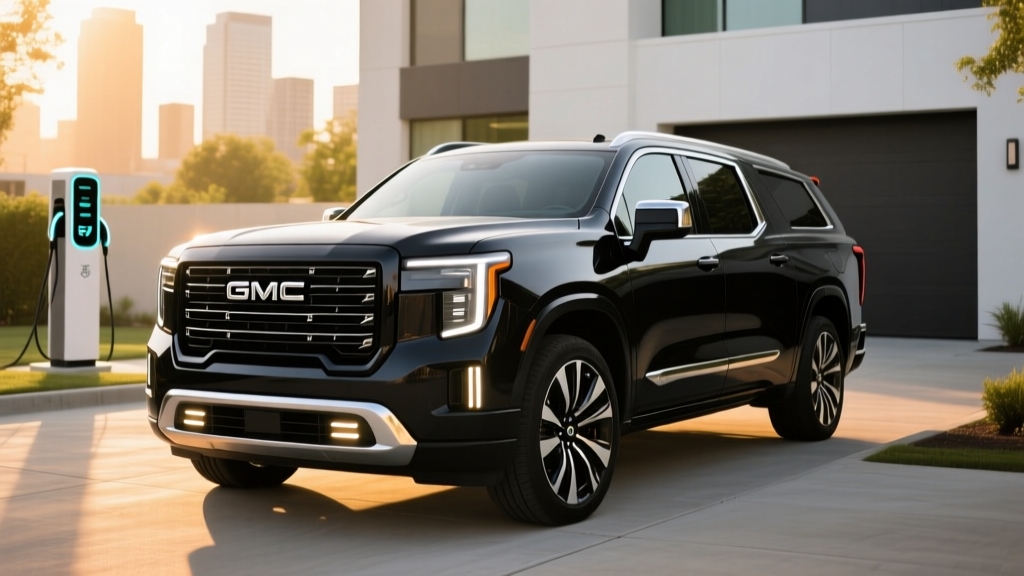
The 2026 GMC Sierra EV Denali Edition 1 delivers an EPA-estimated 440 miles of range from its ~200 kWh Ultium battery, peaks at 350 kW DC fast charging (10–80% in approximately 25 minutes), and produces 754 horsepower. At a starting MSRP of $99,495 (before destination), it qualifies for the $7,500 federal tax credit under current IRS §30D rules — but only if you meet income caps and the vehicle's battery sourcing complies. Real-world highway range lands closer to 350–380 miles, and cold-weather driving can cut that further. If you tow frequently or lack home Level 2 charging, read the ownership-cost breakdown below before committing.
Range, Efficiency, and Real-World Expectations
GMC claims 440 miles of EPA range for the Sierra EV Denali Edition 1, which is equipped with a massive lithium-ion battery pack built on GM's Ultium platform. The usable capacity is approximately 200 kWh — one of the largest production EV batteries on the market. Efficiency clocks in around 48 MPGe combined per fueleconomy.gov data, translating to roughly 44 kWh per 100 miles driven.
EPA vs. Real-World Range
EPA Estimate: 440 miles
Real-World Highway (70–80 mph): ~350–380 miles
Cold Weather (below 32°F): ~310–340 miles
Towing (5,000 lb trailer): ~200–240 miles
The Sierra EV's aerodynamic penalty and 8,500-pound curb weight mean highway efficiency drops significantly above 70 mph. Towing cuts range nearly in half — a physics reality no EV truck has solved.
| Spec | Value |
|---|---|
| EPA Range | 440 miles |
| Battery (usable) | ~200 kWh, NMC chemistry |
| Peak DC Fast Charge | 350 kW |
| 10–80% DC Charge Time | ~25 minutes |
| Level 2 Charge Rate | 19.2 kW (80A) |
| Level 2 Full Charge Time | ~11 hours |
| Horsepower | 754 hp |
| 0–60 mph | ~4.5 seconds |
| Towing Capacity | 9,500 lbs |
| Base MSRP | $99,495 |
| Battery Warranty | 8 years / 100,000 miles |
Charging: Speeds, Connectors, and Home Setup
The Sierra EV Denali uses the NACS (North American Charging Standard) connector natively, granting access to Tesla Supercharger stalls with NACS plugs as well as GM's own growing DC fast-charging network. At a 350 kW-capable station, the truck can accept peak power up to roughly 50% state of charge, after which the charge curve tapers — a thermal-management reality of any large NMC pack.
| Level | Power (kW) | Miles Added per Hour | Typical Use Case |
|---|---|---|---|
| Level 1 (120V) | 1.4 kW | ~3 mi/hr | Emergency / trickle only |
| Level 2 (240V, 80A) | 19.2 kW | ~43 mi/hr | Home overnight charging |
| DC Fast (350 kW peak) | 350 kW | ~700+ mi/hr (peak) | Road trips, 10–80% in ~25 min |
Home charging reality: To fully leverage the 19.2 kW Level 2 onboard charger, you'll need a hardwired wall connector on a 100-amp circuit. Most homes require a panel upgrade (200-amp service minimum) plus a dedicated run from the breaker box. Expect $1,500–$4,000 for a professional installation depending on your panel's proximity to the garage. Without home Level 2, charging a 200 kWh pack on a standard 120V outlet would take over 140 hours — effectively unusable for daily driving.
Cost Breakdown: Sierra EV Denali vs. Gas Sierra Denali
Let's compare the 2026 Sierra EV Denali Edition 1 against the 2026 GMC Sierra 1500 Denali with the 6.2L V8 (420 hp, 14 MPG combined) over 5 years and 75,000 miles.
| Cost Category | Sierra EV Denali | Sierra 1500 Denali (Gas V8) |
|---|---|---|
| Purchase Price (MSRP) | $99,495 | $72,595 |
| Federal Tax Credit (§30D) | −$7,500* | $0 |
| Effective Purchase | $92,000 | $72,595 |
| Fuel/Energy (75k mi) | $5,400 (home L2 @ $0.15/kWh) | $20,090 ($3.75/gal, 14 MPG) |
| Maintenance (5 yr) | $1,800 | $5,500 |
| Insurance (5 yr avg) | $14,500 | $11,000 |
| Estimated Depreciation | $38,000 | $30,000 |
| Total 5-Year Cost | $151,700 | $139,185 |
*§30D credit eligibility depends on buyer AGI (≤$150k single / $300k joint), vehicle MSRP cap ($80k for trucks — Sierra EV Denali exceeds this cap; credit may not apply), and battery critical-mineral sourcing. Verify current rules at irs.gov.
Critical tax-credit caveat: The §30D MSRP cap for trucks and SUVs is $80,000. The Sierra EV Denali Edition 1 at $99,495 exceeds this threshold, meaning it does not qualify for the federal credit under current law. Lower trims like the Sierra EV Elevation (starting around $58,000) do qualify. Always confirm with a tax professional before relying on the credit in your purchase math.
EV vs. Gas Truck: Where Each Wins
| Factor | Sierra EV Denali | Sierra Gas Denali (6.2L V8) |
|---|---|---|
| Instant Torque / Acceleration | 754 hp, 4.5s 0–60 ✓ | 420 hp, 5.9s 0–60 |
| Towing Range | ~200–240 mi (heavy trailer) | ~450+ mi (34-gal tank) |
| Refuel / Recharge Speed | 25 min (10–80% DC) | 5 min (gas station) |
| Daily "Fueling" Convenience | Plug in at home, wake up full ✓ | Weekly gas station visits |
| Cold-Weather Range Loss | 20–30% reduction | Minimal impact ✓ |
| Maintenance Burden | No oil, plugs, transmission fluid ✓ | Regular service intervals |
| Off-Grid / Remote Travel | Limited charging infra | Jerry-can refuel anywhere ✓ |
Common Misconceptions — Myth vs. Fact
| Myth | Fact |
|---|---|
| "440 miles means I'll always get 440 miles." | Highway driving at 75 mph yields ~360 miles. Towing cuts range to ~220 miles. Cold weather shaves 20–30%. |
| "I'll save $7,500 with the tax credit." | The Denali Edition 1 exceeds the $80k MSRP cap for trucks. Only lower Sierra EV trims qualify. Check IRS §30D rules. |
| "The battery will need replacing in 5 years." | GM warranties the Ultium pack for 8 years / 100,000 miles with a minimum 70% capacity retention threshold. Real-world NMC degradation averages 8–12% over 100k miles based on Geotab fleet data. |
| "I can charge on any 120V outlet overnight." | Level 1 adds ~3 miles per hour. With a 200 kWh pack, a full charge takes 140+ hours. Level 2 home charging is effectively mandatory. |
| "It's self-driving with Super Cruise." | Super Cruise is SAE Level 2 — you must remain attentive, hands may be off on mapped roads but eyes must stay on traffic. It is not autonomous driving. |
Driver-Assist Clarity
GMC's Super Cruise is an SAE Level 2 hands-free driver-assistance system. It works on over 750,000 miles of pre-mapped divided highways in the US and Canada. The driver must remain alert and ready to take over immediately. This is fundamentally different from Level 4 robotaxi services like Waymo, which operate without any human driver. Never treat Level 2 as "self-driving."
Real-World Ownership Considerations
Home charging access is non-negotiable. With a 200 kWh battery, public-only charging becomes expensive (DC fast charging averages $0.35–$0.50/kWh nationally, meaning a full charge costs $70–$100) and time-consuming. If you live in an apartment or lack garage access, the Sierra EV Denali is a poor fit unless your employer or municipality offers reliable Level 2 infrastructure.
Climate matters enormously. Owners in northern-tier states (Minnesota, Maine, Montana) should expect 20–30% range loss in sustained sub-freezing temperatures. The Sierra EV uses a heat pump for cabin heating, which helps, but battery chemistry inherently slows in cold. Preconditioning the battery while plugged in mitigates this — always precondition before DC fast charging in cold weather to avoid sluggish charge speeds.
Insurance premiums run higher. EV trucks carry 20–35% higher insurance costs than their gas counterparts due to repair complexity, battery replacement cost, and higher MSRP. Budget $2,800–$3,200/year for comprehensive coverage on a $99k vehicle.
Charging on road trips requires planning. While the NACS connector opens the Tesla Supercharger network (15,000+ stalls nationally), not all stalls support the Sierra EV's length. Many Supercharger stalls have tight turning radii designed for sedans and compact SUVs. GM's Ultium Charge network and Electrify America stations with pull-through lanes are more accommodating for trucks towing trailers.
Decision Framework: Is the Sierra EV Denali Right for You?
Choose the Sierra EV Denali If:
- You have Level 2 home charging (or can install it) and drive under 200 miles daily
- You want 754 hp of instant electric torque and a premium luxury-truck interior
- You rarely tow over long distances (under 150 miles one-way with a trailer)
- You value zero tailpipe emissions and lower routine maintenance
- You can absorb a ~$100k purchase price without relying on the federal tax credit
Choose the Gas Sierra Denali (or Wait for a Lower EV Trim) If:
- You regularly tow heavy trailers over 200+ miles
- You lack reliable home charging access
- You live in a region with extreme winters and sparse DC charging infrastructure
- The $27,000 price gap between gas and EV Denali doesn't pencil out over 5 years of fuel savings
- You want federal tax-credit eligibility — look at the Sierra EV Elevation (MSRP under $60k) instead
Frequently Asked Questions
Does the GMC Sierra EV Denali qualify for the $7,500 federal tax credit?
No — under current IRS §30D rules, the MSRP cap for trucks is $80,000. The Denali Edition 1 starts at $99,495, disqualifying it. The Sierra EV Elevation (starting ~$58,000) does qualify, subject to income limits ($150k single / $300k joint AGI) and battery-sourcing requirements. Always verify at irs.gov and consult a tax professional.
How long does it take to charge the Sierra EV Denali at home?
On a 19.2 kW Level 2 home charger (hardwired, 80-amp circuit), a full 0–100% charge takes approximately 11 hours. Most owners charge from 20–80% overnight in about 6–7 hours. A standard 120V outlet (Level 1) is impractical for daily use with a 200 kWh battery.
What's the real towing range?
Expect 200–240 miles when towing a 5,000-pound trailer at highway speeds. Heavier loads or hilly terrain reduce this further. For comparison, the gas Sierra Denali with its 34-gallon tank achieves roughly 450 miles towing the same load. If you tow frequently over long distances, the gas truck remains more practical.
Will the battery need replacing, and what does it cost?
GM warranties the Ultium battery for 8 years or 100,000 miles, guaranteeing at least 70% capacity retention. NMC chemistry typically degrades 8–12% over the first 100,000 miles based on fleet data. A full out-of-warranty battery replacement would likely cost $20,000–$30,000, though module-level repairs may be cheaper. Most owners will not need a full replacement within typical ownership periods.
Is Super Cruise actually self-driving?
No. Super Cruise is SAE Level 2 driver assistance. It allows hands-free driving on pre-mapped divided highways, but the driver must remain attentive and ready to take over at any moment. The system monitors driver eye gaze and will disengage if attention lapses. It is not Level 4 autonomous driving.
Can I use Tesla Superchargers with the Sierra EV Denali?
Yes. The 2026 Sierra EV uses the NACS connector natively, which is the same connector used at Tesla Supercharger stations. GM has partnered with Tesla to provide access to the Supercharger network. Note that some older Supercharger stalls have tight layouts not ideal for full-size trucks, especially when towing.