Quick Answer: Is the Electric Denali Truck Worth It?
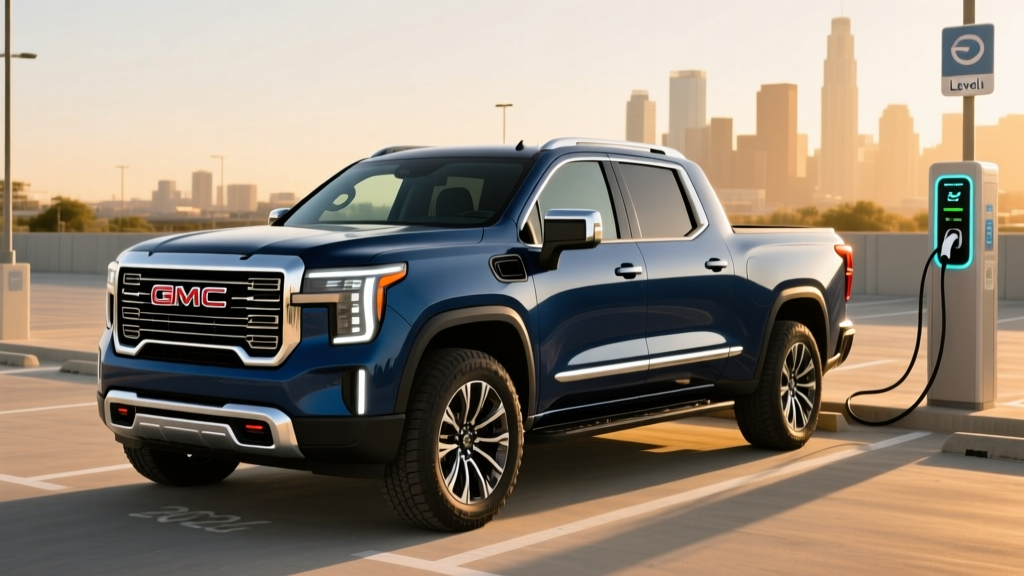
The 2026 GMC Sierra EV Denali Edition 1 delivers an EPA-estimated 390 miles of range from a 200+ kWh Ultium battery, peaks at 350 kW DC fast charging (10–80% in ~25 minutes), and starts at $99,495 before destination. It qualifies for the $7,500 federal tax credit under current IRS §30D rules if your income and the battery sourcing requirements align — bringing effective cost closer to $92,000. Versus a loaded gas Sierra Denali Ultimate (~$82,000), the EV costs more upfront but saves $2,500–$4,000 annually in fuel and maintenance depending on your local electricity rate and mileage. The catch: real-world highway range drops to ~320 miles, cold weather trims another 15–25%, and you need a 240V/60A home circuit to unlock its 11.5 kW Level 2 charging. If you tow frequently, expect range to halve.
Sierra EV Denali Specs at a Glance
GMC positions the Sierra EV on the dedicated BT1 electric platform — not a converted gas truck. That means a flat floor, a massive front trunk (frunk), and a battery pack slung low for a center of gravity that defies its 9,200-pound curb weight. Here are the hard numbers for the 2026 Denali Edition 1:
| Specification | 2026 Sierra EV Denali Edition 1 |
|---|---|
| EPA Range | 390 miles (est. 320 mi highway, ~290 mi cold weather) |
| Battery | ~200+ kWh usable, NMC Ultium (double-stacked modules) |
| Peak DC Fast Charge | 350 kW (800V architecture) |
| 10–80% DC Charge Time | ~25 minutes (tapers significantly above 80%) |
| Level 2 Home Charging | 11.5 kW (adds ~34 mi/hr, full charge ~18 hours) |
| Level 1 (120V) Charging | ~1.4 kW (~4 mi/hr — emergency only) |
| Horsepower / Torque | 754 hp / 785 lb-ft (Max Power mode) |
| 0–60 mph | ~4.2 seconds |
| Max Towing | 10,000 lbs (est. range cut 40–55%) |
| Payload | ~1,800 lbs |
| ProPower Onboard (V2L) | Up to 9.6 kW exportable |
| Base MSRP | $99,495 (+ $2,095 destination) |
| Federal Tax Credit (§30D) | Up to $7,500 (income/sourcing dependent) |
| Battery/Powertrain Warranty | 8 years / 100,000 miles |
Real-World Range vs. EPA Sticker
The 390-mile EPA figure assumes mixed driving. On a 75 mph highway cruise in 70°F weather, expect 310–330 miles. Add a headwind, hills, or 90°F heat (AC compressor load), and you're looking at 280–300 miles. In sub-freezing temperatures (20–30°F), battery chemistry and cabin heating pull range down to 260–290 miles even with the standard heat pump. Towing a 7,000-lb trailer at highway speed? Plan for 175–220 miles between stops. These aren't pessimistic estimates — they're physics. Always plan road trips around 70% of the EPA sticker for a safety buffer.
Electric Denali Truck vs. Gas Sierra Denali: The Cost Showdown
The most common question from truck buyers: does the electric Denali truck actually save money, or is it a premium toy? Let's run a 5-year, 75,000-mile ownership comparison against a comparably equipped 2026 GMC Sierra 1500 Denali Ultimate with the 6.2L V8.
| Cost Category (5 yr / 75k mi) | Sierra EV Denali | Gas Sierra Denali Ultimate |
|---|---|---|
| Purchase Price (MSRP) | $101,590 | $84,290 |
| Federal Tax Credit | −$7,500 (if eligible) | $0 |
| Effective Purchase | $94,090 | $84,290 |
| Fuel/Energy Cost | $4,500 (home charging at $0.14/kWh) | $14,060 (17 MPG avg, $3.20/gal) |
| Maintenance | $1,800 (tire rotations, cabin filter, fluid top-offs) | $5,200 (oil, trans fluid, plugs, belts, brakes) |
| Insurance (avg) | $12,500 | $9,800 |
| Estimated Depreciation | $38,000 | $28,000 |
| Total 5-Year Cost | $152,890 | $141,350 |
The EV saves roughly $11,500 in energy and maintenance over five years, but higher insurance premiums (~$540/yr more) and steeper projected depreciation on a six-figure EV narrow the gap. The break-even point depends heavily on three variables: whether you qualify for the full $7,500 credit, your local electricity rate, and how many miles you drive annually. At 20,000+ miles/year with cheap home solar, the EV pulls ahead. At 10,000 miles/year on expensive utility rates, the gas truck wins on pure economics.
Per-Mile Energy Cost Breakdown
The Sierra EV Denali consumes approximately 48–52 kWh per 100 miles (roughly 2.0–2.1 kWh/mi) in mixed driving. Here's what that translates to:
| Charging Scenario | Cost per kWh | Cost per Mile | Cost per 300-mi Trip |
|---|---|---|---|
| Home Level 2 (national avg) | $0.14 | $0.29 | $87 |
| Home Level 2 (California peak) | $0.32 | $0.66 | $198 |
| Home Solar (amortized) | $0.06 | $0.13 | $39 |
| Public DC Fast (Electrify America) | $0.48 | $0.99 | $297 |
| Gas Sierra (17 MPG, $3.20/gal) | — | $0.19/mi (gas) | $56 (gas) |
Home charging on a national average rate is competitive with gas. Public DC fast charging, however, costs significantly more per mile than gasoline — a critical factor if you lack home charging access.
Charging the Sierra EV Denali: Home Setup and Road-Trip Reality
A 200+ kWh battery is enormous — larger than most home battery walls. Charging it demands serious electrical infrastructure.
Home Charging Requirements
To use the Sierra EV's full 11.5 kW Level 2 capability, you need a NEMA 14-50 outlet on a 60A breaker or a hardwired Level 2 EVSE (like the ChargePoint Home Flex or Emporia V2) on a dedicated circuit. Most homes with a 200A electrical panel can accommodate this, but older homes with 100A service will likely need a panel upgrade ($1,500–$3,500).
| Home Charging Component | Estimated Cost Range |
|---|---|
| Level 2 EVSE (40A–48A unit) | $400–$750 |
| Electrician labor (50-ft run, conduit, 60A breaker) | $800–$2,000 |
| Permit and inspection | $100–$300 |
| Panel upgrade (if needed, 100A → 200A) | $1,500–$3,500 |
| Total typical install | $1,300–$3,050 (without panel upgrade) |
At 11.5 kW, the Sierra EV adds roughly 34 miles of range per hour. A full 10–100% charge from near-empty takes approximately 18–20 hours on Level 2. For daily use, most owners plug in overnight and wake up fully topped off — you rarely need a full 0–100% cycle.
DC Fast Charging on the Road
The 800V architecture enables a peak charge rate of 350 kW at compatible CCS or NACS stalls. On a 350 kW charger with a preconditioned battery, you'll see the charge curve peak near 350 kW for roughly the 10–40% state-of-charge window, then taper to ~200 kW through 60%, and drop further to ~80 kW past 80%. The 10–80% time of ~25 minutes is achievable at the best chargers (Electrify America 350 kW stalls, Tesla Superchargers with NACS adapter). At a more common 150 kW charger, expect 10–80% in roughly 45–55 minutes.
Charging Caveats
Peak 350 kW charging requires: (1) a compatible 350 kW DC stall, (2) a preconditioned battery (navigate to the charger in the infotainment to trigger thermal prep), and (3) a battery state of charge below ~30%. Arrive at a charger with a 50% SoC and your peak rate drops substantially. Always precondition for 20–30 minutes before a fast-charge stop.
Federal Tax Credit: Does the Sierra EV Denali Qualify?
Under current IRS §30D rules, the $7,500 federal tax credit for new clean vehicles has strict requirements. Here's the eligibility checklist for the 2026 Sierra EV Denali:
- MSRP Cap: Trucks/vans/SUVs must have an MSRP ≤ $80,000. The Sierra EV Denali at $99,495 exceeds this cap and does NOT qualify for the new-vehicle §30D credit.
- Buyer Income Limits: AGI ≤ $300,000 (joint), $225,000 (head of household), $150,000 (individual). Even if MSRP qualified, you must meet income thresholds.
- Battery Sourcing: Critical minerals and battery components must meet phased-in domestic/free-trade-partner percentages (increasing annually through 2029).
- Point-of-Sale Transfer: Eligible buyers can transfer the credit to the dealer for an immediate price reduction at purchase.
The hard truth: The Sierra EV Denali Edition 1 exceeds the $80,000 MSRP cap for trucks, making it ineligible for the new-vehicle federal tax credit. Lower-trim Sierra EV models (if GMC introduces sub-$80k trims like the Elevation) could qualify. Always verify current eligibility on fueleconomy.gov before purchasing.
Common Misconceptions About the Electric Denali Truck
| Myth | Fact |
|---|---|
| "390 miles means I'll always get 390 miles" | Highway driving at 75 mph yields ~310–330 mi; cold weather drops it to ~260–290 mi. Plan trips around 70% of EPA. |
| "It charges in 25 minutes anywhere" | Only at 350 kW chargers with a preconditioned battery and low SoC. Common 150 kW chargers take 45–55 minutes for 10–80%. |
| "I can tow my boat the same distance" | Towing 7,000+ lbs cuts range by 40–55%. A 390-mile truck becomes a ~200-mile truck under load. |
| "The battery will need replacing in 5 years" | GM warrants the Ultium battery for 8 years/100,000 miles with ≥60% capacity retention. NMC degradation data shows ~10–15% loss over 150,000 miles with proper care. |
| "Any standard outlet will charge it fine" | Level 1 (120V) adds ~4 miles per hour. A full charge would take 5+ days. Level 2 (240V) is practically mandatory for a 200 kWh battery. |
| "It qualifies for the $7,500 tax credit" | At $99,495 MSRP, the Denali exceeds the §30D $80,000 truck cap. Only lower-priced trims may qualify. |
Who Should Buy the Electric Denali Truck?
Decision Framework: Is the Sierra EV Denali Right for You?
Choose the Sierra EV Denali if:
- You have a garage or driveway where you can install a 240V/60A Level 2 charger
- Your daily commute is under 150 miles round-trip (you'll rarely need public charging)
- You value instant torque, near-silent operation, and the 9.6 kW V2L capability for job sites or tailgating
- You drive 15,000+ miles/year, where fuel savings offset the premium over time
- You want a luxury electric truck and find the Rivian R1T too small or the Tesla Cybertruck too polarizing
Stick with the gas Sierra Denali or consider a hybrid alternative if:
- You tow heavy trailers (>5,000 lbs) more than a few times per year — the range penalty is severe
- You live in an apartment or lack access to any Level 2 charging at home or work
- You frequently drive 400+ mile stretches in rural areas with sparse DC fast-charging infrastructure
- Your budget is firm below $85,000 and the tax credit doesn't apply to the Denali trim
- You live in extreme cold climates (consistent sub-10°F winters) where range loss compounds with towing
First-Time EV Buyer Essentials for the Sierra EV
If this is your first electric vehicle, the Sierra EV Denali is a deep-end introduction. Here's what to internalize before signing:
Budget for the charger, not just the truck. Add $1,500–$3,000 to your purchase budget for professional Level 2 home installation. Without it, owning a 200 kWh battery truck is impractical.
Learn the charge curve. Charging from 80% to 100% on DC fast charging takes almost as long as 10% to 80%. Road-trip strategy: charge to 80%, then drive. Don't sit at a charger waiting for 100%.
Preconditioning is non-negotiable. Always set your navigation to the next charging stop. The truck will warm or cool the battery to optimal temperature, unlocking peak charge rates. Without it, you may arrive at a 350 kW stall and only pull 80 kW.
Insurance will cost more. Six-figure EVs with expensive battery packs carry higher premiums. Get quotes before purchasing — expect $200–$280/month depending on your profile.
Check your state incentives separately. Some states offer rebates or HOV lane access regardless of federal credit eligibility. Verify on your state's energy office website, as these programs change frequently.
Frequently Asked Questions
What is the real-world range of the electric Denali truck?
The EPA rates the Sierra EV Denali at 390 miles, but real-world highway driving at 70–75 mph yields approximately 310–330 miles in mild weather. In cold conditions (below 30°F), expect 260–290 miles. Towing reduces range further to roughly 175–220 miles depending on trailer weight and speed.
How long does it take to charge the Sierra EV Denali at home?
On a 240V Level 2 charger at 11.5 kW, the Sierra EV adds about 34 miles of range per hour. A near-empty to full charge takes approximately 18–20 hours. Most owners charge overnight and never deplete below 20%, making daily charging a 6–8 hour overnight affair.
Does the GMC Sierra EV Denali qualify for the $7,500 federal tax credit?
No. Under current IRS §30D rules, trucks with an MSRP above $80,000 are ineligible for the new-vehicle federal tax credit. The Sierra EV Denali Edition 1 at $99,495 exceeds this cap. Lower-priced Sierra EV trims may qualify if they fall under the threshold.
Can the Sierra EV Denali tow as much as the gas version?
The Sierra EV Denali is rated to tow up to 10,000 lbs, competitive with many gas Sierra configurations. However, towing dramatically reduces range — expect a 40–55% reduction, cutting the 390-mile range to roughly 175–220 miles under load. Plan towing trips around frequent charging stops.
What happens if the Ultium battery fails out of warranty?
GM warrants the battery for 8 years or 100,000 miles against defects and excessive degradation (below 60% capacity). Out-of-warranty replacement for a 200+ kWh pack is estimated at $25,000–$35,000 based on current Ultium pricing, though costs are expected to decline. Real-world NMC degradation data from similar GM Ultium platforms suggests 10–15% capacity loss over 150,000 miles with normal use.
Is the Sierra EV Denali better than the Rivian R1T or Tesla Cybertruck?
It depends on priorities. The Sierra EV Denali offers the longest range (390 mi vs. R1T's ~352 mi dual-motor), traditional truck proportions with a 5'11" bed and MultiPro tailgate, and luxury Denali trim. The Rivian R1T is more off-road capable and agile but smaller and pricier in quad-motor form. The Cybertruck undercuts on price (~$80k–$100k depending on trim) but has polarizing styling and a smaller bed. None qualify for the new-vehicle federal tax credit at their top trims.
Sources: EPA estimates via fueleconomy.gov, GMC official specifications, IRS §30D clean vehicle credit rules. All pricing and specifications reflect 2026 model-year data available at time of publication. Tax credit eligibility is subject to change — consult a tax professional and verify on irs.gov before purchasing.