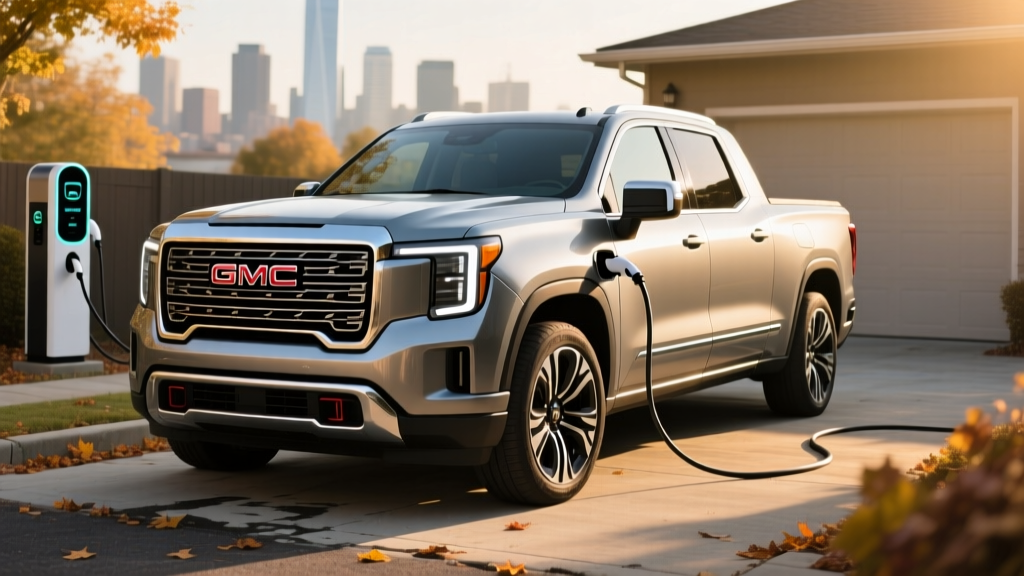
Quick Verdict: Is the GMC Sierra Denali EV Worth It?
The 2026 GMC Sierra Denali EV is a premium electric pickup built on GM's Ultium platform, offering an EPA-estimated 440 miles of range (Edition 1 / top trims with the larger 200+ kWh pack), 754 horsepower, and peak DC fast-charging at 350 kW. Starting around $99,495 (including destination), it targets luxury truck buyers who want towing capability, Super Cruise hands-free driving, and daily electric commuting without range compromise. It qualifies for the full $7,500 federal tax credit under current IRS §30D rules if you meet income caps and the vehicle's battery sourcing satisfies critical-mineral requirements — check with your dealer and a tax professional before purchase.
Range, Battery, and Real-World Efficiency
The Sierra Denali EV uses GM's Ultium battery architecture with an NMC (nickel manganese cobalt) chemistry. Two battery sizes are available depending on trim:
- Standard pack (~180 kWh usable): EPA-estimated 390 miles (Denali trim)
- Extended pack (~205 kWh usable): EPA-estimated 440 miles (Edition 1, Denali Ultimate)
Real-World Range Expectations
The EPA sticker says 440 miles, but real-world conditions change that number significantly:
- Highway driving (75 mph, 70°F): Expect ~340–370 miles. Large pickups face substantial aero drag at speed.
- Cold weather (30°F, mixed driving): Expect ~280–320 miles. NMC chemistry loses 15–25% in freezing temps without preconditioning.
- Towing (5,000 lb trailer, 65 mph): Expect ~180–220 miles. Towing halves range — plan charging stops accordingly.
- City/commute (stop-and-go, mild weather): You can approach or slightly exceed the EPA number thanks to regenerative braking.
Efficiency lands around 48–52 MPGe combined per fueleconomy.gov, translating to roughly 2.0–2.2 kWh/mile. That's typical for a full-size electric truck — the Rivian R1T and Ford F-150 Lightning post similar figures.
Charging Speed: Home and DC Fast Charging
The Sierra Denali EV supports both AC Level 2 and DC fast charging via the NACS (Tesla-compatible) connector, reflecting GM's 2025 transition to NACS across its lineup.
| Charging Level | Power (kW) | Miles Added per Hour | Use Case |
|---|---|---|---|
| Level 1 (120V household) | 1.4 kW | ~3–4 mi/hr | Emergency / trickle top-off |
| Level 2 (240V, 48A home charger) | 11.5 kW | ~28–32 mi/hr | Overnight home charging (full in ~16–18 hrs) |
| Level 2 (240V, 80A / Powerup+) | 19.2 kW | ~48–52 mi/hr | Fast home charging (full in ~10–11 hrs) |
| DC Fast (peak) | 350 kW | ~100+ mi in 10 min | Road-trip charging (10–80% in ~30 min) |
Charging curve reality: The 350 kW peak only sustains briefly at low state-of-charge (roughly 5–25% SoC). From 25–60%, expect ~200–250 kW. Above 80%, charging tapers sharply to protect the NMC cells — the final 20% can take as long as the first 60%. On a road trip, plan to charge from 10–80% and skip topping off unless needed.
Home charging setup: Most Sierra Denali EV owners will want a hardwired Level 2 wall connector on a 60A or 100A circuit. Budget $1,200–$3,000 for a professional installation (charger + electrician + permit), or $2,500–$5,000 if your panel needs upgrading to 200A service. The truck supports up to 19.2 kW AC with the optional onboard charger module.
Performance and Capability
| Specification | 2026 GMC Sierra Denali EV (AWD) |
|---|---|
| Horsepower | 754 hp (with Wide Open Watts mode) |
| 0–60 mph | ~4.3 seconds |
| Max Towing Capacity | 10,000 lbs (est., properly equipped) |
| Payload Capacity | ~1,300 lbs |
| Battery Chemistry | NMC (Ultium) |
| Battery Warranty | 8 years / 100,000 miles |
| Drivetrain | Dual-motor eAWD |
| ProPilot / ADAS | Super Cruise (SAE Level 2) |
| Ground Clearance | ~11.1 inches (with Adaptive Air Ride) |
The 754 hp and dual-motor eAWD give the Denali EV serious passing power and traction, but this is a luxury cruiser, not a dedicated off-roader. The available 4-Wheel Steer (crab-walk mode) helps in tight spaces, and the MultiPro Tailgate plus the eTrunk (front trunk) add practical cargo flexibility that gas trucks can't match.
Super Cruise Is Level 2 — Not Self-Driving
GM's Super Cruise enables hands-free driving on over 750,000 miles of compatible highways, but it is an SAE Level 2 driver-assist system. You must remain attentive, keep your eyes on the road (monitored via infrared camera), and be ready to take over instantly. It does not navigate construction zones, unmapped roads, or adverse weather autonomously.
Sierra Denali EV vs. Gas Sierra Denali: Cost Comparison
This is the calculation every buyer needs to run. Here's a five-year cost breakdown comparing the 2026 Sierra Denali EV against the 2026 gas Sierra Denali (6.2L V8, 420 hp) assuming 15,000 miles/year:
| Cost Category | Sierra Denali EV (AWD) | Sierra Denali Gas (6.2L V8) |
|---|---|---|
| Base MSRP | $99,495 | $72,695 |
| Federal Tax Credit (§30D) | –$7,500 (if eligible) | $0 |
| Effective Purchase Price | ~$91,995 | $72,695 |
| Fuel/Energy (5 yrs, 75k mi) | $5,600 (home L2 @ $0.14/kWh) | $14,100 (@ $3.75/gal, 16 MPG) |
| Maintenance (5 yrs) | ~$1,800 | ~$4,500 |
| Insurance (5 yrs, avg) | ~$14,500 | ~$11,200 |
| Estimated Depreciation (5 yrs) | ~$42,000 | ~$30,000 |
| 5-Year Total Cost | ~$155,895 | ~$132,495 |
Key takeaway: The EV saves roughly $8,500–$10,000 in fuel and maintenance over five years, but the higher purchase price, steeper depreciation, and elevated insurance premiums keep the total cost of ownership higher than the gas Denali by approximately $20,000–$25,000. The EV makes financial sense if you prioritize the driving experience, Super Cruise, instant torque, and home "refueling" convenience — not pure cost savings.
If you charge primarily on public DC fast chargers at $0.40–$0.55/kWh, your 5-year energy cost jumps to $12,000–$16,000, erasing the fuel savings advantage entirely. Home charging access is the single biggest financial variable.
Federal Tax Credit Eligibility (IRS §30D)
The Sierra Denali EV is assembled in the U.S. (Orion Township, MI / Factory ZERO), which satisfies the North American assembly requirement. However, the full $7,500 credit depends on two sub-requirements that change periodically:
- MSRP cap: Trucks/vans/SUVs must be under $80,000 MSRP — the Sierra Denali EV exceeds this cap and may NOT qualify for the new-vehicle §30D credit. Verify current status with your dealer and the IRS clean vehicle credit page.
- Buyer income cap: AGI must not exceed $150,000 (single), $225,000 (head of household), or $300,000 (joint filers).
- Battery sourcing: Critical minerals and battery components must meet escalating domestic-content thresholds — GM's Ultium sourcing has been improving but confirm model-year compliance.
- Point-of-sale transfer: If eligible, you can transfer the credit to the dealer for an immediate price reduction at purchase.
Critical warning: Because the Sierra Denali EV starts near $99,000, it likely falls outside the §30D MSRP cap for trucks ($80,000). Some buyers have structured lease deals to capture the commercial clean vehicle credit (§45W), which lacks the MSRP cap — consult a tax professional before relying on this strategy.
Common Misconceptions About the Sierra Denali EV
| Myth | Fact |
|---|---|
| "It can tow just as far as the gas Sierra." | Towing cuts EV range roughly in half. Expect ~200 miles with a 5,000 lb trailer vs. ~400+ miles in a gas Sierra with its 26-gallon tank. |
| "Super Cruise drives itself." | Super Cruise is SAE Level 2 — you must monitor the road and remain prepared to steer or brake at all times. |
| "Charging takes too long for road trips." | At a 350 kW DC charger, 10–80% takes ~30 minutes. That's a meal break — not ideal, but manageable with route planning via the myGMC app. |
| "The battery will need replacing in 5 years." | GM warranties the Ultium pack for 8 years/100,000 miles against degradation below 70% capacity. Most NMC packs retain 85–90% at 100k miles based on current fleet data. |
| "I'll save money vs. the gas version." | Lower fuel/maintenance costs don't offset the ~$27,000 higher purchase price over 5 years. The EV is a premium experience choice, not a budget play. |
Real-World Ownership Considerations
Home Charging Access
If you can install a Level 2 charger at home, the Sierra Denali EV transforms your routine: plug in at night, wake up to 300+ miles every morning. Without home charging, you'll rely on public DC fast chargers 2–3 times per week, adding 45–90 minutes to your schedule and roughly doubling your per-mile energy cost.
Cold Climate Impact
NMC batteries lose meaningful range in sustained sub-freezing temperatures. In northern states, budget 20–25% range loss in winter. The Sierra's liquid thermal management and preconditioning help — always precondition while plugged in before a cold-weather drive to minimize losses and protect charging speed.
Insurance Premiums
Electric pickups carry higher insurance premiums due to repair complexity, battery replacement costs, and higher MSRP. Expect $2,600–$3,200/year for the Denali EV vs. $2,000–$2,500 for the gas Denali, depending on your state and driving record. Get quotes before committing.
Depreciation Risk
Full-size EVs are depreciating faster than gas trucks as of 2025–2026, driven by rapid battery tech improvements, Tesla price pressure, and lease returns flooding the used market. The Sierra Denali EV may retain 50–55% of value after 3 years vs. ~60–65% for the gas Denali. Factor this into your ownership math.
Decision Framework: Should You Buy the Sierra Denali EV?
Choose the GMC Sierra Denali EV if:
- You have reliable home Level 2 charging (garage or driveway with 240V access)
- Your daily commute is under 200 miles round-trip and you want zero fuel stops for daily driving
- You value Super Cruise hands-free highway driving for long commutes
- You want 754 hp of instant electric torque and a near-silent cabin
- You tow occasionally (under 200 miles one-way) and can charge at destination
- Budget allows a ~$95,000+ effective purchase price after incentives
Stick with the Gas Sierra Denali (or wait) if:
- You cannot install a home charger and lack convenient DC fast-charging infrastructure
- You frequently tow heavy trailers over 200+ miles (range becomes a serious constraint)
- Total cost of ownership is your primary decision driver — the gas version wins on 5-year math
- You live in extreme cold climates and regularly drive 300+ miles in winter
- You plan to keep the truck 10+ years and worry about long-term EV depreciation uncertainty
Frequently Asked Questions
What is the real-world range of the GMC Sierra Denali EV?
The EPA rates the extended-pack Sierra Denali EV at 440 miles. In real-world mixed driving at moderate temperatures, expect 350–390 miles. Highway-only driving at 75 mph drops that to ~340–370 miles. Towing a trailer cuts range roughly in half to ~200 miles. Always plan trips around charging infrastructure, not the EPA sticker.
Does the GMC Sierra Denali EV qualify for the $7,500 federal tax credit?
Likely not under the new-vehicle §30D credit, because the truck's MSRP exceeds the $80,000 cap for pickups. Some lessees may benefit from the §45W commercial credit passed through as a lease incentive — confirm with your dealer and review current rules at irs.gov.
How long does it take to charge the Sierra Denali EV at home?
On a standard 48A Level 2 home charger (11.5 kW), a full charge from empty takes roughly 16–18 hours. On an 80A circuit with the 19.2 kW onboard charger option, that drops to ~10–11 hours. Most owners charge overnight and rarely deplete the full pack, so a typical 50% top-off takes 8–9 hours on 11.5 kW.
Can the Sierra Denali EV power my home during an outage?
The Sierra Denali EV supports V2H (vehicle-to-home) bidirectional charging with GM's Energy Transfer Pro accessory. With a compatible home energy management system, the truck's ~200 kWh battery can power an average home for 5–7 days during an outage — a significant resilience advantage over the gas version (which requires a separate generator).
How does the Sierra Denali EV compare to the Ford F-150 Lightning and Rivian R1T?
The Sierra Denali EV leads on luxury and range (440 mi vs. Lightning's ~320 mi extended, R1T's ~410 mi Max Pack). The F-150 Lightning starts significantly lower (~$55,000) and is more value-oriented. The Rivian R1T offers superior off-road capability and a quad-motor option but lacks Super Cruise. The Denali EV occupies the premium full-size niche — closest competitor is the Tesla Cybertruck (though it targets a different buyer demographic).
What does maintenance cost on the Sierra Denali EV?
EV maintenance eliminates oil changes, spark plugs, transmission fluid, and exhaust system repairs. Expect to pay for tire rotations, cabin air filters, wiper fluid, and brake inspections (regen braking extends pad life significantly). Budget ~$300–$400/year in routine maintenance vs. $800–$1,200/year for the gas Sierra Denali's V8.