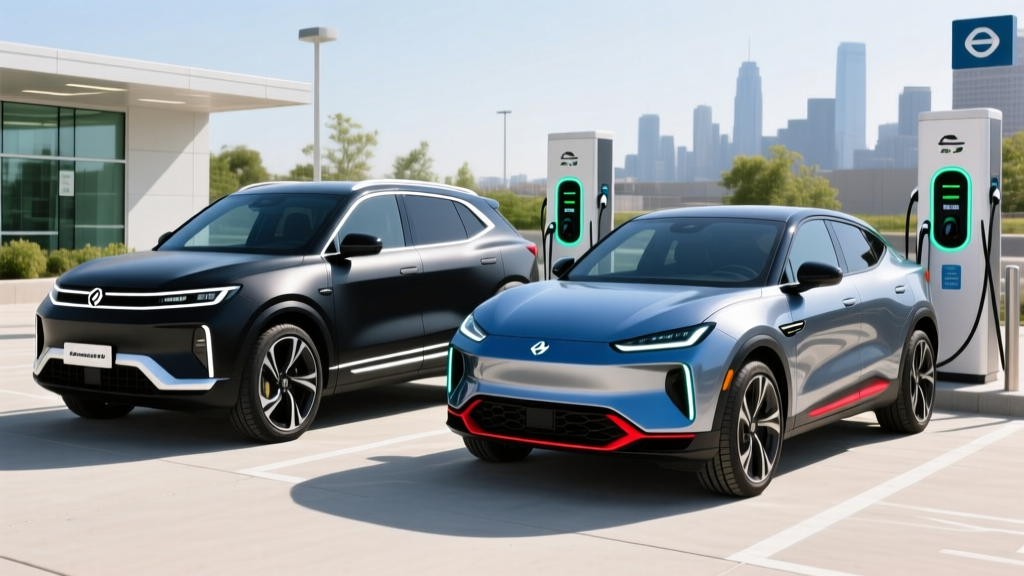
Vehicle Overview: The Electric Behemoth Redefining Off-Road Luxury
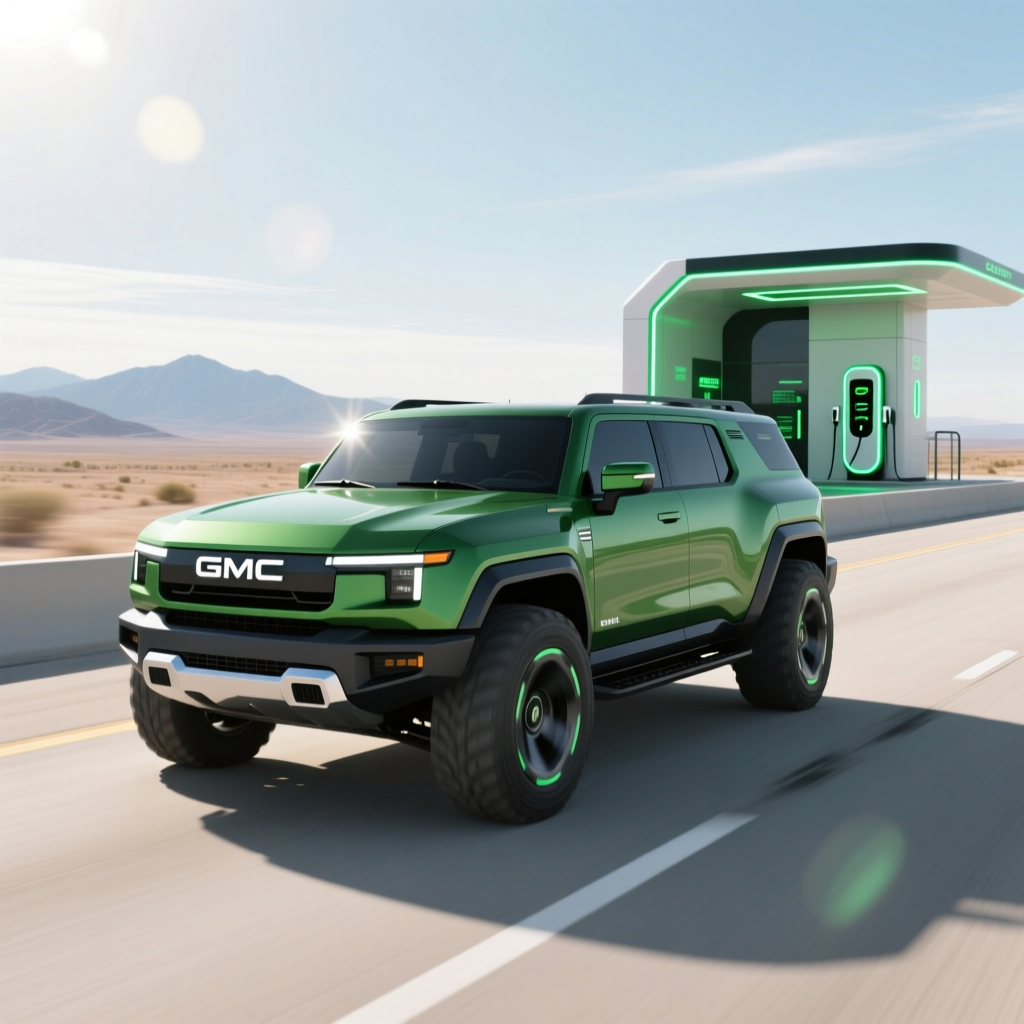
The GMC Hummer EV SUV is not merely a vehicle; it is a rolling statement of engineering excess and electric ambition. Built upon General Motors’ Ultium platform, this heavyweight off-roader takes the iconic, gas-guzzling nameplate of the past and transforms it into a zero-emission leviathan. Tipping the scales at over 9,000 pounds, the Hummer EV SUV is a masterclass in using electric torque to defy the laws of physics, offering supercar-rivaling acceleration alongside unparalleled off-road prowess. For buyers navigating the upper echelons of the market, it stands out as one of the most capable and imposing entries in our roundup of the best electric SUVs.
Unlike its pickup truck sibling, the SUV variant offers a slightly shorter wheelbase, which translates to better breakover angles and enhanced maneuverability on tight, rocky trails. Available in dual-motor and tri-motor configurations, the pinnacle 3X trim delivers a mind-bending 830 horsepower and 1,200 pound-feet of torque. Yet, beyond the sheer brute force, GMC has packed this rig with cutting-edge technology, including four-wheel steering, an adaptive air suspension, and hands-free highway driving systems. In this comprehensive review, we dissect the real-world capabilities, ownership realities, and technological marvels that define the GMC Hummer EV SUV.
Real-World Range & Efficiency
When discussing a vehicle equipped with a double-stacked, 24-module battery pack boasting over 200 kWh of usable capacity, efficiency takes on a completely different meaning. The Hummer EV SUV is not designed for hyper-miling; it is designed for dominance. According to EPA ratings, the tri-motor Hummer EV SUV achieves an estimated range of up to 314 miles on a full charge, while the dual-motor variants push slightly further, nearing the 330-mile mark. However, translating these figures to real-world scenarios requires an understanding of aerodynamics and mass.
Pushing a 9,000-pound box with the aerodynamic profile of a brick through highway headwinds & crosswinds demands immense energy. In independent real-world highway testing at sustained speeds of 75 mph, the Hummer EV SUV typically yields between 240 and 260 miles of range. The massive 35-inch all-terrain tires create significant rolling resistance, which further impacts efficiency. Conversely, in stop-and-go city traffic, the vehicle’s aggressive regenerative braking system and one-pedal driving mode work wonders, recapturing kinetic energy and often allowing the SUV to exceed its EPA estimates.
Off-road excursions introduce another variable. When engaging Extract Mode or tackling steep, rocky inclines, energy consumption spikes dramatically. Drivers planning overland expeditions must carefully map out charging infrastructure or invest in high-capacity portable solar generators to supplement the grid. Ultimately, the range is more than sufficient for daily commuting and weekend getaways, but cross-country road trips require meticulous planning compared to lighter, more aerodynamic electric crossovers.
Charging Speed & Infrastructure
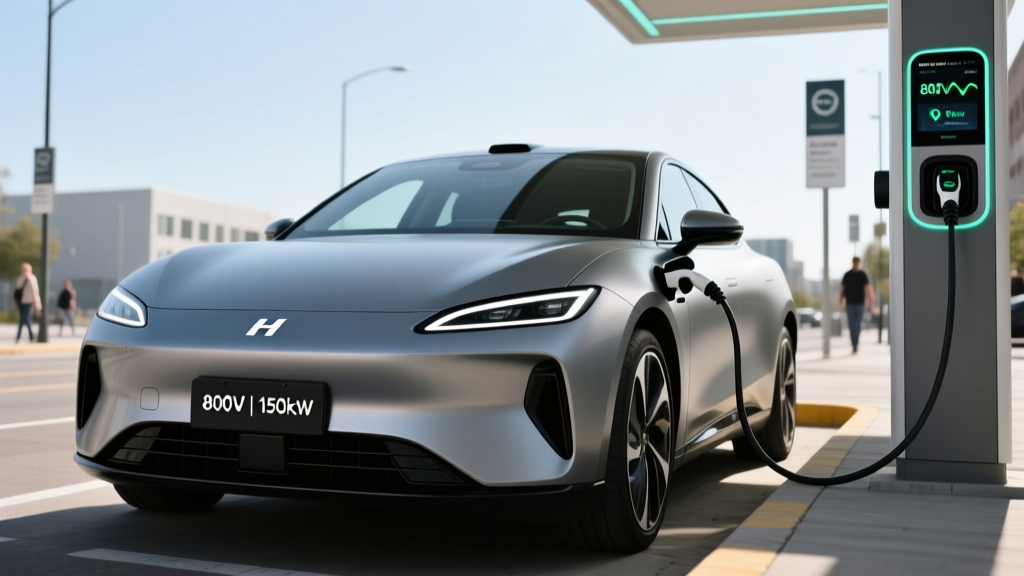
Charging a battery pack of this magnitude is a logistical feat, but GMC has equipped the Hummer EV SUV with an 800-volt electrical architecture to mitigate downtime. When connected to a 350-kW DC fast charger, the SUV can accept peak charging rates that add roughly 100 miles of range in just 12 minutes. However, sustaining that peak rate is a different story. Due to the sheer size of the battery and the necessity of thermal management to protect the cells, the charging curve tapers off significantly after reaching an 80 percent state of charge.
A full 10-to-80 percent charge at a high-speed public station typically takes between 45 minutes and an hour, provided the battery is properly preconditioned. The vehicle’s navigation system automatically conditions the battery when a fast charger is routed as a destination, ensuring the cells are at the optimal temperature to accept maximum current upon arrival.
Home charging presents a unique challenge for Hummer EV owners. Using a standard Level 2 home charger (typically 11.5 kW or 48 amps), replenishing the massive 200+ kWh battery from near-empty to full can take well over 24 hours. Therefore, owners must adopt a habit of plugging in nightly to top off the battery, treating the vehicle much like a smartphone. For those who frequently tow or embark on heavy off-road adventures, upgrading to a high-amperage home charging station is practically a mandatory investment to ensure the vehicle is ready for duty each morning.
Interior, Cargo, & Technology
Stepping into the Hummer EV SUV feels like entering a luxury command center with distinct lunar-inspired motifs. The cabin is dominated by a 13.4-inch diagonal center infotainment touchscreen and a 12.3-inch digital driver cluster. The interface, built on Google Built-in, offers seamless integration with Google Maps, Google Assistant, and the Play Store, providing an intuitive user experience that rivals the best consumer electronics. The UI features exclusive Hummer graphics, including topographical maps and real-time energy flow visualizations that are both functional and visually striking.
Despite its rugged exterior, the interior materials are decidedly premium, featuring soft-touch surfaces, metallic accents, and available leather upholstery. The Infinity Roof system is a standout feature, allowing drivers to remove modular roof panels and store them in the front trunk (e-trunk), transforming the cabin into an open-air observatory. The acoustic dampening is exceptional; despite the massive tires and boxy shape, the cabin remains whisper-quiet at highway speeds, allowing the premium Bose audio system to shine.
Cargo capacity is generous, though the sloping roofline of the SUV variant slightly compromises maximum volume compared to the pickup. Behind the second row, there is ample space for golf clubs, camping gear, or a week’s worth of luggage. Folding the rear seats flat opens up a cavernous cargo hold. The power-operated e-trunk up front provides secure, weatherproof storage for charging cables, recovery gear, or the aforementioned roof panels, making it a highly practical choice for adventurers.
Driving Dynamics & Off-Road Prowess
The driving dynamics of the Hummer EV SUV are where the vehicle truly transcends its massive curb weight. In its standard Tour mode, the adaptive air suspension glides over highway imperfections, delivering a ride quality that mimics a luxury land yacht. However, unleash the tri-motor powertrain, and the experience becomes violently exhilarating. Engaging Watts to Freedom (WTF) mode lowers the suspension, preconditions the battery, and unleashes all 830 horsepower. The result is a 0-60 mph sprint in approximately 3.5 seconds—a surreal experience accompanied by haptic seat vibrations and immersive audio cues that simulate a rocket launch.
Where the Hummer EV SUV truly separates itself from competitors in our EV comparisons is its off-road geometry and hardware. The available four-wheel steering system, famously dubbed CrabWalk, allows the rear wheels to turn up to 10 degrees in the same direction as the front wheels. This enables the SUV to move diagonally, a party trick that is genuinely useful for navigating tight trail obstacles or parallel parking in cramped urban spaces. The rear-wheel steering also drastically reduces the turning radius, making this behemoth surprisingly manageable in city traffic.
For severe off-road conditions, Extract Mode raises the air suspension by an additional six inches, providing class-leading ground clearance, approach, and departure angles. The underbody is protected by heavy-duty steel skid plates, and the available front and rear electronic locking differentials (e-Lockers) ensure that torque is distributed to the wheels with traction. Whether crawling over boulders in Moab or traversing deep snow, the Hummer EV SUV offers a level of confidence and capability that few production vehicles can match.
Ownership Costs & Value
Owning a supersized electric luxury vehicle comes with a unique set of financial considerations. The initial purchase price places the Hummer EV SUV firmly in the premium tier, competing directly with high-end offerings from Land Rover, Mercedes-Benz, and Tesla. While buyers are spared from the volatility of gasoline prices and the routine maintenance associated with internal combustion engines (such as oil changes, transmission fluid swaps, and spark plug replacements), other costs require attention.
Tire wear is a significant factor. The immense weight and instant torque of the Hummer EV will chew through standard all-terrain tires faster than a lighter vehicle. Replacing a set of specialized 35-inch EV-rated tires is a substantial expense that owners should budget for. Additionally, insurance premiums for the Hummer EV SUV tend to be higher than average, reflecting the vehicle’s high repair costs, advanced sensor suites, and staggering performance metrics.
However, the value proposition extends beyond mere dollars and cents. For buyers who demand uncompromising off-road capability, supercar acceleration, and a commanding road presence, the Hummer EV SUV offers an experience that is entirely unique in the current automotive landscape. It holds its value well among enthusiasts, though early depreciation curves for heavy, complex EVs should be factored into long-term leasing or financing decisions.
Pros & Cons
Pros:
- Staggering acceleration and powertrain performance (up to 830 hp).
- Class-leading off-road hardware, including CrabWalk and Extract Mode.
- Whisper-quiet, luxurious cabin with innovative Infinity Roof.
- 800-volt architecture enables rapid DC fast charging.
- Highly advanced Super Cruise hands-free driving capabilities.
Cons:
- Massive curb weight negatively impacts real-world highway efficiency.
- Extremely long Level 2 home charging times due to battery size.
- High cost of ownership regarding specialized tires and insurance.
- Sheer physical size makes navigating tight urban spaces challenging.
- Cargo space is slightly compromised by the sloping SUV roofline.
Key Specifications Comparison Table
| Specification | GMC Hummer EV SUV (3X) | Rivian R1S (Tri-Motor) | Tesla Model X (Plaid) | Mercedes-Benz EQS SUV |
|---|---|---|---|---|
| Horsepower | 830 hp | 850 hp | 1,020 hp | 649 hp |
| 0-60 mph | ~3.5 seconds | ~2.9 seconds | ~2.5 seconds | ~4.1 seconds |
| EPA Est. Range | ~314 miles | ~321 miles | ~326 miles | ~305 miles |
| Max Towing | 7,500 lbs | 7,700 lbs | 5,000 lbs | 3,500 lbs |
| Off-Road Focus | Extreme | High | Low | Low |
Frequently Asked Questions
Does the GMC Hummer EV SUV fit in a standard residential garage?
Fitting the Hummer EV SUV into a standard garage can be a tight squeeze and, in some cases, impossible. The vehicle is exceptionally wide (over 86 inches without mirrors) and tall (over 73 inches). Many modern residential garages have standard 7-foot or 8-foot doors, but the internal clearance and width between support pillars often pose a problem. Prospective buyers are strongly advised to measure their garage dimensions, including the driveway approach angle, before taking delivery of the vehicle.
What is the maximum towing capacity of the Hummer EV SUV?
When properly equipped, the GMC Hummer EV SUV boasts a maximum towing capacity of 7,500 pounds. This makes it highly capable of hauling heavy utility trailers, large boat rigs, or multi-horse trailers. However, as with all electric vehicles, towing heavy loads at highway speeds will drastically reduce the effective driving range, often cutting the EPA estimates in half. Utilizing the vehicle’s integrated trailer routing and ProGrade trailering system helps manage the added strain on the powertrain and battery.
How does CrabWalk work in real-world off-road scenarios?
CrabWalk utilizes the four-wheel steering system to turn the front and rear wheels in the same direction at low speeds. In real-world off-road scenarios, this allows the driver to navigate the SUV diagonally around tight obstacles, such as large boulders or dense trees, without needing to perform multi-point turns. It is also incredibly useful for side-hilling, allowing the vehicle to maintain a straight trajectory on a cambered surface. While it looks like a gimmick on paper, experienced off-roaders find it to be a highly practical tool for technical trail navigation.
Is Super Cruise included on all Hummer EV SUV trims?
GMC’s acclaimed Super Cruise hands-free driving technology is available on the Hummer EV SUV, but its inclusion depends on the specific trim level and optional packages selected. When equipped, Super Cruise allows for true hands-free driving on hundreds of thousands of miles of compatible divided highways across North America. It utilizes a combination of LiDAR map data, real-time cameras, GPS, and a driver-attention monitoring system to ensure safe, automated cruising, significantly reducing fatigue on long road trips.
What is the battery warranty coverage for the Ultium platform?
General Motors provides robust warranty coverage for the Ultium battery pack in the Hummer EV SUV. The battery is backed by an 8-year or 100,000-mile limited warranty, whichever comes first. This warranty covers defects in materials and workmanship and guarantees that the battery will retain a minimum percentage of its original capacity (typically around 60 to 70 percent, depending on the specific contract terms) over the warranty period. Additionally, the electric motors and power electronics are covered under the same powertrain warranty umbrella, providing peace of mind for early adopters of this heavy-duty EV technology.
For more insights on heavy-duty electric trucks and luxury off-roaders, be sure to explore our Rivian R1S review and stay tuned to Auto Edge View for the latest in electric mobility.