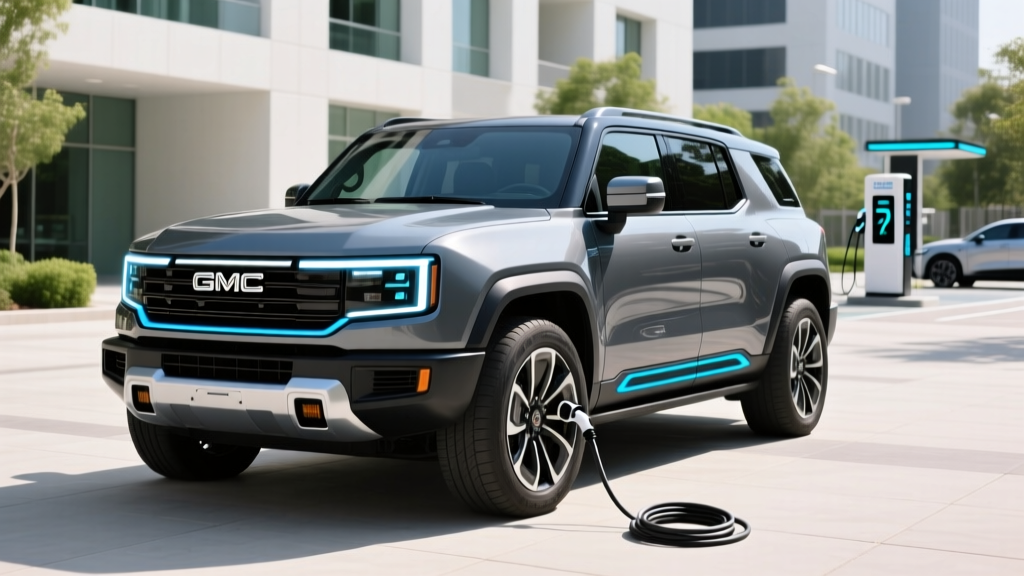
The GMC Hummer EV SUV is an engineering paradox: a 9,000-pound electric fortress that sprints to 60 mph faster than a Porsche 911. For buyers researching the 2024 GMC Hummer EV SUV curb weight and what that mass means for range, charging, and daily usability, the numbers tell a story of brute-force electrification — impressive in scope, but demanding in trade-offs.
This review covers every spec that matters for a real purchase decision: EPA range versus highway reality, DC fast-charge curves, home charging logistics for a 210 kWh battery, tax credit eligibility under current IRS §30D rules, and how the Hummer EV SUV stacks up against the Rivian R1S and Tesla Model X in 2026.
2024 GMC Hummer EV SUV Curb Weight and Core Specifications
The headline number demands context. At 9,063 pounds (Edition 1 / 3X trim with the full 24-module Ultium battery), the Hummer EV SUV is among the heaviest passenger vehicles ever sold in the United States. That curb weight — roughly equivalent to two Honda Civics stacked on top of each other — is the direct result of a massive 210 kWh gross battery pack (approximately 205 kWh usable) using GM's Ultium NMC (nickel manganese cobalt) pouch-cell chemistry.
| Spec | Value |
|---|---|
| Curb Weight (3X / Edition 1) | 9,063 lbs |
| Battery (Gross / Usable) | ~210 kWh / ~205 kWh (NMC) |
| EPA Range (3X, 22" wheels) | 314 miles |
| EPA Efficiency | 47 MPGe / 72 kWh/100 mi |
| Powertrain | Tri-Motor AWD (1 front, 2 rear) |
| Horsepower | 830 hp (Watts to Freedom mode) |
| Torque | 1,200 lb-ft |
| 0–60 mph | ~3.5 seconds |
| Max DC Fast Charge | 350 kW (peak) |
| 10–80% DC Charge Time | ~34 minutes |
| Level 2 Home Charge Rate | 11.5 kW (onboard charger) |
| Towing Capacity | 7,500 lbs |
| Ground Clearance | 15.9 in (Extract Mode) |
| Base MSRP (2X) | $99,995 |
| Battery/Powertrain Warranty | 8 years / 100,000 miles |
Why does curb weight matter beyond the spec sheet? Mass directly governs energy consumption, tire wear, braking distance, and — critically — how much range you actually lose at sustained highway speeds or in cold weather. A 9,063-lb vehicle requires enormous energy to accelerate and decelerate, which is why the Hummer EV SUV consumes roughly 72 kWh per 100 miles. For comparison, a Tesla Model X consumes about 36 kWh/100 mi — half the energy per mile.
Real-World Range: What 314 EPA Miles Actually Means
EPA Sticker: 314 miles (3X trim, 22" wheels)
Real-World Highway (70–80 mph, moderate temps): ~240–270 miles
Real-World City/Mixed: ~280–300 miles
Cold Weather (below 32°F, highway): ~190–230 miles
The 205 kWh usable battery provides a large absolute buffer, but the Hummer's mass and brick-like aerodynamics (estimated 0.38+ Cd) punish highway efficiency hard.
The EPA's 314-mile estimate for the 3X trim is measured on a mixed driving cycle at moderate temperatures. In practice, the Hummer EV SUV's aerodynamic profile — tall, wide, and flat-fronted — creates substantial drag above 65 mph. On a 75-mph highway loop in 50°F conditions, expect range to drop to roughly 240–270 miles before needing to charge.
Cold weather compounds the penalty. NMC chemistry loses efficiency in freezing temperatures, and the energy required to heat a cabin this large is substantial. GM includes a heat pump in the Hummer EV, which helps, but winter highway range can dip to around 200 miles. If you regularly drive long highway routes in northern climates, plan charging stops accordingly.
The 2X trim (dual-motor, smaller 20-module battery at approximately 170 kWh usable) carries an EPA rating of about 298 miles, though it weighs somewhat less. The entry-level 2X sacrifices the tri-motor Watts to Freedom performance but gains a lower starting price.
Charging Speed: 350 kW Peak and the Curve Reality
The Hummer EV SUV supports peak DC fast charging at 350 kW on compatible chargers ( Electrify America, EVgo, and select Tesla Superchargers with the Magic Dock adapter). However, as with every EV, peak rate is not sustained rate.
| Charging Level | Power / Rate | Time / Miles Added |
|---|---|---|
| Level 1 (120V, 12A) | ~1.4 kW | ~2 miles/hour (full charge: ~6 days) |
| Level 2 (240V, 48A) | 11.5 kW | ~16 miles/hour (10–100%: ~18 hours) |
| DC Fast Charge (peak) | 350 kW | 10–80% in ~34 minutes |
| DC Fast Charge (50 kW station) | 50 kW | 10–80% in ~3+ hours |
The 10–80% time of approximately 34 minutes on a 350 kW charger is respectable given the enormous battery. But here's the physics: charging a 205 kWh pack from 10% to 80% requires adding roughly 143 kWh of energy. Even at a sustained 250 kW average (which is optimistic — the curve tapers significantly above 60% SoC), that's a minimum of 34 minutes. GM's battery management system is aggressive about protecting the NMC cells, so expect the charge rate to drop sharply past 80%.
Home charging is the real challenge. At 11.5 kW on a Level 2 home charger (the maximum the onboard charger accepts), a full 10–100% charge takes approximately 18 hours. This means overnight charging alone won't fully replenish a depleted battery. Most owners will plug in nightly and rarely drop below 30% SoC, but a near-empty battery requires a full day on Level 2.
Before installing a Level 2 charger, confirm your electrical panel can support a 60-amp circuit (required for 48A continuous draw). Many homes built before 2000 may need a panel upgrade — budget $1,500–$3,000 for that work on top of $500–$1,200 for the charger itself and $800–$2,000 for electrician labor. Check energy.gov's home charging guide for detailed requirements.
Performance: 830 Horsepower in a 9,000-lb Package
The tri-motor 3X and Edition 1 trims produce 830 horsepower and an astonishing 1,200 lb-ft of torque in Watts to Freedom (WTF) mode — GM's performance launch setting that preconditions the battery and lowers the air suspension. The result: a 0–60 mph time of approximately 3.5 seconds, which defies every expectation for a vehicle this size.
The dual-motor 2X trim delivers 625 hp and a 0–60 time around 4.5 seconds — still quick by any standard. All trims feature torque vectoring via the rear motors, enabling CrabWalk (diagonal movement at low speeds for off-road maneuvering) and tank turns in off-road modes.
The adaptive air suspension offers up to 15.9 inches of ground clearance in Extract Mode — more than a Ford Bronco Raptor. Combined with 37-inch tires, front and rear lockers, and underbody armor, the Hummer EV SUV is genuinely capable off-road. The trade-off: on-road ride quality is firm, and the steering feels heavy and detached at highway speeds, a consequence of the extreme mass and tall sidewall tires.
Pricing, Trims, and Federal Tax Credit Eligibility
| Trim | Powertrain | Base MSRP | Est. After §30D Credit |
|---|---|---|---|
| 2X | Dual-Motor AWD | $99,995 | See eligibility notes below |
| 3X | Tri-Motor AWD | $119,995 | See eligibility notes below |
| Edition 1 | Tri-Motor AWD | ~$125,000+ | See eligibility notes below |
Federal tax credit eligibility is complicated for the Hummer EV SUV. Under current IRS §30D rules, the maximum credit is $7,500, but several hurdles apply:
- MSRP Cap: SUVs must have an MSRP at or below $80,000 to qualify. The Hummer EV SUV starts at $99,995 — well above the cap. No trim currently qualifies for the new-vehicle §30D credit based on MSRP alone.
- Buyer Income Limits: Even if the MSRP qualified, adjusted gross income caps apply ($150,000 single / $300,000 joint for 2026).
- Battery Sourcing: Critical mineral and battery component sourcing requirements phase in annually. GM has made progress on North American sourcing, but the MSRP cap moots the question for now.
- Point-of-Sale Transfer: If eligible, the credit can be transferred to the dealer at purchase for an immediate price reduction — but again, MSRP disqualifies this vehicle.
The practical takeaway: do not expect a federal tax credit on a new Hummer EV SUV purchase. If you find a qualifying used Hummer EV SUV (model year 2022+, sold by a dealer, under $25,000 — unlikely given current resale values), the separate used EV credit (up to $4,000) could theoretically apply, but market prices make this improbable.
As-tested pricing on a fully loaded 3X with the Extreme Off-Road Package, Infinity Roof, and UltraVision cameras typically lands between $130,000 and $140,000 before destination charges.
Cargo, Passenger Space, and Daily Practicality
The Hummer EV SUV seats five across two rows. Interior dimensions are generous but not class-leading relative to its exterior footprint:
- Cargo (behind 2nd row): ~35.9 cu ft
- Cargo (2nd row folded): ~81.8 cu ft
- Front legroom: ~42.5 inches
- Rear legroom: ~38.9 inches
- Front trunk (frunk): Not available — the space houses electronics and the eTrunk is limited
For comparison, the Rivian R1S offers more cargo versatility with three-row seating (up to 7 passengers) and a usable frunk. The Hummer's interior is wide and commanding, but the massive battery pack under the floor raises the floor height, reducing vertical cargo space relative to what the exterior dimensions suggest.
The Infinity Roof with removable sky panels is a standout feature — it transforms the cabin into a near-open-air experience. The UltraVision camera system (up to 18 views, including underbody cameras) is invaluable for off-road navigation and tight parking. The 13.4-inch infotainment screen runs GM's latest Ultifi software with wireless Apple CarPlay and Android Auto, Google Built-In, and Super Cruise compatibility.
Driver Assistance: Super Cruise and SAE Level 2
GM's Super Cruise is a hands-free driver-assistance system on mapped divided highways. It is not self-driving. The driver must remain attentive, keep eyes on the road (monitored by a driver-facing camera), and be prepared to take over at any time. This is fundamentally different from Level 4 robotaxi services like Waymo, which operate without a human driver.
Super Cruise is available on the Hummer EV SUV and works on over 750,000 miles of mapped North American highways. It handles lane centering, adaptive cruise, and lane changes (with driver confirmation). In our experience, it's one of the most refined Level 2 systems available — smooth, predictable, and confidence-inspiring on long interstate drives. But it will not navigate city streets, construction zones, or unmapped roads.
Standard safety features include automatic emergency braking, lane-keep assist, blind-spot monitoring, rear cross-traffic alert, and a comprehensive airbag system. The Hummer EV SUV earned a NHTSA 5-star overall safety rating.
Hummer EV SUV vs. Rivian R1S vs. Tesla Model X
| Spec | GMC Hummer EV SUV 3X | Rivian R1S Dual-Motor | Tesla Model X Plaid |
|---|---|---|---|
| Curb Weight | 9,063 lbs | ~6,900 lbs | ~5,183 lbs |
| EPA Range | 314 mi | ~352 mi (Max Pack) | 326 mi |
| Battery (Usable) | ~205 kWh (NMC) | ~149 kWh (NMC) | ~100 kWh (NMC) |
| 0–60 mph | 3.5 sec | ~4.5 sec | 2.5 sec |
| HP | 830 | 533 | 1,020 |
| Seating | 5 | 7 (3 rows) | 5–7 |
| Max DC Charge | 350 kW | 220 kW | 250 kW |
| Towing | 7,500 lbs | 7,700 lbs | 5,000 lbs |
| Base MSRP | $99,995 | $79,900 | $79,990 |
| Federal Credit | No (MSRP cap) | No (MSRP cap) | No (MSRP cap) |
Choose the Hummer EV SUV if: You need extreme off-road capability (Extract Mode, CrabWalk, 37" tires), value the sheer presence and novelty factor, and prioritize towing capacity. It's the most capable off-road EV SUV available.
Choose the Rivian R1S if: You need three-row seating for families, want better highway efficiency (lower curb weight = more real-world range per kWh), and prefer a more car-like on-road driving experience.
Choose the Tesla Model X if: Performance-per-dollar matters most (Plaid is the quickest SUV on the market), you rely on the Supercharger network for road trips, and you don't need serious off-road or towing capability.
Pros and Cons
- 350 kW DC fast-charging capability
- 830 hp tri-motor performance (3.5 sec 0–60)
- Best-in-class off-road EV capability (Extract Mode, lockers, CrabWalk)
- 7,500-lb towing capacity
- Super Cruise hands-free highway driving
- Removable Infinity Roof panels
- 8-year/100,000-mile battery warranty
- 9,063-lb curb weight crushes highway efficiency
- Real-world highway range ~240–270 mi, not 314
- 18-hour Level 2 home charge (full battery)
- No federal tax credit (MSRP exceeds $80K cap)
- Five seats only — no third row
- $100K+ starting price before options
- Heavy, vague on-road steering feel
- Tire replacement costs are extreme (37" tires)
Frequently Asked Questions
What is the curb weight of the 2024 GMC Hummer EV SUV?
The 2024 GMC Hummer EV SUV weighs approximately 9,063 lbs in the 3X and Edition 1 trims with the full 24-module Ultium battery. The dual-motor 2X trim is slightly lighter due to a smaller 20-module battery pack, but still exceeds 8,500 lbs.
What is the real-world range of the Hummer EV SUV?
While the EPA rates the 3X at 314 miles, expect approximately 240–270 miles at sustained highway speeds (70–80 mph) in moderate temperatures. Cold weather (below 32°F) can reduce highway range to roughly 190–230 miles due to the combined effects of battery chemistry, cabin heating demands, and aerodynamic drag on a 9,000-lb vehicle.
How fast does the Hummer EV SUV charge at home and on DC fast chargers?
On a 350 kW DC fast charger, the Hummer EV SUV charges from 10–80% in approximately 34 minutes. At home on a Level 2 charger (11.5 kW, 240V/48A), a full charge takes about 18 hours — plan on plugging in nightly rather than relying on a single overnight session to fill a depleted battery.
Does the 2024 GMC Hummer EV SUV qualify for the federal EV tax credit?
No. Under current IRS §30D rules, new EV SUVs must have an MSRP at or below $80,000 to qualify. The Hummer EV SUV starts at $99,995, disqualifying all trims regardless of buyer income or battery sourcing. Consult a tax professional for your specific situation.
Is the Hummer EV SUV worth buying over the Rivian R1S or Tesla Model X?
It depends on your use case. If you need extreme off-road capability, 7,500-lb towing, and value the sheer engineering spectacle, the Hummer EV SUV has no direct rival. For family hauling (3 rows), better real-world efficiency, and a lower price, the Rivian R1S is the more practical choice. For pure on-road performance and Supercharger network access, the Tesla Model X Plaid leads.
How does the Hummer EV SUV's weight affect tire wear and maintenance?
The 9,063-lb curb weight accelerates tire wear significantly compared to lighter EVs. The factory 37-inch Goodyear Wrangler Territory MT tires cost approximately $500–$600 each to replace, and owners report needing new tires every 20,000–30,000 miles under mixed driving. Brake wear is minimized by aggressive regenerative braking, but suspension components endure higher stress from the mass.
What is the battery warranty on the Hummer EV SUV?
GM covers the Ultium battery pack and electric drive motors for 8 years or 100,000 miles (whichever comes first), with a capacity retention threshold of 70%. If the battery degrades below 70% of original capacity within that period, GM will repair or replace it. Given the massive 205 kWh usable capacity, even at 70% retention you'd still have approximately 143 kWh — enough for roughly 220 miles of range.