Quick Answer: Is the GMC Hummer EV Worth It in 2026?
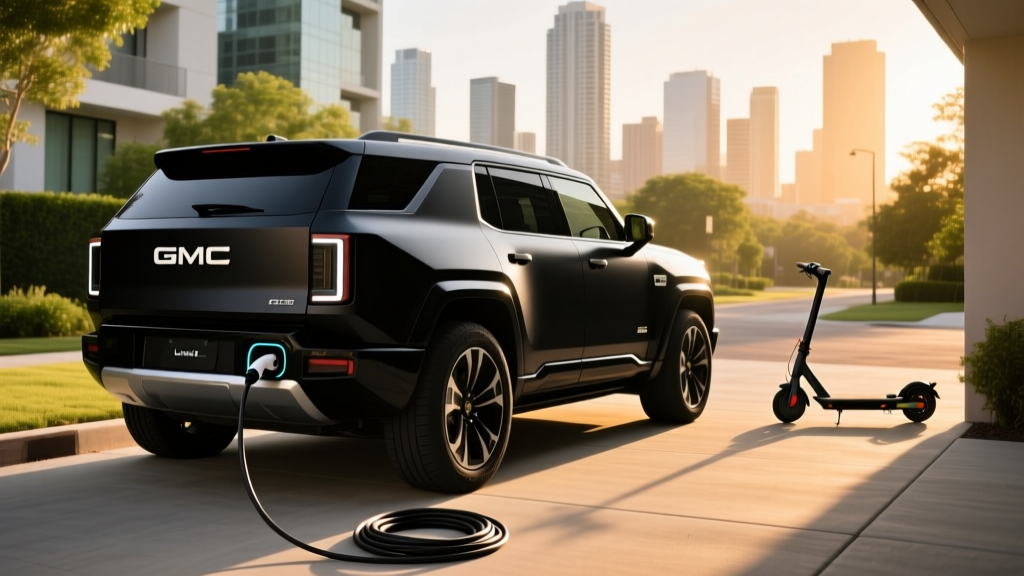
The GMC Hummer EV Pickup (2EV trim) starts around $98,000 and delivers an EPA-estimated 314 miles of range from a massive 212.7 kWh (usable) Ultium battery pack. Real-world highway range drops to roughly 250–270 miles, and cold weather can cut that by another 20–30%. It charges at a peak of 350 kW on DC fast chargers (10–80% in approximately 35 minutes) but requires robust home electrical infrastructure for Level 2 charging. Total 5-year ownership cost lands near $110,000–$125,000 depending on electricity rates and insurance. It qualifies for the federal §30D tax credit only if battery sourcing and buyer income requirements are met — verify on IRS.gov before purchasing.
Range, Battery, and Real-World Efficiency
The Hummer EV is an engineering spectacle: 1,000 horsepower, 0–60 mph in roughly 3.0 seconds (with Watts to Freedom mode engaged), and a curb weight exceeding 9,000 pounds. That mass demands an enormous battery — GM's dual-layer Ultium pack holds approximately 212.7 kWh of usable energy using NMC (nickel manganese cobalt) chemistry. For context, that is nearly three times the capacity of a Tesla Model Y's battery.
| Spec | Hummer EV Pickup 2EV (2026) |
|---|---|
| EPA Range | 314 miles |
| Real-World Highway (70 mph) | ~250–270 miles |
| Cold-Weather Range (20°F) | ~220–250 miles |
| Battery (Usable) | 212.7 kWh, NMC |
| Efficiency | 47 MPGe / 71 kWh/100mi |
| Peak DC Fast Charge | 350 kW (800V architecture) |
| 10–80% DC Charge Time | ~35 minutes |
| Level 2 Charge Rate | 11.5 kW (19.2 kW optional) |
| Level 2 Full Charge Time | ~19 hours (11.5 kW) |
| 0–60 mph | ~3.0 sec (WTF mode) |
| Horsepower | 1,000 hp (tri-motor) |
| Towing Capacity | 7,500 lbs |
| Base MSRP (2EV) | ~$98,000 |
| Battery/Powertrain Warranty | 8 years / 100,000 miles |
EPA vs. Reality: The 314-mile EPA estimate assumes mixed driving. On sustained highway trips at 70+ mph, expect 250–270 miles. In freezing temperatures, battery heating and cabin climate demands can reduce range to 220–250 miles. At 47 MPGe (71 kWh/100mi), the Hummer EV is the least efficient mainstream EV sold in the US — you are moving 9,000+ pounds of vehicle. According to fueleconomy.gov, this is roughly equivalent to a gas truck getting 14–15 MPG in combined driving.
Charging: What You Need at Home and on the Road
The Hummer EV's 800-volt architecture enables some of the fastest DC charging available. At a 350 kW-capable station (like newer Electrify America or EVgo stalls), you can add roughly 100 miles of range in about 10 minutes, though the charge curve tapers significantly above 80% state of charge. Expect a 10–80% session to take approximately 35 minutes under ideal battery-preconditioned conditions.
Home charging is where the math gets demanding. A standard 11.5 kW Level 2 charger (48 amps on a 60-amp circuit) adds about 8–9 miles of range per hour. Fully replenishing the 212.7 kWh pack from near-empty takes roughly 19 hours — meaning you cannot fully recharge in a single overnight session if the battery is deeply depleted. The optional 19.2 kW Level 2 charger (80 amps, requiring a 100-amp circuit) cuts this to approximately 12 hours, but most residential electrical panels cannot support this without an upgrade.
| Charging Level | Power (kW) | Miles Added per Hour | Full Charge Time | Infrastructure Required |
|---|---|---|---|---|
| Level 1 (120V) | 1.4 kW | ~1 mile | ~150+ hours | Standard outlet |
| Level 2 (240V, 48A) | 11.5 kW | ~8–9 miles | ~19 hours | 60-amp circuit, NEMA 14-50 or hardwired |
| Level 2 (240V, 80A) | 19.2 kW | ~14–15 miles | ~12 hours | 100-amp circuit, panel upgrade likely |
| DC Fast (350 kW peak) | Up to 350 kW | N/A | 10–80% in ~35 min | Public CCS/NACS station |
Home Charging Installation Cost Estimate
| Item | Cost Range |
|---|---|
| Level 2 Charger (hardware) | $500–$1,200 |
| Electrician (60-amp circuit install) | $800–$2,500 |
| Electrical Panel Upgrade (if needed, 200A service) | $2,000–$5,000 |
| Permits & Inspection | $100–$400 |
| Total Estimated Cost | $1,400–$9,100 |
The Hummer EV's massive battery makes a panel upgrade more likely than with smaller EVs, since you will want the fastest Level 2 charging your home can support.
Hummer EV vs. Gas Trucks: Cost Comparison
The natural cross-shop for a Hummer EV buyer is a full-size gas or diesel truck — the Ford F-150, Ram 1500, or GMC Sierra 1500 in premium trims. Here is how the economics stack up over five years and 75,000 miles of driving.
| Cost Category | Hummer EV 2EV | GMC Sierra 1500 Denali (Gas) |
|---|---|---|
| Base MSRP | $98,000 | $72,000 |
| Federal Tax Credit (§30D) | Up to $7,500 (if eligible) | $0 |
| Fuel/Energy (75,000 mi) | $6,400–$10,700* | $13,500–$16,900** |
| Maintenance (5 years) | $1,500–$2,500 | $3,500–$5,000 |
| Insurance (5 years) | $14,000–$18,000 | $9,000–$12,000 |
| Estimated Depreciation (5 yr) | $40,000–$50,000 | $28,000–$35,000 |
| 5-Year Total Cost of Ownership | $112,400–$139,800 | $98,000–$122,900 |
* Based on $0.12–$0.20/kWh home charging and 71 kWh/100mi efficiency. DC fast charging at $0.35–$0.48/kWh pushes costs higher.
** Based on 16 MPG combined and $3.20–$4.00/gallon regular unleaded.
The Hummer EV saves on fuel and maintenance but loses ground on purchase price, insurance premiums (specialty EV coverage is 30–50% higher for trucks in this price range), and steeper projected depreciation. The break-even point versus a loaded gas truck is narrow and highly dependent on your local electricity rates and annual mileage.
Real-World Ownership Considerations
Who Should Buy the Hummer EV
This truck makes sense for a specific buyer: someone with home charging access (ideally a 240V/60A circuit minimum), a daily commute under 150 miles round-trip, and the desire for a statement vehicle that delivers genuine off-road capability (with available 4-wheel steer and Extract Mode for 17 inches of ground clearance) alongside supercar-rivaling acceleration.
Who Should Reconsider
If you lack home charging, the Hummer EV becomes impractical. Its 71 kWh/100mi consumption means public DC fast charging is both time-consuming and expensive — a full charge at $0.40/kWh costs approximately $85. Apartment dwellers or street parkers should look at more efficient EVs or a PHEV truck like the Ford F-150 PowerBoost hybrid as a bridge option.
Climate and Driving Pattern Impact
Cold-weather owners in northern states should budget for 20–30% range loss in winter. The Hummer EV's battery thermal management system helps, but heating a 9,000-pound vehicle in 20°F weather is energy-intensive. Owners in mild climates (California, Texas, Southeast) will see range closest to EPA estimates.
| Myth | Fact |
|---|---|
| "The Hummer EV gets 314 miles no matter how you drive." | EPA is a mixed-cycle estimate. Sustained highway driving at 75 mph yields ~250–270 miles. Cold weather reduces this further. |
| "It charges as fast as a Tesla." | Peak rate is 350 kW (impressive), but the massive battery means 10–80% takes ~35 minutes vs. ~18 minutes for a Model Y. Total energy added is much larger. |
| "EVs don't need maintenance." | Tires wear 20–30% faster on heavy EVs. The Hummer EV's weight and torque demand frequent tire replacement (~$1,800–$2,400 per set of 35-inch tires). |
| "The federal tax credit is guaranteed." | §30D eligibility depends on battery critical-mineral sourcing, buyer income caps ($300K joint / $150K single), and MSRP limits ($80K for trucks). The Hummer EV's MSRP may exceed the cap — check current IRS rules. |
| "Home charging is simple." | A 212 kWh battery demands robust Level 2 infrastructure. Many homes need a 200-amp panel upgrade ($2,000–$5,000) to support adequate charging speeds. |
Federal Tax Credit and Purchase Incentives
The Hummer EV faces a significant hurdle with the §30D Clean Vehicle Credit. The MSRP cap for trucks is $80,000 under current IRS rules, and every Hummer EV trim exceeds that threshold. This means the Hummer EV likely does not qualify for the $7,500 federal tax credit as of 2026. Always verify current eligibility on fueleconomy.gov's tax credit page before making a purchase decision.
Some states offer additional rebates or HOV-lane access for EVs regardless of price — check your state's energy office or DMV. Utility companies may also offer off-peak charging rebates or Level 2 charger incentives worth $250–$1,000.
Decision Framework: Should You Buy the Hummer EV?
Choose the Hummer EV If:
- You have a garage with 240V/60A (or can upgrade your panel)
- Your daily driving is under 150 miles and you want a premium electric truck
- Off-road capability and 1,000-hp performance are priorities
- You accept ~$110K+ in 5-year ownership costs for the experience
- You understand the truck likely does not qualify for the federal tax credit
Consider an Alternative If:
- You lack reliable home charging access
- Your budget is under $70,000 — look at the Ford F-150 Lightning (XLT from ~$55K) or Rivian R1T (Dual-Motor from ~$70K)
- You prioritize efficiency — the Rivian R1T achieves ~2.0 kWh/mi vs. the Hummer's ~2.35 kWh/mi
- You tow frequently over 200 miles — EV range drops 40–50% while towing heavy loads
- You want the tax credit — the F-150 Lightning and R1T may qualify depending on trim and sourcing
Frequently Asked Questions
How long does the Hummer EV battery last?
GM warranties the Ultium battery for 8 years or 100,000 miles against defects and excessive degradation (typically defined as falling below 60–70% of original capacity). NMC chemistry degrades gradually; expect 10–15% capacity loss over 150,000 miles under normal use. Replacement cost, if out of warranty, is estimated at $20,000–$30,000+ for a pack this size — though prices continue to decline.
Can the Hummer EV tow long distances?
Towing capacity is 7,500 lbs, but range drops dramatically under load. Expect roughly 150–180 miles of range when towing a 5,000-lb trailer at highway speeds. For towing-intensive use cases exceeding 150 miles between charging stops, a diesel truck remains more practical in 2026.
Does the Hummer EV use NACS or CCS for charging?
The 2026 Hummer EV ships with the NACS (North American Charging Standard) connector, granting access to Tesla Supercharger stations via GM's agreement with Tesla. It previously used CCS1, and adapters are available for legacy CCS stations.
What is the Hummer EV's insurance cost?
Insurance premiums average $2,800–$3,600 annually depending on state, driving record, and coverage level. That is 30–50% higher than a comparably priced gas truck due to specialized EV repair costs, high parts prices, and the vehicle's performance profile. Get quotes from multiple insurers before purchasing.
Is the Hummer EV good off-road?
Yes — with available 4-wheel steer (CrabWalk mode for diagonal movement), adaptive air suspension with Extract Mode (17 inches of ground clearance), underbody armor, and 35-inch all-terrain tires, it is genuinely capable. The tri-motor AWD system provides precise torque vectoring. However, the 9,000+ lb curb weight means it can sink in soft sand and mud more readily than lighter off-road vehicles.
How does the Hummer EV SUV compare to the Pickup?
The Hummer EV SUV shares the same powertrain but has a shorter wheelbase, slightly less range (~307 miles EPA for 2026 trims), and a smaller bed area (it has a rear cargo space instead). Pricing is similar. Choose the SUV if you prefer enclosed cargo; choose the Pickup for utility and bed versatility.