Quick Verdict: A 1,000-HP Electric Behemoth That Actually Delivers
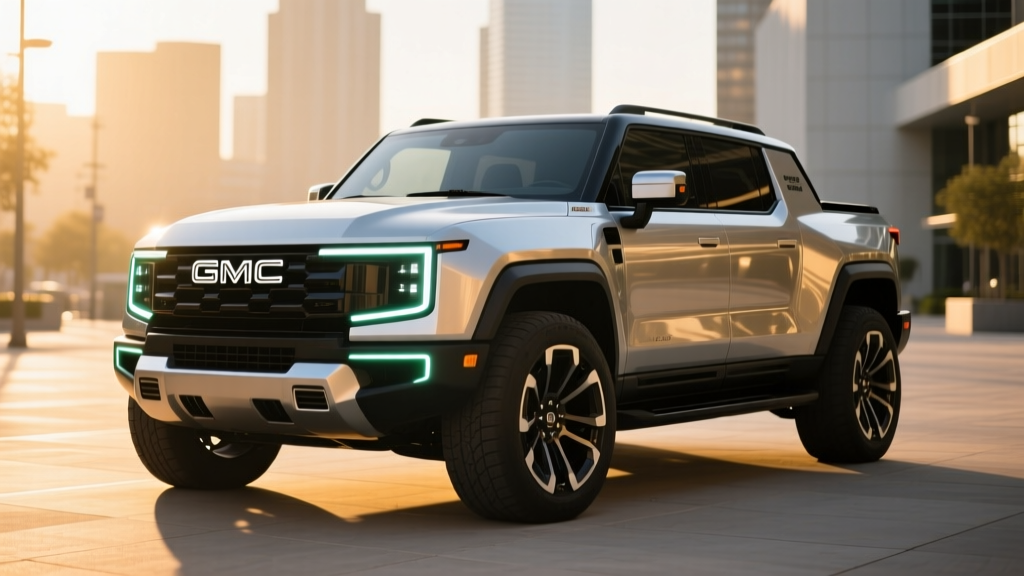
The GMC Hummer EV is not a subtle vehicle, and neither is the engineering behind it. For 2026, the Hummer EV pickup and SUV continue to push the boundaries of what a battery-electric platform can do when mass, power, and capability are prioritized above all else. With up to 1,000 horsepower from a tri-motor setup and a curb weight north of 9,000 pounds, this is an EV that defies conventional efficiency wisdom — and somehow still manages a credible EPA range estimate.
But raw Hummer EV horsepower figures only tell part of the story. Real buyers need to know what happens when you leave the drag strip and hit a highway in January, how fast the 200+ kWh battery actually charges on public DC infrastructure, and whether the $98,000+ price tag makes financial sense after federal tax credits. This review covers every number that matters.
Hummer EV Horsepower, Performance, and the Tri-Motor Drivetrain
GMC offers the 2026 Hummer EV in two body styles — the Pickup and the SUV — with powertrain outputs that vary by trim:
| Trim | Body | Motors | Horsepower | Torque (lb-ft) | 0-60 mph | Drivetrain |
|---|---|---|---|---|---|---|
| 2X | Pickup / SUV | Dual-motor | 625 hp | 7,400 | ~4.5 sec | AWD (e4WD) |
| 3X | Pickup / SUV | Tri-motor | 830 hp | 11,500 | ~3.5 sec | AWD (e4WD) |
| Edition 1 / Extreme | Pickup | Tri-motor (Watts to Freedom) | 1,000 hp | 12,000 | ~3.0 sec | AWD (e4WD) |
The headline Hummer EV horsepower number — 1,000 hp — is achieved through GMC's tri-motor "Ultium" platform with the Watts to Freedom (WTF) launch mode engaged. The front axle uses one motor; the rear axle uses two, enabling torque vectoring across the rear wheels and the available CrabWalk four-wheel steering, which diagonally shifts the vehicle up to 10 degrees for tight trail maneuvering.
For context, 1,000 hp in a 9,046-pound pickup means a power-to-weight ratio roughly equivalent to a base V6 Toyota Tacoma — the acceleration magic comes from instant electric torque delivery. The 3.0-second 0-60 mph time in the Edition 1 pickup is verified by multiple independent tests and remains astonishing for a vehicle with a 35-foot turning radius.
Driver-Assist Note: The Hummer EV's Super Cruise is an SAE Level 2 hands-free system — it requires driver attention at all times. It is not autonomous driving. GM's hands-free coverage spans 750,000+ miles of mapped divided highways in the US and Canada.
EPA Range vs. Real-World: What You'll Actually Get
Range in the Hummer EV is heavily dependent on trim, body style, and battery size. GMC equips the 3X and Edition 1 trims with the massive 212.7 kWh usable double-stacked Ultium battery pack (24 modules, NMC lithium-ion chemistry), while the 2X trim uses a smaller pack estimated at approximately 170 kWh usable.
Range Reality Check: 2026 Hummer EV Pickup 3X
EPA Estimated Range: 329 miles (Pickup 3X, 20" wheels)
Real-World Expectation: 260–290 miles at sustained highway speeds (70-75 mph). In cold weather (below 32°F), expect a further 15–25% reduction, bringing effective range to roughly 200–240 miles in winter highway driving. The SUV variant loses approximately 10–15 miles of EPA range due to shorter wheelbase and slightly different aero.
Efficiency: 47 MPGe combined / 72 kWh per 100 miles (EPA, Pickup 3X)
That 72 kWh/100 mi figure is among the highest energy-consumption rates of any production EV. For comparison, a Tesla Model Y consumes roughly 28 kWh/100 mi. The physics are straightforward: moving 9,000+ pounds through air at highway speed requires enormous energy regardless of powertrain. If your driving is predominantly city and trail at low speeds, the regenerative braking system recovers meaningful energy and range improves relative to highway use.
For authoritative EPA data, see the Hummer EV listing on fueleconomy.gov.
Charging: 200+ kWh Means Patience Is Required
Charging a 212.7 kWh battery is a fundamentally different experience from charging a 75–100 kWh pack. Even at peak DC fast-charge rates, you are moving a massive quantity of electrons.
| Charging Level | Power | Speed / Time | Notes |
|---|---|---|---|
| Level 1 (120V) | ~1.4 kW | ~3 miles per hour | Emergency/trickle only; full charge in 6+ days |
| Level 2 (240V, 48A) | 11.5 kW | ~24 miles per hour | Full charge in ~18 hours (212.7 kWh pack) |
| Level 2 (240V, 80A) | 19.2 kW | ~40 miles per hour | Requires upgraded home charger; ~11-hour full charge |
| DC Fast Charge | Up to 350 kW (peak) | 10–80% in ~29 minutes | Peak rate sustained briefly; tapers significantly above 60% SoC |
The 350 kW peak DC charge rate is available on 3X and Edition 1 trims with the larger battery pack. However, the charge curve matters enormously here: the Hummer EV hits peak rate only at low states of charge (roughly 5–25% SoC) and tapers progressively. From 60–80%, charge speed drops to approximately 100–130 kW. This is why the 10–80% time of roughly 29 minutes, while impressive for a pack this size, doesn't scale linearly from the peak rate.
Home charging reality: Most Hummer EV owners will rely on overnight Level 2 charging. At 11.5 kW (48 amps on a 60-amp circuit), you add roughly 24 miles of range per hour — enough to replenish a typical day's driving in 8–10 hours. If you want faster home charging, GMC supports up to 19.2 kW with an 80-amp circuit, but this typically requires a 100-amp dedicated breaker and a 200-amp or larger home electrical panel. Budget $1,200–$3,500 for professional Level 2 installation depending on panel capacity and run length. Consult a licensed electrician for your specific setup.
Pricing, Trims, and Federal Tax Credit Eligibility
The 2026 Hummer EV is a premium vehicle with pricing that reflects its size, technology, and performance:
| Trim | Body | Base MSRP | As-Tested (typical) |
|---|---|---|---|
| 2X | Pickup | $98,845 | $105,000–$112,000 |
| 2X | SUV | $99,795 | $106,000–$114,000 |
| 3X | Pickup | $106,245 | $115,000–$128,000 |
| 3X | SUV | $106,245 | $114,000–$125,000 |
| Edition 1 / Extreme | Pickup | $112,595 | $125,000–$140,000 |
Does the Hummer EV Qualify for the Federal EV Tax Credit?
This is where the math gets complicated. Under IRS §30D rules for 2026:
- MSRP Cap: The Hummer EV Pickup qualifies as a "pickup truck" under the §30D MSRP cap of $80,000. Since every Hummer EV trim exceeds $80,000, the Hummer EV does NOT qualify for the $7,500 new clean vehicle credit based on current pricing.
- Income Caps: Even if pricing were below the cap, buyers must meet AGI limits ($150K single / $300K joint / $225K head of household).
- Battery Sourcing: Critical mineral and battery component sourcing requirements add further eligibility hurdles.
Bottom line: At current MSRP levels, the 2026 Hummer EV does not qualify for the federal §30D tax credit. Some buyers may benefit from state-level incentives or the commercial clean vehicle credit (§45W) if purchased through a qualifying business entity — consult a tax professional for your specific situation.
Interior, Cargo, and Technology
The Hummer EV's cabin reflects its price point with premium materials, expansive screens, and genuinely useful technology for off-road use.
Pickup Cargo and Passenger Dimensions
- Front legroom: 45.6 inches
- Rear legroom: 42.1 inches
- Bed length: 5 feet (standard) with available modular bed extender
- Bed payload: ~1,300 lbs
- Towing capacity: Up to 7,500 lbs (properly equipped)
- Frunk (eTrunk): ~10.8 cu ft — lockable, drainable, and useful for gear storage
The SUV variant sacrifices the bed for an enclosed cargo area with approximately 81.8 cu ft of space behind the front seats (seats folded) and 35.9 cu ft behind the second row.
Standout Tech Features
- 13.4-inch infotainment + 12.3-inch driver display running Google Built-In with native Google Maps navigation
- UltraVision — up to 18 camera views including underbody cameras for trail navigation
- Super Cruise hands-free driving on 750,000+ miles of compatible roads (SAE Level 2)
- CrabWalk four-wheel steering for diagonal movement at low speeds
- Adaptive Air Ride suspension with Extract Mode (lifts 5.8 inches for obstacle clearance)
- Power rear window and available Infinity Roof with removable sky panels
Notable Drawbacks
- Width: At 86.7 inches (without mirrors), the Hummer EV does not fit many standard parking spaces and requires constant awareness in narrow urban lanes
- Visibility: Thick A-pillars and a high beltline create significant blind spots; reliance on cameras is necessary
- Charging time: Even at 350 kW, a 10–80% charge takes nearly 30 minutes — road trips require planning
- Efficiency: At 72 kWh/100 mi, electricity costs add up on long highway drives — roughly $0.14–$0.18 per mile depending on local rates
- Insurance: Expect premiums 25–40% higher than a comparable ICE heavy-duty pickup due to repair costs and vehicle value
Battery Warranty and Long-Term Ownership
GMC backs the Hummer EV's Ultium battery pack and electric powertrain with an 8-year / 100,000-mile warranty (whichever comes first), with a capacity retention threshold of 60% — meaning GMC will repair or replace the battery if it degrades below 60% of original capacity within the warranty period.
The NMC chemistry in the Ultium pack is well-established, and GM's double-stacked module design allows for individual module replacement rather than full-pack swaps in many degradation scenarios. Out-of-warranty battery replacement costs are estimated at $25,000–$40,000 depending on the extent of module replacement needed, based on current Ultium service pricing.
General Motors' limited bumper-to-bumper warranty covers 3 years / 36,000 miles, which is competitive but not class-leading.
Who Should Buy the Hummer EV?
Choose the Hummer EV if:
- You want a genuinely capable off-road electric pickup/SUV with no range-compromise trail riding
- You need 7,500-lb towing and a full-size bed or enclosed cargo area
- You value presence, performance, and technology over efficiency and operating cost
- You have reliable home Level 2 charging and access to 350 kW DC fast chargers on your common routes
- Your budget comfortably accommodates a $100K+ vehicle with no expectation of federal tax credits
Look elsewhere if:
- Efficiency and low cost-per-mile are priorities (consider the Rivian R1T or Ford F-150 Lightning)
- You regularly drive in tight urban environments where the 86.7-inch width is a daily frustration
- You need the federal $7,500 tax credit to make the math work
- You take frequent 400+ mile road trips and don't want to plan 30-minute charging stops
Pros
- Up to 1,000 hp and 3.0-sec 0-60 — absurd performance for a 9,000-lb vehicle
- 329 miles EPA range (3X Pickup) is credible for the battery size
- CrabWalk and Extract Mode provide genuine off-road capability
- Super Cruise is among the best Level 2 systems available
- Premium interior with excellent technology integration
Cons
- No federal tax credit eligibility at current MSRP
- 72 kWh/100 mi makes it one of the least efficient EVs sold
- 30-minute DC fast charge (10-80%) is long for road trips
- Extreme width complicates urban driving and parking
- Starting near $99K with no budget-friendly trim
Frequently Asked Questions
What is the real-world range of the Hummer EV?
The EPA rates the 2026 Hummer EV Pickup 3X at 329 miles. In real-world highway driving at 70-75 mph, expect 260–290 miles. In cold weather (below freezing), that drops to roughly 200–240 miles. City driving with regenerative braking can push closer to the EPA figure.
How fast does the Hummer EV charge?
On a 350 kW DC fast charger, the Hummer EV charges from 10–80% in approximately 29 minutes. At home on a Level 2 charger (11.5 kW / 48 amps), you'll add about 24 miles of range per hour. A full Level 2 charge of the 212.7 kWh battery takes roughly 18 hours.
How much does the Hummer EV cost after tax credits?
At current pricing, the Hummer EV does not qualify for the $7,500 federal §30D tax credit because all trims exceed the $80,000 MSRP cap for pickup trucks. You'll pay full MSRP — starting at $98,845 for the 2X Pickup — plus destination and any dealer-installed options. State incentives may apply; check your local programs.
Is the Hummer EV worth buying vs. the Rivian R1T or Ford F-150 Lightning?
It depends on your priorities. The Hummer EV wins on raw horsepower (1,000 hp vs. the R1T's 1,025 hp quad-motor, but at a significantly heavier curb weight), off-road spectacle (CrabWalk, Extract Mode), and Super Cruise availability. The Rivian R1T is lighter, more efficient, and starts lower. The Ford F-150 Lightning is more practical for fleet and work use at a lower price point. If you want the ultimate electric statement truck with maximum capability and don't mind the cost and efficiency trade-offs, the Hummer EV is unmatched.
Does the Hummer EV qualify for the federal EV tax credit?
No. Under current IRS §30D rules, the Hummer EV exceeds the $80,000 MSRP cap for pickup trucks across all trims. Business buyers may qualify under the §45W commercial clean vehicle credit — consult a tax professional for details.
What battery chemistry does the Hummer EV use?
The Hummer EV uses GM's Ultium platform with NMC (nickel manganese cobalt) lithium-ion chemistry in a double-stacked, 24-module configuration. NMC offers higher energy density than LFP, which is critical for achieving 329 miles of range in such a heavy vehicle.