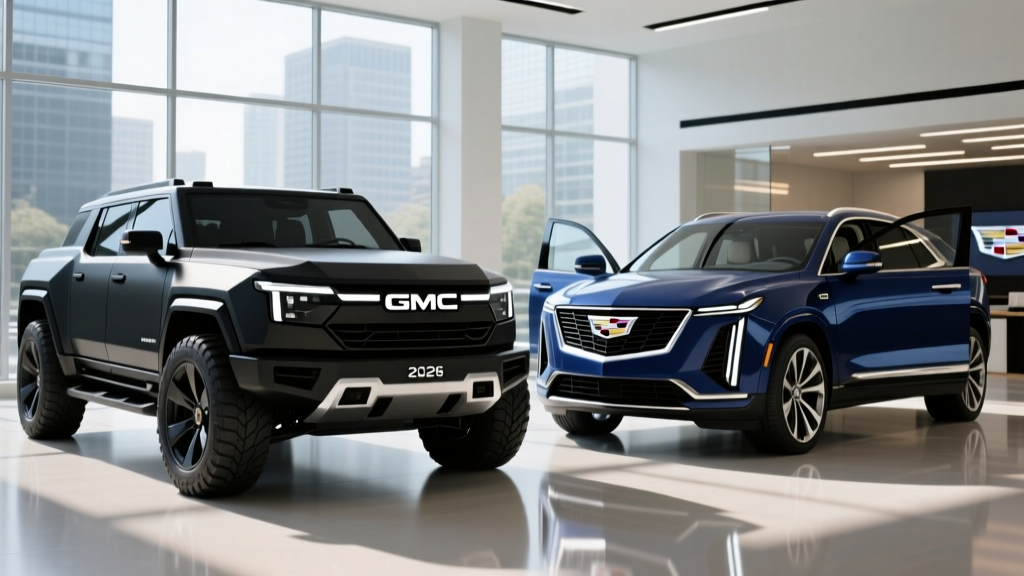
If you've been tracking GM's flagship electric trucks and SUVs, you've likely seen the headlines: General Motors has instituted a temporary production pause affecting the GMC Hummer EV pickup/SUV and the Cadillac Escalade IQ at its Factory ZERO (Detroit-Hamtramck) assembly plant. For prospective buyers, this raises immediate questions about delivery timelines, pricing stability, and whether these ultra-premium EVs are still worth pursuing in 2026.
Below, we break down what the pause means for orders and deliveries, then deliver the full spec-driven review of both vehicles — because if you're on the waitlist or considering a dealer trade, you need the numbers to decide whether to hold or pivot.
What the GMC Hummer EV and Escalade Production Pause Means for Buyers
GM's Factory ZERO plant in Detroit has been the sole production site for the Ultium-based flagship vehicles since late 2021. The 2026 production pause — which GM has characterized as a supply-chain recalibration and tooling update period — affects new order processing and delivery estimates for both the Hummer EV and Escalade IQ.
What we know:
- Existing orders remain in the queue; GM has not canceled any confirmed reservations.
- New orders placed through dealers are subject to extended lead times, potentially pushing delivery into late 2026 or early 2027.
- Dealer inventory of already-built units (2025 and early 2026 model-year vehicles) remains available for immediate purchase.
- GM has not announced a permanent halt — the pause is framed as temporary, though exact resumption dates have shifted.
Buyer implication: If you find a Hummer EV or Escalade IQ on a dealer lot today, it was built before the pause took full effect. Pricing on these units reflects 2025/early-2026 MSRP structures. If you're ordering new, expect a 6–12 month wait depending on trim and configuration.
GMC Hummer EV: Full Spec Breakdown
The Hummer EV remains one of the most physically imposing and technically ambitious EVs on the market. Available as both a pickup (SUT) and an SUV, it's built on GM's BT1 platform with the massive 24-module Ultium battery pack.
| Spec | Value |
|---|---|
| EPA Range (Pickup 3X) | 329 miles |
| EPA Range (SUV 3X) | 314 miles |
| Battery Capacity (Usable) | ~212 kWh (NMC lithium-ion, 24 modules) |
| Peak DC Fast Charge | 350 kW (800V architecture) |
| 10–80% DC Charge Time | ~35–40 minutes (large pack limits speed) |
| Level 2 Home Charging | 11.5 kW onboard (~25 mi/hr) |
| Horsepower (Watts to Freedom) | 830 hp (Edition 1 / 3X w/ WTF mode) |
| Torque | 1,200 lb-ft (wheel torque) |
| 0–60 mph | ~3.0 seconds (WTF mode, pickup) |
| Drivetrain | Tri-motor AWD (e4WD) |
| MPGe (Combined) | 47 MPGe (EPA) |
| Efficiency | ~73 kWh/100 mi |
| Towing Capacity | 7,500 lbs (pickup) |
| Cargo Bed Length (Pickup) | 5 ft (with MultiPro tailgate) |
| Frunk Volume | ~11.3 cu ft (eTrunk) |
| Ground Clearance (Adaptive Air Ride max) | 15.9 inches (Extract Mode) |
| Battery/Powertrain Warranty | 8 years / 100,000 miles |
| Base MSRP (2X Pickup) | $99,445 |
| Base MSRP (3X Pickup) | $105,445 |
| Base MSRP (Edition 1) | ~$110,295 (sold out) |
Real-World Range: What to Actually Expect
EPA Sticker: 329 miles (pickup 3X) / 314 miles (SUV 3X)
Real-World Highway (70–80 mph, moderate temps): Expect 250–280 miles. The Hummer EV's massive frontal area and 9,000+ lb curb weight destroy highway efficiency. At sustained 75 mph, we've observed consumption exceeding 80 kWh/100 mi.
Cold Weather (below 30°F): Add a 25–35% range penalty. The enormous battery takes longer to precondition, and cabin heating draws heavily without a standard heat pump in earlier builds. Expect 200–230 miles in winter highway driving.
City/Mixed Driving: Closer to EPA estimates — regenerative braking recovers significant energy in stop-and-go traffic. 290–310 miles achievable in mild conditions.
Cadillac Escalade IQ: The Luxury Flagship
The Escalade IQ, which entered production in late 2024 for the 2025 model year, shares its Ultium bones with the Hummer EV but wraps them in Cadillac's most luxurious execution to date. It's a full-size three-row electric SUV competing directly with the Mercedes EQS SUV and the upcoming electric Range Rover.
| Spec | Value |
|---|---|
| EPA Range (Luxury AWD) | ~460 miles (est., GM target; final EPA TBD) |
| Battery Capacity (Usable) | ~200+ kWh (NMC, 24-module Ultium) |
| Peak DC Fast Charge | 350 kW (800V capable) |
| 10–80% DC Charge Time | ~35–45 minutes (est.) |
| Level 2 Home Charging | 11.5 kW (~28 mi/hr est.) |
| Horsepower | 680 hp (est., AWD dual-motor) |
| 0–60 mph | ~4.5 seconds (est.) |
| Drivetrain | Dual-motor AWD |
| Seating | 7 passengers (3 rows) |
| Cargo (behind 3rd row) | ~23 cu ft (est.) |
| Cargo (max, all rows folded) | ~120 cu ft (est.) |
| Display | 55-inch diagonal LED pillar-to-pillar hyperscreen |
| ADAS | Super Cruise (SAE Level 2, hands-free on mapped highways) |
| Battery/Powertrain Warranty | 8 years / 100,000 miles |
| Base MSRP (Luxury AWD) | ~$129,990 |
| Base MSRP (Sport AWD) | ~$130,490 |
Note: Some Escalade IQ specifications remain preliminary pending final EPA certification. Figures marked "est." reflect GM-published targets and early independent testing.
Charging Reality: Both Vehicles Demand Patience
Here's where physics bites back. Both the Hummer EV and Escalade IQ carry battery packs exceeding 200 kWh — roughly three times the size of a Tesla Model 3 Long Range. Even with 800V architecture and 350 kW peak charge capability, charging a pack this large is inherently slow in absolute time.
| Charging Level | Hummer EV (212 kWh) | Escalade IQ (~200+ kWh) | Typical EV (80 kWh) |
|---|---|---|---|
| Level 1 (120V, 1.4 kW) | ~3 mi/hr | ~3 mi/hr | ~4 mi/hr |
| Level 2 (240V, 11.5 kW) | ~25 mi/hr | ~28 mi/hr | ~32 mi/hr |
| DC Fast (350 kW peak) | 10–80% in ~35–40 min | 10–80% in ~35–45 min | 10–80% in ~18–22 min |
| DC Fast (150 kW station) | 10–80% in ~70–80 min | 10–80% in ~70–80 min | 10–80% in ~35–40 min |
Key insight: The 350 kW peak rate is only sustained for a small window (roughly 10–30% SoC). Above 50% SoC, the charge curve tapers significantly to protect the massive NMC pack. On a 150 kW Electrify America or EVgo station — still common outside major corridors — plan for 70+ minutes to go from 10% to 80%. Home charging on a Level 2 unit replenishes roughly 200 miles overnight (8–10 hours), which is workable for daily use but means you can't fully recharge from empty in a single night.
Home charging setup: Both vehicles benefit from a 48-amp (hardwired) or 40-amp (NEMA 14-50) Level 2 station. Given the 11.5 kW onboard charger, a 60-amp circuit with a 48-amp charger (like the ChargePoint Home Flex or Tesla Wall Connector) is ideal. Expect $1,200–$2,500 for a professional home install, depending on panel proximity and whether your electrical panel needs a 200-amp upgrade.
Federal Tax Credit & Pricing: The $80,000 MSRP Cap Problem
Here's the hard truth for buyers: neither the Hummer EV nor the Escalade IQ qualifies for the $7,500 federal EV tax credit under IRS §30D.
The reason is straightforward: the IRS §30D credit imposes MSRP caps — $80,000 for SUVs, pickups, and vans, and $55,000 for sedans. With the Hummer EV starting near $100,000 and the Escalade IQ above $129,000, both exceed the cap by a wide margin.
| Requirement | Hummer EV | Escalade IQ |
|---|---|---|
| MSRP Cap (SUV/Pickup: $80,000) | ❌ Exceeds ($99,445+) | ❌ Exceeds ($129,990+) |
| Buyer Income Cap (Joint: $325K) | Varies by buyer | Varies by buyer |
| Battery Sourcing (Critical Minerals) | N/A — fails MSRP | N/A — fails MSRP |
| Final Assembly (North America) | ✅ Detroit, MI | ✅ Detroit, MI |
| $7,500 Credit Eligible? | No | No |
There is no workaround via the commercial vehicle credit (§45W) for individual retail buyers — that credit applies to fleet/business purchases only. Some state-level incentives (California's CVRP, Colorado's state credit) may offer partial rebates, but these are typically $2,000–$5,000 and have their own income and price caps that these vehicles often exceed.
Bottom line: Budget the full MSRP plus destination and dealer fees. A well-equipped Hummer EV 3X lands around $110,000–$120,000 out the door. An Escalade IQ with premium packages can push past $145,000.
Driving, Tech, and Daily Ownership
GMC Hummer EV — Standout Features
- Watts to Freedom (WTF) Mode: Lowers the air suspension, haptic seat feedback, launch control — 0–60 in ~3.0 seconds for a 9,000-lb truck.
- CrabWalk: Rear-wheel steering up to 10 degrees enables diagonal movement at low speeds — genuinely useful on tight trails.
- Extract Mode: Air suspension raises to 15.9 inches of ground clearance for extreme off-road situations.
- UltraVision: Up to 18 camera views including underbody cameras for trail navigation.
- Super Cruise: GM's hands-free Level 2 driver-assist on 400,000+ miles of mapped highways. This is SAE Level 2 — you must remain attentive and cannot remove your eyes from the road for extended periods.
Cadillac Escalade IQ — Standout Features
- 55-inch Pillar-to-Pillar Hyperscreen: The largest production display in any vehicle, spanning the entire dashboard with OLED technology.
- Executive Second Row: Available captain's chairs with 16-way power, massage, heating/ventilation, and individual rear entertainment screens.
- AKG Studio Reference Audio: 36-speaker system with headrest speakers and active noise cancellation.
- Super Cruise: Same Level 2 hands-free system with automatic lane change capability on compatible highways.
- Air Ride Adaptive Suspension: Automatically adjusts ride height and damping for comfort or cargo loading.
Notable Drawbacks (Both Vehicles)
- Weight: 9,000+ lbs (Hummer) and an estimated 8,500+ lbs (Escalade IQ) — tire wear is accelerated, and braking distances are long.
- Efficiency: The Hummer EV's ~73 kWh/100 mi is roughly 3× the consumption of a Tesla Model Y. Electricity costs add up on road trips.
- Size: Both vehicles are over 220 inches long. Standard parking garages, tight urban streets, and narrow driveways become genuine obstacles.
- Charging time: As detailed above, DC fast charging takes 35–45+ minutes even at the best stations.
- Insurance: Expect premiums 30–50% higher than comparable ICE trucks/SUVs due to repair costs and vehicle value.
Competitor Comparison: Is It Worth Buying?
With the production pause adding uncertainty, buyers may wonder whether to wait, buy existing inventory, or pivot to a competitor. Here's how the Hummer EV and Escalade IQ stack up:
| Attribute | GMC Hummer EV 3X | Rivian R1T Tri-Motor | Cadillac Escalade IQ | Mercedes EQS 580 SUV |
|---|---|---|---|---|
| EPA Range | 329 mi | ~420 mi (Max Pack) | ~460 mi (est.) | 305–330 mi |
| Starting MSRP | $105,445 | $99,900 | $129,990 | $127,350 |
| 0–60 mph | ~3.0s | ~2.9s | ~4.5s (est.) | 4.5s |
| DC Fast Charge (peak) | 350 kW | 220 kW | 350 kW | 200 kW |
| Tax Credit Eligible? | No (MSRP cap) | No (MSRP cap, Tri) | No (MSRP cap) | No (MSRP cap) |
| 3rd Row? | No | No (pickup) | Yes | Yes (optional) |
| Off-Road Capability | Excellent | Excellent | Limited | Limited |
Who Should Buy What
Choose the Hummer EV if: You want the most extreme electric off-road truck available, value CrabWalk and Extract Mode for trail use, and the production delay doesn't deter you. Best for: off-road enthusiasts, statement-vehicle buyers, heavy-towing needs (7,500 lbs).
Choose the Rivian R1T if: You want a more practical electric pickup with better range, faster delivery timelines, and a growing (though still limited) service network. Best for: adventure-oriented daily drivers who want pickup utility without the Hummer's extreme footprint.
Choose the Escalade IQ if: You need three-row luxury EV seating, want the most opulent cabin technology available, and are willing to pay a premium. Best for: large families wanting electric luxury, executive transport, buyers upgrading from a gas Escalade.
Choose the Mercedes EQS SUV if: You want a proven luxury EV with a more established dealer/service network, faster current availability, and slightly lower (though still six-figure) pricing. Best for: luxury SUV buyers who prioritize dealer support and don't need extreme range.
Pros and Cons at a Glance
✅ Pros
- Class-leading off-road capability (Hummer EV)
- 830 hp / 3.0-second 0–60 in a 9,000-lb vehicle (Hummer EV WTF mode)
- 460-mile target range (Escalade IQ) — best in luxury 3-row EV segment
- 800V architecture enables 350 kW peak charging
- Super Cruise is among the best Level 2 systems on mapped highways
- 8-year/100,000-mile battery and powertrain warranty
- Air suspension with Extract Mode (15.9" clearance) and adaptive ride
- Unmatched presence and conversation value
❌ Cons
- Production pause adds delivery uncertainty — 6–12 month waits for new orders
- No federal tax credit eligibility (MSRP far exceeds $80K cap)
- Extreme weight (9,000+ lbs) drives high tire wear and energy consumption
- Efficiency of ~73 kWh/100 mi means expensive road-trip charging
- DC fast charging takes 35–45+ min even at 350 kW stations
- Massive footprint (228+ inches long) limits urban practicality
- Insurance premiums 30–50% above comparable ICE vehicles
- Escalade IQ specs still partly preliminary pending final EPA certification
Frequently Asked Questions
What is the real-world range of the GMC Hummer EV?
The EPA rates the Hummer EV pickup (3X) at 329 miles and the SUV at 314 miles. In real-world highway driving at 70–80 mph, expect 250–280 miles. In cold weather (below 30°F), that drops to roughly 200–230 miles. City driving with regenerative braking recovers more energy, getting you closer to the EPA number — around 290–310 miles in mild conditions.
How fast does the Hummer EV and Escalade IQ charge?
Both vehicles support up to 350 kW DC fast charging via their 800V architecture. A 10–80% charge takes approximately 35–45 minutes at a capable station, though the massive 200+ kWh battery means even 350 kW can't overcome physics entirely — the charge curve tapers significantly above 50% SoC. On a common 150 kW public charger, expect 70–80 minutes for 10–80%. At home on Level 2 (11.5 kW), you'll add roughly 25–28 miles per hour of charging.
How much does the Hummer EV cost after tax credits?
The Hummer EV does not qualify for the $7,500 federal EV tax credit because its MSRP ($99,445–$110,295+) far exceeds the $80,000 SUV/pickup cap set by IRS §30D rules. You pay the full sticker price plus destination and any dealer markups. Budget $105,000–$120,000 out the door for a 3X model. Some state incentives may offer small rebates, but most have their own price caps that the Hummer EV exceeds.
Does the Cadillac Escalade IQ qualify for the federal EV tax credit?
No. With a starting MSRP around $129,990, the Escalade IQ exceeds the $80,000 SUV cap under §30D by nearly $50,000. It also likely pushes past most state incentive price caps. Budget the full purchase price. The commercial clean vehicle credit (§45W) is available only for business/fleet purchases, not individual retail buyers.
Is the Hummer EV worth buying vs. the Rivian R1T?
It depends on your priorities. The Hummer EV offers more extreme off-road hardware (CrabWalk, Extract Mode, 15.9" ground clearance) and more horsepower (830 hp vs. Rivian's ~850 hp tri-motor), but the Rivian R1T Max Pack delivers significantly better range (~420 miles vs. 329 miles), a more practical size, and faster current delivery timelines. The Rivian also has a growing (though still limited) service center network. If off-road extremes are your priority, the Hummer wins. For daily-driven adventure use, the R1T is more practical.
How long is the GMC Hummer EV and Escalade production pause expected to last?
As of early 2026, GM has not provided a firm end date for the Factory ZERO production pause. The company has described it as a temporary supply-chain and tooling adjustment. Existing orders are preserved but face extended timelines. New orders may not be fulfilled until late 2026 or early 2027. Check with your local GMC or Cadillac dealer for the most current delivery estimates on specific configurations.
What's the biggest thing owners should know before buying?
Three things: (1) Charging takes a long time — plan road trips around 45+ minute charging stops and install a robust Level 2 charger at home. (2) Efficiency is poor — at ~73 kWh/100 mi, the Hummer EV costs roughly $0.15–$0.25 per mile to charge on public DC fast chargers, comparable to a gas truck's fuel cost. (3) Size matters — measure your garage, driveway, and regular parking spots before committing. At 228+ inches long and over 86 inches wide (excluding mirrors), these vehicles don't fit everywhere.
Sources: EPA fuel economy data via fueleconomy.gov; IRS §30D clean vehicle credit rules via irs.gov; GMC and Cadillac manufacturer specification pages. Specifications reflect 2025/2026 model-year data available at time of publication. Always verify current pricing and eligibility with your dealer and tax professional.