Quick Verdict: An Electric Supertruck That Defies Physics (and Efficiency)
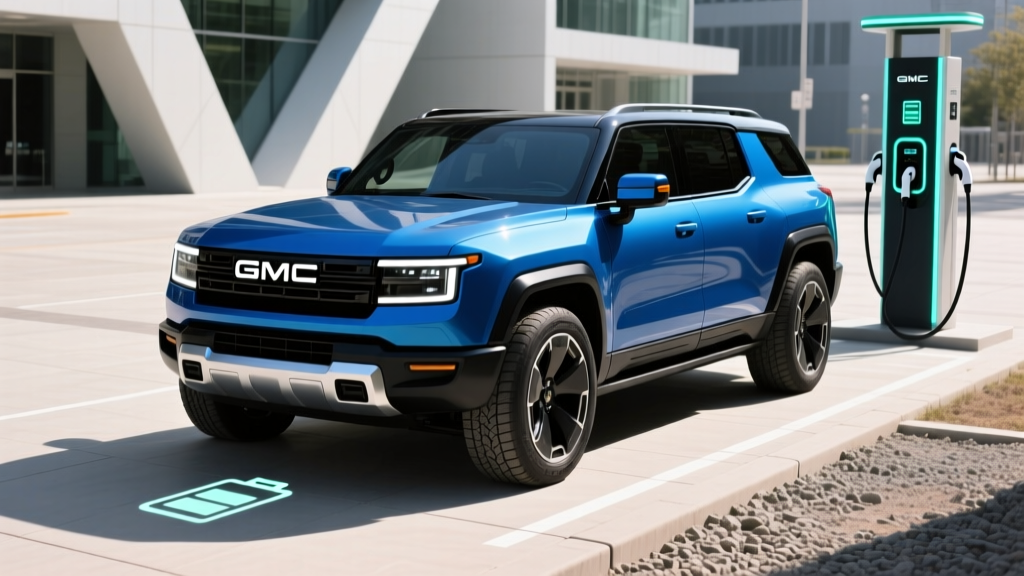
The 2026 GMC Hummer EV 3X occupies a category of one: a 9,000-pound electric supertruck that hits 60 mph in roughly 3 seconds, crosses 380 miles on a charge, and turns every parking lot into a spectator event. With three motors producing up to 1,000 horsepower, the 3X trim sits near the top of the Hummer EV lineup, offering torque vectoring, adaptive air suspension, and GMC's hands-free Super Cruise driver-assistance system.
But the Hummer EV 3X demands real trade-offs. Its efficiency is among the worst of any EV sold in the U.S. at 47 MPGe combined, meaning charging costs add up fast on road trips. Its sheer size — over 18 feet long and nearly 7 feet wide — makes urban driving a negotiation with infrastructure. And at a starting MSRP above $106,000, federal tax credit eligibility is complicated. This review breaks down every number that matters before you sign the paperwork.
Range, Battery & Real-World Efficiency
Real-World Expectation: ~300–320 miles highway at 70 mph; ~260–290 miles in freezing temperatures; ~340+ miles city/suburban with regen braking
The Hummer EV 3X draws power from a massive Ultium battery pack with approximately 246 kWh of total capacity (~212 kWh usable), using GM's NMC (nickel manganese cobalt) lithium-ion chemistry. This is one of the largest battery packs in any production passenger vehicle, and it's the primary reason the Hummer EV achieves its impressive EPA range despite weighing over 9,000 pounds.
According to fueleconomy.gov, the Hummer EV 3X pickup is rated at 47 MPGe combined, which translates to roughly 73 kWh per 100 miles — making it one of the least efficient EVs on the market. For comparison, the Ford F-150 Lightning achieves 66 MPGe combined, and the Rivian R1T Tri-Motor lands around 70 MPGe. The Hummer's aerodynamic profile (roughly that of a brick with headlights) and 4,500+ pound curb weight per axle explain the energy appetite.
On a 200-mile highway road trip at sustained 75 mph speeds, expect to consume approximately 80–85 kWh, which means you'll arrive with roughly 120–140 miles of range remaining from a full charge. Cold weather (below 30°F) compounds the penalty: plan for a 20–30% range reduction on winter highway drives, landing you closer to 260–280 real-world miles. The Hummer EV's standard heat pump helps mitigate cabin heating losses, but the sheer thermal mass of a 246 kWh pack takes time to condition.
| Spec | Value |
|---|---|
| EPA Range | 381 miles (Pickup, 35" tires) |
| Battery Capacity | ~246 kWh total / ~212 kWh usable |
| Battery Chemistry | NMC (Ultium platform) |
| Drivetrain | Tri-Motor AWD (e4WD) |
| Horsepower | Up to 1,000 hp (Watts to Freedom mode) |
| Torque | Up to 1,200 lb-ft |
| 0–60 mph | ~3.0 seconds (WTF mode) |
| Efficiency | 47 MPGe / 73 kWh/100 mi |
| Max DC Fast Charge | 350 kW (800V architecture) |
| 10–80% DC Charge Time | ~35 minutes |
| Level 2 Home Charging | 11.5 kW (~16 mi/hr) |
| Towing Capacity | 7,500 lbs (pickup) |
| Base MSRP (3X Pickup) | $106,395 |
| Battery/Powertrain Warranty | 8 years / 100,000 miles |
Charging Speed: DC Fast, Level 2 & What You'll Actually See
The Hummer EV 3X uses GM's 800-volt Ultium architecture, enabling DC fast charging at up to 350 kW peak at compatible stations (such as Electrify America 350 kW stalls or Tesla Supercharger V4 stations with NACS adapter access). At peak rate, GMC estimates a 10–80% charge in approximately 35 minutes, adding roughly 100 miles of range in about 10 minutes.
| Charging Level | Power (kW) | Speed (miles/hr added) | Notes |
|---|---|---|---|
| Level 1 (120V, 12A) | ~1.4 kW | ~2 mi/hr | Emergency/trickle only; full charge takes 6+ days |
| Level 2 (240V, 48A) | 11.5 kW | ~16 mi/hr | Full charge ~13 hours; overnight ready |
| DC Fast (350 kW peak) | Up to 350 kW | ~250+ mi/hr (peak) | 10–80% in ~35 min; tapers significantly above 80% |
Here's what the charging curve actually looks like in practice: the 3X pack sustains above 300 kW roughly between 10% and 30% state of charge, then steps down through the 200–250 kW range through 60%, and tapers to below 100 kW past 80%. Charging from 80–100% on DC fast charging is painfully slow — expect another 30+ minutes for the last 20%. On road trips, plan your stops around 10–80% sessions for the best time efficiency.
For home charging, the Hummer EV accepts up to 11.5 kW on Level 2 (240V, 48 amps). With a 212 kWh usable pack, a full 0–100% Level 2 charge takes roughly 18–19 hours, though in practice you'll rarely arrive home near empty. A typical overnight session (10 hours at 11.5 kW) adds about 160 miles of range — more than enough for daily driving recovery.
Home charging installation note: The Hummer EV's 11.5 kW acceptance rate requires a hardwired 60-amp circuit (or a NEMA 14-50 outlet at 40A for ~9.6 kW). Most homes will need a licensed electrician to install a dedicated 60A circuit, and some older panels (100A service) may require a full panel upgrade to 200A — budget $2,000–$4,000 for that contingency. Total Level 2 home install cost typically runs $1,200–$3,500 depending on panel proximity and local permitting.
Performance & Driving Dynamics
The 3X trim earns its name from its three-motor e4WD powertrain: one motor on the front axle and two on the rear, delivering independent torque vectoring across the rear wheels. The result is up to 1,000 horsepower and 1,200 lb-ft of torque when engaging Watts to Freedom (WTF) mode — GMC's launch-control feature that pre-conditions the battery, lowers the air suspension, and provides haptic and audio feedback before releasing full power.
The 0–60 mph time of approximately 3.0 seconds places the Hummer EV 3X in supercar territory despite its 9,046-pound curb weight. Quarter-mile times hover around 11.5 seconds. This is a physics-defying feat, and it never stops being startling the first few times you floor it.
Beyond straight-line speed, the 3X's standout performance features include:
- CrabWalk: Four-wheel steering allows the rear wheels to turn up to 10 degrees in the same direction as the fronts, enabling diagonal movement — useful for tight trail obstacles and a guaranteed conversation starter.
- Adaptive Air Suspension: Provides up to 5.8 inches of ride-height adjustment. Extract mode raises the suspension to its maximum height for extreme off-road clearance (approach/departure angles of 49.7°/38.4° in Extract mode).
- Torque Vectoring: The dual rear motors can send up to 100% of rear torque to a single wheel, improving traction in rock crawling and low-grip scenarios.
- One-Pedal Driving: Aggressive regenerative braking enables near-complete stops without touching the friction brakes, though the 9,000-pound mass means regen alone won't bring you to a full hold on steep grades.
On-road manners are surprisingly composed for a vehicle of this mass. The air suspension absorbs highway imperfections with authority, and steering is precise if numb. Body roll in corners is well-controlled, though you'll feel the weight transfer in any evasive maneuver. This is a grand tourer masquerading as an off-road rig, and it's most at home devouring interstate miles.
Interior, Cargo & Technology
The Hummer EV's cabin reflects its six-figure price with premium materials, expansive digital displays, and genuine off-road utility. The pickup configuration offers a crew cab layout seating five passengers with generous dimensions:
- Front legroom: 45.6 inches
- Rear legroom: 43.4 inches
- Front headroom: 42.5 inches (with available Infinity Roof panels removed)
- Cargo bed length: 5 feet (with mid-gate open: extended to ~8 feet into the cabin)
- Bed volume: ~45 cu ft (bed only); expanded with mid-gate and fold-down rear seats
- Front trunk (eTrunk): ~8.1 cu ft — large enough for charging cables, a weekender bag, or tools
The Infinity Roof with removable transparent panels is a signature feature — open-air driving in a full-size truck is genuinely novel. The panels store in the included frunk bag, though they're bulky and require two people for comfortable installation/removal.
On the tech front, the Hummer EV runs GM's Ultifi software platform on a 13.4-inch diagonal infotainment touchscreen paired with a 12.3-inch driver instrument cluster. Wireless Apple CarPlay and Android Auto are standard. The system includes embedded Google services (Google Maps navigation, Google Assistant, Play Store apps), though some owners report occasional lag when switching between camera views and navigation.
Driver Assistance — Super Cruise: The 3X includes GMC's Super Cruise hands-free driving system, which operates on over 750,000 miles of compatible divided highways in the U.S. and Canada. This is an SAE Level 2 system — the driver must remain attentive, and a camera monitors eye gaze. Super Cruise handles lane centering, adaptive cruise, and automatic lane changes on compatible roads. It does not operate on surface streets, in construction zones, or in adverse weather. Think of it as an excellent highway co-pilot, not a replacement for an engaged driver.
Pricing, Trims & Federal Tax Credit Eligibility
The 2026 GMC Hummer EV 3X pickup starts at a base MSRP of $106,395, including destination charge. Key competitors in the electric supertruck segment price as follows:
| Model | Base MSRP | As-Tested (Typical) | Federal §30D Credit Eligible? |
|---|---|---|---|
| GMC Hummer EV 3X Pickup | $106,395 | $115,000–$125,000 | Unlikely (MSRP cap exceeded) |
| Ford F-150 Lightning Platinum | $96,870 | $102,000–$108,000 | Unlikely (MSRP cap exceeded) |
| Rivian R1T Tri-Motor Max | $109,900 | $115,000–$120,000 | Unlikely (MSRP cap exceeded) |
| Chevrolet Silverado EV 4WT | $74,800 | $78,000–$85,000 | Potentially (under $80K truck MSRP cap) |
- MSRP Cap: Pickup trucks must be at or below $80,000 MSRP to qualify. The Hummer EV 3X at $106,395 exceeds this cap.
- Buyer Income Cap: Modified AGI must not exceed $150,000 (single), $225,000 (head of household), or $300,000 (joint filing).
- Battery Sourcing: Critical minerals and battery components must meet escalating domestic-sourcing thresholds; verify current-year compliance on irs.gov.
- Point-of-Sale Transfer: Eligible buyers can transfer the credit to the dealer for an upfront price reduction — but only if all criteria above are met.
- Consult a tax professional before relying on credit eligibility; rules change and individual circumstances vary.
At $106,395, the Hummer EV 3X does not qualify for the federal §30D new EV tax credit because it exceeds the $80,000 MSRP cap for pickup trucks. State and local incentives may still apply — check the AFDC state incentive database for your jurisdiction — but the full sticker price is what most buyers will finance or pay out of pocket.
Warranty & Long-Term Ownership
GM backs the Hummer EV's Ultium battery pack and electric powertrain components with an 8-year / 100,000-mile warranty, with a capacity retention threshold of 70% — meaning GM will repair or replace battery modules if the pack degrades below 70% of original capacity within the warranty period. The limited vehicle warranty covers 3 years / 36,000 miles bumper-to-bumper.
Long-term battery degradation data for the Ultium platform is still maturing (the Hummer EV launched for the 2022 model year), but GM's NMC chemistry historically shows 8–12% degradation over 100,000 miles in the Bolt EV platform. The Hummer's massive pack provides a larger buffer — even at 15% degradation, you'd still have roughly 320 miles of EPA-rated range remaining.
Insurance costs are a real consideration. Full coverage on a $110,000+ electric supertruck typically runs $3,500–$5,500 annually depending on your profile, location, and carrier. Get quotes before purchasing — some insurers classify the Hummer EV in specialty/exotic tiers due to repair cost and parts availability.
Pros, Cons & Who Should Buy
- 381-mile EPA range — among the longest of any EV sold
- 350 kW DC fast charging via 800V architecture
- 3.0-second 0–60 mph in a 9,000-lb vehicle
- CrabWalk, Extract mode, and genuine off-road capability
- Super Cruise hands-free highway driving included
- Infinity Roof and eTrunk offer unique utility
- 8-year/100,000-mile battery warranty
- 47 MPGe — worst-in-class efficiency; high charging costs
- $106,395 base price; no federal tax credit eligibility
- Extreme size (18+ ft long, 7 ft wide) limits urban usability
- Level 2 home charging takes 18+ hours for full charge
- Limited public charging infrastructure for vehicles this wide
- Insurance premiums significantly above average
- Only 7,500-lb towing — less than some gas heavy-duty trucks
- Buy it if: You want the most capable, most attention-grabbing electric truck on the road; you have home Level 2 charging and rarely exceed 300 miles between charges; you value off-road capability and supercar acceleration equally.
- Skip it if: Efficiency and low running costs are priorities; you live in a dense urban area with tight parking; you need federal tax credit assistance to justify the purchase; you regularly tow above 7,000 lbs.
- Consider instead: Ford F-150 Lightning (lower price, better efficiency, wider charging access), Rivian R1T (more refined interior, better on-road dynamics), Chevrolet Silverado EV (lower MSRP, potential tax credit eligibility).
Frequently Asked Questions
What is the real-world range of the Hummer EV 3X?
The EPA rates the 2026 Hummer EV 3X at 381 miles. In real-world highway driving at 70–75 mph, expect 300–320 miles. In cold weather (below 30°F), plan for 260–290 miles. City driving with regenerative braking can push range closer to or slightly above the EPA estimate.
How fast does the Hummer EV 3X charge at home and on the road?
On a 350 kW DC fast charger, the 3X charges from 10–80% in approximately 35 minutes, adding roughly 100 miles in 10 minutes at peak rate. At home on a Level 2 charger (11.5 kW), you'll recover about 16 miles of range per hour, and a full charge takes approximately 18 hours.
Does the GMC Hummer EV 3X qualify for the federal EV tax credit?
No. The Hummer EV 3X's base MSRP of $106,395 exceeds the $80,000 MSRP cap for pickup trucks under IRS §30D rules. Even if you meet income and battery-sourcing requirements, the vehicle price disqualifies it. Consult irs.gov for current-year rules and a tax professional for personalized guidance.
How does the Hummer EV 3X compare to the Rivian R1T and F-150 Lightning?
The Hummer EV 3X offers more horsepower (1,000 vs. 850 for the R1T Tri-Motor), longer EPA range (381 vs. ~328 for the R1T Max), and unique features like CrabWalk. The Rivian R1T is more refined on-road and slightly smaller for daily use. The F-150 Lightning is less expensive and more efficient but can't match the Hummer's range or performance. All three exceed the $80K MSRP cap in upper trims, limiting tax credit access.
Is the Hummer EV 3X good for towing?
The 3X is rated for 7,500 pounds of towing capacity — adequate for boats, campers, and car trailers but less than heavy-duty gas trucks. Expect range to drop by 40–50% when towing near max capacity at highway speeds, meaning 150–190 miles between charges with a heavy trailer. Always precondition the battery before a tow day for optimal performance.
What is CrabWalk and when would I use it?
CrabWalk uses four-wheel steering to angle the rear wheels up to 10 degrees in phase with the front wheels, allowing the truck to move diagonally. It's useful for navigating tight off-road obstacles, positioning the truck in narrow trails, and — most commonly — impressing onlookers. It's not designed for high-speed use and works best at low speeds on loose surfaces.
How long will the Hummer EV battery last?
GM warranties the Ultium battery for 8 years or 100,000 miles against degradation below 70% capacity. Based on NMC chemistry track records, expect 85–90% capacity retention at 100,000 miles with normal use. The pack should outlast 200,000+ miles before falling below 70%, though long-term Ultium-specific data is still being gathered. Avoid frequent 100% charges and extended storage at low state of charge to maximize longevity.